
Stone Export Packing Checklist When Freight Routes Change
Back in the day…, I watched a hotel lobby order nearly turn into a court argument because six crates arrived with clean timber, clean straps, and completely unreadable side marks. The stone was inside. The drawings were correct. The problem was that the receiving team in the Gulf could not tell which crate belonged to the reception wall and which crate belonged to the column base.
That shipment had already been delayed once because the vessel changed connection. Then the container sat under heat, dust, and too many forklift moves. By the time the site opened the door, the ink on the shipping mark had bled into a grey cloud. Take it from me, a missing label can make good stone look like bad management.
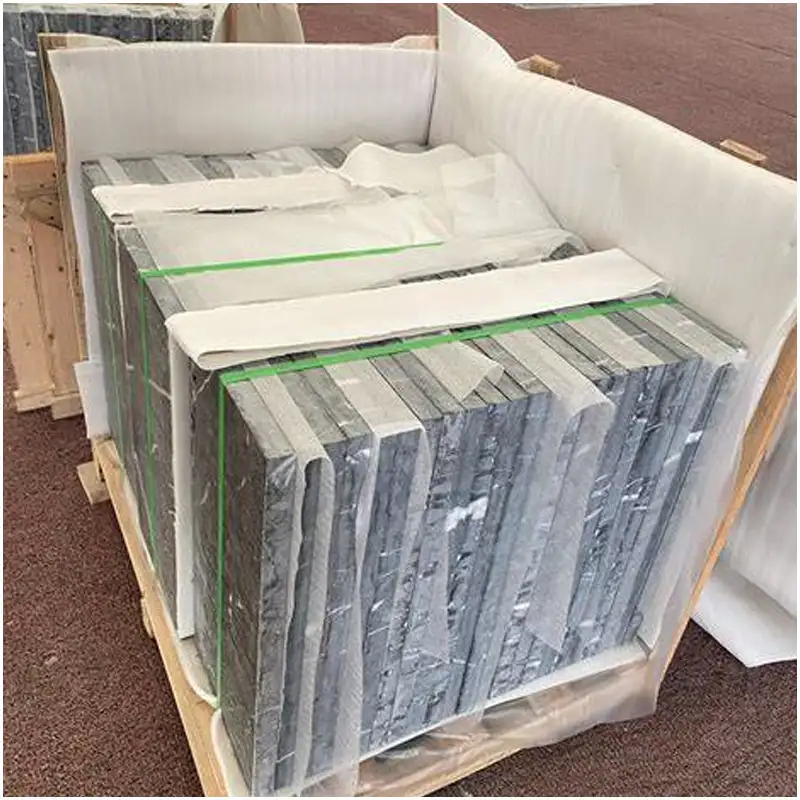
On July 2, Drewry reported its World Container Index at $4,530 per 40-foot container, and Kuehne+Nagel’s July updates kept pointing to regional cargo-flow shifts around the Strait of Hormuz. I am not here to predict freight. I am here to say what happens on our side when the route gets messy: the stone export packing checklist has to get stricter before the truck leaves the factory.
You can’t skip this step just because the order is already late. Late cargo with weak packing is still weak cargo. Late cargo with clear inspection files, strong crates, and a readable loading map can still be saved.
Why A Stone Export Packing Checklist Matters In A Volatile Freight Week
I do not panic every time freight rates move. I do change my questions when routes become unstable. If cargo may wait longer, I ask whether the crates have enough bracing and whether the photos prove condition before loading.
That is the exact workflow behind Natural Stone Project Procurement: The Complete Step-by-Step Guide for Export Orders. Procurement does not end when the material is paid for. It ends when the correct pieces arrive, in the correct sequence, with enough proof to solve a site question without shouting across time zones.
For cut-to-size stone orders, I want the packing file to answer four questions before anyone books the vessel: what is inside each crate, where does each piece install, what condition was it in before packing, and how will the receiver identify it without opening every box? If those answers are weak, the freight news only makes the risk bigger.
Take it from me, a 20GP stone container can look neat from the outside and still hide trouble. If the crate sequence does not match the loading plan, the site may unload the wrong pieces first. If spare pieces sit in an unmarked crate, they may be thrown aside when they are needed most.
From Dry-Lay To Loading: My Project-Stage Workflow
I like chronological checks because they catch mistakes while there is still time to fix them. Back in the day…, we used to receive blurry photos by email and argue over whether a tile edge was chipped or just dusty. Now I ask for structured photo sets because memory is not a quality-control system.
Stage 1: Drawing Freeze
Before production, I want the latest drawing revision stamped and locked. The shop drawing number must match the cutting list. If the architect issued a new wall elevation yesterday, the factory must not work from last week’s PDF.
A product such as 카라라 화이트 대리석 컷 사이즈 needs dimensions tied to room numbers, edge notes, finish notes, and packing sequence. One wrong revision stamp can send 600 millimeters of stone to the wrong wall.
Stage 2: Dry-Lay Approval
For floor, wall, waterjet, and lobby pieces, I want a dry-lay before packing. Not a beauty photo. A grid photo with labels, ruler shots, and close-ups where the vein or pattern crosses from one piece to the next.
The article Cut-To-Size Stone Checklist: Drawings, Finishes, Edges, Packing, and Inspection belongs beside every order file because it keeps the basic sequence visible. You can’t skip this step when the design depends on direction, pattern, or room-by-room matching.
Stage 3: Inspection Photo Set
I want inspection photos before pieces disappear into timber. Each photo set should show the surface, edge, back side where relevant, thickness measurement, finish, and label. For a repeated hotel floor, I also ask for random carton checks because the first piece is not the whole order.
The guide What Stone Inspection Photos Should Show Before Final Payment and Packing is not decoration. It is the dispute file. If someone later claims the material shipped with chips, stains, or wrong finish, the photo set gives us something firmer than opinion.
Stage 4: Packing And Loading
Packing is where a project becomes physical. A crate has to protect the stone, but it also has to explain itself. The shipping mark, crate number, gross weight, room reference, and opening direction should be readable after a long route.
When we pack 이란 피에트라 회색 석판 아르마니 회색 석판 프로젝트 용 타일 드라이 레이어 크기에 맞게 절단, I care as much about the dry-lay record as I care about the timber. A polished dark surface can look fine in one photo and reveal handling marks only when the light hits sideways.
My Packing Log For Cut-To-Size Stone Orders
The table below is what I want a project manager to see before booking FOB shipment. It is meant to stop practical failures.
| Project Stage | Checkpoint | Minimum Record I Want | Failure It Prevents |
|---|---|---|---|
| Drawing freeze | Revision control | Drawing number, date, room code, approved stamp | Pieces fabricated from an old drawing |
| Dry-lay | Piece sequence | Overall grid photo plus close-ups at transitions | Pattern mismatch after installation |
| 검사 | Surface and edge proof | Top, edge, thickness, label, and finish photos | Payment dispute after packing |
| 포장 | Crate bracing | Internal support photo before closure | Breakage during vessel or port handling |
| 로드 중 | Container map | 20GP or 40HQ layout with crate numbers | Wrong unloading sequence at site |
| Handover | Spare piece log | Spare count, crate number, and intended area | No matching replacement after site damage |
The Hard-Won Lesson: A Spare Piece Is Useless If Nobody Can Find It
A resort corridor job once packed 4 percent spare limestone pieces. The spare crate carried only the general project name, not the corridor code or piece range. When three panels cracked during site handling, the replacements sat untouched for five days while the installer priced emergency material.
The Lesson: Mark spare pieces by area, crate number, and intended use before the container is sealed.
Shipping Mark Protocol For Longer Routes
A shipping mark is not a logo exercise. It is the language between the factory, forwarder, port team, site warehouse, and installer. If that language fails, the crate becomes a mystery box.
I want the shipping mark on two sides of every crate, printed large enough to read from a forklift seat. I also want a waterproof document pouch fixed inside the crate and one packing list outside the container file. Take it from me, one copy is not enough.
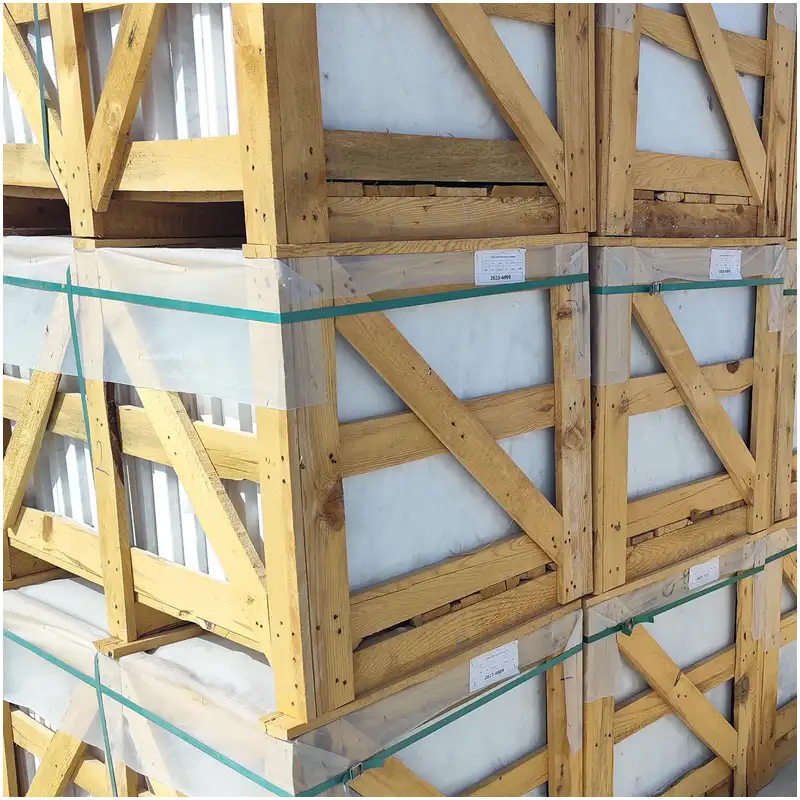
For a stone export packing checklist, the crate mark should include project name, purchase order, crate number, room or area code, piece range, gross weight, handling direction, and warning notes. If the receiving site speaks another language, add a simple drawing icon for top, side, and fragile handling.
When we ship G654 화강암 타일 크기 자르기 for outdoor or public-area work, the material may be tough, but the order still needs sequence control. Dense stone does not forgive a missing area code when the site has three teams unloading at once.
Inspection Photos Before Final Payment
I do not like final payment based only on a packing list. A packing list tells me what someone says was packed. Inspection photos tell me what the camera saw before the lid closed.
The article Natural Stone Project Specification Guide: Material, Drawings, Inspection, Packing, And Delivery ties this back to the full workflow. Specification without proof is weak. Proof without clear file names is also weak.
My photo naming habit is boring for a reason: project code, crate number, piece number, photo type, and date. If the file says only “IMG_4388”, nobody will find it when the site calls six weeks later.
You can’t skip this step when freight routes are tense. Cargo may pass through extra handling points. A proper photo set helps separate factory condition, transit condition, and site handling condition.
Spare Pieces Are Not An Afterthought
Spare pieces save jobs. I usually ask for 2-5 percent spare material on tile-heavy areas, depending on material variation, project distance, and whether replacement supply will be available later. For one-off slabs, I prefer agreed spare pieces from the same batch.
A waterjet lobby medallion is a good example. If one thin section breaks on site and there is no spare, the project does not need a speech; it needs a matching piece. The product file for 맞춤형 5 성급 호텔 로비 대리석 워터젯 메달리온 드라이 레이 검사 용 shows why dry-lay and spare planning belong together.
Back in the day…, a resort corridor project lost three pieces after arrival. The factory had packed spares, but nobody marked the crate clearly. The replacements sat in the customs warehouse while the installer claimed we had shipped none.
Understanding Stone Export Packing In Today’s Market
Why Freight Pressure Changes The Risk Profile
Route changes do not automatically damage stone, but they often add time, handling, storage, and documentation pressure. A crate that survives a direct service may face more stress when transshipment changes. A weak file becomes more dangerous when the route becomes less predictable.
How Procurement Teams Should Respond
The response is not panic. The response is tighter records. A good packing file includes approved drawings, dry-lay photos, inspection photos, crate photos, loading map, packing list, and shipping mark proof. That is the working habit inside Natural Stone Project Procurement: The Complete Step-by-Step Guide for Export Orders.
What To Confirm Before The Container Door Closes
Before loading, I want one person to compare the crate list against the drawing area list. Then I want photos of each crate mark, internal bracing, loading sequence, and container seal. The seal photo should include the number clearly. No guessing.
자주 묻는 질문
1. What should a stone export packing checklist include?
The list should include approved drawings, dry-lay photos, inspection records, crate numbers, shipping marks, internal bracing photos, loading sequence, container seal photo, and spare piece records. For project stone, every crate should connect back to a room, area, or drawing code.
2. Why are shipping marks so important for stone project orders?
Shipping marks help the receiving team identify crates without opening everything at once. They reduce unloading confusion, wrong-area storage, and installation delays. I prefer large waterproof marks on two crate sides plus a matching packing list in the project file.
3. Should inspection photos be taken before or after packing?
Both stages matter. Before packing, photos prove material condition, finish, edge quality, dimensions, and labels. After packing, photos prove crate bracing, mark placement, loading sequence, and container seal. Together, they give the project team a useful dispute record.
4. How many spare pieces should a stone export order include?
For tile-heavy areas, I often suggest 2-5 percent spare material, adjusted by material variation and project distance. For special slabs, waterjet pieces, or bookmatched work, spare planning should be agreed before cutting because later matching can be difficult.
5. Does freight disruption change how stone should be packed?
Freight disruption does not change the stone, but it can add handling, waiting time, and transshipment pressure. That means crate bracing, waterproof labeling, photo records, and loading maps become more important. Weak packing is less forgiving when the route becomes complicated.
If A Packing Problem Appears After Delivery
First, photograph the crate, label, seal, damaged area, and nearby unopened packages. Second, stop installation until the project manager compares the site condition with the loading map. Third, contact the supplier with original inspection photos, packing list, and crate records so the team can compare factory, transit, and site handling issues.
Quick-Reference Checklist for Export Stone Packing
- Confirm every crate number against the approved drawing area before loading.
- Photograph each dry-lay layout with visible labels and piece sequence.
- Record internal crate bracing before the timber lid is closed.
- Print waterproof shipping marks on two visible crate sides.
- Prepare a loading map that shows crate position inside the container.
- List spare pieces by crate number, material batch, and intended project area.
Final Conclusion
A stone export packing checklist cannot control freight rates, political risk, or vessel schedules. It can control the parts that belong to the project team: drawings, dry-lay, inspection photos, crate bracing, shipping marks, loading maps, and spare piece records.
When routes change, weak records get exposed fast. My advice is simple: pack the stone as if the receiving site will need to understand every crate without calling you at midnight. You can’t skip this step, and I would rather ask for one more crate photo than explain one missing spare piece to our FOR U STONE project partners.

참조
World Container Index Assessed by Drewry, Drewry Supply Chain Advisors.
Middle East Situation Updates, Kuehne+Nagel.
Two-Week US-Iran Ceasefire Not Enough to End Ocean Container Shipping Disruption or Surging Freight Rates, Xeneta.
Strait of Hormuz Shipping Impact: What You Need to Know, Freightos.
Dimension Stone Design Manual, Natural Stone Institute.
ASTM International Stone Standards, ASTM International.
Natural Stone Technical Guidance, Stone Federation Great Britain.
Structured Data General Guidelines, Google Search Central.