
Stone Crate Shipping Mark Protocol for Cut-to-Size Orders
Back in the day…, I watched a site crew open a crate marked “WALL-02” and pull out stair risers. The crate itself was not wrong. The stone was not wrong. The shipping mark was lazy. Two project areas used the same short code, and nobody caught it before loading. Take it from me, nothing makes a project manager lose patience faster than five workers standing beside the wrong crate while the correct pieces sit three rows behind it.
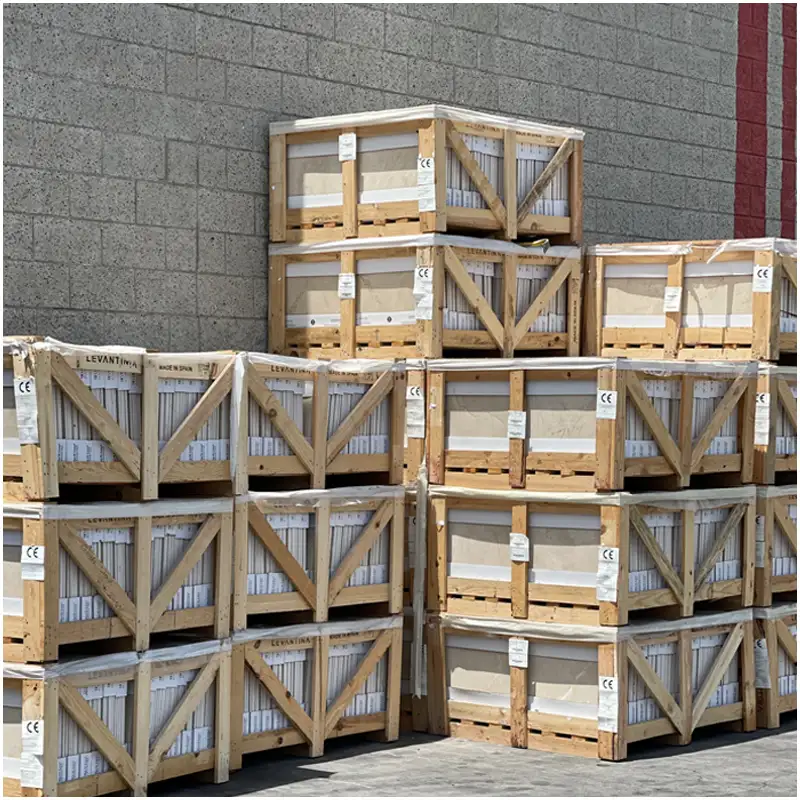
A stone crate shipping mark protocol is the rulebook for how every crate is named, photographed, checked, and opened. It sounds boring. Good. Boring systems save projects. When routes change, containers get handled more, or a site opens crates out of sequence, the mark becomes the first line of control.
This article extends the loading photo record we already prepared today. A photo proves what was loaded. The shipping mark tells the receiver what they are looking at. You can’t skip this step because the site does not have our factory memory.
The workflow belongs under Natural Stone Project Procurement: The Complete Step-by-Step Guide for Export Orders. Procurement is not finished when the crate is strong. It is finished when the correct crate can be found, opened, and installed without a chain of phone calls.
Why Stone Crate Shipping Mark Protocol Fails In Real Projects
Most marking failures come from shortcuts. Someone uses a project nickname. Someone writes a room number without an area code. Someone changes the drawing revision but keeps the old crate number. Someone marks spare pieces as “extra” and thinks that is enough. Back in the day…, I saw all of them.
For a cut-to-size stone order, a good mark needs to speak to the site. The factory may understand internal codes, but the receiver may only know Tower B, Level 12, Corridor Wall, or Pool Stair. If the code does not bridge those languages, the crate mark becomes a private joke.
When a project uses 플라노 석회암 벽 클래딩, for example, I want elevation, zone, crate number, and piece range. A wall cladding crate can hold similar-looking panels from different elevations. Open the wrong one first, and the dry-lay logic breaks.
What I Put On Every Main Mark
My main mark includes project code, purchase order, crate number, area code, piece range, gross weight, net weight when available, destination, and handling direction. I also add “OPEN FIRST” only when the site sequence really needs it. Do not overuse priority marks, or people stop believing them.
You can’t skip this step. A label that looks clear in the factory can become unreadable after rain, dust, forklift contact, or plastic wrap glare. That is why I want stencil marks plus waterproof labels, not just one printed paper sheet.
Shipping Mark Table For Cut-To-Size Crates
This is the format I use when training new coordinators. It keeps the mark useful without making it too crowded to read.
| Mark Field | Example | Why I Need It |
|---|---|---|
| Project code | HTL26-DXB | Separates crates when multiple projects ship in the same month. |
| Area code | L03-COR-WA | Tells the site where the crate belongs before opening. |
| Piece range | P-021 to P-038 | Connects crate contents to the drawing and dry-lay record. |
| Handling mark | Keep Upright / Fragile Edge | Protects panels, long strips, and finished edges during unloading. |
| Spare identity | SP-L03-COR-WA | Keeps spare pieces tied to the area they are meant to protect. |
The Hard-Won Lesson: Never Let Two Areas Share One Short Code
A commercial project used “L2-WALL” for both lift lobby wall panels and level-two corridor wall skirting. The packing list separated them, but the crate mark did not. At destination, the team opened the lobby crate first and moved it to the corridor staging area. By the time the mistake was found, two crates had been shifted twice, one corner protector was broken, and the installer lost half a day.
The Lesson: Write crate codes for the person unloading the job, not for the person who packed it.
How I Connect Marks, Photos, And Packing Lists
A mark is only strong when the photo set and packing list repeat the same code. I want the crate label photo to show the same crate number used in the packing list. I want the loading photo folder to use the same number. I want the dry-lay folder to use the same area code. No mystery names.
Crate label photos need to be readable before and after wrapping. Take it from me, plastic film can turn a perfect label into a mirror. I ask for one photo before wrapping and one after wrapping, especially when rain or long yard waiting time is possible.
For stone such as 블랙 화강암 야외 계단, the handling mark matters because the pieces are heavy and finished on specific edges. If the crate is opened on the wrong side, the site can damage the very edge we protected.
Where Spare Pieces Go Wrong
Spare pieces often fail because people treat them as leftovers. They are not leftovers. They are project insurance. A spare tread, border, or skirting piece needs its own area code. If the site cannot find the spare quickly, it does not matter that the factory packed it.
For products like 유라 베이지 석회암 타일, spare boxes can look almost identical to main stock. The mark must show where those pieces belong. Otherwise, the site may install spare material before main material, then discover a shortage in the real area.
Make The Mark Work In Bad Conditions
A crate mark that works only in a clean factory is not good enough. At destination, the crate may sit in a dim warehouse, a dusty site yard, or a temporary unloading zone with rain coming sideways. The receiver may read the mark from two meters away while a forklift driver is waiting. Back in the day…, I saw a perfect paper label become useless after plastic wrap reflected the afternoon sun.
Take it from me, the mark needs contrast, size, and repetition. Put the main code on at least two sides. Use a waterproof label and a stencil. Put an inner list inside the crate. If the outside gets damaged, the inside still speaks. You can’t skip this step when the crate contains mixed panels, returns, or spare pieces that look similar from the edge.
I also ask the coordinator to read the mark aloud against the packing list before loading starts. It sounds childish until it catches a typo. One wrong digit in a crate code can send a whole area to the wrong staging zone. Back in the day…, we caught a duplicated C-12 mark this way ten minutes before the forklift arrived.
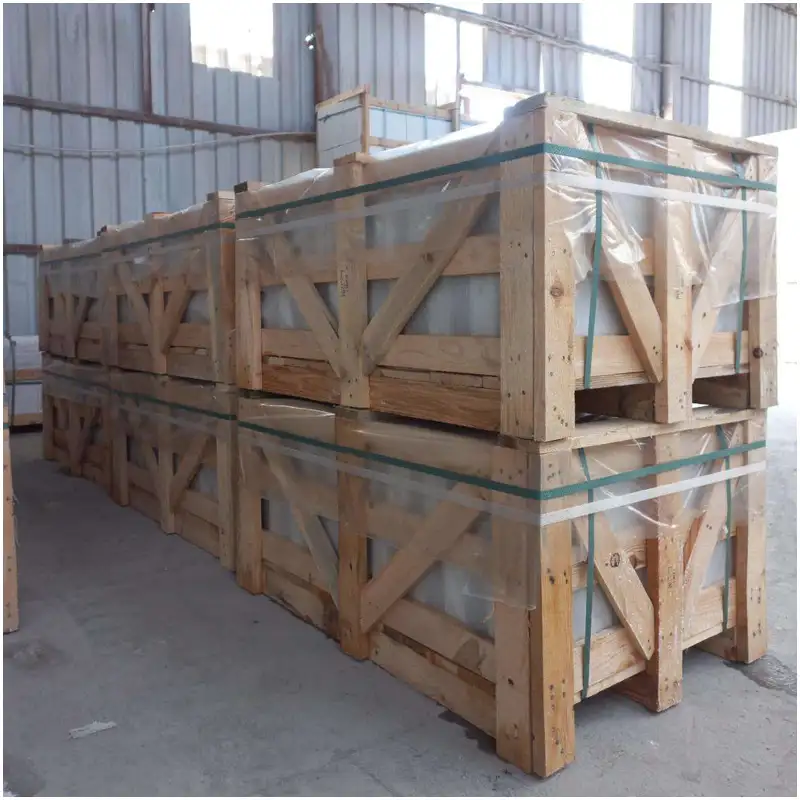
Understanding Shipping Marks In Today’s Export Market
Why Freight Pressure Makes Labels More Important
When vessels run smoothly, a weak mark may still survive. When containers are delayed, rehandled, inspected, or stored longer, the mark faces more chances to fail. A natural stone export shipment carries heavy crates and mixed pieces. The receiver needs fast identification, not a puzzle.
A stone crate shipping mark protocol also reduces blame. If the mark, photo, and packing list agree, the site can identify the crate. If they do not agree, every team starts defending itself. That is wasted energy.
What To Do If A Mark Is Missing At Destination
If a mark is unreadable or missing, stop opening random crates. First, document the crate from all sides and photograph any inner list visible without unpacking. Second, do not proceed with installation from uncertain crates until the contents are matched. Third, contact the supplier with crate dimensions, loading photos, packing list, and any remaining mark fragments for comparison.
자주 묻는 질문
1. What is a stone crate shipping mark protocol?
It is the system used to name, label, photograph, and verify stone crates before shipment. It connects the crate number to the project drawing, packing list, inspection photos, and installation area. A good protocol helps the site find the correct crate without depending on memory.
2. What information belongs on a stone crate mark?
The mark needs project code, order number, crate number, destination, area code, piece range, gross weight, handling direction, and spare identity when relevant. I also like a waterproof label and a stencil mark. One mark can fail. Two marks give the site a better chance.
3. How do I mark spare pieces for a cut-to-size stone order?
Mark spare pieces with the same area logic as the main pieces. Do not write only “spare.” Use area code, piece type, and project stage. If the spare belongs to Level 3 corridor skirting, the mark needs to say that. Otherwise, the site may not find it when the breakage happens.
4. Should crate marks match the packing list exactly?
Yes. The crate number, area code, and piece range must match the packing list and photo folder. If the same crate has three different names in three records, the site will waste time. I treat that as a documentation failure before the shipment leaves.
5. What should I do first if a crate mark is unreadable?
Photograph the crate from all sides, including size, timber structure, and any remaining mark. Do not open random crates until the contents are matched with the original records. Then send the supplier the photos, packing list, loading record, and delivery notes so the crate can be identified properly.
Quick-Reference Checklist for Stone Crate Marks
- Assign one unique crate code to every area and piece range.
- Match the crate code across packing list, label photos, and loading photos.
- Use waterproof labels plus stencil marks for long-distance shipments.
- Mark spare pieces with the same area code as the protected pieces.
- Photograph each label before and after wrapping the crate.
- Reject duplicate short codes before the container loading day.
Final Conclusion
A stone crate shipping mark protocol is not decoration on plywood. It is the map the site uses when the container opens. If the mark is vague, the packing list becomes harder to use. If the mark is duplicated, the wrong crate can move first. If spare pieces have no identity, they may as well not exist.
Take it from me, a strong mark saves time when people are tired, forklifts are waiting, and the schedule is already tight. You can’t skip this step, and I would rather print one more waterproof label than explain one mystery crate to our FOR U STONE project partners.
참조
Dimension Stone Design Manual, Natural Stone Institute.
ASTM International Stone Standards, ASTM International.
Red Sea / Gulf of Aden Situation, Maersk.
Middle East Operational Update, Maersk.
Freight Procurement Strategy Guidance, Xeneta.
Google Search Central Editorial Notes, Google Search Central.