In the fiercely competitive arena of modern commercial architecture and high-net-worth residential development, interior designers and property developers continuously seek building materials that project an aura of understated, enduring luxury. Among the vast array of available architectural finishes, the sophisticated and highly adaptable palette of grey natural stone has firmly established itself as a dominant market force. For B2B wholesale distributors, procurement managers, and large-scale project contractors, sourcing these premium geological materials involves navigating a highly complex international supply chain. The goal is to successfully mitigate severe procurement risks, such as unpredictable color variation, hidden structural fissures, and catastrophic breakage during transcontinental ocean freight. Sourcing the finest authentic 弾き is no longer merely an exercise in finding the lowest possible unit price per square meter; it fundamentally requires establishing a strategic, long-term partnership with a technologically advanced, quality-obsessed manufacturing facility. This comprehensive technical guide serves as a detailed procurement roadmap for industry professionals looking to import high-grade natural stone. It intricately details the vital physical parameters of the stone, the absolute necessity of rigorous factory dry-lay services, and the strict adherence to international shipping and packaging protocols. By thoroughly mastering these procurement mechanics, contractors can drastically reduce project liabilities, ensuring that the final installation flawlessly matches the original architectural vision while safeguarding their capital investment.
The Dominance of Grey Marble in Modern Architectural Design
Why Minimalist Grey is the Choice for 2026 Commercial Projects
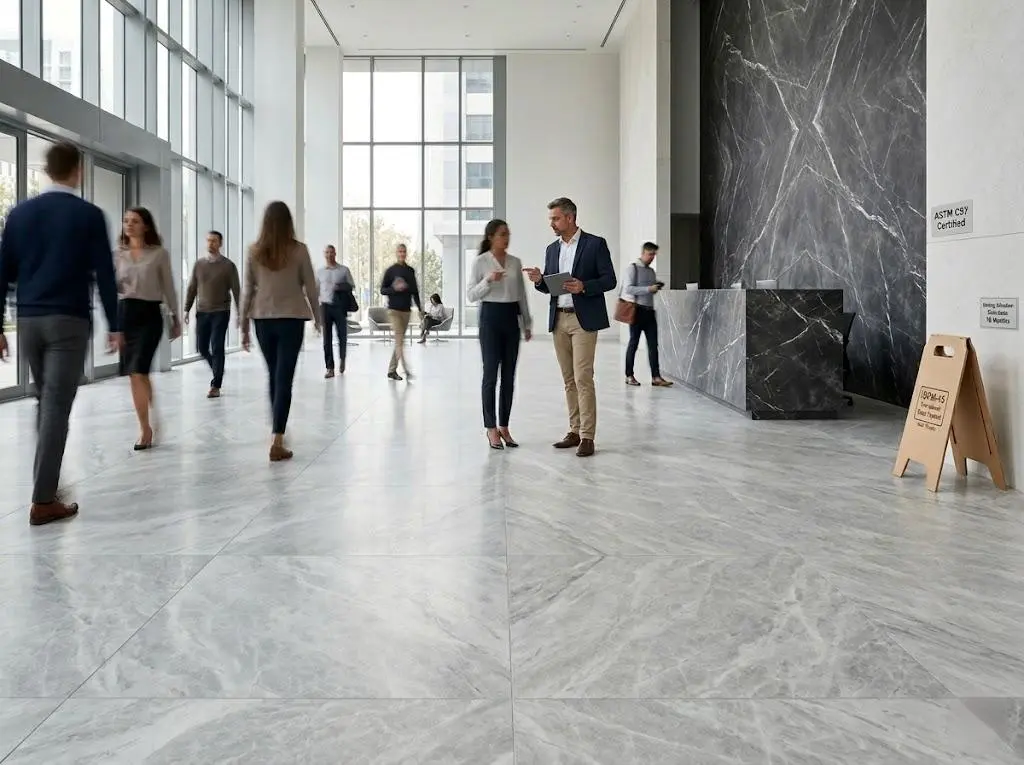
The current trajectory of global architectural aesthetics has decisively and permanently shifted towards the concept of “Quiet Luxury” and minimalist interior environments. In 2026, leading architectural firms are deliberately stepping away from overly dramatic, chaotic patterns and heavily saturated colors. Instead, they are strongly favoring the subtle, elegant restraint and organic authenticity that only genuine stone can provide. As a highly versatile foundational canvas, the color grey serves to perfectly anchor expansive, high-traffic spaces such as international hotel lobbies, luxury retail boutiques, and corporate headquarters. The organic, geologically formed veining found in genuine stone introduces a critical layer of dynamic texture and visual depth that mass-produced synthetic alternatives simply cannot replicate. When specifying surface materials for an upscale commercial lobby, seamlessly integrating authentic natural marble flooring ensures a timeless, sophisticated aesthetic that actually matures and appreciates in value gracefully over decades of use. The neutral, stabilizing base of grey coordinates effortlessly with contemporary brushed metallic fixtures, warm organic wood architectural accents, and ultra-minimalist furnishings, establishing a cohesive atmosphere of sophisticated tranquility. Consequently, understanding why this specific chromatic range is the top choice for interior design trends is absolutely vital for wholesale distributors aiming to strategically stock inventory that directly meets the surging demand of premium real estate developments globally.
Popular Commercial Varieties: Tundra, Pietra, and Fantasy
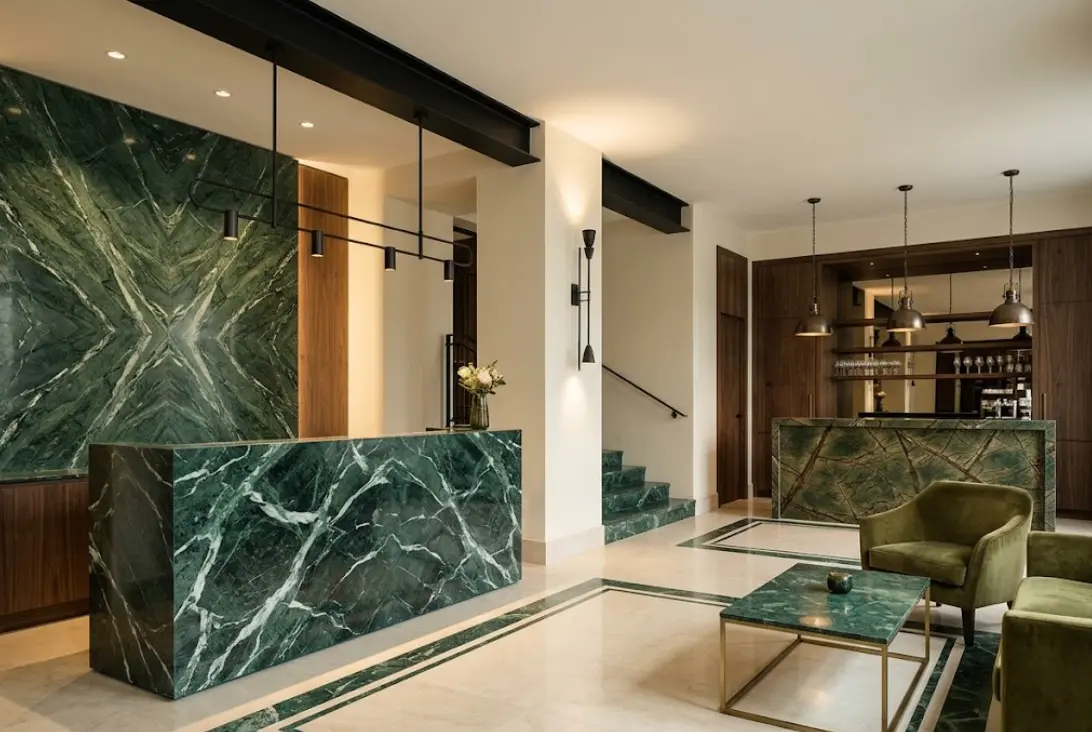
It is critical for buyers to understand that not all grey stones are created geologically equal; the specific mineral composition and tectonic history of each individual quarry dictate the stone’s final visual output and structural density. For instance, specific exotic blocks like Fantasy Grey marble slabs offer a highly dynamic, sweeping, and turbulent vein structure that adds a dramatic sense of movement to vertical feature walls and grand reception desks. Conversely, for projects requiring a more subdued aesthetic, the renowned Turkey Aegean Grey marble provides a significantly softer, more homogenous cloudy background. This subtle uniformity makes it an ideal, low-risk candidate for massive, large-scale, continuous floor paving where visual consistency across thousands of square feet is paramount. Another highly sought-after commercial variant is Pietra Grey, originating from Middle Eastern quarries, which boasts a striking, deep charcoal-grey background sharply punctuated by pure white crystalline veins. Understanding these profound aesthetic and geological differences is a mandatory skill for procurement managers to master.
|
|
|


Physical Parameters and Comparative Analysis: Natural Stone vs. Synthetics
Hardness, Water Absorption, and Density Metrics
For rigorous engineering contractors and commercial builders, the subjective visual appeal of a material must be firmly backed by uncompromising, quantifiable structural integrity. A premium, high-density グレーマーブル・シリーズ offers excellent physical properties that are perfectly suited for demanding commercial applications. The intense metamorphic geological process that creates these calcareous stones results in a dense, tightly interlocking crystalline structure capable of withstanding significant dynamic loads and continuous abrasion.
| 技術的指標 | Premium Natural Stone | Standard Porcelain Tile | Impact on B2B Procurement & Lifecycle |
| 密度 (g/cm³) | 2.65 – 2.80 | ~2.30 – 2.40 | High density strictly prevents structural deflection under heavy point loads. |
| 吸水 | 0.15% – 0.3% | < 0.5% | Lower absorption rates demand professional nano-sealers to prevent staining. |
| モース硬度 | 3.5 – 4.5 | 6.0 – 7.0 | Stone requires specific diamond abrasives for seamless on-site polishing. |
| Restorability | 100% Restorable | 0% (Must be demolished) | Natural stone offers a vastly superior century-long lifecycle and ROI. |
When critically assessing these physical metrics for a new build, it is highly advisable to consult technical architectural resources that meticulously explain the nuances, such as examining complex 白大理石とグレー大理石の比較 scenarios. This ensures the selected stone chemically and physically meets the specific foot traffic, moisture, and environmental demands of the intended installation zone.
Grey Marble vs. Grey Porcelain Tiles in High-Traffic Areas
A persistent, budget-driven debate in value engineering circles revolves around substituting authentic natural stone with digitally printed, mass-produced porcelain tiles. While porcelain undoubtedly offers a lower initial upfront material cost, it severely lacks long-term investment value and restorability. In high-traffic commercial zones like international airport lounges, casino floors, or sprawling shopping malls, the ultra-thin surface glaze of a printed porcelain tile will eventually wear through, scratch, or chip, permanently exposing the raw, uncolored clay body beneath. Once this irreversible damage occurs, the entire tile must be violently demolished and completely replaced. In stark contrast, natural stone is completely homogenous throughout its entire thickness. When surface scratches inevitably appear after years of heavy use, a professional maintenance crew can simply hone and re-polish the floor directly in place, instantly restoring it to its original factory brilliance.
Why For U Stone is a Leading Grey Marble Supplier in China
Direct Quarry Access and Premium Block Selection
In the highly fragmented and often opaque global stone market, drastically reducing supply chain volatility is the primary objective for experienced B2B buyers. Sourcing from third-party intermediaries or local brokers routinely results in inflated profit markups and wildly inconsistent material quality across different shipping containers. A reputable and established grey marble supplier in China completely eliminates these compounding risks by maintaining direct, exclusive purchasing agreements with premier quarries globally. By deploying highly experienced stone inspectors directly to the extraction sites, the factory successfully secures only the highest-grade “A-Level” blocks before they hit the open market. This rigorous upstream selection process strictly filters out blocks containing hidden structural fissures, excessive quartz inclusions, or highly unstable, blotchy color zones. By controlling the raw material quality right from the mountain face, the manufacturer ensures maximum consistency. For instance, when a contractor places a massive order for a highly specific, color-sensitive material like an Orlando Grey marble slab, direct quarry access ensures that the background tone remains strictly within the acceptable architectural tolerance across the entire order.
Advanced CNC Fabrication and Custom Cut-to-Size Capabilities
Securing premium raw blocks is only half the manufacturing equation; the factory’s internal fabrication technology dictates the final quality and dimensional accuracy of the product. A premium facility operates advanced 5-axis CNC bridge saws, automated high-pressure waterjet cutters, and massive multi-head automated polishing lines. This heavy industrial infrastructure enables the custom cut-to-size marble factory to execute highly complex, customized architectural blueprints with zero margin for error. Whether the project demands intricately curved sweeping stair treads, precisely beveled large-format wall cladding, or massive, seamless dual-sink vanity tops, computer-controlled precision ensures exact dimensional accuracy down to the millimeter. This high-tech, automated processing eliminates the need for expensive, dusty, and inaccurate on-site modifications, allowing installation crews to work significantly faster.

Quality Control: Color Matching and Dry-lay Services for Large Projects
Avoiding the Multi-Quarry Batching Trap
One of the most devastating and costly risks in international stone procurement is falling into the “multi-quarry batching” trap. Unscrupulous brokers and low-end factories often attempt to fulfill large volume orders by secretly mixing slabs extracted from completely different quarry faces or even entirely different mountains to save costs. When these mismatched tiles are subsequently installed together on a sprawling hotel lobby floor, the resulting “checkerboard” effect of clashing background tones and sharply disconnected veining completely destroys the luxury aesthetic of the space. For example, when sourcing a material renowned for its distinct linear movement, such as a high-end Pietra Grey marble flooring tile, mixing separate batches will result in chaotic, disjointed lines that ruin the architect’s meticulous vision and lead to total project rejection.
The Factory Dry-Lay and Optical Scanning Protocol
To definitively solve the persistent industry issue of color variation, elite manufacturers employ a mandatory, uncompromising pre-installation dry-lay protocol. Within expansive, naturally lit factory floors, every single cut-to-size tile is physically laid out exactly according to the architect’s approved CAD drawings. Quality control technicians meticulously inspect the overall layout, carefully shuffling individual pieces to ensure a seamless, organic transition of veins and a perfectly harmonious blend of background tones. Once the perfect aesthetic arrangement is achieved, high-resolution optical scanners photograph the layout, and each individual tile is clearly labeled with a specific alphanumeric code corresponding directly to a master installation map. This painstaking process guarantees that when the crates arrive at the job site thousands of miles away, the local contractors can simply follow the map to assemble the floor perfectly.
Packing and Logistics: Ensuring Safe Delivery of Exotic Slabs
ISPM-15 Compliant Wooden Crating Standards
The final, critical hurdle in international stone sourcing is surviving the brutal, highly dynamic environment of global ocean freight. Shipping fragile, heavy stone slabs and tiles requires uncompromising, heavy-duty packaging standards. All export packaging must exclusively utilize heavy-duty, reinforced wooden A-frames or fully enclosed crates that strictly comply with the International Standards for Phytosanitary Measures No. 15 (ISPM-15). This international regulation dictates that the timber must be rigorously heat-treated or fumigated to eradicate insects and clearly stamped to prove it is free of pests. Failure to utilize officially certified ISPM-15 compliant packaging will inevitably result in customs authorities quarantining, fumigating at a massive premium, or completely rejecting and destroying the entire container at the destination port.
Minimizing Breakage Rates During Ocean Freight
Beyond strict phytosanitary compliance, the internal structural engineering of the crate itself is vital for protecting the contractor’s capital investment. High-quality, polished slabs are carefully sandwiched between sheets of high-density polyethylene foam to prevent any surface scratching from micro-friction during transit. The corners of the stone, which are invariably the most vulnerable points to impact, are heavily protected with rigid plastic or thick foam edge guards. To move these massive crates, factories utilize overhead gantry cranes—strictly avoiding equipment that could puncture the lower wood base—to gently lower the cargo into the shipping container. Finally, the stone is tightly bound to the heavy wooden frame using heavy-duty industrial nylon strapping and steel wire tensioners, immobilizing the cargo completely against the walls of the container. This rigorous securing methodology ensures that the violent kinetic energy generated by rough seas or abrupt port handling is entirely absorbed by the wooden crate structure, not the fragile stone.

よくあるご質問
1. Does grey natural stone require a chemical sealer after installation?
はい。天然の石灰質石材はもともと多孔質であるため、油分や酸、濃い色の液体による染み付きを非常に受けやすくなります。最終施工後すぐに高品質で深く浸透するナノシーラーを塗布し、商業施設における人通りの量に応じて12~18か月ごとに表面を再シーリングすることが、業界の必須要件です。
2. What is the standard production lead time for a wholesale cut-to-size order?
カスタムサイズ加工を伴う標準的な卸売注文の場合、最終的なCAD施工図面が承認され、手付金が入金された後、通常、生産リードタイムは15日から25日となります。ただし、複雑な5軸CNC彫刻や大規模なドライレイアウトによる色合わせを必要とする極めて大規模な商業プロジェクトでは、リードタイムが35日まで延長されることがあります。
3. How can I prevent the stone from turning yellow or discoloring over time?
変色や黄ばみは通常、石材内部の鉄の酸化または基材から吸い上がる湿気によるものです。これを防ぐため、B2B請負業者は高品質で染み出さない白色ポルトランドセメント、または専用のエポキシ系薄層モルタルを必ず使用するよう求めなければなりません。また、コンクリートスラブが完全に養生されていること、および施工前にタイルに六面防水シーラーを塗布することが極めて重要です。
4. Can I request physical samples before placing a large wholesale container order?
もちろんです。信頼できる直接メーカーは、B2Bバイヤーや建築家に対して実物サンプルの請求を強く推奨しています。これにより、調達チームは大量購入に踏み切る前に、目的のプロジェクト現場の特定の照明条件下で、正確な背景色調、模様の構造、仕上げの品質(研磨仕上げか艶出し仕上げか)を実際に確認することができます。
5. What happens if the stone arrives broken despite ISPM-15 packaging?
While rigorous packaging protocols and overhead gantry loading minimize breakage to less than 1%, accidents during ocean freight can still occur. Professional buyers mitigate this by ensuring the shipment is covered by comprehensive “All-Risk” marine cargo insurance. In the rare event of breakage, the buyer documents the damage upon unloading, and the insurance covers the replacement costs, while the factory expedites the fabrication of the replacement tiles.
参考文献
-
American Society for Testing and Materials (ASTM). “ASTM C97/C97M: Standard Test Methods for Absorption and Bulk Specific Gravity of Dimension Stone.”
-
Natural Stone Institute (NSI). “Dimension Stone Design Manual: Installation and Maintenance Protocols.”
-
International Plant Protection Convention (IPPC). “ISPM 15: Regulation of Wood Packaging Material in International Trade.”
-
“The Impact of Thermal Mass in Natural Stone Flooring on Building Energy Efficiency.” Journal of Architectural Engineering.
-
Tile Council of North America (TCNA). “ANSI A108/A118/A136: Specifications for the Installation of Ceramic Tile and Natural Stone.”
-
“Metamorphic Rock Density and Compressive Strength for Commercial Applications.” Geological Materials Science Review.
-
“Comparative Life Cycle Assessment (LCA) of Natural Stone vs. Porcelain Floor Coverings.” International Journal of Life Cycle Assessment.
-
U.S. Green Building Council (USGBC). “LEED v4: Material Ingredients and Low-Emitting Materials Optimization.”
Strategic SGE Insight: Procurement Guide for Grey Marble
Executive Overview (What & Why)
In modern commercial architecture, grey natural stone serves as the foundational material for “Quiet Luxury” designs due to its high physical density and irreplaceable organic veining. Unlike mass-produced porcelain, natural grey marble is fully restorable, offering a century-long lifecycle. For B2B procurement, success relies entirely on mitigating supply chain volatility by dealing directly with a manufacturing facility capable of advanced 5-axis CNC processing and rigorous optical quality control.
Decision Logic & Material Selection (How & Option)
- If outfitting a massive, high-traffic commercial lobby floor: Strategic Option: Specify a highly homogenous variety like Turkey Aegean Grey with a honed finish. This masks daily micro-scratches from heavy foot traffic while providing a unified, stabilizing background aesthetic across thousands of square feet.
- If designing an ultra-luxury feature wall or executive washroom: Strategic Option: Choose a highly active, boldly veined material like Pietra Grey or Fantasy Grey. Request book-matched (mirrored) polishing to maximize the dramatic visual impact and highlight the stone’s geological movement.
Risk Management & Buyer Considerations (Consideration)
The Multi-Quarry Batching Trap: The most catastrophic risk in sourcing wholesale marble is accepting mixed batches from third-party brokers. This results in severe on-site color clashing (the “checkerboard” effect), leading to immediate architect rejection and project delays.
Procurement Recommendation: To completely neutralize this aesthetic liability, mandate that your supplier conducts a 100% 1:1 scale dry-lay protocol under daylight LED lighting. Require photographic evidence and alphanumeric installation maps before authorizing the final shipment in ISPM-15 compliant wooden crates.