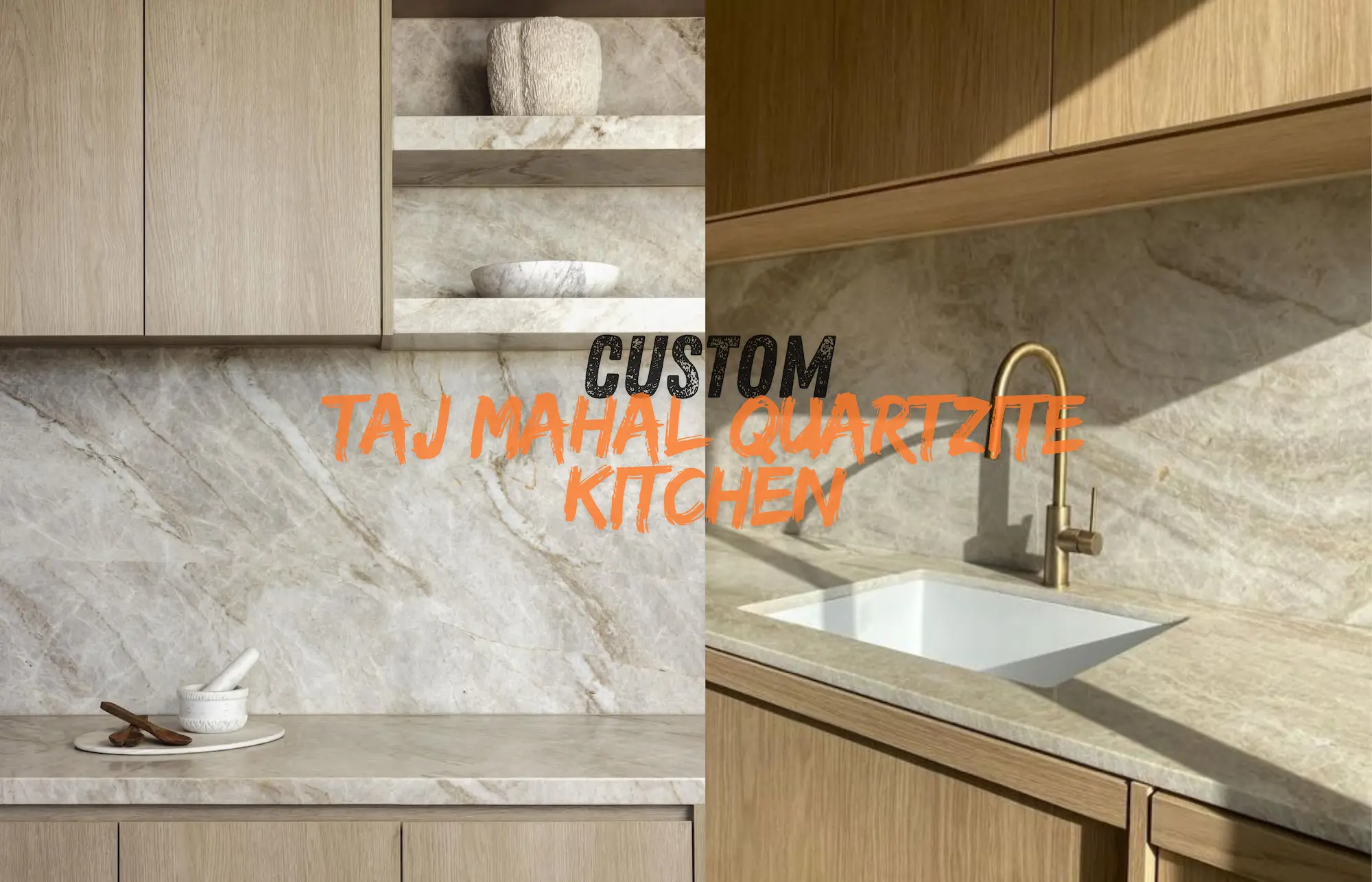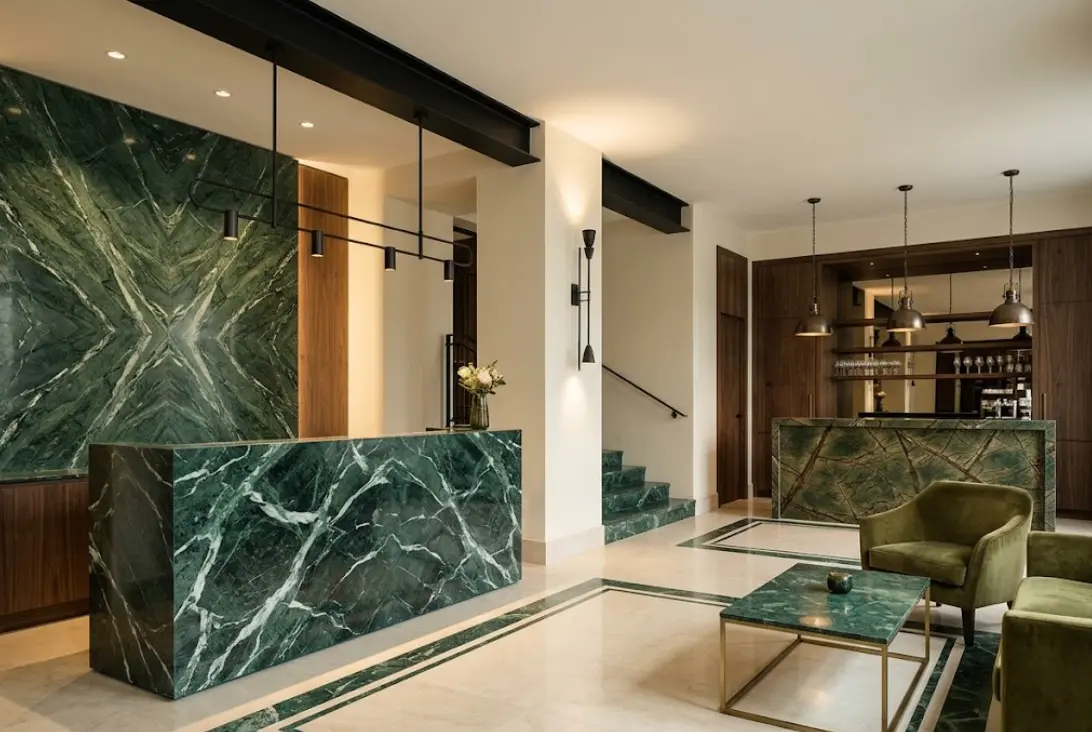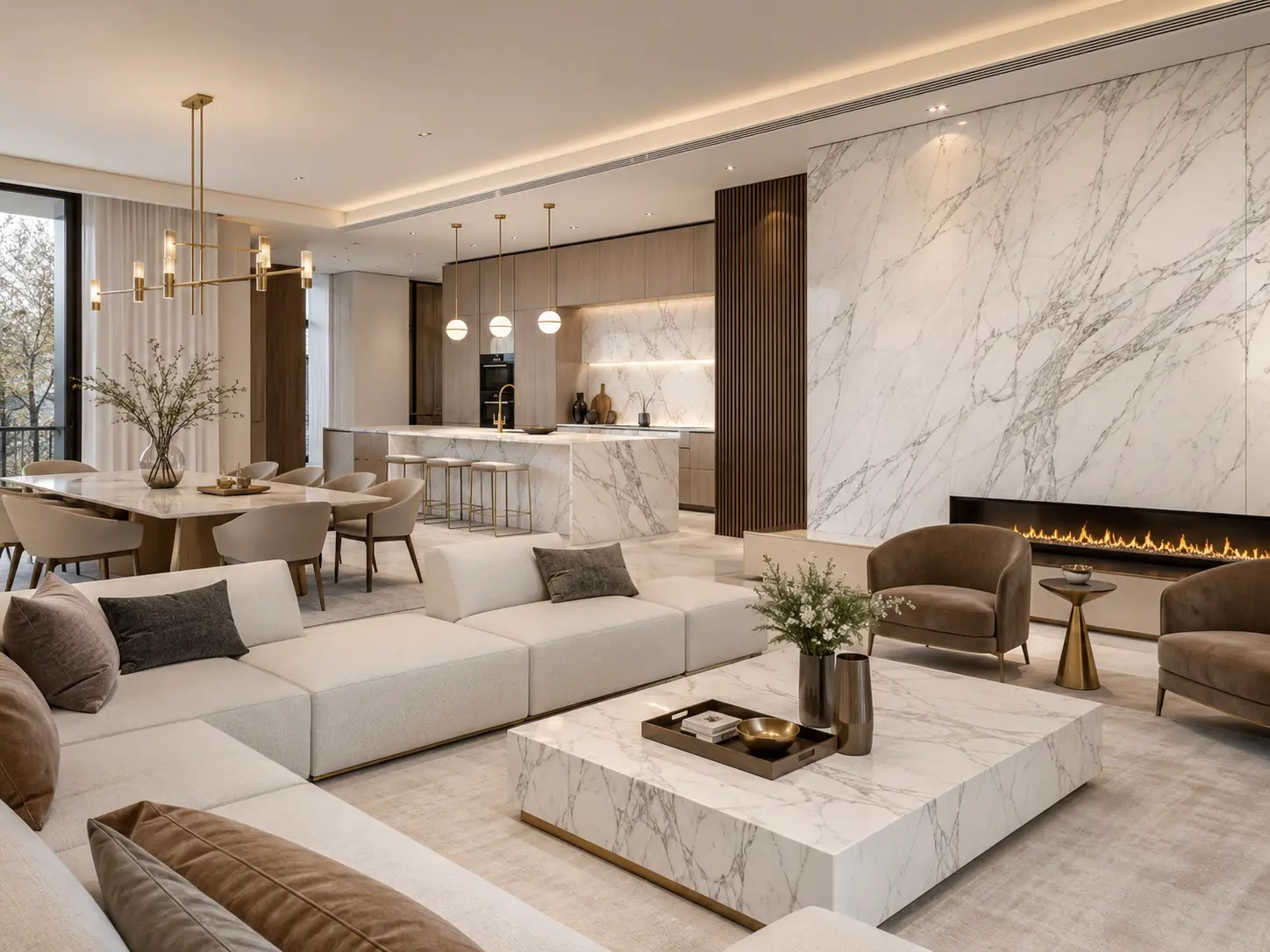
Quick Summary: Granite and Marble Compared for Real Projects
Granite and Marble Are Both Natural Stones, But They Solve Different Design Needs
Granite and Marble are two of the most recognized natural stones in architecture, interior design, countertop fabrication, hospitality projects, and luxury residential construction. Both materials can create beautiful surfaces, long-lasting value, and a strong sense of natural character. However, they are not selected for exactly the same reasons. Granite is usually chosen when the project needs hardness, stability, low water absorption, wear resistance, outdoor suitability, and long-term practicality. Marble is often selected when the design goal is soft veining, refined luxury, classical elegance, and a warmer decorative atmosphere.
The most important point for buyers is simple: Granite and Marble are not competitors in every situation. They are different materials for different project priorities. A busy kitchen, hotel entrance, shopping mall floor, subway station, airport, or exterior stair project usually needs different performance from a villa bathroom, fireplace surround, decorative wall, boutique hotel suite, or luxury reception feature. The right choice depends on use, traffic, finish, maintenance plan, climate, safety, and visual style.
For buyers comparing natural stone options, reviewing professional 御影石スラブ helps position Granite as a practical and durable stone family for countertops, flooring, stairs, façades, wall cladding, and commercial applications.
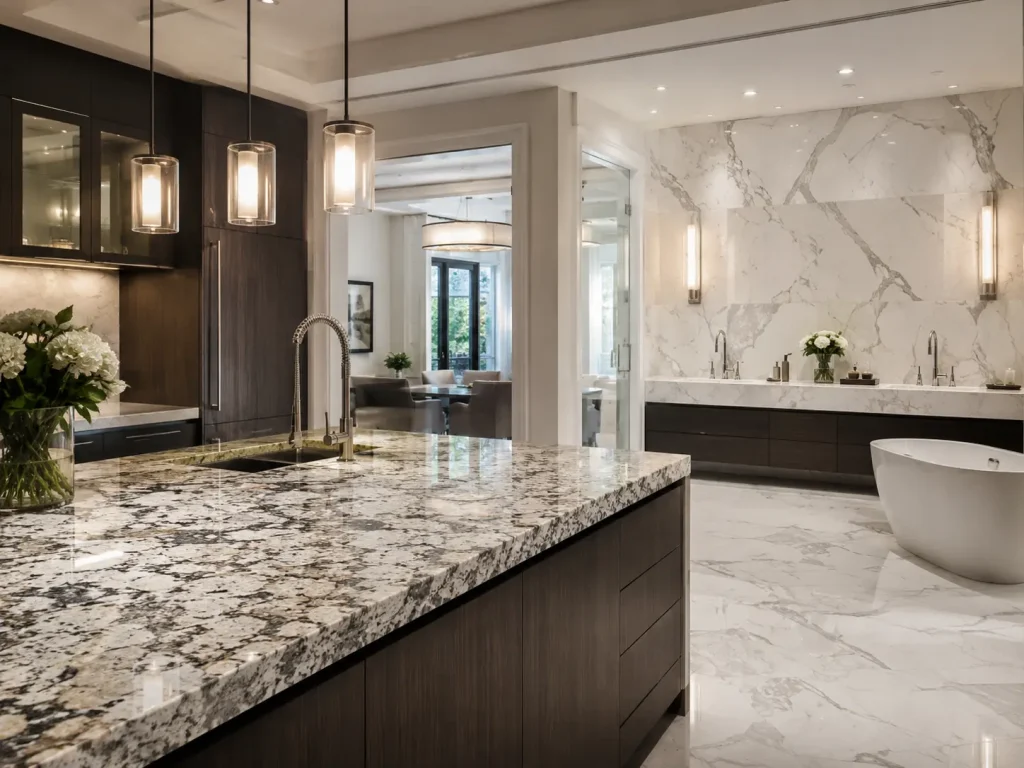
What Are Granite and Marble?
What Is Granite?
Granite is a natural igneous rock formed when molten magma cools slowly underground. It is mainly composed of quartz, feldspar, mica, and other minerals. This formation gives Granite its compact granular structure, strong hardness, low porosity, high compressive strength, and good long-term stability. It can appear fine-grained, medium-grained, coarse-grained, or plaque-like, depending on mineral composition and quarry source.
Typical Granite has a Mohs hardness around 6 to 7, density around 2.63 to 2.75 g/cm³, water absorption commonly around 0.15% to 0.46%, and compressive strength that can range from about 100 to 300 MPa, with some fine-grained varieties reaching even higher values. These characteristics make Granite suitable for kitchen countertops, commercial flooring, stairs, exterior paving, wall cladding, monuments, and high-use architectural surfaces.
What Is Marble?
Marble is a natural metamorphic stone formed when limestone or dolomitic limestone is transformed by heat and pressure. Its main mineral is usually calcite or dolomite. This structure gives Marble its softer surface, natural translucency, flowing veins, cloud-like movement, and classic luxury appearance. Marble is widely used in bathrooms, wall panels, fireplaces, floors, columns, staircases, hotel interiors, villas, sculptures, and decorative spaces.
Marble usually has a Mohs hardness around 3 to 5, depending on variety. Its surface can be easier to mark than Granite, but this same softness also contributes to its refined veining, graceful movement, and timeless design value. Buyers comparing elegant surfaces can explore marble stone slabs to understand how different colors, origins, and vein patterns fit luxury interiors.
Why Buyers Often Compare Granite and Marble
Buyers compare Granite and Marble because both are natural stones, both are available as slabs and tiles, and both can be used in luxury projects. But their strengths are different. Granite is commonly selected for performance-heavy areas where hardness, wear resistance, and stability matter. Marble is selected when the project needs visual softness, classical elegance, and a decorative premium feeling.
For B2B buyers, the comparison should not stop at appearance. The decision should include hardness, water absorption, acid sensitivity, abrasion resistance, deformation resistance, weathering behavior, finish type, traffic level, maintenance capacity, and supplier quality control.
Geological Difference: How Granite and Marble Are Formed
Granite Formation and Structure
Granite forms when magma cools slowly below the earth’s surface. As the rock crystallizes, quartz, feldspar, mica, and other minerals create a dense interlocking structure. This compact structure gives Granite its strong performance in load-bearing, abrasion, and weather-exposed applications.
Because many granite deposits occur as large rock masses, blocks, and stable quarry formations, Granite is often easier to produce in large-size slabs or regular cut-to-size pieces. Its joint development can be relatively regular in many quarry conditions, which supports block extraction and processing efficiency. For large commercial projects, this can help with supply continuity, large-area flooring, façade panels, and bulk orders.
Marble Formation and Structure
Marble forms when limestone recrystallizes under heat and pressure. During this process, calcite or dolomite crystals become denser and more decorative. Mineral impurities create veins, clouds, waves, and color changes. This gives Marble its famous visual softness and natural artistic movement.
Because Marble is more reactive to acidic substances and more sensitive to certain outdoor conditions, buyers usually select it more carefully for application environments. It performs beautifully in interior walls, bathrooms, vanities, floors, fireplaces, columns, and decorative areas where its elegance can be fully appreciated with a suitable maintenance plan.
Why Formation Matters in Real Projects
The geological difference explains many practical differences. Granite’s igneous structure supports hardness, wear resistance, stability, and outdoor durability. Marble’s metamorphic structure supports veining, softness, and classical design expression. A project does not need to ask which stone is universally better. It needs to ask which stone fits the use environment better.
Material Hardness Difference Between Granite and Marble
Granite Has Higher Surface Hardness
One of the clearest differences between Granite and Marble is hardness. Granite commonly has a Mohs hardness of about 6 to 7. This means it is not easily scratched by common daily contact, such as knives, nails, keys, or light surface friction. This is why Granite is widely used for kitchen countertops, stair treads, commercial flooring, exterior paving, and high-traffic public areas.
Marble usually has a Mohs hardness around 3 to 5. It is easier to mark or scratch under direct contact with hard objects. For this reason, Marble is often selected for controlled interior applications where its beauty is the design priority and maintenance can be managed properly.
How Hardness Affects Application Choice
If the surface will face heavy traffic, frequent cooking, luggage wheels, foot traffic, restaurant service, shopping mall use, or public entry zones, Granite often provides stronger daily resistance. If the surface is used for bathroom walls, vanity tops, fireplace surrounds, feature panels, or luxury interiors where the owner values softer veining and accepts regular care, Marble can be an excellent option.
| Performance Factor | 御影石 | 大理石 | Buyer Meaning |
|---|---|---|---|
| Rock Type | Igneous | Metamorphic | Different formation and mineral structure |
| Main Minerals | Quartz, feldspar, mica | Calcite or dolomite | Affects hardness and chemical reaction |
| モース硬度 | About 6–7 | About 3–5 | Granite is more suitable for heavy-use surfaces |
| Typical Density | About 2.63–2.75 g/cm³ | Often about 2.55–2.75 g/cm³, depending on variety | Both are heavy natural stones requiring proper installation |
| 吸水 | Often about 0.15%–0.46% | Usually more variable by type and finish | Both should be evaluated before kitchens, bathrooms, and exterior use |
| 圧縮強度 | About 100–300 MPa | Often lower and more variable | Granite is preferred for high-load and high-traffic uses |
| Design Strength | Durability and broad color range | Soft veining and classic luxury | Choose by project purpose |
Stability, Weathering, and Outdoor Suitability
Granite Offers Strong Stability for Exterior and High-Traffic Use
Granite has good stability and is not easily weathered under normal outdoor exposure. Its compact structure, low porosity, low water absorption, and high hardness help it resist sunlight, rain, wind, freeze-thaw conditions, and everyday wear when properly selected and installed. This is why Granite is often used for exterior cladding, outdoor paving, steps, monuments, landscaping, commercial entrances, and public areas.
Granite also has good deformation resistance. Its dense mineral structure helps it maintain shape and performance in many demanding environments. For large-area flooring, stairs, or exterior panels, this stability is a major reason many architects and contractors choose Granite.
Marble Is Best Used Where Its Natural Elegance Can Be Protected
Marble is widely used in interior decorative applications because its veining and soft mineral movement create a refined atmosphere. In outdoor environments with long-term sunlight, rain, wind, and pollution exposure, Marble selection requires more caution, proper finish choice, and a suitable maintenance plan. This does not reduce its design value; it simply means Marble performs best when placed where its beauty can be protected and maintained.
For buyers sourcing white Marble, material selection and supplier inspection are especially important. A detailed guide on factory-direct white marble can help buyers understand how slab photos, origin, finish, thickness, and supplier communication affect successful procurement.
Chemical Reaction Difference: Acid and Alkali Sensitivity
Why Marble Needs More Care Around Acids
Marble contains calcite or dolomite, which can react with acidic substances. Lemon juice, vinegar, wine, coffee, fruit juice, acidic cleaners, and some alkaline chemicals may affect the surface finish. This reaction can appear as etching, dull spots, or surface changes. For this reason, Marble is usually selected with a clear care plan when used in kitchens, bathrooms, restaurants, bars, or commercial interiors.
This is why many designers prefer Granite for active kitchen countertops. Granite is generally more chemically stable in daily kitchen use. It can better handle common cooking environments, although harsh cleaners and improper maintenance should still be avoided.
Granite Still Needs Proper Cleaning
Granite is more stable than Marble in many chemical exposure situations, but it should still be cleaned with pH-neutral products. Sealers, resins, and finishes can be affected by strong chemicals. The safest approach for both materials is simple: avoid harsh acid or alkaline cleaners, wipe spills promptly, use appropriate sealers when needed, and follow professional care instructions.
For active kitchens, buyers can study how to seal and clean granite countertops so the selected stone keeps its appearance and performance over time.
Differences in Surface Features, Natural Variation, and Defect Control
Natural Stone Variation Should Be Managed, Not Feared
Both Granite and Marble are natural materials, which means variation is part of their value. Granite may show grains, speckles, crystals, color patches, veins, or exotic movement. Marble may show veins, clouds, lines, mineral spots, fissures, and color variation. These features are not automatically problems. They become problems only when the buyer does not inspect them before cutting, shipping, or installation.
Marble can have visible veins, natural fissures, resin-filled areas, and color movement that require careful slab selection. Granite can also have natural color changes, mineral clusters, or directional pattern variation. For both materials, actual slab photos, close-up images, dry lay approval, and lot control are essential.
Where Each Stone Shines Visually
Granite often works well when the project needs a strong natural texture, high-use performance, or dramatic color depth. Marble works beautifully when the design calls for soft veining, calm luxury, and timeless elegance. A white Marble bathroom wall and a black Granite hotel entrance are both correct choices when used in the right context.
For buyers comparing white Marble styles, the guide on Calacatta vs Carrara white marble is useful for understanding how vein style, background color, and design mood influence interior selection.
|
|
|


Wear Resistance Difference in Flooring and Public Areas
Granite for Heavy Foot Traffic
Granite has strong abrasion resistance and is suitable for high-traffic floors. It is commonly used in airports, large shopping malls, subway stations, hotel entrances, commercial lobbies, public plazas, and exterior steps. Its hardness and compact structure help it maintain surface quality under repeated use.
For flooring, finish selection is very important. Polished Granite can be elegant, but honed, flamed, brushed, or textured finishes may be more practical in wet or public areas. Slip resistance should always be considered for hotels, restaurants, bathrooms, outdoor areas, and commercial entrances.
Marble for Controlled Interior Floors and Decorative Spaces
Marble flooring is widely used in luxury interiors, villas, hotel corridors, bathrooms, and decorative lobby areas where the project values refined veining and soft elegance. In high-use public areas, Marble can still be specified when cleaning, sealing, finish selection, and maintenance are properly planned.
For flooring safety and surface planning, a professional marble floor tiles anti-slip guide can help designers evaluate finish, moisture exposure, foot traffic, and anti-slip treatment before installation.
| プロジェクトエリア | Granite Fit | Marble Fit | Buyer Check |
|---|---|---|---|
| キッチンカウンター | Excellent for active use | Suitable for luxury kitchens with care planning | Acid exposure and sealing |
| 浴室の壁 | Suitable | Excellent for soft luxury design | Waterproofing and finish |
| Hotel entrance floor | Very suitable | Possible with maintenance planning | Wear and slip resistance |
| Exterior stairs | Very suitable with textured finish | Use selectively in protected conditions | Weathering and safety |
| Feature wall | Suitable for strong texture | Excellent for elegant veining | Slab layout and lighting |
| Commercial flooring | Strong practical choice | Best in controlled interiors | Abrasion and cleaning plan |
Deformation Resistance, Strength, and Large-Area Use
Why Granite Is Often Used for Large Areas
Granite has strong resistance to deformation and high strength. Its compressive strength can commonly range from 100 to 300 MPa, while fine-grained Granite may reach even higher values. This makes it suitable for large-area use such as commercial flooring, exterior paving, stairs, wall cladding, and high-traffic public spaces.
Because Granite color changes are often relatively controlled within the same block lot, it can be suitable for large-area installations when lot selection is managed properly. Large projects should still request tile layout photos, slab photos, batch labels, and dry lay approval before shipment.
How Marble Can Be Used in Large Interiors
Marble can also be used in large interiors, especially for hotels, villas, lobbies, bathrooms, corridors, and luxury decorative floors. The key is to use it where the traffic, cleaning method, and maintenance plan fit the material. For large Marble projects, buyers should pay close attention to vein matching, thickness, reinforcement, surface finish, and installation method.
Granite vs Marble for Kitchen Countertops
Why Granite Is Often Preferred for Active Kitchens
Kitchen countertops face knives, cookware, oils, sauces, coffee, citrus, wine, water, heat, and daily cleaning. Granite’s hardness, chemical stability, and low water absorption make it a practical choice for active kitchens. It is also available in many colors, including black, white, grey, green, brown, blue, red, and exotic multicolor patterns.
Granite is especially useful for family kitchens, restaurant counters, rental properties, outdoor kitchens, and commercial preparation areas where durability and easier maintenance are important.
When Marble Works Beautifully in Kitchens
Marble can work in kitchens when the design priority is elegance and the owner accepts a natural patina over time. It is popular for baking stations, show kitchens, luxury islands, backsplashes, and decorative countertop areas. The best results come when the buyer uses cutting boards, trays, pH-neutral cleaners, sealing, and quick spill cleanup.
| Kitchen Requirement | おすすめ方向 | なぜ |
|---|---|---|
| Active cooking | 御影石 | Higher scratch and acid resistance |
| Soft luxury show kitchen | Marble or exotic Granite | Depends on desired design mood |
| 低メンテナンス | 御影石 | More practical daily care |
| Classical veining | 大理石 | More refined natural movement |
| Commercial food area | 御影石 | Stronger performance under frequent use |
| Baking zone | Marble with care planning | Cool surface and elegant look |
Granite vs Marble for Bathrooms, Walls, and Luxury Interiors
Marble for Soft Luxury Bathrooms
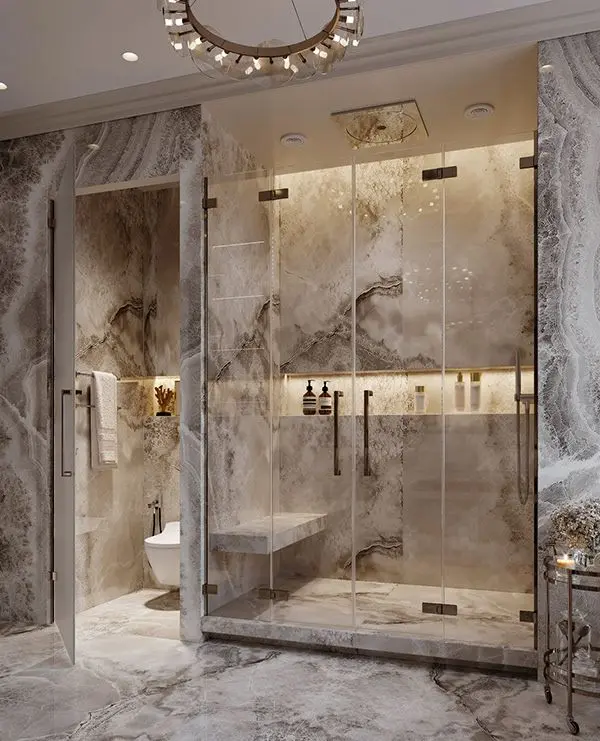
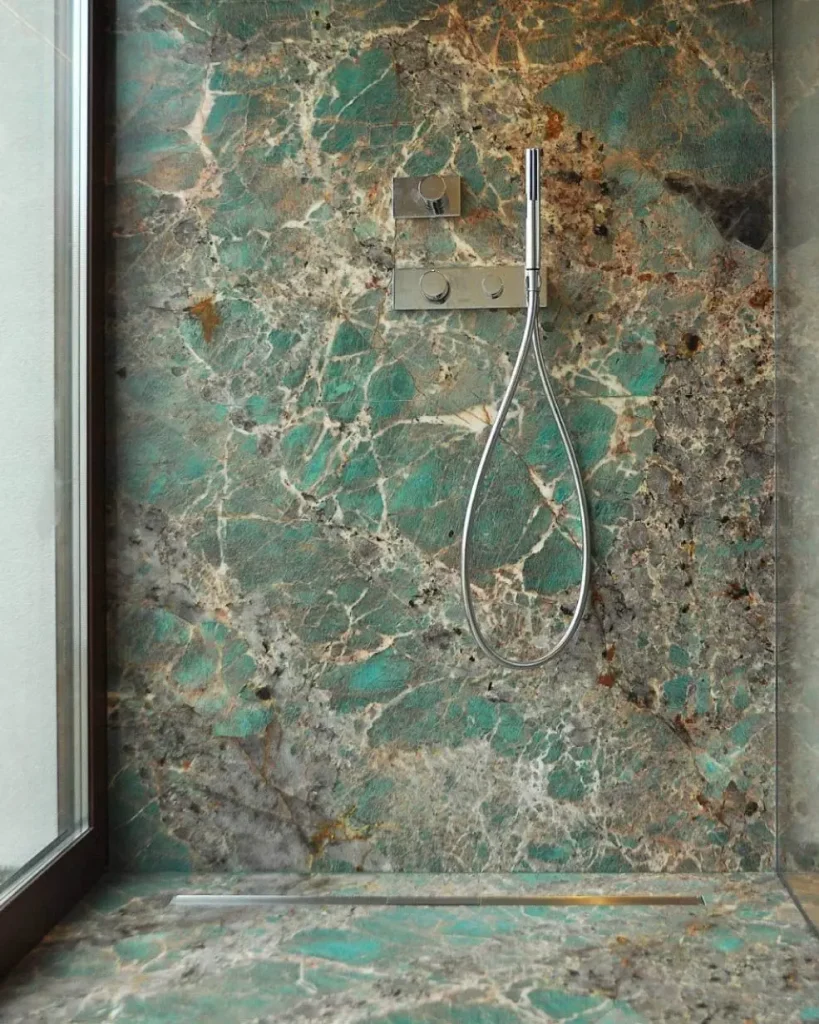
Marble is widely used in bathrooms because it creates a calm and luxurious atmosphere. White Marble, beige Marble, grey Marble, green Marble, black Marble, and brown Marble can all create distinctive moods. Marble works well for vanity tops, shower walls, bathtub surrounds, wall panels, floors, and spa interiors.
The best Marble bathrooms use suitable sealing, waterproofing, proper slope, good ventilation, and pH-neutral cleaning. When these details are controlled, Marble can deliver an elegant space that feels timeless rather than overly decorative.
Granite for Practical Bathrooms and Commercial Wet Areas
Granite is useful for bathroom vanity tops, thresholds, flooring, shower seats, and commercial wet areas where durability and maintenance efficiency matter. It is also a strong choice for hotel bathrooms, apartment bathrooms, and public washrooms when selected with the right finish and slip-resistance planning.
For high-end interiors, both Granite and Marble can work well together. Designers may use Marble for walls and Granite for high-use counters or thresholds, creating a balanced combination of elegance and durability.
For interior design planning, a guide on granite slabs for luxury interiors can help buyers understand how to use strong natural stone surfaces without making the space feel too visually heavy.
|
|
|
Maintenance Difference Between Granite and Marble
Granite Maintenance
Granite is relatively easy to maintain when cleaned correctly. Use pH-neutral cleaner, soft cloths, clean water, and stone-safe detergents. Avoid harsh acids, strong alkaline chemicals, abrasive pads, and cleaners that may damage sealers or surface finishes. Sealing may be recommended depending on the stone variety, finish, and use environment.
大理石のメンテナンス
Marble requires a more careful cleaning approach because of its calcite or dolomite content. Use pH-neutral cleaners, wipe acidic spills quickly, avoid vinegar or lemon-based cleaners, and follow sealing recommendations. In active spaces, Marble may develop a natural patina over time. Many designers and owners accept this as part of its character.
Maintenance Capacity Should Influence Material Choice
For homes with careful use and a preference for classic elegance, Marble can be a beautiful choice. For high-traffic commercial projects, rental properties, restaurants, public entries, and active kitchens, Granite often offers more practical daily performance. The right choice depends on how the space will actually be used.
Material Parameters Buyers Should Request
Test Data for Granite and Marble
B2B buyers should request technical data when selecting Granite or Marble for commercial, exterior, public, or high-value applications. Important test items include density, water absorption, compressive strength, flexural strength, abrasion resistance, slip resistance, and freeze-thaw performance when required.
| テスト項目 | なぜ重要なのか | Granite Priority | Marble Priority |
|---|---|---|---|
| 吸水 | Stain and moisture risk | Important | Very important |
| 圧縮強度 | Load-bearing durability | Important | Important |
| 曲げ強度 | Breakage risk | Important | Important |
| 耐摩耗性 | Flooring wear | Important | Very important for flooring |
| 滑り抵抗 | Floor and stair safety | Important | Important |
| Freeze-thaw test | Exterior durability | Important for outdoor use | Use selectively based on project conditions |
| Finish quality | Appearance and maintenance | Important | Very important |
Why Real Slab Inspection Matters
Stone names and small samples are not enough. Buyers should request full slab photos, close-up images, videos, batch information, thickness measurements, finish confirmation, dry lay photos, and packing records. This is especially important for projects using bookmatched Marble, exotic Granite, large flooring areas, or cut-to-size stone packages.
Granite and Marble Buying Checklist for B2B Projects
What Importers and Distributors Should Check
Importers and distributors should confirm the stone name, alternative names, quarry origin, slab photos, block lot, thickness, finish, quantity, price terms, packing method, container loading photos, test reports, lead time, and replacement policy. Natural stone value depends on both material quality and supplier execution.
What Fabricators Should Check
Fabricators should check slab flatness, fissures, resin treatment, mesh backing, polish quality, vein direction, cutout planning, edge behavior, sealing requirements, and bookmatching potential. These details affect whether the slab becomes a successful countertop, wall panel, vanity, or stair component.
What Architects and Contractors Should Check
Architects and contractors should review application area, stone type, finish, slip resistance, thickness, anchor method, shop drawings, dry lay photos, batch consistency, installation method, and maintenance plan. Working with a professional Granite and Marble supplier can help connect design intention with material selection, inspection, fabrication, packing, and export coordination.
Cost Difference Between Granite and Marble
What Affects Granite Price?
Granite price depends on quarry origin, rarity, color, slab size, thickness, finish, pattern consistency, quantity, fabrication complexity, shipping route, and packing method. Common Granite colors may be more cost-efficient, while exotic colors, large slabs, strong movement, and premium finishes may cost more.
What Affects Marble Price?
Marble price depends on origin, whiteness, vein quality, rarity, slab size, thickness, bookmatching ability, finish, fabrication complexity, and waste rate. Highly desired white Marble varieties or clean bookmatch slabs can be significantly more expensive than common commercial Marble.
Why Cheapest Is Not Always Best
Low price may hide mixed lots, weak packing, poor polish, thickness variation, excessive resin, unclear photos, or weak communication. For both Granite and Marble, real value depends on slab quality, inspection support, packing safety, project documentation, and after-sales communication.
Common Mistakes When Choosing Granite and Marble
Mistake 1: Choosing Only by Appearance
A beautiful stone may not fit the application. Always match the material to traffic level, moisture exposure, cleaning method, climate, and maintenance expectations.
Mistake 2: Using Marble in High-Acid Kitchen Areas Without Care Planning
Marble can be used in kitchens, but buyers should plan for sealing, pH-neutral cleaning, quick spill cleanup, trays, cutting boards, and acceptance of natural patina.
Mistake 3: Using Polished Stone in Wet Public Floors Without Slip Review
Both Granite and Marble can be polished, but wet public floors require slip-resistance evaluation. Finish selection must consider safety as well as appearance.
Mistake 4: Mixing Different Slab Lots
Different lots can show color and pattern changes. Large projects should reserve matching slabs or tiles from the same block or batch.
Mistake 5: Not Requesting Full Slab Photos
Small samples cannot show full movement, fissures, vein flow, color variation, or layout potential. Full slab photos and dry lay approval reduce risk.
Mistake 6: Choosing Supplier Only by Low Price
Inspection, packing, documentation, cutting accuracy, and communication matter. A slightly cheaper stone can become expensive if it causes breakage, delay, mismatch, or replacement problems.
Industry Trends: How Designers Use Granite and Marble Today
Natural Stone Is Returning to Luxury Interiors
Designers are returning to authentic natural materials because clients want spaces with texture, depth, and permanence. Granite and Marble both support this trend, but in different ways. Granite delivers practical luxury, while Marble delivers soft elegance.
Marble for Soft Luxury, Granite for Practical Luxury
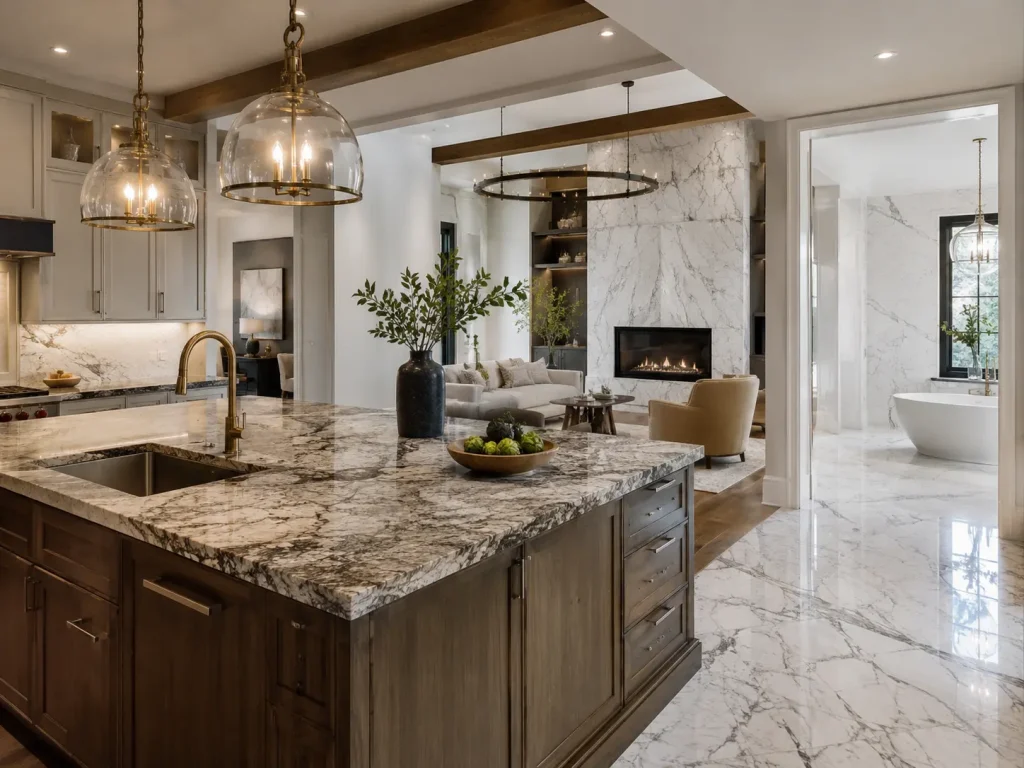
Marble is often used for bathrooms, feature walls, fireplaces, decorative floors, and refined interiors. Granite is often used for countertops, stairs, commercial flooring, exterior cladding, and high-use surfaces. Many projects combine both materials to balance performance and design emotion.
Long-Life Materials Support Sustainable Design
Durability is part of sustainable design. A stone that lasts for decades can reduce replacement frequency. Responsible sourcing, efficient fabrication, proper packing, and correct installation help both Granite and Marble deliver better lifecycle value.
Buyer Decision Logic: Should You Choose Granite or Marble?
If You Need a Kitchen Countertop
Choose Granite when lower maintenance, scratch resistance, and chemical stability are the priorities. Choose Marble when soft veining, classic elegance, and natural patina are part of the design goal.
If You Need a Luxury Bathroom
Choose Marble for soft, timeless, spa-like walls and vanities. Choose Granite for practical vanity tops, thresholds, wet-area floors, or commercial bathrooms requiring easier maintenance.
If You Need Commercial Flooring
Choose Granite for heavy traffic areas such as hotel entrances, malls, airports, and subway stations. Choose Marble for controlled interior areas where elegance is the priority and maintenance is planned.
If You Need a Feature Wall
Both materials can work beautifully. Choose Marble for flowing veins and refined movement. Choose Granite for stronger texture, exotic color, or more dramatic mineral depth.
If You Are a Distributor
Stock both Granite and Marble because they serve different markets. Granite supports practical projects and outdoor use. Marble supports high-end interior decoration and classic luxury demand.
Final Recommendation: Granite and Marble Are Not Competitors—They Serve Different Project Goals
Granite and Marble are both valuable natural stones, but they should be selected by project purpose rather than simple preference. Granite is generally better suited for hardness, wear resistance, stability, deformation resistance, outdoor decoration, active kitchens, heavy-traffic floors, stairs, and commercial projects. Marble is better suited for soft veining, classic interiors, bathrooms, feature walls, fireplaces, decorative floors, and spaces where elegance is the primary goal.
The right decision depends on application, finish, maintenance capacity, test data, slab quality, lot consistency, installation environment, and supplier reliability. A successful project does not force one stone to do everything. It uses Granite where performance is critical and Marble where visual elegance is the priority.
Before placing an order, prepare your project type, size, finish, thickness, quantity, destination, maintenance expectations, and design style. For material selection, slab matching, finish recommendations, or project planning, request a Granite and Marble project consultation to reduce sourcing risk and improve order accuracy.
FAQ About Granite and Marble
1. グラニットと大理石の主な違いは何ですか?
花崗岩と大理石の主な違いは、その形成過程、鉱物構造、硬度、および用途にあります。花崗岩は主に石英、長石、雲母からなる火成岩で、高い硬度、安定性、耐摩耗性を備えています。一方、大理石は主に方解石またはドロマイトからなる変成岩であり、柔らかな模様とクラシカルな優雅さ、より洗練された装飾的な外観を特徴としています。花崗岩は一般的に、アクティブなキッチンや人通りの多い床、階段、屋外用途に選ばれますが、大理石は浴室、壁、暖炉、高級インテリアに多く用いられます。
2. キッチンのカウンタートップには、花崗岩と大理石のどちらが良いですか?
アクティブなキッチンカウンタートップには、通常、花崗岩がより実用的な選択肢です。というのも、花崗岩は硬度が高く、傷つきにくく、化学的安定性に優れ、日常の調理環境においてメンテナンスの手間も少ないからです。大理石も、オーナーが柔らかな模様を重視し、定期的なお手入れやシーリング、こぼれ物の迅速な清掃、経年による自然な風合いを許容できる場合、キッチンに使用できます。どちらがより適しているかは、プロジェクトにおいて日常の耐久性を重視するか、それともクラシックで高級感あふれる外観を重視するかによります。
3. 大理石は花崗岩より手入れが大変ですか?
はい、マーブルは一般的に花崗岩よりも慎重なメンテナンスを必要とします。これは、マーブルに含まれる方解石やドロマイトがレモン汁、酢、ワイン、コーヒー、および酸性のクリーナーなどの酸性物質と反応するためです。花崗岩は通常、日常的に使用される場所でも比較的安定していますが、それでも適切な清掃と必要に応じたシーリングを行うことでさらに良好な状態を保つことができます。マーブルの場合、pH中性のクリーナーを使用し、こぼれ物をすばやく拭き取ること、シーリングを施すこと、そして丁寧に使用することで表面を保護し、その洗練された外観を維持することができます。
4. グラナイトと大理石はどちらも床材に使えますか?
はい、花崗岩と大理石の両方を床材として使用できますが、それぞれ異なる交通量やメンテナンス条件に適しています。花崗岩はその硬さと耐摩耗性から、ホテルのエントランス、空港、ショッピングモール、地下鉄駅、外部階段、商業通路など、交通量の多いエリアで一般的に好まれます。一方、大理石は、優雅さを主なデザイン目標とし、適切なメンテナンスが可能な高級な室内床、バスルーム、別荘、装飾空間などに多く用いられます。
5. どうやって花崗岩と大理石のサプライヤーを選べばよいですか?
花崗岩および大理石のサプライヤーを選ぶ際は、全面スラブの写真、クローズアップ検査画像、仕上げオプション、厚さの詳細、試験データ、梱包写真、乾式敷設サポート、施工図面、明確な輸出書類を提供できるものを選んでください。大規模プロジェクトの場合、サプライヤーはロットの均一性、色合わせ、サイズに合わせた切断精度、梱包の安全性、納期管理を支援する必要があります。信頼できるサプライヤーは、単に低価格を提示するだけでなく、材料選定からプロジェクトのリスク軽減まで幅広くサポートすべきです。
参考文献
- “Dimension Stone Design Manual” — Technical Committee — Natural Stone Institute — Stone Design Manual
- “ASTM C615 Standard Specification for Granite Dimension Stone” — ASTM Committee C18 — ASTM International — Natural Stone Standard
- “ASTM C503 Standard Specification for Marble Dimension Stone” — ASTM Committee C18 — ASTM International — Natural Stone Standard
- “ASTM C97 Standard Test Methods for Absorption and Bulk Specific Gravity of Dimension Stone” — ASTM Committee C18 — ASTM International — Stone Testing Standard
- “ASTM C170 Standard Test Method for Compressive Strength of Dimension Stone” — ASTM Committee C18 — ASTM International — Stone Testing Standard
- “ASTM C880 Standard Test Method for Flexural Strength of Dimension Stone” — ASTM Committee C18 — ASTM International — Stone Testing Standard
- “Natural Stone Countertop Installation Guide” — Technical Team — Natural Stone Institute — Fabrication and Installation Resource
- “Natural Stone Flooring and Slip Resistance Guidance” — Technical Committee — Natural Stone Institute — Commercial Stone Resource
Granite and Marble Selection Insights for Project Buyers
Decision Logic:
- Active kitchen → choose Granite for hardness and easier daily care.
- Luxury bathroom → choose Marble for soft veining and spa-like atmosphere.
- Hotel entrance floor → choose Granite with suitable anti-slip finish.
- Feature wall → choose Marble for refined flow or Granite for dramatic texture.
- Exterior stairs → choose Granite with flamed, grooved, or textured finish.
よくある間違い: Avoid choosing only by appearance, ignoring acid sensitivity, mixing different lots, selecting polished stone for wet public floors without slip review, or buying only by low price without checking slab photos, packing, and documentation.
Final recommendation: Granite and Marble should be selected by project goal, not by simple comparison. The best stone is the one that fits the surface use, traffic level, design mood, maintenance plan, and installation environment.