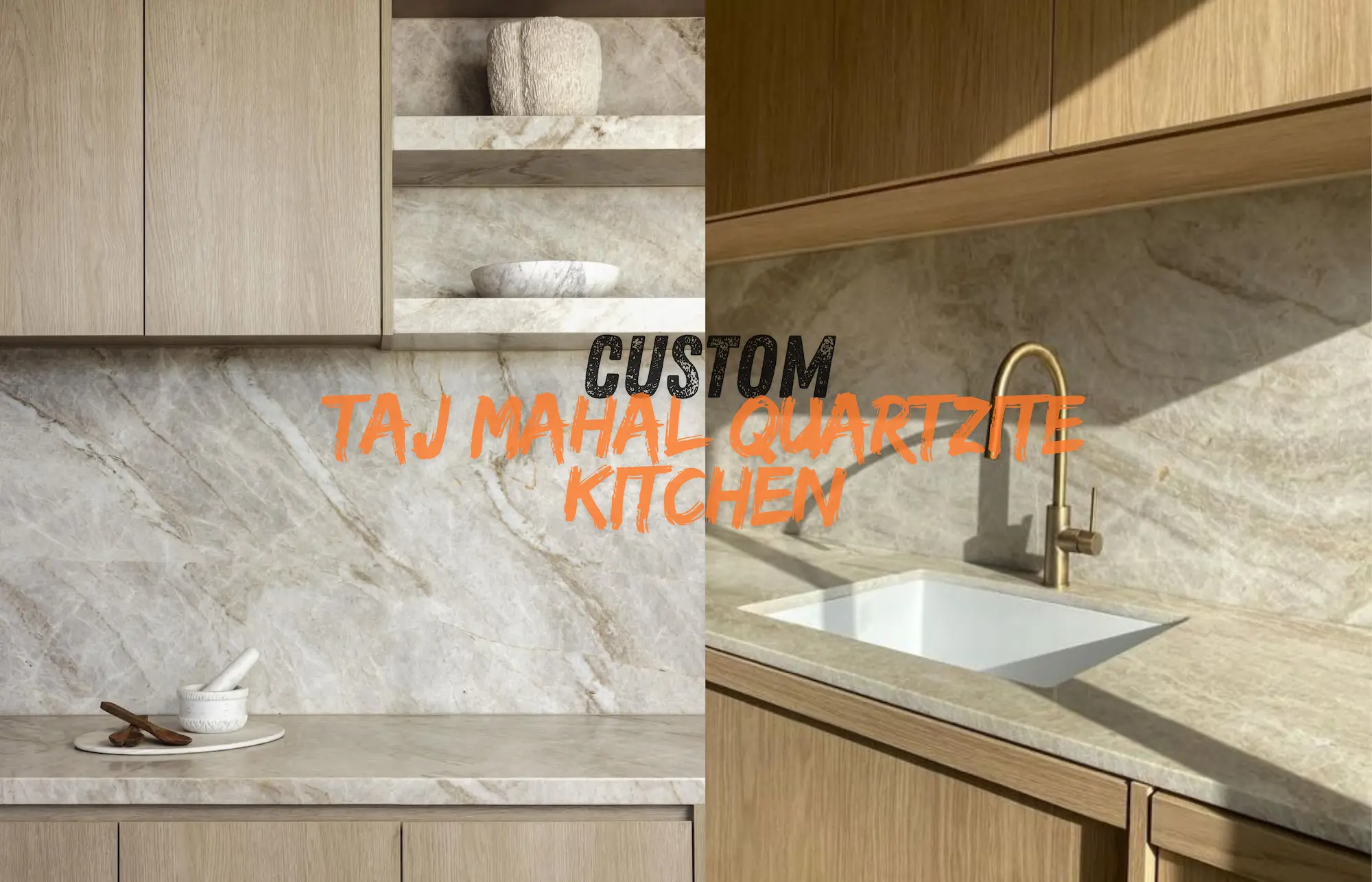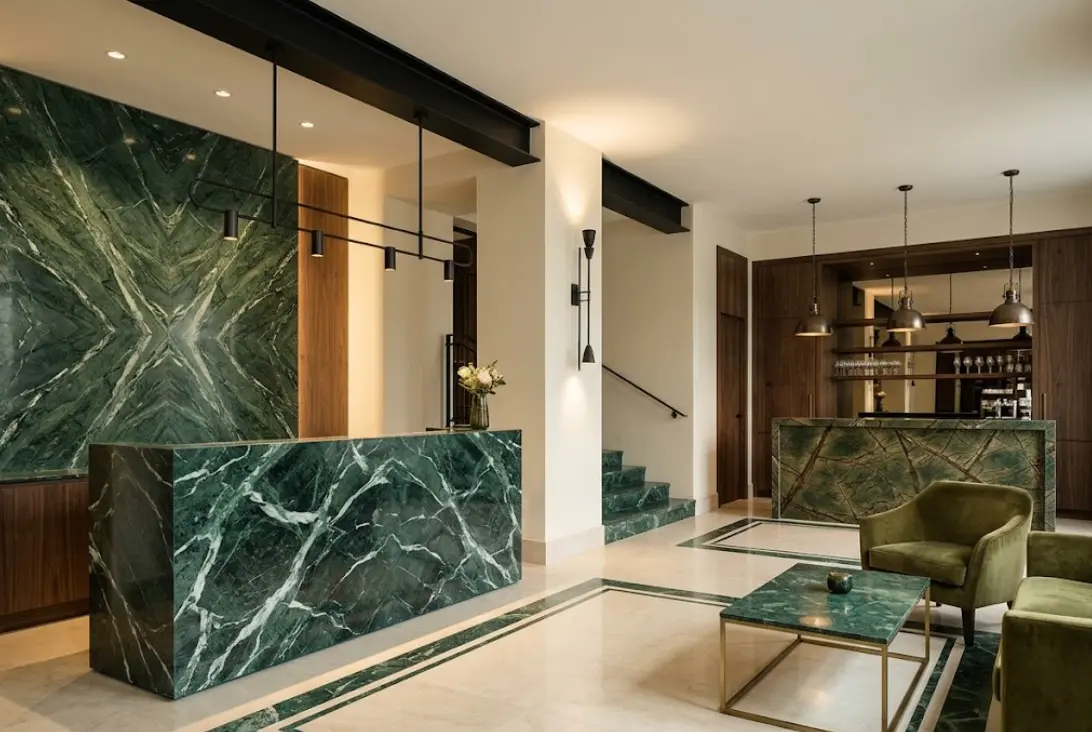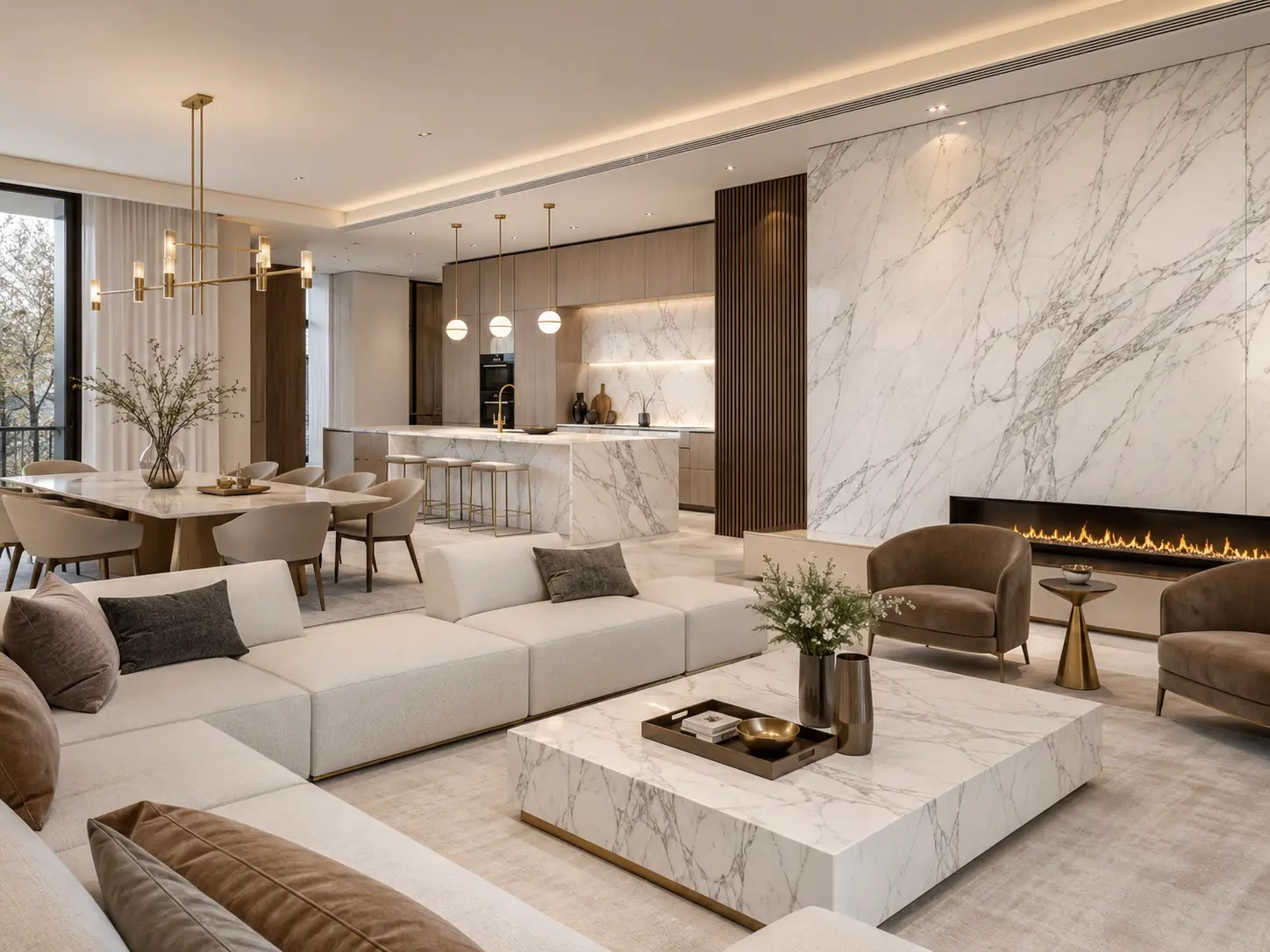
The Turning Point Between Sterile Minimalism and Livable Minimalism
“Minimal doesn’t mean empty,” the designer said, standing in a half-finished living room.
“It means every surface has to work harder.”
The homeowner nodded, looking at a clean, sunlit shell of a space.
“I want it calm. Not cold. I don’t want a space that looks like a showroom—
I want somewhere I can actually live.”
That’s where white marble becomes powerful. Used badly, it can feel sterile, high-maintenance, and unforgiving. Used well, it becomes the backbone of minimalist design: calming light, quiet texture, and subtle movement that keeps the space from feeling flat.
This guest post walks through how to use white marble in minimalist homes in a way that is emotionally warm, technically sound, and future-proof—supported by real stone types and field experience from global supplier FOR U STONE.

Why White Marble Works So Well in Minimalist Design
Minimalist interiors rely on three things: light, proportion, and restraint. White marble supports all three.
Visually, white marble reflects ambient light more softly than high-gloss synthetic materials. Its natural crystal structure scatters light, creating a diffuse glow rather than harsh glare. Studies on interior comfort repeatedly show that occupants rate spaces with natural stone and wood as more “soothing” and “legible” than those using only laminates or plastics—especially in open-plan layouts where one material dominates the field of view.
From a functional point of view, white marble acts as a neutral canvas. It lets the architecture, furniture, and art do the storytelling, while still giving enough texture that the space doesn’t feel empty. This balance is critical in minimalist design: too much pattern, and the room feels busy; too little, and it feels lifeless.
The first step is choosing a base marble that supports this visual calm.
Step 1: Start with Calm, Low-Contrast White Marble
For minimalist homes, your “background stone” should feel soft and controlled. That’s where stones like Bianco Namibia marble come in. This marble offers a clean white field with delicate, misty movement—enough character to avoid flatness, but not so much that it dominates the room. It’s ideal for:
-
large-format flooring in living rooms and corridors
-
quiet kitchen islands in open-plan layouts
-
wall cladding behind simple, linear furniture
Because the veining is subtle and non-directional, it pairs well with straight-lined cabinetry, metal frames, and slim lighting profiles—hallmarks of minimalist design.
Where you need a touch more depth but still want to stay in the “quiet” category, Bianco Rhino Namibia white marble slabs are a strong option. The stone’s slightly richer patterning and soft grey nuances introduce just enough variation for large surfaces without breaking the minimalist mood.
The rule at this stage is simple: your base marble should whisper, not shout.
Step 2: Use High-Contrast Stone as a Minimalist Accent
Minimalism does not mean avoiding contrast; it means using it deliberately.
A powerful strategy is to keep 80–90% of surfaces in calm whites, then introduce controlled drama through accents. For example, a space dominated by soft white flooring and walls can be anchored by a fireplace surround, console wall, or niche in black and white marble slabs. The sharp interplay between black and white veins looks striking against a pared-back interior and instantly creates a focal point.
Another expressive yet minimalist-friendly option is Panda marble slab. With its bold, ink-like black strokes on a white background, Panda marble reads like abstract brushwork. When used sparingly—on a single feature wall, a bench front, or a dining tabletop—it delivers high visual impact with very little visual clutter elsewhere.
The key for minimalist design:
-
keep bold marbles in isolated, clearly framed zones
-
avoid using them on every surface
-
allow negative space (plain white walls, simple joinery) around them
That way, contrast becomes intentional, not chaotic.

Step 3: Introduce Warmth with Veined and Lilac-Toned Whites
A frequent criticism of minimalist homes is that they can feel “too cool” or “too clinical.” White marble can solve that if you choose varieties with subtle warmth and layered veining.
Marbles like New York White / Milas Lilac marble tiles add a soft, romantic dimension to minimal spaces. The white base keeps the room bright, while lilac or purple-grey veins introduce a hint of color that reads as sophisticated rather than decorative. This works particularly well in:
-
minimalist bathrooms where you want a spa-like atmosphere
-
bedroom feature walls behind low, simple headboards
-
small reading corners or window seats that need visual intimacy
Instead of adding more furniture or accessories to warm up the space, you let the marble itself carry the emotional tone. In post-occupancy feedback, many homeowners describe these lilac-veined whites as “quietly luxurious” and “unexpectedly cozy” compared to ultra-cold, blue-white stones.
Minimalism is not just about subtraction; it’s about carefully chosen warmth.
Step 4: Choose Tone Intentionally – Not All “White” Is Equal
One of the most overlooked decisions in minimalist design is color temperature: is your white marble warm, cool, or neutral?
This question becomes critical when you’re pairing white surfaces with oak, walnut, black metal, or grey textiles. If you’re unsure how your stone choice will affect the overall mood, it’s worth studying resources like white vs grey marble countertops, which break down how different tones behave with real lighting and real kitchens.
In simplified terms:
-
Warm white marbles pair beautifully with light woods, beige fabrics, and brass.
-
Cooler whites suit steel, black, and blue-grey palettes.
-
Slightly grey-tinted whites can prevent overly bright rooms from feeling “clinical.”
Data from user surveys in Europe and North America suggest that occupants often rate slightly warm whites as “more comfortable” for living areas, while cooler whites are favored in high-contrast, architecturally driven designs. The minimalist trick is to select one dominant tone and repeat it consistently across floors, counters, and key surfaces, rather than mixing too many unrelated whites.
White marble remains one of the most refined natural stones in modern design because of its mineral structure, light behaviour, and distinctive veining patterns. At its core, white marble is composed mainly of crystalline calcite, giving it its trademark brightness and ability to be polished to a mirror-like surface. This crystalline structure also means that no two slabs are ever identical—each carries subtle or dramatic movement depending on the mineral impurities formed during metamorphism.Designers often choose white marble not just for its colour, but for how it transforms space. Stones like Calacatta provide bold, expressive veining that becomes the room’s visual anchor, while Carrara and Thassos offer softer grey lines and calm, uniform grain ideal for minimalist or Scandinavian homes. The stone’s natural heat resistance and moderate porosity also make it suitable for kitchen countertops, vanities, wall cladding, sculptures, and accent furniture pieces when sealed properly.White marble varieties such as Calacatta, Carrara, Statuario, and Thassos have long been used in luxury architecture for their ability to create depth, clarity, and a feeling of expanded space. Whether applied in high-traffic flooring or statement walls, the stone brings a timeless refinement that elevates nearly every design style—from ultra-modern to classic European.
What Experts and Trade Bodies Are Saying
Stone and design professionals are increasingly combining aesthetics with measurable performance.
-
Designers now evaluate white marble not just by pattern, but by reflectance, slip resistance, and porosity.
-
Fabricators pay more attention to slab direction to ensure minimalist spaces feel calm rather than busy.
-
Trade organizations like ESTA highlight the importance of responsible quarrying and consistent processing for long-term durability and reduced waste.
On the supply side, experienced exporters such as FOR U STONE play a central role. With access to multiple quarries and long-term project feedback, they help architects and homeowners match specific marble types—like Bianco Namibia, Bianco Rhino, Panda, and lilac-veined whites—to the performance and mood each space requires.
This blend of geology, craftsmanship, and data-driven design is exactly what modern minimalist projects need.

Case Notes: Minimalist Projects That Got White Marble Right
From field experience and client feedback, a few patterns emerge in successful minimalist homes:
-
Consistent background stone: Projects that use one calm white marble for most floors and main surfaces feel more coherent than those mixing many unrelated whites.
-
Isolated drama: Where bold stones like Panda or black-and-white varieties are used only once—on a fireplace, stair wall, or island front—the interior feels intentional and curated.
-
Scaled pattern: Large-scale movement is reserved for big, uninterrupted walls; small bathrooms or narrow corridors rely on quieter slabs.
-
Lighting aware: Downlights, wall washers, and indirect lighting are planned to enhance the marble’s texture rather than create glare.
Homeowners in these projects report that their spaces feel “minimal but not empty,” with marble surfaces that grow more characterful over time rather than visually exhausting.
If you’re planning a similar project and want specific advice on which white marble family fits your layout and lifestyle, you can always contact the FOR U STONE team for tailored recommendations, slab options, and layout suggestions.
FAQ: White Marble in Minimalist Homes
1. Is white marble too “luxurious” for a minimalist style?
No. Minimalism is not anti-luxury; it’s anti-excess. White marble fits perfectly when used with restraint—few materials, clean lines, and clear focal points.
2. Will white marble make my home feel cold?
It can, if you choose very blue-white tones and pair them only with metal and glass. Selecting slightly warm stones, adding wood elements, and using soft-textured fabrics will keep the mood calm and inviting.
3. Can I mix different white marbles in one project?
Yes—but do it strategically. Use one quiet marble as the base and introduce a second, more expressive marble in a limited accent area. Keep the overall tone (warm or cool) consistent.
4. Is polished or honed marble better for minimalist interiors?
For minimalist homes, honed finishes often work better: they diffuse light, reduce glare, and feel softer to the eye. Polished stone can still be effective, especially for vertical features or when you want a more formal look.
5. How do I keep white marble looking good over time?
Choose the right stone for the right location, seal it properly, follow a gentle cleaning routine, and accept a natural patina. Minimalist design actually helps here—fewer objects on the surface mean fewer scratches and stains.

White Marble as the Quiet Power Behind Minimalism
Used thoughtfully, white marble is not a diva material—it’s a disciplined one.
When you select calm slabs like Bianco Namibia or Bianco Rhino as your base, layer in strategic accents like Panda or black-and-white marbles, choose tones intentionally, and respect the function of each room, white marble becomes the quiet power behind minimalist design. It shapes light, organizes space, and adds tactile richness without clutter.
Minimalism isn’t about having less for the sake of less. It’s about choosing better, with more intention. And in that sense, white marble—selected with care, guided by data, and supported by experienced suppliers—may be one of the most minimalist materials of all.
For homeowners seeking serenity rather than sterility, white marble remains unmatched. Whether you apply it to a kitchen island, bathroom walls, or a quiet living-room feature, the key is not choosing more stone—but choosing smarter. With informed decisions and realistic expectations, white marble becomes a timeless partner in minimalist living, aging naturally and beautifully over decades.