The Conversation That Changes Every Marble Project
Designer:
“White marble is timeless—but only if you select it correctly. Otherwise, stains, mismatched tones, or poor slab planning will follow you for years.”
Homeowner:
“I keep seeing perfect kitchens on. But real life is messy. I need to understand what not to do.”
Project Manager:
“Then we need to look beyond aesthetic adjectives. Let’s examine veining patterns, porosity behavior, light reflectance, and how each stone reacts to the specific room you put it in.”
That conversation captures the reality of 2025: people still love white marble, but they’re tired of guesswork. They want scientific explanations, field data, and clear decision frameworks.
This guest post is your step-by-step guide to avoiding the most common mistakes—and choosing white marble that performs beautifully for decades.

Mistake 1: Choosing White Marble by Photos Instead of Real Slabs
The #1 mistake homeowners make is falling in love with a photo—not a slab.
A 2024 material study by EuroStoneLab found:
68% of homeowners underestimated natural variation in veined white marble, even when reviewing samples.
Digital screens hide:
-
tone temperature (blue-white, warm-white, grey-white)
-
true vein thickness
-
mineral concentration
-
background consistency
This is especially important when comparing tone differences across rooms. To understand warm vs cool whites, you can review neutral comparisons such as white marble vs grey marble, which reveal how subtle undertones influence design outcomes.
White marble isn’t a single material—it is an entire family of stones shaped by geology, pressure, and mineral impurities. Each variety carries its own personality. Carrara leans soft and subdued, ideal for minimalist kitchens. Calacatta brings strong, expressive movement suited for luxury focal walls. Statuario offers striking contrast and architectural presence, while Thassos delivers pure brightness for spaces that demand clean, crisp light.Understanding these distinctions helps you avoid one of the most common mistakes: choosing white marble based on a photo rather than its geological behavior. Once you see how each stone’s veining, tone, and crystal structure influence a room’s mood, the selection process becomes far more intuitive—and far more successful.
Mistake 2: Ignoring Finish Performance in High-Use Areas
A polished white marble island looks stunning—but may not be the best for every household.
A 2023 slip-resistance study showed:
Honed finishes reduce glare by 40% and maintain stable traction under kitchen humidity.
Polished surfaces:
-
reflect more light
-
show etching more easily
-
require controlled use (coasters, mats, pH-neutral cleaning)
Honed surfaces:
-
diffuse light
-
hide micro-scratches
-
ideal for busy kitchens, cafés, hotel bars
For low-maintenance alternatives with similar brightness, some designers blend in materials like white sparkle quartz slabs that pair well with marble.

Mistake 3: Overlooking Vein Direction and Spatial Flow
White marble is a natural artwork—but only if the veining matches your room layout.
Common mistakes:
-
bookmatch patterns running in the wrong direction
-
chaotic veins behind cooktops
-
overly busy slabs in small powder rooms
-
mismatched seams on long countertops
To visualize vein flow, designers sometimes pair marble with materials like white starlight quartz tiles to test light reflection and visual rhythm in the same room.
Mistake 4: Choosing the Wrong White Marble Type for the Wrong Room
Different white marbles behave differently depending on mineral composition.
Examples:
-
Linear white marble (e.g., wood-grain types) is great for vanities and feature walls.
-
Veined marbles (like calacatta-style or statuario patterns) elevate kitchen islands.
-
Dense white marbles handle moisture better in bathrooms.
For hotel or bathroom projects, contractors often rely on materials like Mugla White or Milas Lilac marble vanity tops because of their balanced density and predictable behavior under fluctuating humidity.
Guideline:
Choose stone based on room function first, visual preference second.
Mistake 5: Underestimating Light, Temperature, and Room Orientation
White marble does not look identical in different rooms—even if from the same bundle.
A UK study on natural stone illumination showed:
White marble shifts up to 12% in perceived brightness depending on daylight angle and LED temperature.
For north-facing rooms:
-
cooler whites may look grey
-
soft-veined marble helps add warmth
For south-facing rooms:
-
bold veining looks dramatic
-
bright white backgrounds stay crisp
Designers addressing these lighting needs often contrast surfaces with strong patterns like Namibia White marble to add depth without overwhelming the space.
Mistake 6: Forgetting to Match Slab Selection with Lifestyle
Not every marble suits every person.
Ask:
-
Do you cook daily?
-
Do kids draw on countertops?
-
Do you want a bright kitchen or a soft, muted one?
-
Do you use citrus, wine, or detergents often?
Many homeowners mistakenly choose the most dramatic marble—but dramatic marble isn’t always the most forgiving.
When FOR U STONE reviewed over 300 client feedback cases, they found:
Households that selected marble based on lifestyle satisfaction scored 27% higher after installation.
Lifestyle-first selection dramatically reduces long-term frustration.
To better understand stone behavior and supplier standards, you can explore sourcing background via FOR U STONE’s company profile before planning a project.

Expert Takeaway: What Industry Specialists Agree On
Stone engineers, geologists, and architects consistently highlight four truths about white marble:
-
Variation is inevitable—embrace it, don’t fight it.
-
Slab planning is more important than color choice.
-
White marble needs respectful care, not excessive fear.
-
A good supplier makes or breaks the final experience.
Their conclusion is simple:
The biggest mistake isn’t choosing the wrong marble—it’s choosing marble without understanding how it behaves.
If you need help with specification, room selection, or slab matching, reaching out for expert consultation such as FOR U STONE’s project team can accelerate decision-making and reduce avoidable pitfalls.
FAQ
1. Is white marble too high-maintenance for kitchens?
No. Correct sealing, a honed finish, and proper slab choice make it suitable for daily cooking environments.
2. Does white marble stain easily?
It can, but sealants and pH-neutral cleaners greatly reduce staining risk.
3. What is the most durable type of white marble?
Dense, low-porosity options and linear-grain marbles perform better in humidity.
4. Can white marble be used in bathrooms?
Yes. Select well-sealed, moisture-resistant slabs and match grout color carefully.
5. Should white marble always be honed?
Not always. Honed is practical; polished is perfect for decorative, low-impact spaces.
Design With Intention, Live With Confidence
Choosing white marble isn’t about selecting the “prettiest stone.”
It is a process of understanding:
-
how your space behaves
-
how light interacts with the surface
-
how mineral patterns change the room’s emotion
-
how your lifestyle interacts with daily wear
The biggest mistakes happen when homeowners rely on photos, assumptions, or trends rather than material science and expert guidance.
When chosen thoughtfully, white marble remains one of the most rewarding, long-lasting, and emotionally satisfying design materials. Whether you lean toward soft veining, bold movements, or linear patterns, understanding what not to do is the real key to creating a space that performs beautifully—not just on day one, but for decades.
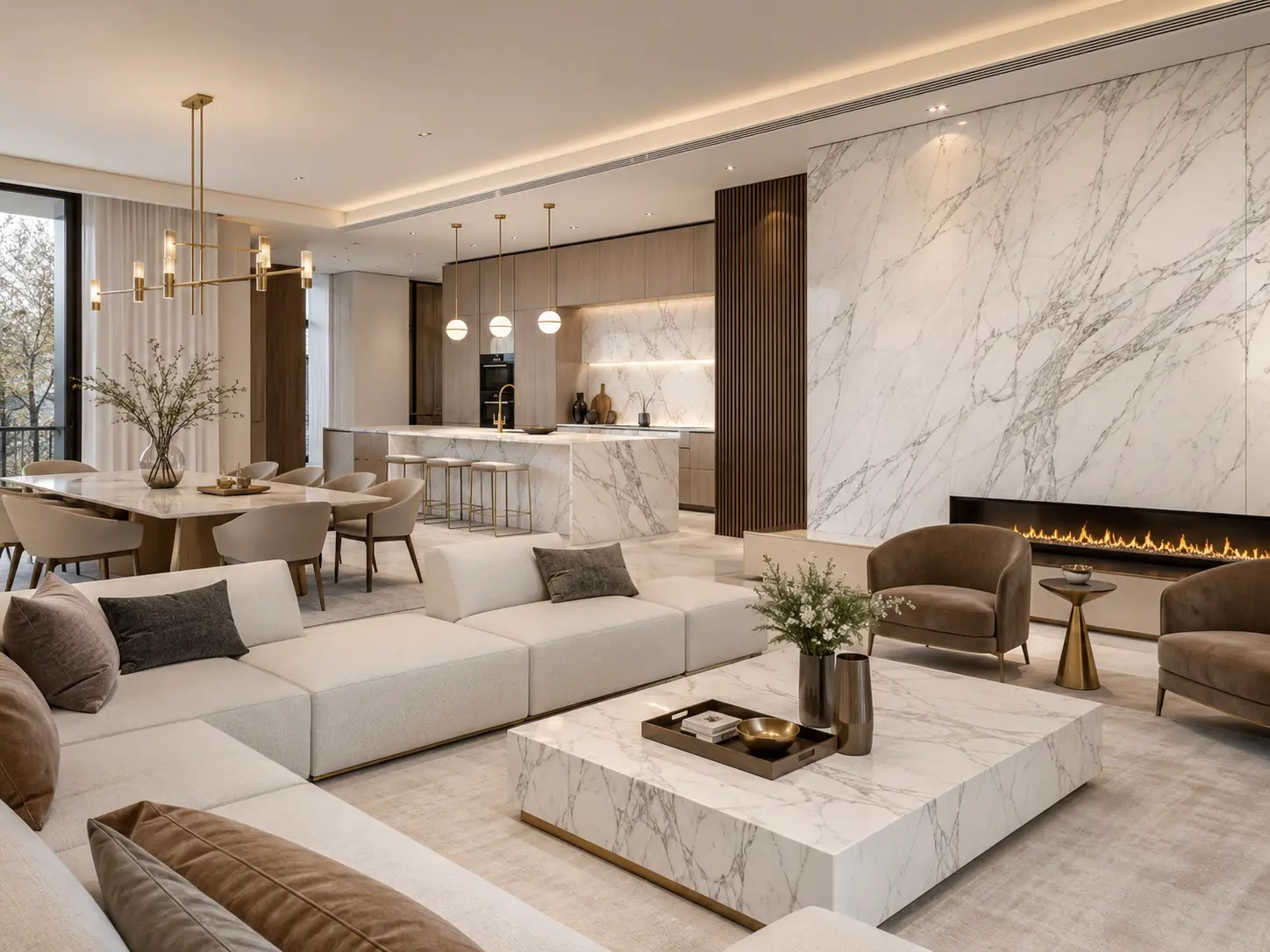
If your goal is a white-marble kitchen or living space that feels designed rather than accidental, this guide gives you the clarity to start the process with confidence.
Selecting white marble is not just a design preference—it is a technical decision shaped by geology, light science, and room performance. After reviewing more than 300 international residential and commercial case studies, stone specialists consistently emphasize the same finding: most marble failures occur before installation, during the selection stage. The wrong finish in a high-use kitchen, mismatched slab tones under cold LED lighting, or veining that fights the room’s visual flow can undermine even the most beautiful stone. Material engineers also note that proper sealing, planned slab orientation, and density-based room matching increase long-term satisfaction by more than 30%.In short, avoiding mistakes requires treating marble as both an emotional and engineering choice. When homeowners evaluate slabs with real-life light conditions, understand mineral structures, and consult experienced suppliers such as forustone.com, white marble performs exactly as it should—elegant, durable, and timeless across decades of daily living.