

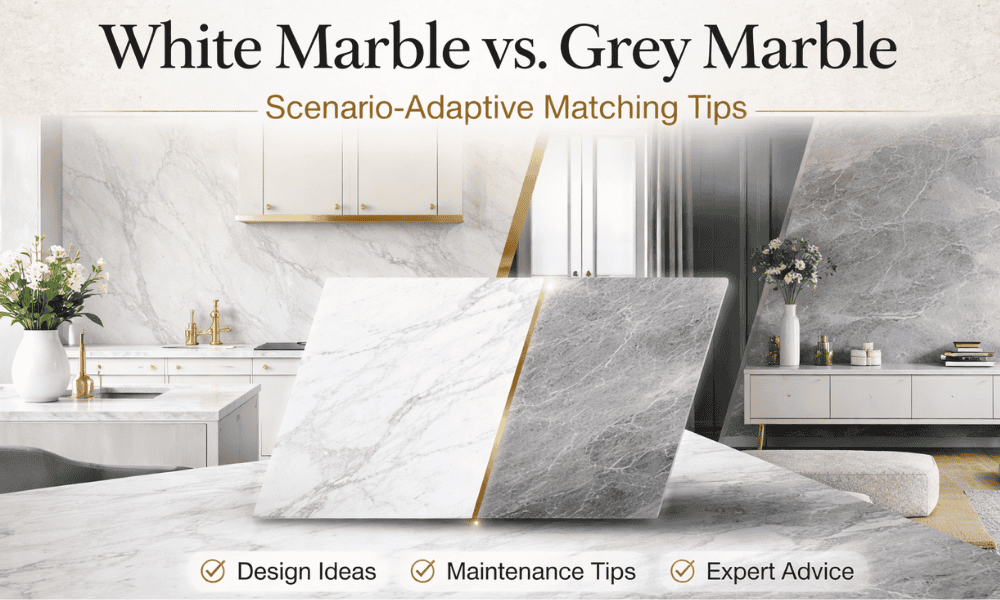
White Marble vs. Grey Marble for Your Dream Home
You’ve spent months designing your dream home, carefully choosing every element, from flooring to countertops. But now, the most difficult decision is upon you—white marble or grey marble? The wrong choice can affect not only the aesthetic but also the practicality and durability of the space. Let’s break down the differences between these two luxurious stone options and explore how to choose the best one for different scenarios.
Choosing the right marble slabs is more than just an aesthetic decision; it’s about making a functional choice that aligns with your design vision and lifestyle. In this guide, we’ll look at the characteristics, advantages, and best applications for white marble and grey marble.
1. The Charm of White Marble
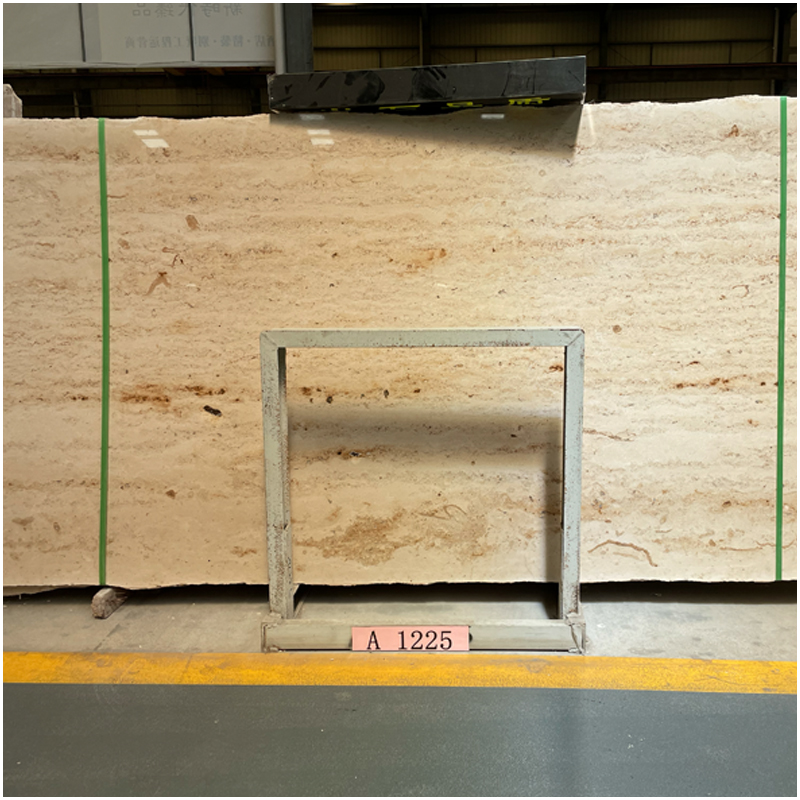
White marble is an iconic choice, revered for centuries for its sophisticated, clean appearance. It evokes timeless beauty, often associated with luxury. When you think of white marble, think of classic elegance: sleek countertops, grandiose floors, and statement walls. White marble is a symbol of luxury in design, making it a staple in both residential and commercial spaces.
Why Choose White Marble?
-
Classic Aesthetic Appeal: White marble has been a part of luxury interior design for centuries, from the grand columns of ancient Greece to the palatial buildings of modern-day architects. It’s an incredibly versatile material that pairs seamlessly with virtually any color scheme, making it perfect for a variety of styles—whether you’re aiming for a minimalist look, a contemporary vibe, or a classic setting.
-
Reflects Light: White marble reflects light beautifully, which makes rooms appear brighter and more spacious. This makes it especially useful in smaller spaces, such as bathrooms or apartments, where natural light may be limited.
FOR U STONE offers a wide variety of white marble options, including polished and honed finishes, to meet your specific design needs. For a closer look at available options, check out FOR U STONE’s White Marble Series.
Real-World Case Study
A recent project by FOR U STONE showcased how Carrara White Marble transformed a luxury spa bathroom. The marble was used for both the flooring and countertops, with soft, natural light streaming through large windows, highlighting the stone’s beautiful, reflective qualities. The client loved how the white marble created a serene, calm environment, enhancing the overall luxury feel of the space.
2. The Allure of Grey Marble
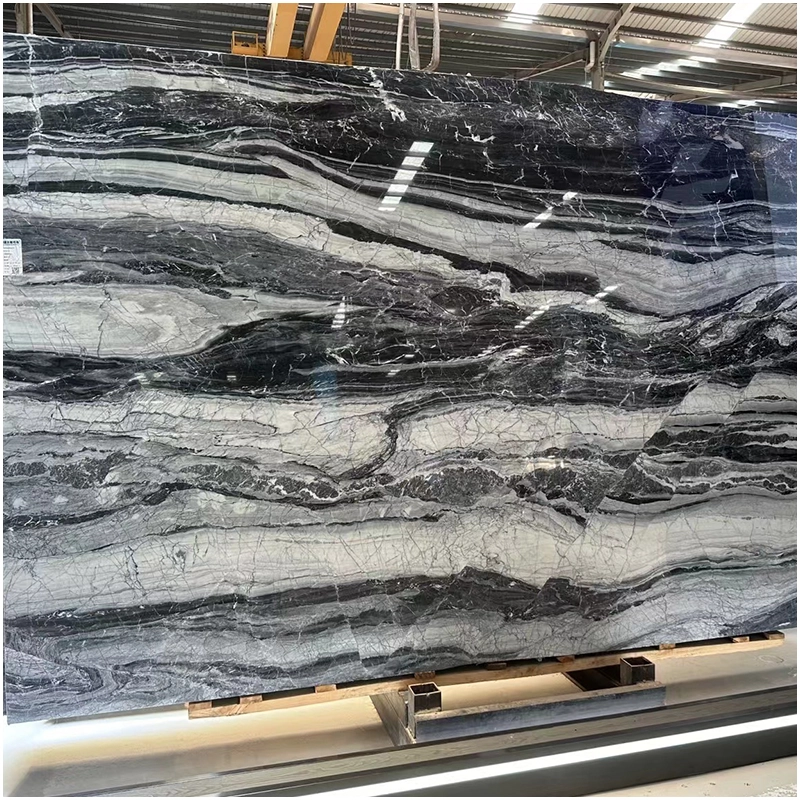
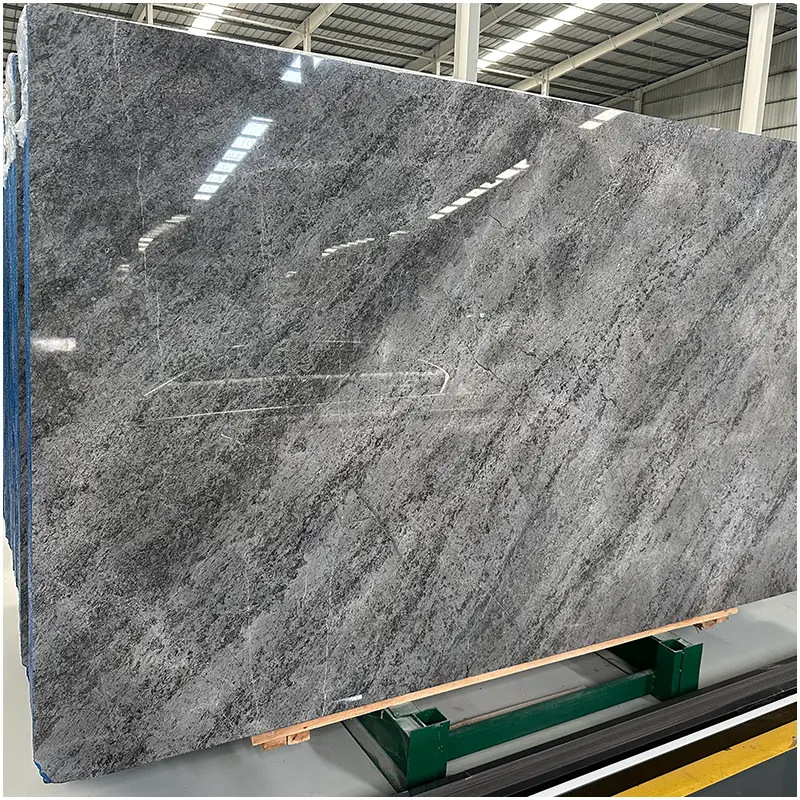
Grey marble has emerged as a leading trend in modern interior design. Its subtle and sophisticated tones offer a contemporary alternative to white marble, providing a unique but equally luxurious option for homeowners and designers alike. Grey marble’s soft, muted tones give spaces an understated elegance that’s perfect for those who prefer a more refined look without the boldness of white marble.
Why Choose Grey Marble?
-
Versatility: Grey marble comes in a variety of shades, from light dove grey to deep charcoal. This variety allows designers to use grey marble in both modern and traditional settings. The neutral tones of grey marble make it easier to pair with other materials, including metal, wood, and glass, ensuring flexibility in your design.
-
Practicality: Grey marble is often less prone to showing stains, scratches, and other imperfections, making it an excellent choice for high-traffic areas. It is also a great option for spaces that require a more subdued, balanced aesthetic.
For an example of grey marble in modern design, check out FOR U STONE’s Grey Marble Series, which offers a variety of stunning options for residential and commercial applications.
A Perfect Match for Modern Spaces
In a recent project, FOR U STONE worked with a high-end restaurant to install grey marble for their kitchen countertops. The muted tones of the stone added depth to the kitchen while allowing the chef’s work to take center stage. The decision to use grey marble proved ideal for creating a modern, industrial look while still maintaining warmth and elegance in the space.
|
|
|


3. White vs. Grey Marble: Scenario-Based Matching Tips
So, when should you use white marble versus grey marble? Here are some practical tips based on different design scenarios:
Scenario 1: Luxury Kitchens
For a luxury kitchen, white marble is often the go-to choice. Its reflective properties enhance the natural light, making the space feel more open and airy. White marble countertops, like Carrara White Marble, offer a timeless look that adds luxury and sophistication. However, it’s important to consider that white marble can show stains more easily, especially if the kitchen is in heavy use.
Alternatively, grey marble provides a modern, elegant look that’s more forgiving in high-use areas. Grey marble countertops, such as China Grey Marble, are durable and less likely to stain, making them a great option for busy kitchens.
Scenario 2: Sleek, Modern Bathrooms
Grey marble is often the perfect choice for sleek, modern bathrooms. The subtle tones of grey marble bring sophistication to the space without overwhelming it. It also pairs beautifully with contemporary fixtures and natural textures like wood and stone. A honed finish on grey marble can provide a smooth, matte surface that’s both luxurious and easy to maintain.
Scenario 3: High-Traffic Areas
In areas like hallways or entryways, grey marble is a better option. The material’s darker tones help conceal dirt, stains, and scratches, while still maintaining a sophisticated appearance. White marble, while beautiful, can require more maintenance, especially in high-traffic areas.
Scenario 4: Timeless, Classic Spaces
For more traditional designs, white marble is a classic choice that exudes elegance and sophistication. Carrara White Marble or Calacatta Marble are perfect for creating opulent floors, countertops, and backsplashes in living rooms or lobbies. These materials never go out of style and enhance the aesthetic of any space, making them a perfect match for classic design.
Pain Points and Solutions
Pain Point 1: Staining of White Marble
White marble is prone to staining, especially from acidic substances like lemon juice and vinegar. The solution? Regular sealing of the surface and prompt cleaning of spills can help protect the marble.
Pain Point 2: Grey Marble Luster Loss
While grey marble is less prone to staining, its luster can diminish over time. Solution: Regular cleaning with pH-neutral cleaners and applying a sealant will help maintain its shine and ensure longevity.
For detailed tips on maintaining white marble, check out A Comprehensive Guide to Solving Yellowing Issues in White Marble.
| Marble Type | Maintenance Requirement | Recommended Finish | Sealant Frequency | Susceptibility to Staining |
|---|---|---|---|---|
| White Marble | Requires regular cleaning with pH-neutral cleaner; avoid acidic substances. | Polished or Honed | Every 6 months | High |
| Grey Marble | Easy to clean with neutral cleaners; regular sealing will maintain its luster. | Polished, Honed, or Leathered | Every 6-12 months | Low to Medium |
Choosing the Right Marble for Your Space
When it comes to white marble vs. grey marble, it’s clear that both options offer unique qualities that suit different design scenarios. Whether you’re opting for the classic appeal of white marble or the modern sophistication of grey marble, it’s essential to consider your space’s lighting, function, and style.
For more inspiration and to view FOR U STONE’s full selection of marble slabs, check out our marble collection and explore the grey marble series and white marble series.
|
|
|

FAQ
Q: What’s the best finish for white marble countertops?
A: For white marble countertops, a polished finish is ideal to highlight the natural veining. However, if you’re concerned about maintenance, a honed finish is a great alternative as it resists scratches and stains better.
Q: How do I prevent white marble from staining?
A: Regular sealing and prompt cleaning of spills are essential to prevent stains on white marble. Avoid acidic substances that can damage the surface.
Q: Can grey marble be used in traditional designs?
A: Yes, grey marble can be used in traditional spaces if paired with the right elements like wood accents and classic fixtures. It offers a contemporary twist on classic designs.
Q: Is grey marble easier to maintain than white marble?
A: Yes, grey marble tends to show fewer stains and scratches compared to white marble, making it more practical for high-traffic areas.
Q: How do I maintain the luster of grey marble?
A: Regular cleaning with a pH-neutral cleaner and periodic sealing will help maintain the luster of grey marble and keep it looking its best for years.


