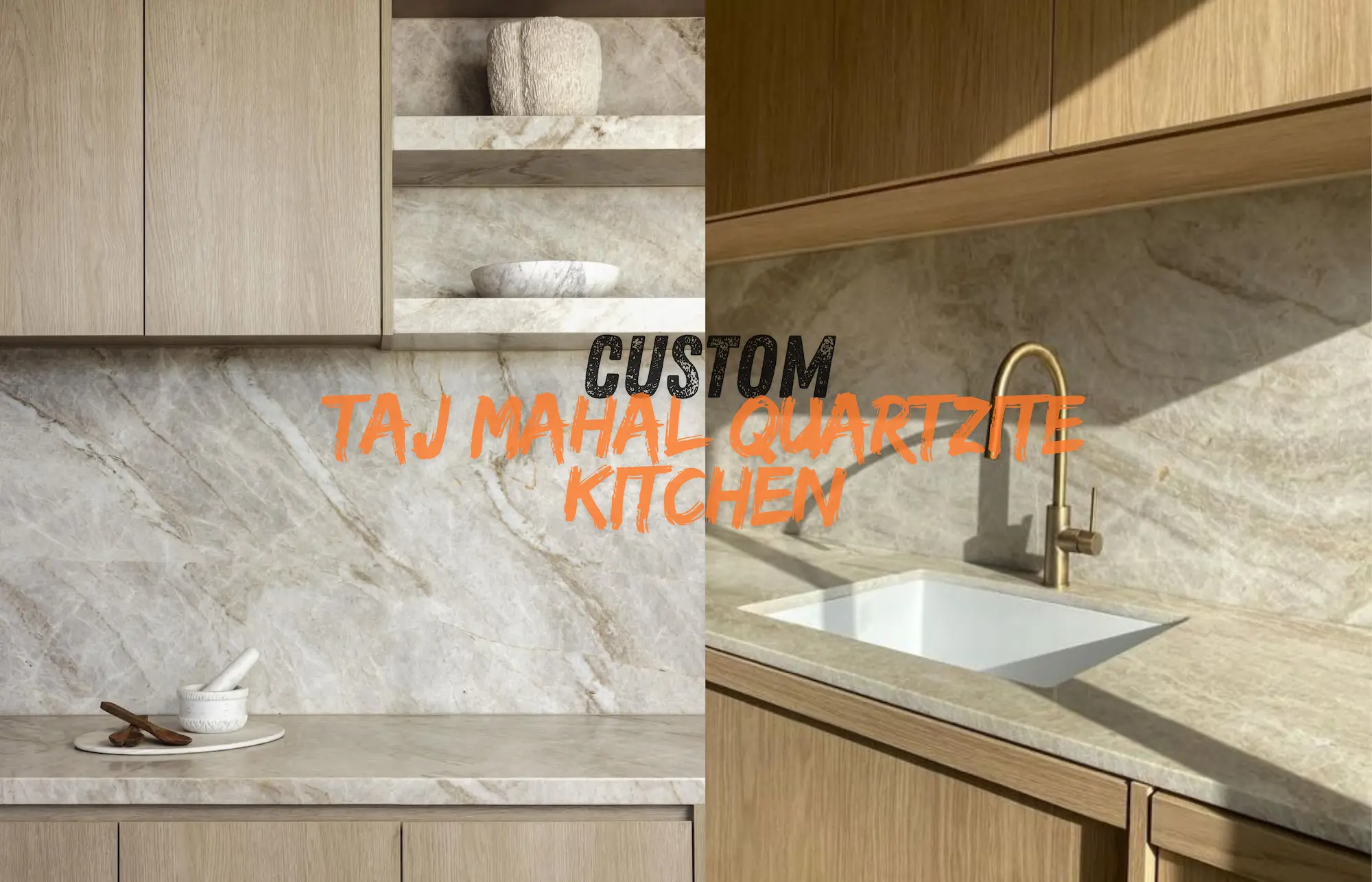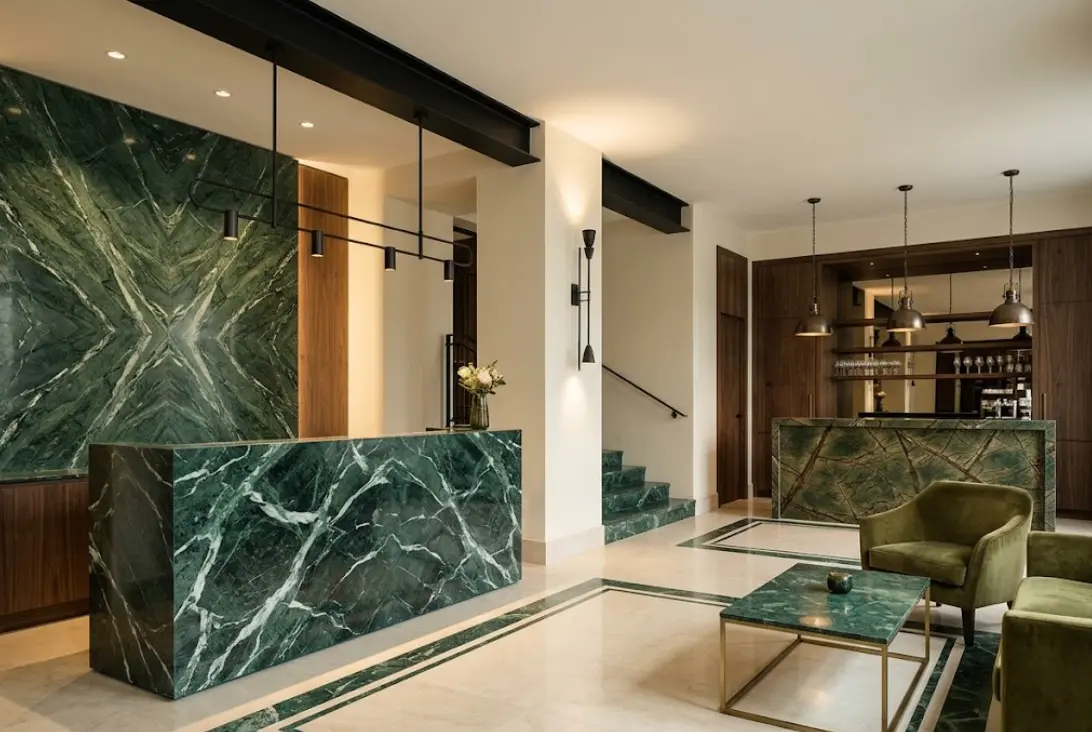
Korte samenvatting: Quartzite countertop slab photos should show the full slab face, slab number, vein direction, color range, fissures, resin areas, finish, thickness, and usable area before production starts. For exotic quartzite countertops, the photo review should also connect each slab with the kitchen island, sink, cooktop, backsplash, and packing plan.
What Slab Photos Should Show Before a Quartzite Countertop Order
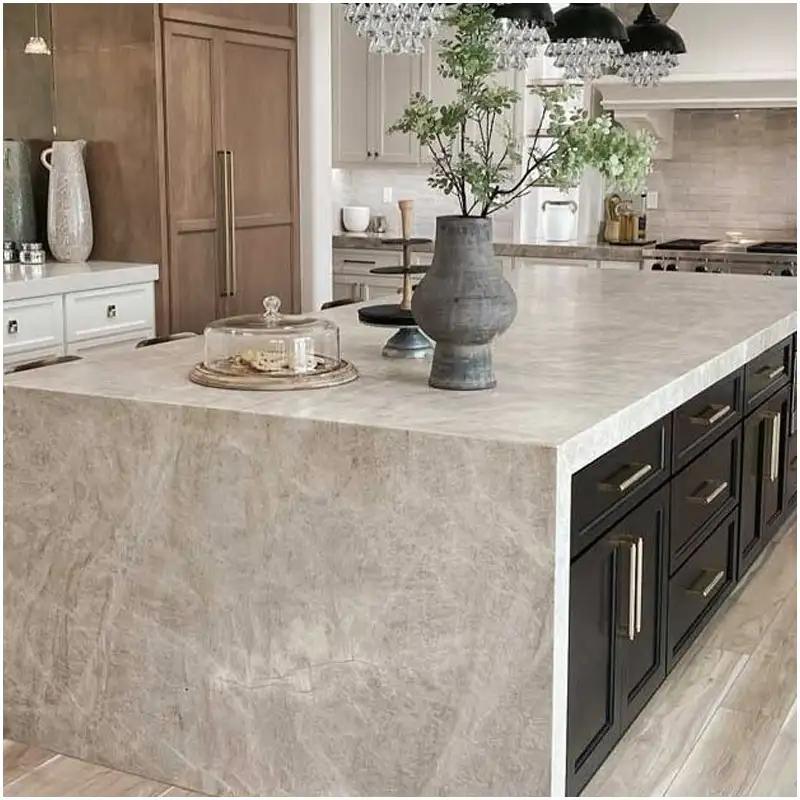
A quartzite countertop order should therefore begin with full-slab photos. A small sample can suggest color, but it cannot show where the strongest vein will land on an island, whether two slabs can be matched, or whether a line will cross a sink opening. The photo set needs to answer practical layout questions before cutting starts.
VOOR U STONE's exotisch kwartsiet, Taj Mahal Kwartsiet, Patagonië kwartsiet, stone countertopsen Aanrechten en wastafelbladen pages are closely connected to this review step. Quartzite is a slab-led material. The specific pieces chosen for the project often decide whether the finished countertop feels balanced or difficult to install.
Technical references support a cautious approach. ASTM C616 covers quartz-based dimension stone, while Natural Stone Institute resources discuss natural stone selection, design, fabrication, and care. These references do not replace a supplier’s slab review or a fabricator’s judgment, but they reinforce the same practical point: the material, finish, thickness, intended use, and installation conditions should be reviewed together.
1. Start with a straight full-slab photo
The first image should show the complete quartzite slab from edge to edge. It should not be a cropped beauty photo, a wet preview, or a close-up of the best corner. A full-slab photo lets the project team see the whole pattern, the available area, the strongest veins, and any natural features that may affect cutting.
The photo should show the slab number or bundle label. This is basic, but it prevents confusion later. Kwartsiet platen with the same commercial name can still differ in background color, vein weight, crystal structure, and movement. If a kitchen designer approves one slab and the cutting shop receives another, the final countertop may not match the approved design.
For countertop work, a full-slab photo should also help the fabricator decide where to place the template. An island top, a perimeter run, a backsplash strip, and a waterfall side may all come from the same slab or from several related slabs. The straight photo becomes the starting point for that discussion.
Ask for more than one angle when the surface finish is important. A polished quartzite can reflect light strongly, while a honed or leathered finish can make the same stone look softer. One straight photo shows layout. An angled photo helps show reflection, texture, and finish consistency.
2. Check whether the slab is suitable for the countertop layout
Quartzite photos should be reviewed against the actual countertop drawing. The drawing should mark island size, perimeter runs, sink position, cooktop opening, faucet holes, overhangs, backsplash pieces, waterfall sides, and any mitered edges. Without those details, the slab photo is only a material image, not a production review.
The most important question is where the visible parts of the slab will land. A strong vein through the center of an island can look intentional. The same vein crossing a sink cutout may look broken after fabrication. A translucent or crystal-rich area may be beautiful on a vertical feature, but it may not be the best place for a heavy-use prep zone.
Large islands need special attention. A slab may look wide enough at first glance, but the usable area can shrink after trimming edges, avoiding fissures, and preserving vein direction. If the island needs a waterfall side, the side panel should be reviewed in the same direction as the top. Otherwise, the vein may turn abruptly at the miter.
For long kitchen runs, check whether multiple slabs can sit near each other without a harsh color jump. This is especially important with warm quartzites such as Taj Mahal-style materials, where the background can shift from cream to beige, gold, grey, or light taupe across different slabs.
3. Read veins before approving sink and cooktop openings
Sink and cooktop openings remove part of the slab. On quiet materials, this may not change the design much. On expressive quartzite, the opening can cut through the most important part of the pattern. That is why the photo review should mark these openings before fabrication begins.
For a sink, check whether strong veins or natural lines pass through the corners of the cutout. Corners are already areas where fabrication needs care. If a natural fissure or strong mineral line reaches the same area, the fabricator may want to shift the layout, reinforce the piece, or choose another slab section.
For a cooktop, check both the opening and the back rail. A narrow stone strip behind a cooktop can be more vulnerable during handling and installation. If the selected quartzite has visible fissures, heavy crystal movement, or repaired lines in that area, the fabricator should review it before cutting.
Backsplash pieces also matter. A short backsplash strip may be cut from an offcut, but a full-height backsplash needs a clear layout. If the design uses a matched countertop and backsplash, the photo review should show whether the vein direction can continue naturally from the counter to the wall.
4. Look closely at fissures, resin lines, and crystal zones
Quartzite can contain natural fissures, mineral seams, resin-filled areas, and crystal bands. These features are not automatically defects. Many quartzites need reinforcement or resin treatment during processing, and some natural lines are part of the stone’s appearance. The question is whether the feature is acceptable for the countertop area where it will appear.
Full-slab photos should be followed by close-up photos of any uncertain areas. Ask for detail images with a scale reference when possible. A line that looks heavy in a close-up may be small on the full slab. A line that looks minor in a warehouse photo may matter if it runs through a sink corner or front edge.
Crystal-rich quartzites can also reflect light unevenly. In a showroom photo, this can look attractive. In a kitchen, it may appear different under under-cabinet lighting, pendant lights, or sunlight from a window. If the finish is polished, ask for angled photos that show how the slab reflects light across the surface.
For stones such as Patagonië kwartsiet, photo review should be more deliberate because the slabs can have strong blocks of color, translucent-looking areas, and irregular movement. The layout should decide which sections become the island, the perimeter, the wall panel, or the less visible offcuts.
5. Confirm finish, thickness, and edge plan
Quartzite slab photos should show or confirm the finish. Polished, honed, leathered, and brushed finishes change how the countertop looks and feels. A polished finish can deepen color and make veining more reflective. A honed finish can reduce glare but may show some marks differently. A leathered finish can give texture, but it should be reviewed for cleaning expectations and edge detail.
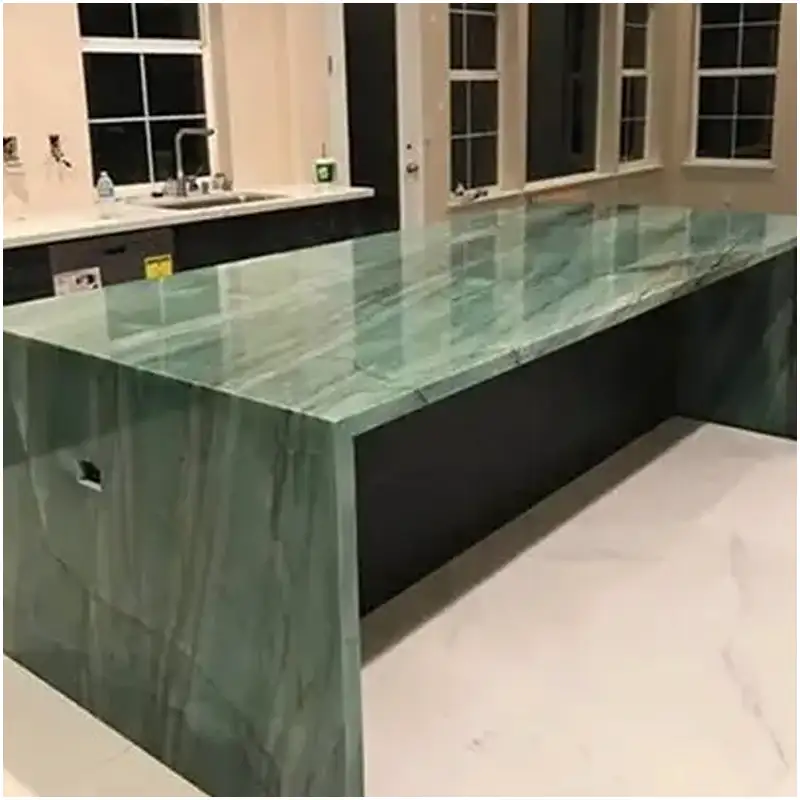
Thickness should be confirmed in writing. A 20 mm slab and a 30 mm slab can lead to different edge details, weight, support requirements, and packing. If the project uses a built-up edge or mitered waterfall side, the slab thickness and edge construction need to be reviewed together.
Edge profiles should be matched to the stone’s movement and the kitchen style. A simple eased edge keeps attention on the slab face. A thicker mitered edge can make an island look more substantial, but it also requires careful matching at the corner. Strong quartzite veins may need extra review at mitered edges so the side panel does not look disconnected.
For commercial counters, hotel suites, villa kitchens, and multi-unit projects, the edge plan should be consistent across pieces. If several countertops are produced from different slabs, the slab photo set should help confirm whether the finish and thickness look consistent enough for the full order.
6. Do not skip sealing and care questions
Quartzite is a natural stone, and sealing guidance can vary by material, finish, and fabricator. Dense quartzites may absorb less than some other stones, while other quartzite-labelled materials may behave differently. A photo cannot prove absorption performance. It can only show visible structure, surface appearance, and finish.
Before approval, ask whether the slab has been sealed, whether sealing is recommended after fabrication, and what care instructions should be followed. Natural Stone Institute consumer guidance generally treats quartzite as a natural stone that can need proper sealing and maintenance based on the specific material and use.
Kitchen use makes this question practical. Coffee, citrus, oil, wine, sauces, and cleaning products can interact with stone surfaces differently. The final performance depends on the stone, finish, sealing, fabrication, installation, and daily care. Do not approve a countertop only because the slab looks hard in a photo.
If the kitchen will be heavily used, ask for a sample from the selected slab batch when possible. A small sample does not replace full-slab review, but it can help with finish approval, sealer discussion, and color comparison under the project’s lighting.
7. What the quartzite photo package should include
A clear photo package makes the approval process faster. It also gives the supplier, fabricator, designer, and contractor a shared record. For quartzite countertops, the package should include full-slab photos, labels, dimensions, finish notes, and detail photos of areas that may affect layout.
| Photo or note | What it should show | Why it matters for countertops |
|---|---|---|
| Full-slab front view | Complete slab face, vein direction, color range, and label | Shows whether the slab can work for the island, perimeter, or backsplash |
| Angled surface view | Reflection, polish level, texture, and crystal movement | Helps confirm finish and how the slab may read under kitchen lighting |
| Close-up detail photos | Fissures, resin lines, repairs, pits, edge chips, and special natural features | Helps decide whether to avoid, accept, reinforce, or reposition certain areas |
| Dimension note | Length, width, thickness, and available quantity | Confirms whether the slab covers the required countertop pieces after trimming |
| Layout sketch | Sink, cooktop, island, waterfall side, backsplash, and edge locations | Connects the photo review with actual cutting decisions |
| Packing label photo | Slab number, bundle information, and selected pieces | Keeps approved slabs traceable during production and shipment |
8. Related Stone Project Guides
9. Checklist before confirming a quartzite countertop order
- Approve full-slab photos with slab numbers before choosing close-up details.
- Mark island, perimeter, sink, cooktop, backsplash, and waterfall positions on the drawing.
- Check whether the strongest veins land in acceptable locations after cutting.
- Ask for close-ups of fissures, resin lines, repairs, pits, chips, and crystal-rich areas.
- Confirm slab thickness, finish, edge profile, and whether mitered edges are required.
- Review whether several slabs can sit together without a harsh color or pattern jump.
- Ask about sealing and care guidance for the exact quartzite and finish selected.
- Keep approval records tied to slab labels, packing labels, drawings, and production notes.
10. FAQ of Luxury Exotic Quartzite Countertop
1. What photos are needed before ordering quartzite countertops?
Ask for straight full-slab photos, angled surface photos, close-ups of fissures or repairs, slab labels, dimension notes, and finish details. If the countertop includes an island, waterfall side, sink, cooktop, or full-height backsplash, the photos should be reviewed with the drawing so the strongest veins land in acceptable areas.
2. Can a quartzite countertop be approved from a small sample?
A small sample is useful for checking general color and finish, but it is not enough for final quartzite countertop approval. It cannot show full-slab veining, color range, usable area, fissures, or how the stone will work around sink and cooktop openings. Full-slab photos should be reviewed before production.
3. Why do quartzite slabs with the same name look different?
Quartzite is a natural stone, so slabs sold under the same commercial name can still vary in background color, veining, crystal movement, and mineral structure. Different blocks, cuts, and finishing methods can also change the appearance. This is why each selected slab should be reviewed and labelled before a countertop order is confirmed.
4. Should quartzite countertops be sealed after installation?
Many quartzite countertops are sealed, but the need depends on the specific stone, finish, porosity, fabrication process, and daily use. Ask the supplier or fabricator for care guidance tied to the selected slab. A photo can show visible structure, but it cannot replace sealing and maintenance advice for the actual countertop.
5. How should quartzite slabs be checked for a waterfall island?
For a waterfall island, review the top and side panel together. The slab photos should show whether the vein can turn naturally at the mitered edge, whether the side panel has a similar color range, and whether any fissure or repair line falls near the corner. A layout sketch should be approved before cutting.
Final Conclusion of Custom Quartzite Countertop for Kitchen and Bathroom from FOR U STONE
Quartzite countertop slab photos should do more than make the stone look attractive. They should show whether the actual slabs can work with the island, sink, cooktop, edge profile, backsplash, and final installation area. Full-slab photos, labels, dimensions, finish notes, and close-up details give the project team a better basis for approval before cutting begins.
For exotic quartzite, Taj Mahal-style quartzite, Patagonia Quartzite, and other natural quartzite countertops, the safest review connects the slab photos with the drawing. That step helps decide which part of the slab becomes the island, which part becomes the perimeter, and which areas should be avoided or reserved for less visible pieces.
Natural stone project procurement guide
Use this complete guide to connect material selection, slab approval, drawings, inspection, packing, and export-ready delivery.

Ask FOR U STONE to review quartzite slabs with your countertop drawings
Send the countertop dimensions, island size, sink and cooktop positions, preferred quartzite, finish, thickness, edge detail, quantity, and project location. FOR U STONE can help review quartzite slab photos and connect the selected material with countertop production, packing, and project delivery planning.
Referenties
- Title: Dimension Stone Design Manual 2024, Author: Natural Stone Institute Technical Committee, Institution: Natural Stone Institute, Source: Natural Stone Institute Resource Library.
- Title: Quartzite Care and Maintenance Guidance, Author: Natural Stone Institute Consumer Education Team, Institution: Natural Stone Institute, Source: Natural Stone Institute Consumer Resources.
- Title: ASTM C616/C616M Standard Specification for Quartz-Based Dimension Stone, Author: ASTM Committee C18 on Dimension Stone, Institution: ASTM International, Source: ASTM Standards.
- Title: ASTM C1528/C1528M Standard Guide for Selection of Dimension Stone, Author: ASTM Committee C18 on Dimension Stone, Institution: ASTM International, Source: ASTM Standards.
- Title: ASTM C97/C97M Standard Test Methods for Absorption and Bulk Specific Gravity of Dimension Stone, Author: ASTM Committee C18 on Dimension Stone, Institution: ASTM International, Source: ASTM Standards.
- Title: ASTM C99/C99M Standard Test Method for Modulus of Rupture of Dimension Stone, Author: ASTM Committee C18 on Dimension Stone, Institution: ASTM International, Source: ASTM Standards.
- Title: ASTM C170/C170M Standard Test Method for Compressive Strength of Dimension Stone, Author: ASTM Committee C18 on Dimension Stone, Institution: ASTM International, Source: ASTM Standards.
- Title: Standards and Specifications for Natural Stone Products, Author: Natural Stone Institute Standards Team, Institution: Natural Stone Institute, Source: Natural Stone Institute Professional Resources.