What Is Taj Mahal Quartzite? Benefits, Uses, Care & Buying Guide
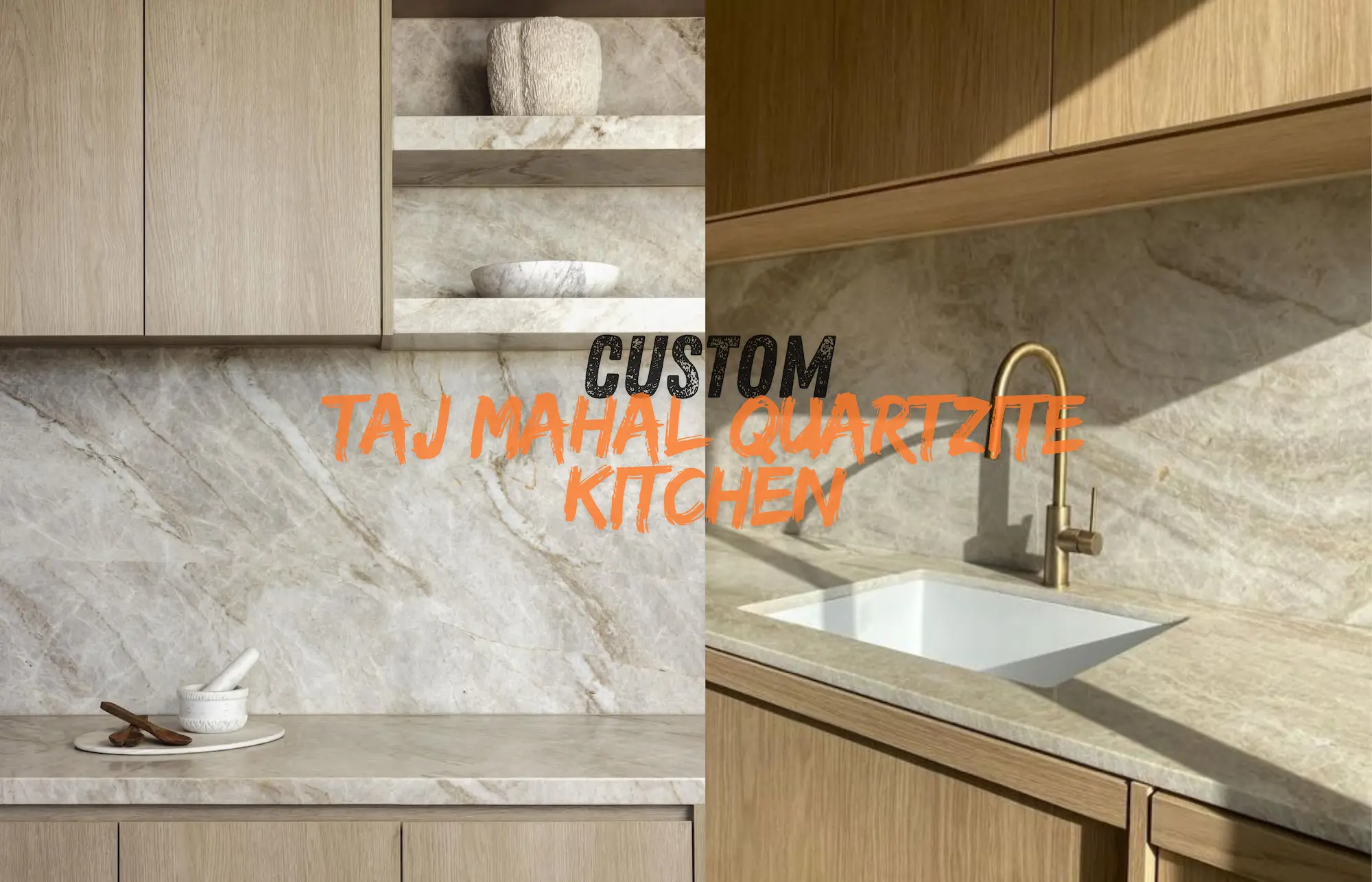
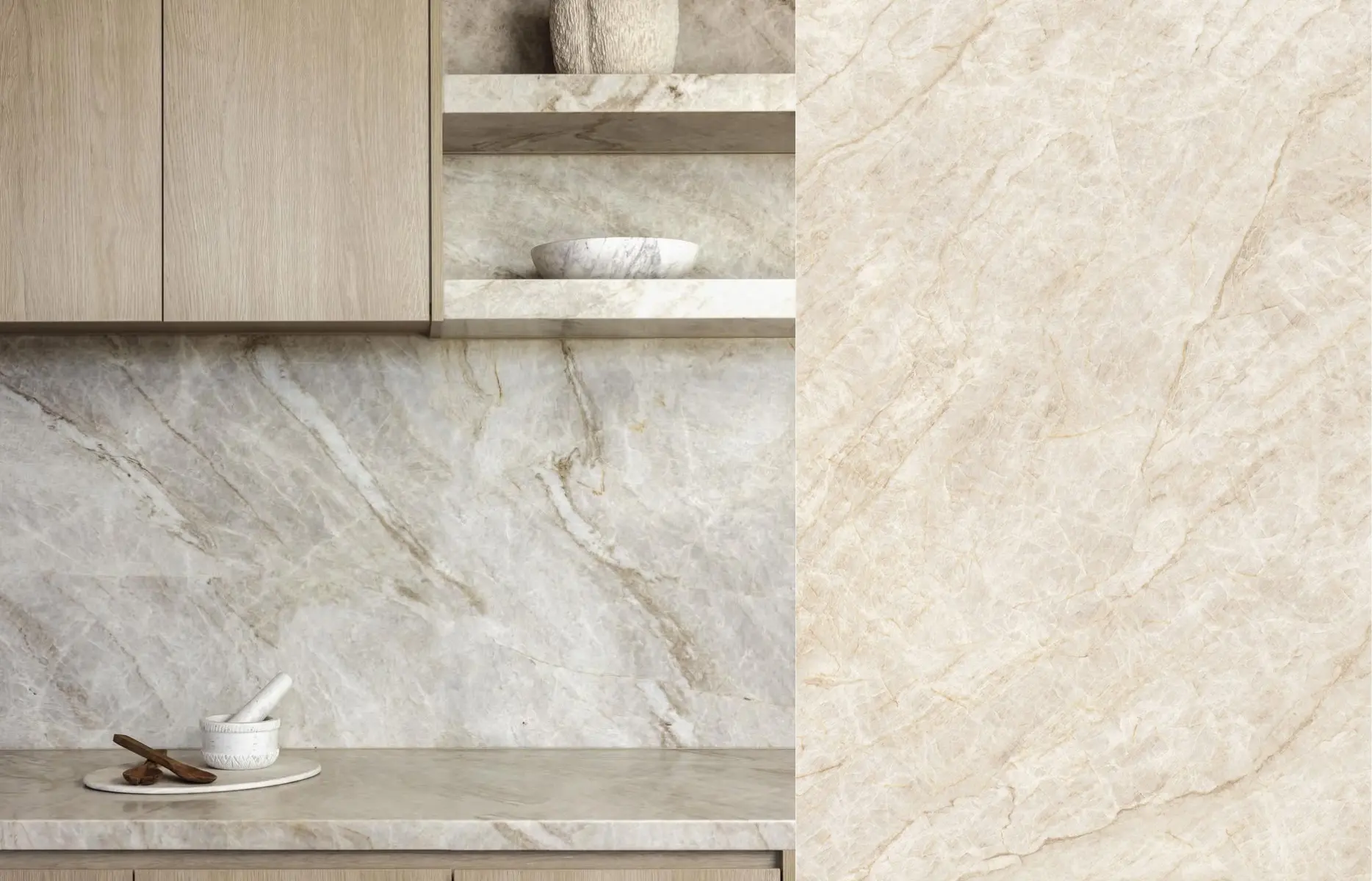
Taj Mahal Quartzite is one of the most sought-after natural stones for buyers who want the elegance of marble but need more confidence in daily use. Known for its warm ivory-beige background, soft veining, and refined overall look, this quartzite is widely used in luxury kitchens, bathroom vanities, waterfall islands, wall features, and other premium interior applications. It offers a calm and sophisticated visual effect that fits both modern and classic projects without feeling too cold or too dramatic.
For many buyers, however, the real question is not just what Taj Mahal Quartzite is. The more important question is whether it is the right material for the project, the maintenance expectation, the design direction, and the long-term performance goal. That is exactly where this guide helps. Instead of stopping at surface-level explanations, this article is built to support real buying decisions by addressing common concerns, hidden risks, selection mistakes, practical comparisons, and the next steps serious buyers should take before ordering.
Korte samenvatting
Taj Mahal Quartzite is a natural stone known for its warm ivory-beige tone, soft veining, and premium marble-like look. It is often chosen for countertops, vanity tops, waterfall islands, and luxury interiors where buyers want natural beauty with more everyday confidence.
For buyers comparing marble, quartz, and quartzite, Taj Mahal Quartzite is often the more balanced option when elegant appearance, natural authenticity, and practical performance all matter in the same project.
Why Taj Mahal Quartzite Is So Popular
Taj Mahal Quartzite has become popular because it answers a very specific market need. Many buyers want the soft visual language of marble, but they worry about fragility, etching, and the long-term stress that can come with softer natural stones in active spaces. Taj Mahal Quartzite often feels like a more balanced recommendation because it offers a warm, natural, high-end appearance while giving buyers more confidence in everyday use.
Another reason for its popularity is design flexibility. Taj Mahal Quartzite works well with wood cabinetry, brass accents, black fixtures, warm whites, greige palettes, and even darker interior schemes. It looks luxurious without becoming visually overwhelming, which makes it an appealing option for homeowners, architects, and developers who want a premium material that will still feel relevant years later. Buyers who want to start by reviewing actual materials can browse Taj Mahal kwartsietplaten or explore the broader luxury stone quartzite collection.
What Exactly Is Taj Mahal Quartzite?

Taj Mahal Quartzite is a natural stone, not an engineered surface. This distinction matters because many buyers confuse quartzite with quartz simply because the names sound similar. Quartzite is quarried from the earth and cut into slabs, tiles, vanity tops, and other formats. Engineered quartz, by contrast, is manufactured using quartz particles, resin binders, and pigments.
This difference changes the entire buying logic. Buyers who value natural movement, authenticity, slab uniqueness, and geological depth are often better matched with quartzite. Buyers who prefer exact consistency, more standardized appearance, and lower-maintenance expectations may lean toward engineered quartz instead. Understanding this early helps avoid the classic problem of ordering one category while expecting the behavior of another.
A More Practical Way to Choose
Taj Mahal Quartzite is often the better choice for buyers who want a natural stone surface with a soft marble-like appearance and more confidence in daily use. It is especially well suited to projects where visual warmth, natural authenticity, and practical durability need to work together. For high-end kitchens, premium islands, and elegant bathroom interiors, it usually makes stronger sense than many buyers first assume.
Engineered quartz may be the more suitable option for buyers whose top priority is exact visual consistency, simpler ongoing care, and tighter control over pattern repetition. Projects that depend on high uniformity across large quantities often favor engineered surfaces for that reason. Buyers planning spa-style vanities or luxury wet-area applications may also find it helpful to review kwartsieten aanrechtbladen, while those still comparing broader stone categories may benefit from a more general stenen gids.
Main Benefits of Taj Mahal Quartzite
Elegant Natural Appearance
Taj Mahal Quartzite delivers a soft, refined, and premium look that appeals to buyers who want natural stone without overly dramatic patterning. It creates visual warmth and calm, which is one of the reasons it fits so well in luxury residential and hospitality design.
Stronger Practical Confidence Than Marble
One of the biggest reasons buyers choose Taj Mahal Quartzite is that it generally offers more everyday confidence than marble in many kitchens and vanity spaces. Quartzite is widely recognized as a hard natural stone, which makes it attractive to buyers who want elegance without stepping directly into the higher fragility concerns associated with marble.
Strong Reputation for Kitchen Use
Quartzite is frequently selected for kitchens because of its durable reputation and strong heat-resistance profile compared with many decorative surfaces. This does not mean buyers should abuse the surface carelessly, but it helps explain why Taj Mahal Quartzite is commonly considered for active family kitchens and entertaining spaces.
Broad Design Compatibility
Taj Mahal Quartzite works across many interior styles. Whether the project leans modern, transitional, warm minimalist, or classic luxury, this material usually integrates smoothly. That lowers design risk and helps buyers make a choice they are less likely to regret after installation.
Best Uses for Taj Mahal Quartzite
The most common applications are kitchen countertops and waterfall islands. This is where the stone’s visual softness and practical confidence work especially well together. Buyers who want a natural kitchen surface that feels bright, warm, and premium often see Taj Mahal Quartzite as a very balanced solution. It is also effective in large-format island designs where flow and tone matter more than loud contrast.

Bathroom vanities are another strong application. The stone helps create a high-end but relaxed atmosphere, especially in bathrooms that need warmth instead of stark whiteness. Buyers exploring this route can continue with kwartsieten aanrechtbladen to better understand vanity-focused use.
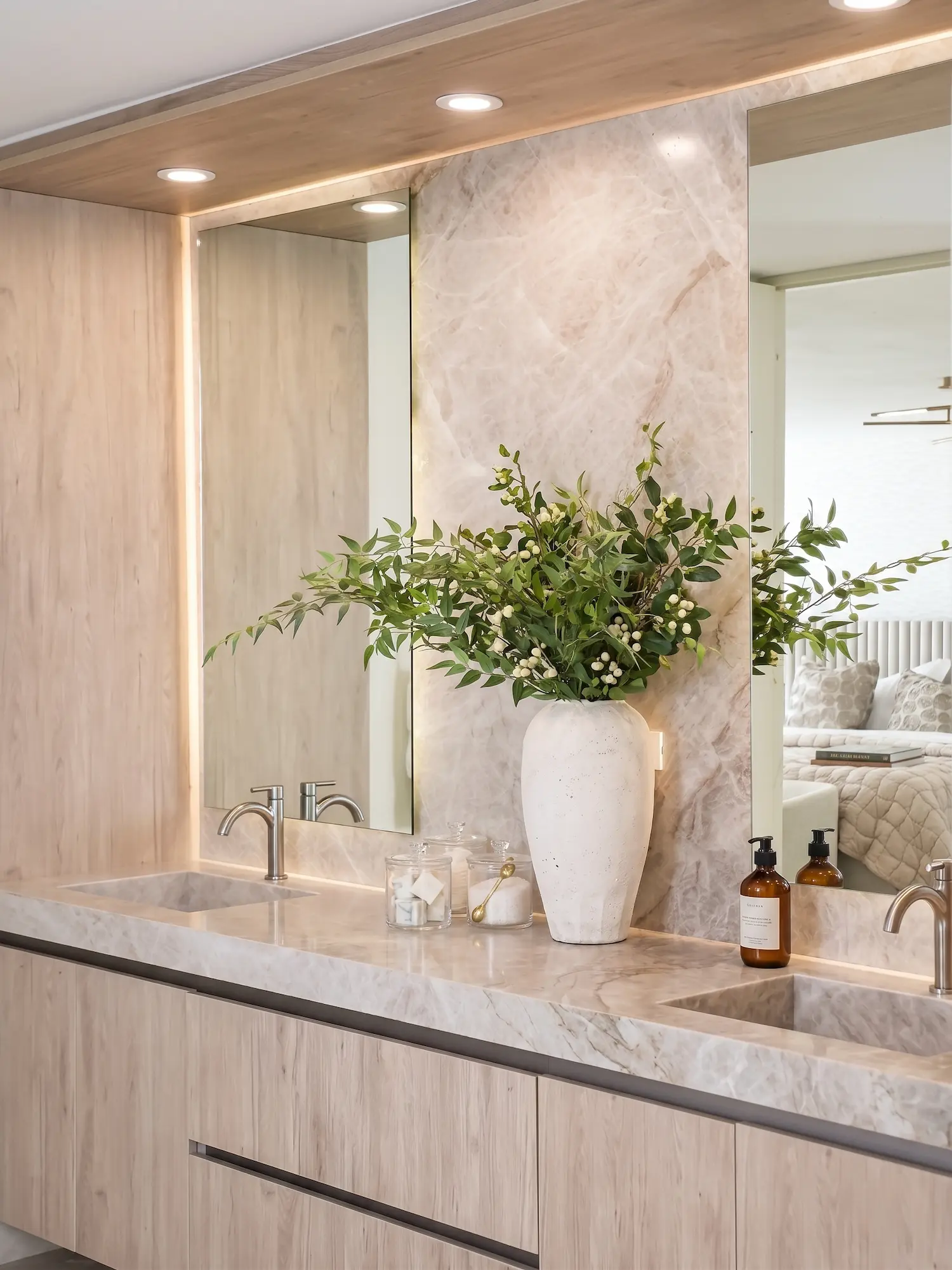
For wall cladding, shower areas, flooring accents, and coordinated interior packages, Taj Mahal kwartsiettegels can be a more practical format. If the goal is to compare this stone with other premium natural materials, the wider collectie exotisch kwartsiet is a logical next step.
What Buyer Pain Points Does It Solve?
Most buyers do not start looking for Taj Mahal Quartzite because they want “just another nice stone.” They are usually trying to solve several problems at once. They want a material that looks high-end, works with warm interior schemes, feels more durable than marble, and still delivers natural beauty that engineered surfaces often cannot fully match.
A major pain point is marble hesitation. Buyers love marble visually, but many become cautious once they think about etching, scratching, ongoing care, and surface sensitivity in daily life. Another pain point is engineered quartz fatigue. Some buyers find engineered surfaces too uniform, too flat, or too manufactured-looking for a genuinely high-end project. Taj Mahal Quartzite often stands out because it offers a middle path between those two concerns.
Taj Mahal Quartzite vs Marble
For buyers comparing appearance, maintenance, and everyday usability at the same time, the table below gives a faster side-by-side view of where Taj Mahal Quartzite stands against marble and engineered quartz.
| Vergelijkingsfactor | Taj Mahal Kwartsiet | Marmer | Kwarts |
|---|---|---|---|
| Type materiaal | Natuurlijk kwartsiet | Natuurlijk marmer | Engineered surface with quartz particles and resin |
| Typical Visual Style | Soft beige tone, subtle natural movement, warm luxury look | Classic veining, elegant and timeless, often more dramatic or softer in character | More uniform, cleaner repetition, easier to standardize across projects |
| Mohs hardheid | About 7 | About 3 | High surface hardness, but the resin-based structure changes heat behavior |
| Resistance to Etching from Acids | Generally better than marble | Lower acid-sensitive surfaces can dull or etch | Generally not acid-etching like marble, but surface care still matters |
| Heat Tolerance in Kitchens | Strong reputation for kitchen use; still use trivets for best practice | Can perform well, but buyers should still avoid careless heat shock and spills | More heat-sensitive because resin can discolor or scorch under excessive heat |
| Pattern Consistency | Natural variation from slab to slab | Natural variation from slab to slab | More consistent and controlled |
| Maintenance Expectation | Moderate; natural stone mindset required | Moderate to high, depending on usage and finish | Usually simpler day-to-day care |
| Best Buyer Fit | Buyers who want natural luxury plus stronger everyday confidence | Buyers who prioritize classic marble character above all else | Buyers who want visual consistency and easier routine care |
This comparison matters because many buyers arrive already emotionally attached to marble aesthetics. Marble still has undeniable appeal and remains a top choice for projects where classic softness, heritage style, and timeless prestige matter most. Buyers who are still comparing broader luxury stone families may also want to explore luxurious marble varieties for context.
That said, Taj Mahal Quartzite is often the better recommendation when a project needs both elegance and more practical peace of mind. In active kitchens, family-use environments, and luxury spaces where beauty must coexist with real daily use, Taj Mahal Quartzite usually feels like the more balanced answer. The right conclusion is not that marble is wrong. The better conclusion is that Taj Mahal Quartzite is often the smarter fit when performance matters alongside appearance.
Taj Mahal Quartzite vs Engineered Quartz
Engineered quartz is often preferred by buyers who want pattern control, consistency, and lower-maintenance expectations. It is easier to standardize, which can be a significant advantage in production-heavy or repetition-driven projects. For some developers or homeowners, that predictability is exactly what they want.
Taj Mahal Quartzite usually becomes the stronger option when natural individuality, authenticity, and a more elevated geological feel are part of the design brief. Buyers who want a true natural stone identity often find quartzite more satisfying in the long term. If that comparison sits at the center of your decision process, ontworpen kwarts vs exotisch kwartsiet should absolutely be part of the internal reading path.
Common Buyer Mistakes
Confusing quartzite with quartz
This is one of the most common mistakes in the stone market. The names sound similar, but the materials behave differently. The consequence is mismatched expectations about maintenance, visual variation, and project suitability.
Choosing only from a small sample
A sample can show the color family, but it rarely shows full slab movement, flow direction, or coordination potential across a large island, backsplash, or multiple surfaces. Buyers who skip full slab review increase the risk of post-fabrication disappointment.
Ignoring the finish
Polished and honed finishes do more than change gloss level. They affect how the stone reads in the room, how warm it feels visually, and how much depth the surface shows. The wrong finish can make the project feel flatter or less premium than expected.
Assuming all natural stone means no maintenance
Taj Mahal Quartzite offers strong everyday confidence, but it is still a natural stone. Buyers who expect a completely maintenance-free ownership experience may end up frustrated. That is why maintenance education should happen before purchase, not after problems appear.
Failing to ask the supplier the right questions
If the buyer does not ask for slab photos, finish confirmation, available sizes, cut-to-size capability, thickness options, and use recommendations, risk goes up. The supplier may deliver material, but not necessarily the best material decision for the specific project.
Potential Risks and Their Consequences
The first risk is expectation mismatch. Taj Mahal Quartzite is a natural material, and variation is part of its value. Buyers who mentally expect engineered-surface consistency may feel disappointed if they do not understand that natural movement and tonal variation are normal.
The second risk is choosing the right material for the wrong application format. A slab chosen for a dramatic waterfall island is not automatically the best choice for a tile-heavy bathroom or a tightly repeated wall layout. The consequence is often not a technical failure first. It is a visual disappointment and poor coordination.
The third risk is underestimating maintenance tolerance. Taj Mahal Quartzite may be a more comfortable option than marble for many users, but it still requires a natural-stone mindset. If the buyer dislikes sealing, hates variation, and does not want to think about care at all, quartzite may not be the best personality fit. The consequence is often dissatisfaction, even if the stone itself performs well.
A Real-World Selection Scenario
Consider a buyer designing a large family kitchen with warm oak cabinetry, brushed brass fixtures, and a waterfall island as the visual centerpiece. The original plan may start with marble because the aesthetic feels timeless and luxurious. But once daily-use concerns enter the discussion, especially around acid sensitivity, visual wear, and long-term care expectations, the decision often becomes less emotional and more practical.
In that type of project, Taj Mahal Kwartsiet frequently becomes the more balanced recommendation. It keeps the warm, elegant, natural-stone feeling the buyer wanted at the beginning, while reducing some of the anxiety that often comes with softer marble surfaces in active kitchens. The lesson is simple: many material mistakes do not happen because the stone is poor. They happen because the buyer chooses with the eye first and checks the project behavior too late.
How to Choose the Right Taj Mahal Quartzite
Not every buyer needs the same material. The table below helps match common project priorities with the option that usually makes the most sense.
| If Your Priority Is… | Recommended Material | Why It Usually Wins | Main Risk If You Choose Wrong |
|---|---|---|---|
| You want a natural stone look with more daily-use confidence than marble | Taj Mahal Kwartsiet | It balances natural authenticity, warm luxury tone, and stronger practical confidence | Choosing marble instead may create more maintenance anxiety than expected |
| You want the classic prestige and softness of old-world stone | Marmer | Nothing fully replaces true marble character for certain design styles | Choosing quartzite instead may feel visually less iconic if your design depends on marble heritage |
| You need highly consistent patterning across many units or repeated layouts | Kwarts | It offers better visual repeatability and tighter standardization | Choosing natural stone may lead to slab variation that disrupts design uniformity |
| You dislike obvious maintenance and want the easiest ownership routine | Kwarts | Routine care is usually simpler for buyers who do not want a natural-stone mindset | Choosing quartzite without accepting natural variation and sealing may lead to regret |
| You want a warm beige luxury kitchen that feels high-end but not overly dramatic | Taj Mahal Kwartsiet | Its soft ivory-beige movement works beautifully with wood, brass, black, and greige palettes | Choosing a whiter or flatter material may make the kitchen feel colder or less premium |
Pre-Order Buyer Checklist
Before confirming Taj Mahal Quartzite for a real project, buyers should not rely on color impression alone. A better approach is to verify the material in the same way a careful supplier or project manager would. The checklist below helps reduce the most common ordering mistakes before fabrication begins.
| What to Confirm Before Ordering | Waarom het belangrijk is | What Can Go Wrong If You Skip It |
|---|---|---|
| Full slab photos or slab video | A hand sample rarely shows full movement, vein direction, and tonal variation | The installed island or countertop may look very different from the sample you approved |
| Finish type: polished, honed, or leathered | Finish affects light reflection, depth, warmth, and everyday visual feel | The final project may feel flatter, colder, or less premium than expected |
| Thickness and edge profile | These details shape the visual weight and fabrication suitability of the slab | The countertop may lose the intended luxury effect or create fabrication limits |
| Application area: island, vanity, wall, or tile project | Different applications need different slab characteristics and layout planning | A beautiful slab choice may still fail visually if it is used in the wrong format |
| Batch coordination for multi-slab projects | Tone and movement should be reviewed together when a project uses more than one slab | Poor slab pairing can make a luxury kitchen look inconsistent |
| Sealing and care recommendations | Natural stone ownership expectations should be clear before installation | Buyers may assume the surface is maintenance-free and become dissatisfied later |
| Cut-to-size and fabrication support | Project-ready support matters when dimensions, sink cutouts, and edges must be controlled | Rework, delays, or avoidable waste can increase after approval |
Start with the project type. Countertops, waterfall islands, vanity tops, tiles, and wall cladding do not need the same slab characteristics. Islands usually benefit from strong directional flow. Vanity tops often benefit from calmer movement. Tile applications may need better dimensional planning and more format coordination.
Then evaluate the tone carefully. Some Taj Mahal Quartzite selections appear warmer and creamier, while others lean more ivory or greige. That small difference can significantly affect how the stone works with cabinets, hardware, wall colors, and natural light.
Movement is the next decision point. Some buyers want quiet elegance with subtle veining. Others want a bit more visual movement to create a stronger focal point. There is no universal best slab. There is only the best slab for the project’s design language and the buyer’s comfort with natural variation.
Buyers should also confirm format needs early. Projects requiring both slab and tile applications should compare Taj Mahal kwartsietplaten met Taj Mahal kwartsiettegels before finalizing the design direction. This avoids the very expensive mistake of falling in love with a concept before checking actual supply logic.
Finally, ask for support documents and practical project information. If your site offers technical references or material files, direct buyers to download resources, current nieuws, or broader support through the FAQ section.
Clear Recommendation
Taj Mahal Quartzite is often the strongest recommendation for buyers who want natural luxury, a warm and elegant palette, and more confidence in active use than marble usually provides. It tends to make the most sense in projects where authenticity, resale-friendly style, and premium material identity matter.
Engineered quartz may still be the better option for buyers who prioritize uniformity and simpler maintenance over natural individuality. Buyers focused on vanity design may be better served by reviewing quartzite bathroom countertop options, while those exploring related premium materials can continue with top luxury quartzite recommendations. The goal is not to praise one material blindly. The goal is to match the right material to the right buyer’s expectations.
Care and Maintenance Basics
Taj Mahal Quartzite offers beauty with practical confidence, but it still deserves proper care. Use pH-neutral, stone-safe cleaners and avoid aggressive acids or random harsh products that are not meant for natural stone. Periodic sealing may also be appropriate depending on the slab, finish, and level of use.
That care mindset matters because quartzite and marble do not behave the same way in everyday environments. Quartzite is widely understood as a harder natural stone than marble, which is one reason it is often considered the more practical choice for countertops and active-use spaces. At the same time, being harder does not mean being maintenance-free. Buyers still need to confirm sealing expectations, approved cleaners, and the right finish for the intended application before treating performance as guaranteed.
This is also where buyer expectations often go wrong. Some buyers hear that quartzite is harder than marble and assume they no longer need to think about sealing, surface care, or slab variation. That is the wrong conclusion. The better conclusion is that Taj Mahal Quartzite can offer a stronger balance of beauty and usability, but only when the project is matched with the right slab, the right finish, and realistic care expectations.
If a buyer’s next concern is long-term maintenance, do not force them to guess. Guide them directly to hoe kwartsiet aanrechtbladen onderhouden, 9 FAQs about luxury quartzite countertops, or the top 10 FAQs of luxury quartzite countertops so they can move forward with a more realistic ownership picture.
Buyer Decision Check
Does This Content Actually Help a Buyer Decide?
Before publishing or reusing this article, use these six questions to check its decision value:
1. Is this content only explaining the material, or is it helping the buyer make a real decision?
2. Does it clearly show common buyer mistakes?
3. Does it explain possible risks and consequences?
4. Does it give a clear recommendation instead of vague praise?
5. Does it include practical decision logic in natural language?
6. Does it guide the buyer toward a soft next step instead of forcing a hard sell?
Veelgestelde vragen
Is Taj Mahal Quartziet geschikt voor keukenaanrechtbladen?
Ja. Het wordt veel gekozen voor keukenaanrechtbladen omdat het een zachte, luxueuze uitstraling combineert met een sterker praktisch imago dan marmer op veel plekken die intensief worden gebruikt.
Heeft Taj Mahal Quartziet afdichting nodig?
In veel gevallen, ja. Als natuursteen kan kwartsiet profiteren van een afdichting, afhankelijk van de specifieke plaat, de afwerking en het gebruiksniveau.
Is Taj Mahal Quartzite hetzelfde als geïmporteerd kwarts?
No. Taj Mahal Quartzite is a natural quarried stone, while engineered quartz is a manufactured surface made with quartz particles and resin binders.
Is Taj Mahal Quartzite better than marble?
For many practical kitchen and vanity applications, it is often the safer recommendation because it usually provides more daily-use confidence. Marble may still be preferred when classic softness and heritage aesthetics matter most.
Can Taj Mahal Quartzite be used in bathrooms?
Yes. It is an excellent choice for vanity tops, wall accents, shower areas, and other warm-toned luxury bathroom applications.
Soft Next Step
If you are seriously considering Taj Mahal Quartzite, the smartest next move is not to compare marketing phrases. It is to compare real slab photos, finish options, application plans, and maintenance expectations against your actual project. That step alone can prevent many of the most common stone-buying mistakes.
For buyers who are close to making a decision, the next practical step is to request full slab images, confirm finish and thickness options, and check whether the material will be used for countertops, waterfall islands, vanity tops, or tile-based applications. You can continue by reviewing Taj Mahal kwartsietplaten, checking tile options, comparing ontworpen kwarts vs exotisch kwartsiet, or moving directly to contact met ons opnemen for slab photos, finish guidance, and project-based recommendations.
Referenties
Quartzite geology and material background: Geology.com – Quartzite: Metamorphic Rock, Pictures, Definition & More
Quartz mineral composition and durability context: Geology.com – Quartz Mineral: Photos, Uses, Properties
Natural stone care and daily cleaning guidance: Natural Stone Institute – Care & Cleaning of Natural Stone
Natural stone stain-removal reference: Natural Stone Institute – Remove Stains from Stone Applications
Quartzite vs quartz countertop differences: Caesarstone – Quartzite Countertops vs. Quartz Countertops
Countertop material comparison for kitchen applications: Caesarstone – Countertop Materials: Choosing the Right One for You
Granite, quartz, and quartzite comparison context: MSI Surfaces – Granite vs Quartz vs Quartzite: How to Choose the Right Countertop
Natural quartzite vs engineered surface distinction: MSI Surfaces – Are Quartzite Countertops a Natural or Manufactured Surface?