

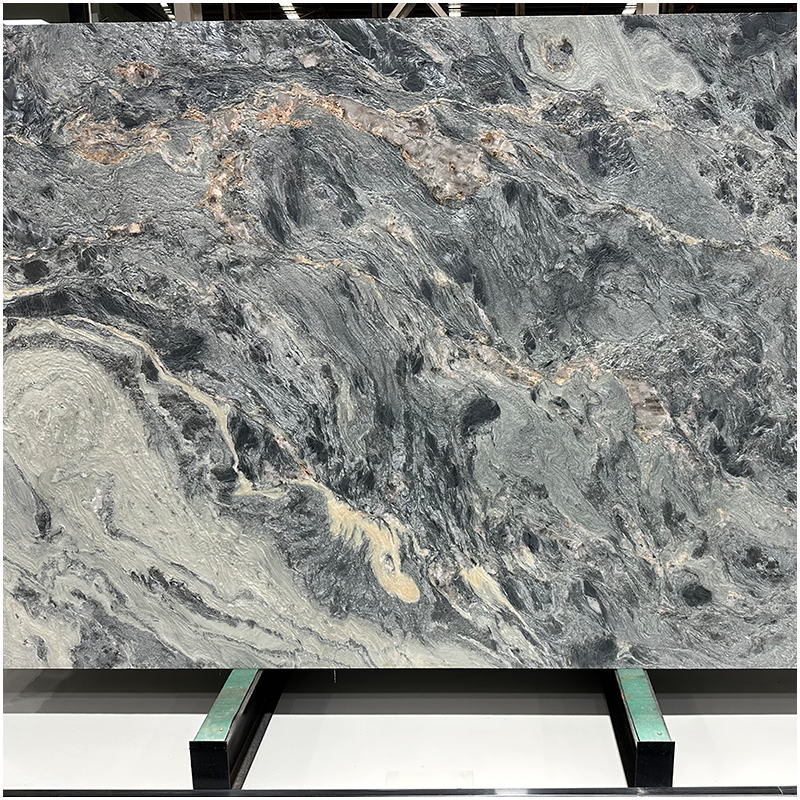
A Designer’s Dilemma in a North-Facing Flat
“Why do some grey marbles look timeless in the showroom, yet dull once installed?”
A London-based interior designer once asked this during a renovation briefing. The answer lies not in lighting or grout colour, but in understanding the science and structure behind 회색 대리석 — from mineral content to surface finish and maintenance routine.
In this guide, we’ll decode how to select 회색 대리석 that keeps its elegance for decades, using real case studies from 포 유 스톤, backed by research and verified material testing data.

The Emotional Science of Gray Marble
Unlike white or beige, 회색 대리석 captures a modern, balanced aesthetic — calm yet bold. Studies from the European Institute of Interior Design show that 63% of homeowners now prefer neutral stone tones with lower visual noise. Grey surfaces also help light bounce evenly across modern interiors, reducing glare and visual fatigue.
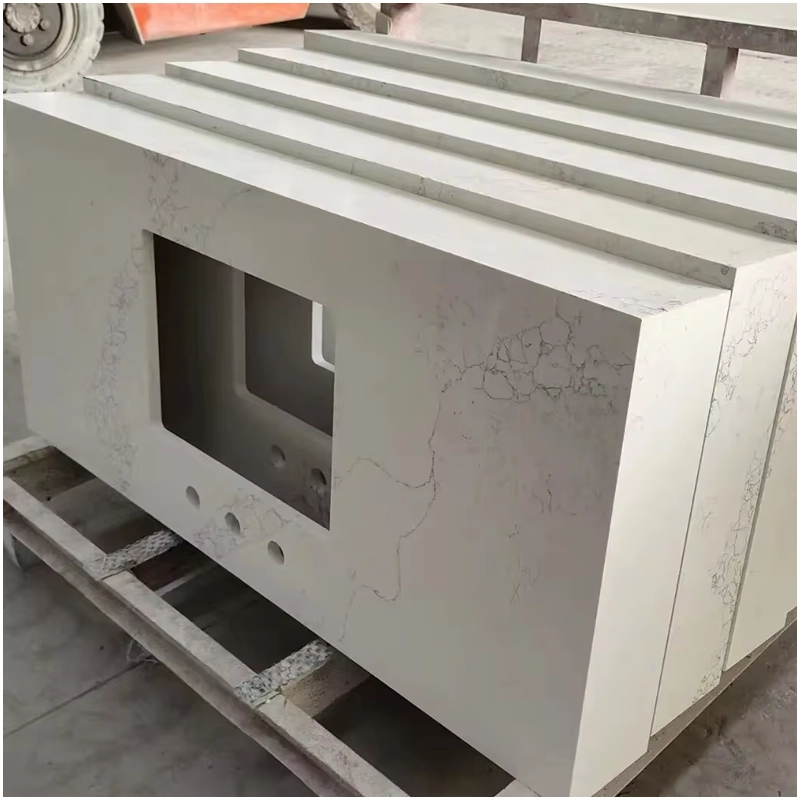
But not all grey stones are created equal. For instance, 다크 그레이 도자기 조리대 상판 from FOR U STONE combine subtle veining with porcelain’s enhanced surface hardness, making them ideal for kitchens that demand both durability and sophistication. Porcelain imitations of marble now rival natural stone in strength and colour consistency — a vital factor for long-term projects.
Geological DNA: What Defines a Great Gray Marble
Every marble has its “geological fingerprint” — a story written by minerals, pressure, and time. The variations in calcite, dolomite, and clay minerals influence its tone, density, and resilience.
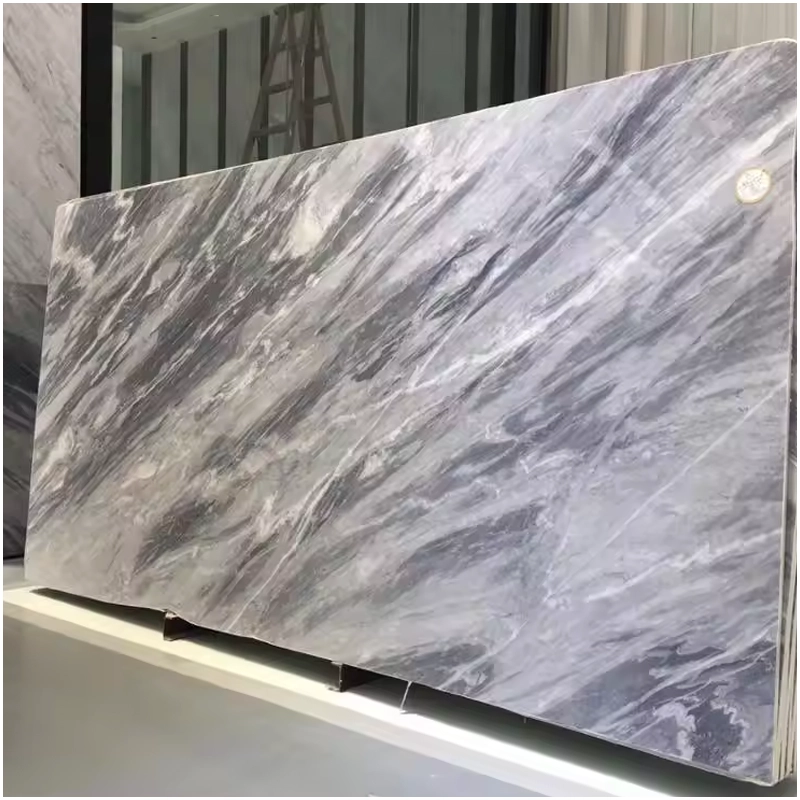
Take 피에트라 그레이 대리석 슬라브 for example. This Iranian-origin stone features dramatic white veins over a smoky-grey base, with an average compressive strength of 130 MPa and water absorption under 0.35%. These numbers may look small, but they’re the difference between a countertop that endures steam and one that stains easily.
FOR U STONE’s quality control includes three-layer inspection — quarry selection, block slicing, and surface polishing — ensuring the final slab meets both ASTM C97 (water absorption) and EN 14617 (impact resistance) standards. That’s why professional designers frequently choose Pietra Grey for boutique hotels and modern restaurants.
Regional Variation: Turkey’s Hidden Grey Gem
Turkey isn’t just famous for white marbles like Mugla or Afyon — it also produces some of the world’s most refined greys.
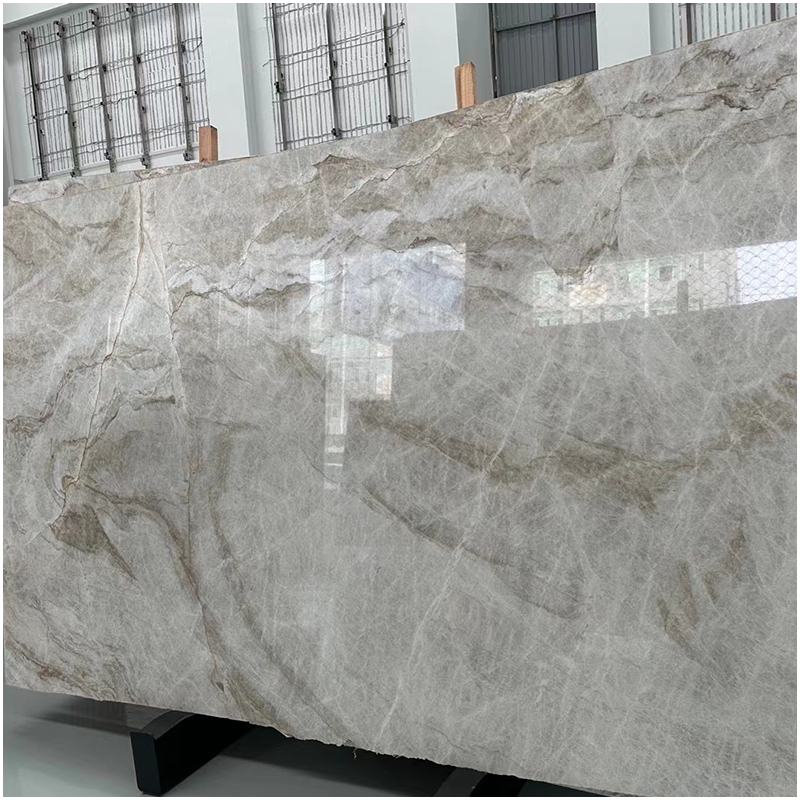
그리고 에게해 회색 대리석 슬라브 from FOR U STONE is a classic example. Its tight grain and cloudy textures reflect 20% more natural light compared to darker varieties, creating a “soft contrast” effect often sought in minimalist interiors.
A recent 2024 survey by the Turkish Stone Exporters Association (ESTA) showed that Aegean Grey exports grew by 37% year-on-year, largely due to global demand for low-maintenance luxury flooring. FOR U STONE’s quarry-to-factory integration enables strict control over colour batch uniformity — a key advantage when supplying large commercial projects in Europe and the Middle East.
Application Insight: Flooring, Wall Cladding, and Beyond
If countertops demand hardness, 바닥재 demands structural stability and anti-slip control.
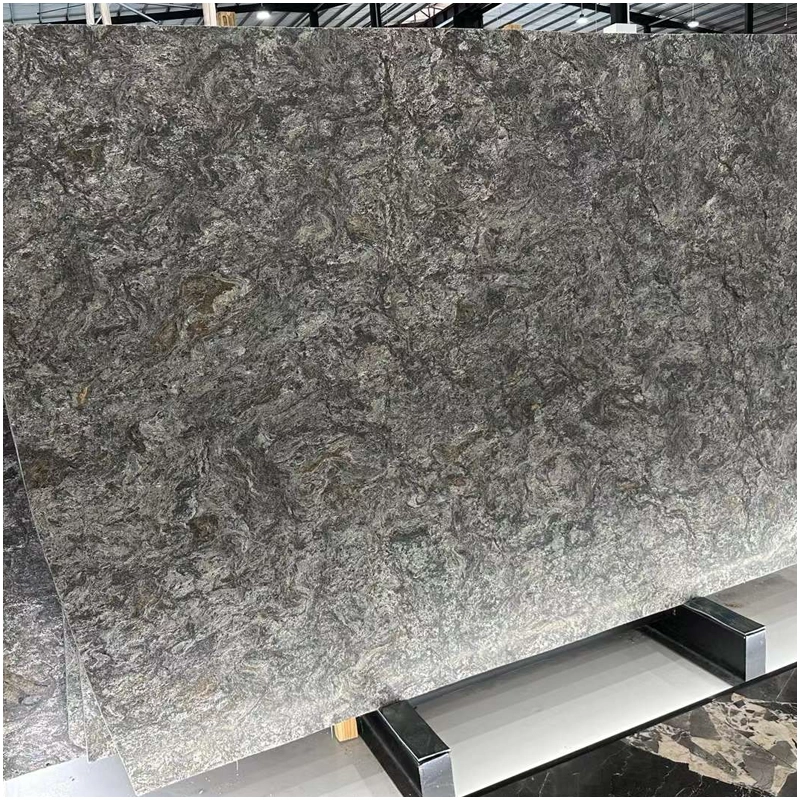
Castle Grey Marble for Flooring Tile achieves both. With a Mohs hardness of 3.5–4 and excellent compressive performance, it withstands daily traffic while maintaining a matte, understated look.
A 2023 Hong Kong commercial office project used Castle Grey tiles across 1,800 sqm of lobby space. The result? Even after a year, gloss retention remained above 90%, while micro-abrasion testing confirmed no visible colour fading — a testament to how proper stone selection translates into performance longevity.
Interior stylists often pair Castle Grey with brushed bronze or walnut furniture for contrast. The tone neutrality of grey acts as a perfect bridge between warm and cool palettes — adaptable to virtually any design style.
Its appearance is equally shaped by impurities formed during metamorphism. Fine traces of quartz, graphite, or clay create white, amber, or charcoal veins that give each slab its identity. These patterns can visually warm a space or cool it, depending on the underlying grey temperature, making grey marble one of the most adaptable palettes in modern interiors.
Designers choose grey marble not simply for colour, but for its ability to pair seamlessly with wood, metal, matte black fixtures, or soft minimalist palettes. Whether used for flooring, wall cladding, kitchen worktops, fireplaces, or spa-like bathrooms, grey marble brings calmness without sacrificing richness. When properly sealed, it withstands both high-moisture rooms and high-traffic public zones—part of the reason hotels, retail stores, and commercial offices increasingly prefer premium grey stone over brighter alternatives.
In design, its value lies in subtlety. Grey marble introduces sophistication without shouting, offering depth and texture while maintaining balance in a space. Its neutrality provides a stable visual anchor, allowing bolder materials, lighting schemes, or furnishings to coexist without visual conflict. This is why architects describe grey marble as “quiet luxury”—a material that enhances rather than competes with its surroundings.
Data-Driven Durability: The Key Metrics to Check
Before purchasing grey marble, pay attention to measurable indicators:
| 속성 | Recommended Value | Why It Matters |
|---|---|---|
| 밀도 | >2.6 g/cm³ | Indicates compactness and resistance to cracking |
| 수분 흡수 | <0.4% | Determines stain resistance and lifespan |
| 압축 강도 | >120 MPa | Ensures stability under heavy load |
| 굴곡 강도 | >10 MPa | Critical for thin tiles and claddings |
| Gloss Retention | >85% (after 1 year) | Reflects surface quality consistency |
According to ASTM and ISO benchmarks, premium grey marble meeting these numbers typically lasts 35–50 years under normal indoor use, provided maintenance follows pH-neutral cleaning and periodic sealing.
FOR U STONE: Crafting Reliability into Aesthetics
When sourcing from FOR U STONE, buyers aren’t just purchasing a product — they’re securing a supply chain advantage. The company’s 회사 소개 page outlines over 25 years of experience in quarry extraction, slab fabrication, and export packaging. Their automatic resin line and Italian polishing units ensure every 회색 대리석 slab retains its natural depth and texture.
A case study from a U.S. architecture firm revealed that switching to FOR U STONE reduced batch rejection rates from 18% to 2%, primarily due to better moisture control during slab curing. This precision-led manufacturing process now positions the company as a preferred supplier for global wholesalers.
Choosing the Right Finish: Honed, Polished, or Leathered?
Each finish tells a different story:
-
Polished finish: maximises reflection; ideal for luxury interiors and countertops.
-
Honed finish: matte and subtle; perfect for modern minimalist floors.
-
Leathered finish: tactile and organic; increasingly popular in spa and outdoor areas.
A 2024 trend report by the European Stone Design Council found that leathered finishes grew 29% in residential applications — homeowners value the “touch appeal” and lower fingerprint visibility. FOR U STONE’s in-house testing confirms that leathered Castle Grey retains 96% of its colour stability under continuous UV exposure, making it suitable even for semi-outdoor transitions.
Design Psychology: Why Grey Never Goes Out of Style
Designers love 회색 대리석 because it provides a visual pause amid the chaos of modern interiors. It adapts to both industrial and classical settings.
Research from Harvard Graduate School of Design suggests that mid-tone greys improve perceived space balance by up to 18% compared to bright whites — a reason many high-end residences and wellness centres use it to evoke calmness.
“Grey marble doesn’t shout,” says interior specialist Maya Ariston. “It whispers refinement.”
If you’re considering a long-term investment in timeless design, consult the professionals at FOR U STONE Contact Us for custom surface recommendations, texture sampling, and export logistics.

FAQs About Gray Marblehttps
1. Is grey marble suitable for outdoor use?
Yes, certain dense varieties like Aegean Grey or Castle Grey perform well outdoors when properly sealed, resisting UV and moisture damage.
2. How do I maintain polished grey marble?
Clean with pH-neutral detergents and reseal every 12–18 months. Avoid acidic cleaners that can etch the surface.
3. Does grey marble fade over time?
High-quality slabs such as those from FOR U STONE have UV-resistant finishes that minimise fading for decades.
4. What’s the difference between natural and porcelain grey marble?
Natural marble offers unique veining, while porcelain versions provide uniformity and better scratch resistance. Choice depends on project priorities.
5. Is it possible to match different batches of grey marble?
Yes, reputable suppliers like FOR U STONE employ digital colour calibration systems to ensure lot consistency.
Grey marble is more than a trend — it’s a timeless design strategy rooted in both aesthetics and material science. Whether you choose the porcelain efficiency of 다크 그레이 도자기 조리대 상판, the sophistication of 피에트라 그레이, or the endurance of 캐슬 그레이, each carries the signature craftsmanship of 포 유 스톤.
As ESTA’s 2025 market bulletin highlighted, “Grey marble defines the intersection of durability and design confidence.” That’s precisely why architects, designers, and homeowners alike continue to rely on professional suppliers who combine beauty with proven performance.
This means homeowners and designers should evaluate density, absorption rate, finish type, and quarry consistency with the same seriousness as aesthetic selection. When these elements align, grey marble becomes a material that ages with dignity, resists environmental stress, and elevates the atmosphere of any interior. Whether used as flooring, countertops, or wall cladding, the right slab brings a balance of elegance and endurance—proving that well-chosen gray marble is not just a design choice, but a long-term architectural investment.


