Quick Buyer Snapshot: Why Marble Tiles Still Matter
Marble Tiles Are More Than a Decorative Surface
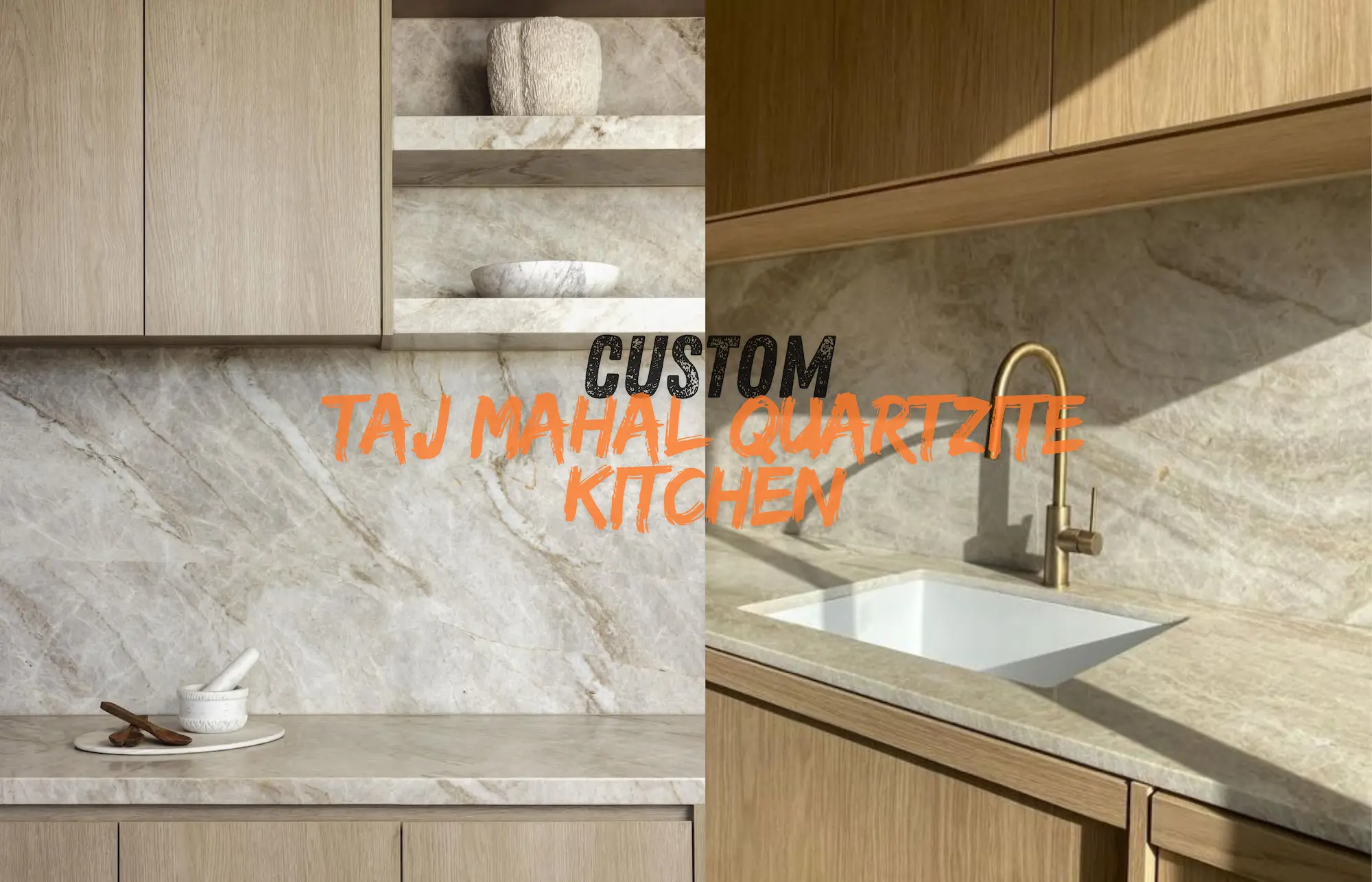
Interior decoration is no longer only about buying trendy furniture and choosing attractive colors. Homeowners, designers, contractors, and project buyers now want materials that look beautiful, last long, support different design themes, and protect the value of the space. This is why Marble Tiles are playing a huge role in modern wall and floor decoration. They bring natural veining, tactile depth, and a sense of permanence that many artificial finishes struggle to copy.
When a buyer reviews natural marble collections, the decision should not stop at surface beauty. Marble tiles must be matched with the room function, traffic level, moisture exposure, lighting, furniture style, and maintenance plan. A tile that looks perfect in a showroom may perform differently in a busy kitchen, hotel lobby, bathroom floor, or outdoor transition area.
The real question is not “Are marble tiles beautiful?” Of course they are. The better question is: which marble tile size, color, finish, thickness, and installation method will give the project the right balance of design impact, safety, cost control, and long-term use?
대리석 타일이란 무엇인가요?
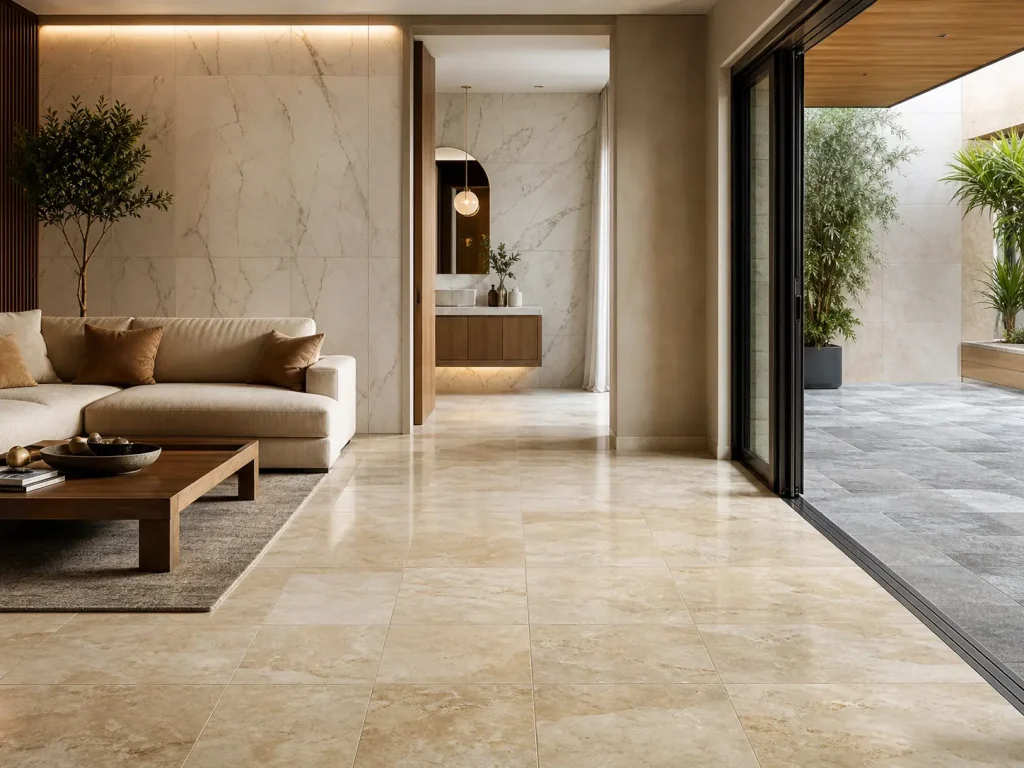
Marble tiles are cut-to-size natural stone pieces made from marble blocks or slabs. They are used for floors, walls, bathrooms, kitchens, fireplaces, staircases, columns, feature areas, and decorative borders. Compared with large marble slabs, tiles are more modular, easier to transport, easier to install in repeated layouts, and often more practical for residential and commercial projects.
For contractors and distributors, marble tiles are attractive because they can be ordered in standard sizes, packed efficiently, and installed across many project types. For homeowners, they offer a way to bring real stone into a space without using full slab installations everywhere. For designers, they provide layout flexibility: straight lay, diagonal lay, herringbone, border patterns, mosaic inserts, bookmatch-inspired panels, and mixed-size floors.
Before choosing a supplier, buyers should check manufacturing experience, project support, quality control, packing, and export capability. A professional marble tiles manufacturer should understand not only stone color, but also thickness tolerance, finish selection, size calibration, crate packing, and project communication.
| 요인 | 대리석 타일 | 대리석 슬라브 | Buyer Recommendation |
|---|---|---|---|
| 설치 | Modular and easier to handle | Requires heavier lifting and skilled handling | Use tiles for repeated floors and walls |
| Seam visibility | More grout lines | Fewer seams | Use slabs for seamless luxury features |
| 수리 | Individual tiles may be replaced | Repair is more complex | Tiles are practical for high-use areas |
| Cost control | More flexible for many projects | Higher fabrication and handling cost | Tiles suit residential and commercial volume work |
Why Marble Tiles Are Important in Interior Decoration
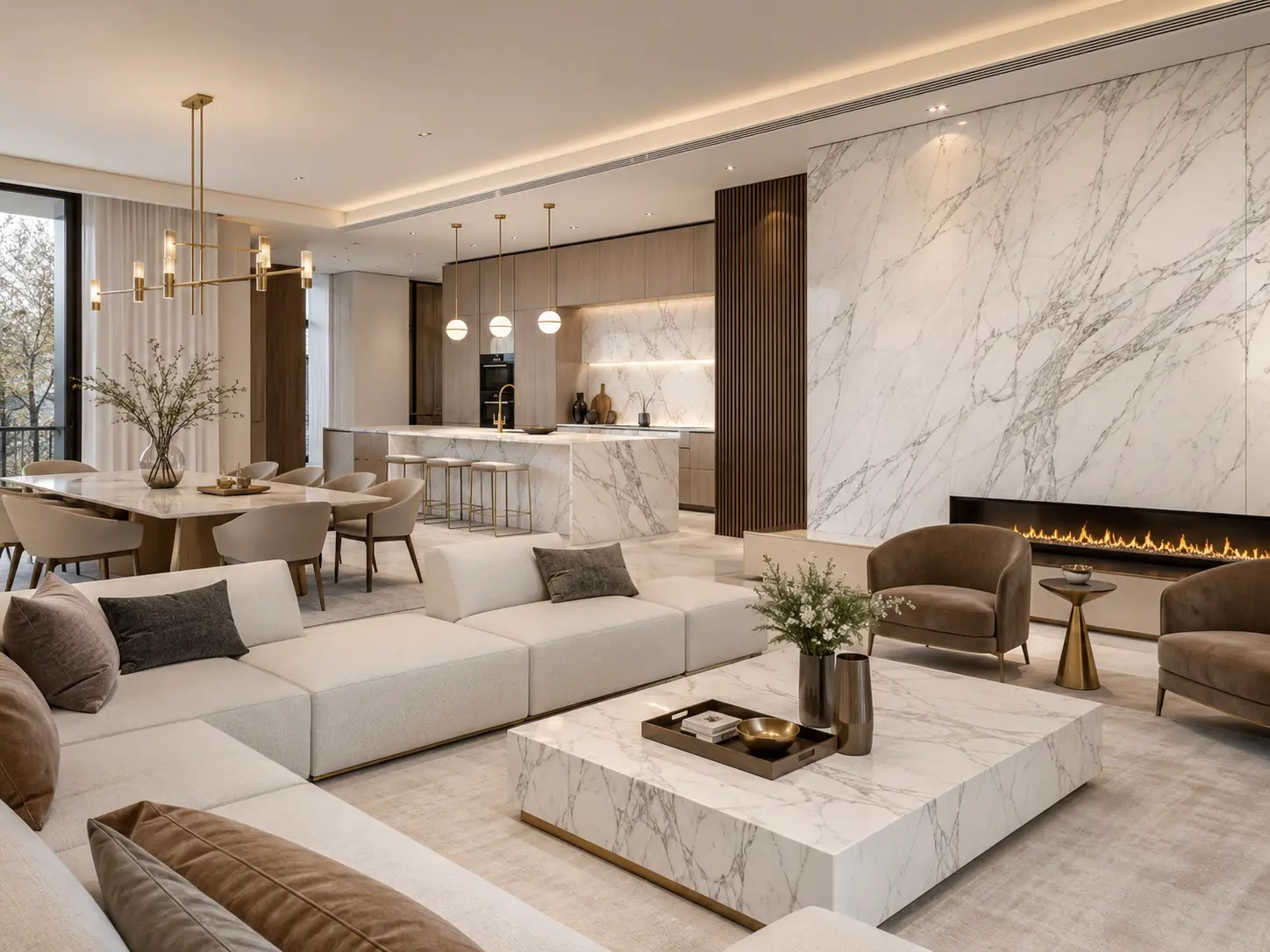
Marble tiles influence more than appearance. They affect the brightness of a room, the feeling underfoot, the visual value of a wall, the durability of a surface, and the way furniture, lighting, and metal finishes work together. White marble tiles can make a bathroom feel clean and spacious. Beige marble floor tiles can make a living room warmer. Grey marble tiles can create a modern architectural mood. Green or black marble tiles can turn a wall or floor into a statement.
For project buyers, the role of marble tiles is also commercial. A hotel lobby floor, luxury apartment bathroom, villa foyer, or retail boutique wall must look premium after installation, but it must also be maintainable. Buyers should prepare room size, tile size, quantity, finish, target color, and delivery destination before requesting a marble tiles project consultation. Clear requirements reduce quotation mistakes and prevent wrong material recommendations.
The market is also moving away from purely sterile spaces. Natural materials, textured finishes, warmer tones, and expressive stone patterns are becoming more important in kitchens, bathrooms, and living spaces. Marble tiles fit this direction because they can be subtle or dramatic, classic or modern, polished or honed.
Main Applications of Marble Tiles
Marble tiles are used in many areas because they are flexible in size, color, finish, and layout. In residential decoration, they are common in bathrooms, kitchens, living rooms, foyers, hallways, staircases, and fireplaces. In commercial projects, they appear in hotels, office lobbies, retail stores, restaurants, clubs, villas, resorts, and public reception areas.
For buyers comparing product options, a dedicated 대리석 타일 category helps organize choices by material, color, size, application, and design style. This matters because a bathroom wall tile, a living room floor tile, and a lobby traffic-area tile should not be selected with the same logic.
| 공간 | Best Marble Tile Type | 권장 마무리 | Main Risk | Buyer Advice |
|---|---|---|---|---|
| 욕실 벽 | White, beige, grey, or dramatic marble tiles | 광택 또는 연마 | Water spots and soap residue | Use ventilation and neutral cleaner |
| 욕실 바닥 | Small or medium tiles | Honed, brushed, or textured | Slip risk when wet | Avoid high-gloss polished floors in wet zones |
| Living room floor | Beige, cream, grey marble tiles | 광택 또는 연마 | Large-area color mismatch | Confirm batch photos before shipment |
| 주방 백스 플래시 | White, grey, green, or patterned tiles | 광택 또는 연마 | Oil splashes and acidic cleaners | Seal and clean with pH-neutral products |
| Hotel lobby | Large-format marble floor tiles | Polished, honed, or treated | High traffic and abrasion | Use proper thickness and maintenance plan |
Color Choices: From White Marble Tiles to Green Statement Surfaces
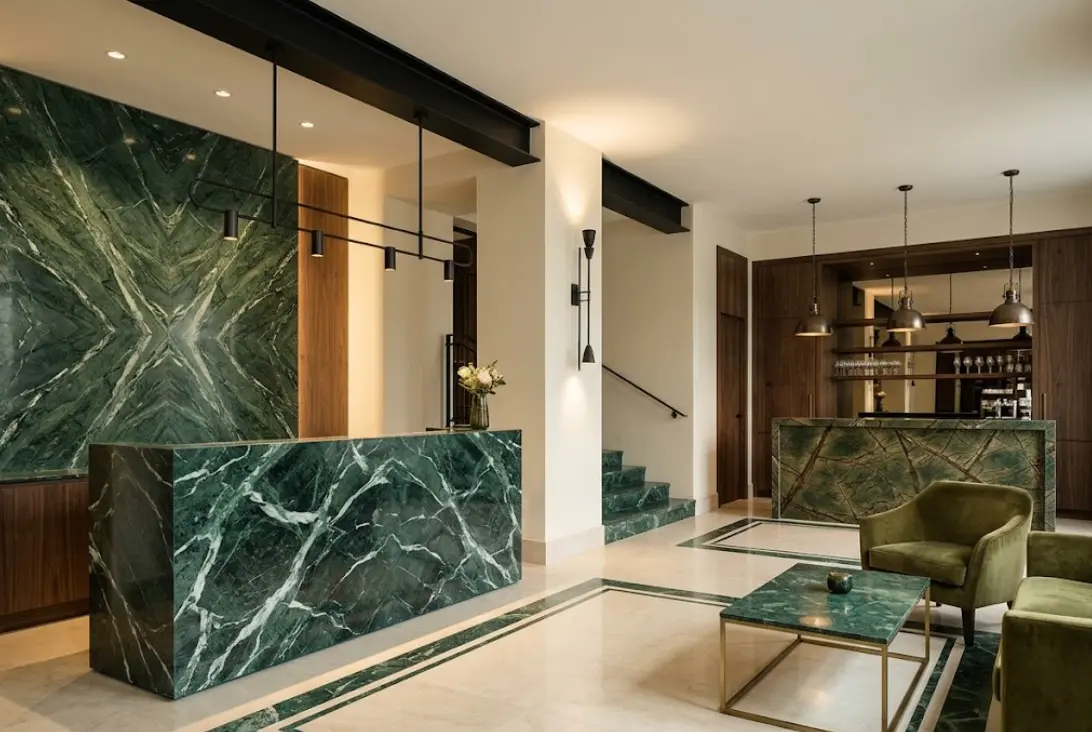
Color is one of the biggest reasons buyers choose marble tiles. White marble tiles create brightness and timeless elegance. Beige tiles add warmth. Grey tiles bring modern calm. Black tiles create bold contrast. Green marble tiles add personality and natural richness, especially in bathrooms, boutique interiors, bar walls, powder rooms, and feature floors.
Designers who want a stronger visual identity can use 녹색 대리석 타일 as accent surfaces rather than covering every wall and floor. Green marble works beautifully with walnut, cream paint, brass fixtures, handmade tiles, and soft indirect lighting. The risk is overuse. If every surface becomes dramatic, the room can feel busy instead of luxurious.
White marble remains one of the safest options for buyers who want brightness and long-term appeal. It works for bathrooms, kitchen backsplashes, small rooms, wall panels, fireplace surrounds, and classic floors. However, white marble can show stains and etching more easily than beige or grey stone, so it should be used with a realistic care plan.
For clean and bright spaces, 흰색 대리석 타일 is especially useful when the goal is to make a room feel larger, lighter, and more refined. In small bathrooms or narrow corridors, white marble can visually expand the space. In kitchens, it pairs well with white cabinets, oak cabinets, brass handles, and matte black fixtures.
| Marble Tile Color | 시각 효과 | Best Space | Maintenance Visibility | Recommendation |
|---|---|---|---|---|
| 흰색 | Bright, clean, timeless | Bathrooms, kitchens, small rooms | High stain and etch visibility | Use with sealing and careful cleaning |
| 베이지 | Warm, comfortable, natural | Living rooms, villas, hotels | Moderate visibility | Best for large family-friendly areas |
| 회색 | Modern, calm, architectural | Bathrooms, commercial interiors, floors | Water marks may show | Pair with wood or warm lighting |
| 블랙 | Bold, luxury, dramatic | Feature areas, bars, powder rooms | Dust and scratches show more | Use as a controlled statement |
| 녹색 | Natural, rich, expressive | Accent walls, bathrooms, boutiques | Depends on finish | Balance with calm surrounding materials |
Grey Marble Tiles and the Modern Interior Balance
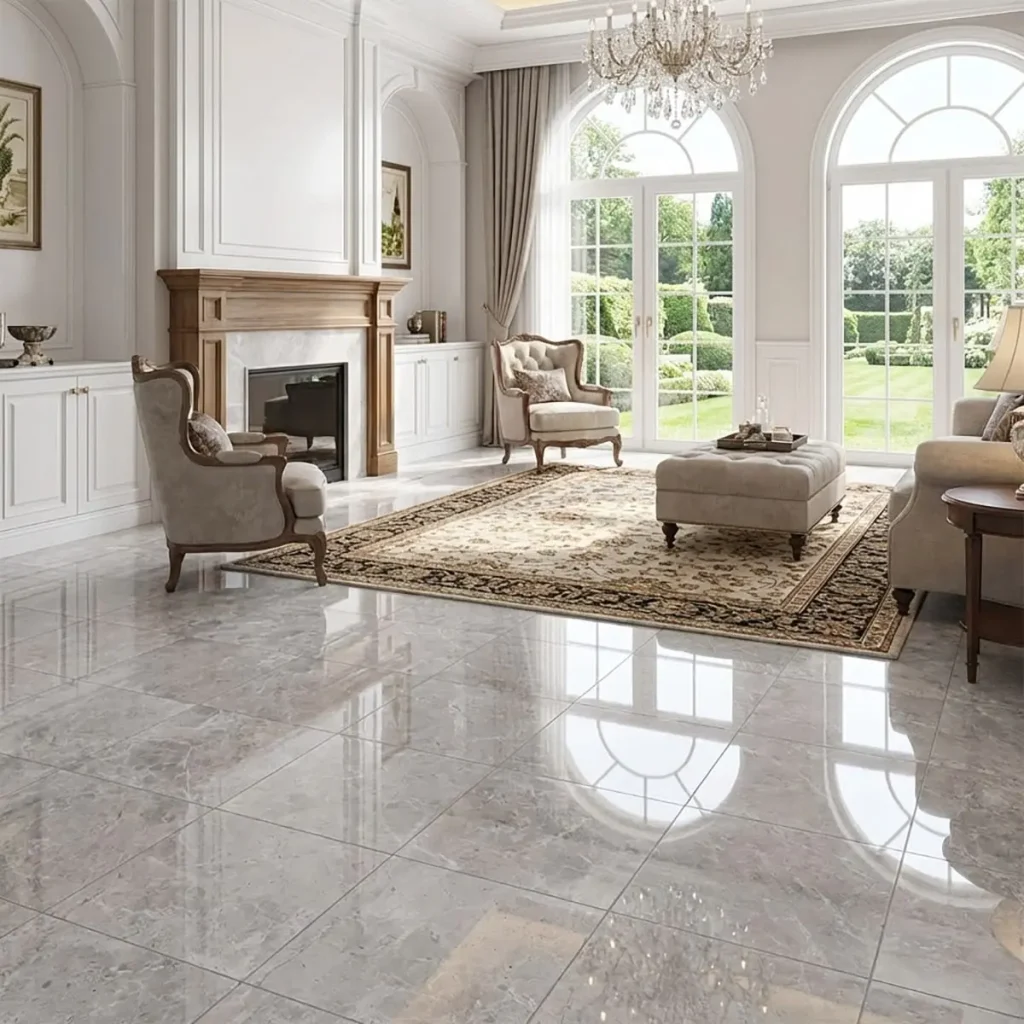
Grey marble tiles have become popular because they provide structure without looking too cold when used correctly. They suit modern apartments, bathrooms, office interiors, commercial corridors, and minimalist living rooms. Grey marble also works well with black metal, chrome, walnut, concrete textures, and soft white walls.
For projects that need calm luxury, Tundra Gray marble tiles can help create a balanced architectural surface. The color is neutral enough for broad use, but the natural veining keeps the room from feeling flat. This makes grey marble useful for buyers who want something more characterful than plain porcelain but less dramatic than black or green marble.
The main risk with grey marble is coldness. If the room has little natural light, too much grey stone can feel heavy. Warm LED lighting, wood cabinetry, beige textiles, and soft wall colors can solve this. Good design is rarely about one material alone; it is about the relationship between stone, light, furniture, and daily use.
Tile Size and Layout: Why Format Changes the Room
Marble tile size changes how a room feels. Small tiles create detail and more grout lines. Medium tiles are practical for bathrooms, kitchens, corridors, and residential floors. Large-format tiles create a cleaner, more luxurious look with fewer joints, but they require better substrate preparation and more skilled installation.
Common sizes include 300 × 300 mm, 305 × 305 mm, 400 × 400 mm, 457 × 457 mm, 600 × 600 mm, 600 × 1200 mm, and custom cut-to-size formats. The best size depends on room scale, drainage, traffic, pattern direction, and budget. For wet bathroom floors, smaller tiles may provide more grout lines and better grip potential. For large living rooms, larger tiles can make the space feel calmer and more premium.
For homeowners and designers comparing style directions, guides on new marble tiles designs for home can help connect tile size, pattern, color, and room function before purchase. This step matters because fashionable layouts may not always suit the actual room size.
| 타일 크기 | 시각 효과 | Best Application | Installation Difficulty | Buyer Recommendation |
|---|---|---|---|---|
| 300 × 300 mm | Detailed and traditional | Bathrooms, borders, small spaces | Low to medium | Useful where more joints help grip |
| 400 × 400 mm | Balanced and practical | Residential floors and bathrooms | Medium | Good general-purpose size |
| 600 × 600 mm | Cleaner and more modern | Living rooms, foyers, lobbies | Medium to high | Needs flat substrate and batch control |
| 600 × 1200 mm | Large, premium, fewer joints | Feature walls and luxury floors | 높음 | Use skilled installers and dry layout |
| Custom cut-to-size | Project-specific | Hotels, villas, stairs, borders | 높음 | Confirm drawings before cutting |
Finish Selection: Polished, Honed, Brushed, Tumbled, or Textured
The finish of marble tiles affects safety, maintenance, and design mood. Polished marble is glossy and luxurious, but it can be slippery when wet and may show scratches or etching more clearly. Honed marble has a softer matte look and is often preferred in calm modern interiors. Brushed and textured finishes feel more natural and may hide small marks better. Tumbled marble has softened edges and works well in Mediterranean, rustic, or traditional spaces.
For a deeper design comparison, a marble tiles guide for modern interiors can help buyers understand how finish, color, and layout change the final feeling of a room. A polished wall can look elegant, but a polished wet floor can become a maintenance and safety problem. The surface must fit the use, not just the photo.
| 완료 | Look | Slip Feel | 유지 관리 | 최상의 사용 |
|---|---|---|---|---|
| 광택 | Glossy and reflective | Lower grip when wet | Shows etching and scratches | Walls, dry floors, decorative areas |
| 연마 | Matte and soft | Better than polished | Needs sealing and stain care | Bathrooms, living rooms, calm interiors |
| 브러시 | Textured and natural | Improved tactile grip | Texture needs careful cleaning | Floors and organic interiors |
| 텀블 | Aged and softened | Moderate grip | Porous edges need care | Backsplashes, traditional bathrooms |
| 샌드 블라스트 | Rough and anti-slip | Higher grip | Can hold dirt | Wet or semi-outdoor areas |
Travertine, Limestone, Pavers, and Marble Tiles: How They Work Together
Many buyers also compare marble with travertine, limestone, and pavers. Travertine is a calcium carbonate stone often referred to as a type of limestone. It has been used for thousands of years in construction and decoration, including major historic and public buildings. Its natural holes, warm tones, and aged texture make it popular for Mediterranean homes, outdoor spaces, bathrooms, and landscape transitions.
Pavers are often used in outdoor and landscape decoration because they are economical, durable, and available in different sizes. Grey pavers can create a romantic contrast with green plants, garden furniture, patios, and pathways. They are not the same as marble tiles, but they belong to the same broader design conversation: choosing the right stone for the right use area.
If the project needs elegant interiors, marble tiles are usually stronger visually. If the project needs outdoor garden paths or patios, pavers may be more practical. If the project needs rustic warmth, travertine can be a good candidate. If the project needs polished luxury, marble tiles often win.
Technical Performance: Beauty Must Work with Specification
Marble is a natural carbonate stone, so buyers must understand its performance limits. It is beautiful, but it is not magic. Marble is softer than granite and many quartzites. It can be scratched by abrasive dirt, dulled by acidic substances, and stained if porous areas are not protected. This does not mean marble tiles are bad. It means they need correct selection, installation, and care.
| 요인 | 중요한 이유 | Higher-Risk Situation | Safer Choice | Buyer Action |
|---|---|---|---|---|
| 미끄럼 저항 | Wet floors can become unsafe | Polished bathroom floors | Honed, brushed, textured, or smaller tiles | Check finish for wet areas |
| 산성 에칭 | Acid can dull marble surfaces | Kitchens and dining areas | Use backsplash or protected areas | Avoid acidic cleaners |
| Stain risk | Oil, wine, and cosmetics may mark stone | White honed marble | Beige, grey, or sealed marble | Confirm sealing plan |
| Scratch visibility | Fine scratches affect polished surfaces | Dark polished floors | Honed or patterned marble | Use mats and proper cleaning |
| Color variation | Natural batches vary | Large floor areas | Batch-selected material | Request full batch photos |
| Breakage during shipping | Tiles can chip or crack | Poor packing | Strong crates and separation | Confirm export packing details |
Marble Tiles vs Porcelain Tiles: Honest Buyer Comparison
Porcelain tiles are popular because they are consistent, dense, and easier to maintain. Marble tiles are selected because they are natural, unique, premium, and emotionally richer. Neither material wins every project. The right choice depends on what the buyer values most.
| 요인 | 대리석 타일 | 도자기 타일 | Buyer Recommendation |
|---|---|---|---|
| Natural character | Unique veining and variation | Printed or manufactured consistency | Choose marble for authenticity |
| 유지 관리 | Needs neutral cleaning and sealing awareness | Generally easier | Choose porcelain if low maintenance is top priority |
| Luxury value | High natural stone value | Depends on design quality | Choose marble for premium interiors |
| Color consistency | 자연스러운 변화 | High consistency | Use batch approval for marble |
| 수리 | Can be refinished in some cases | Usually replaced when damaged | Consider long-term maintenance plan |
Installation: Where Good Marble Tiles Become a Good Project
Installation quality determines whether marble tiles look premium or disappointing. The substrate must be flat, clean, stable, and dry. Adhesive or mortar must be suitable for natural stone. Light-colored marble often needs white adhesive to reduce shadowing. Grout width and color should be chosen before installation, not improvised on site.
Dry layout is especially important for marble because natural veining can look random if tiles are installed without planning. Before fixing tiles, the installer should check color distribution, vein direction, edge pieces, cut locations, and transitions. Waste allowance should also be included. Many projects need around 5-15% extra material depending on room shape, cuts, pattern matching, and breakage risk.
For premium interiors, buyers can compare top grade marble tiles to understand how quality level, selection, and project suitability influence the final result. A cheap tile installed badly is expensive twice: once when you buy it, and again when you regret it.
Common Mistakes When Buying Marble Tiles
Choosing Only by Product Photo
Product photos cannot show the full batch variation of natural stone. Buyers should request current batch photos, close-up images, and packing details before ordering.
Using Polished Marble in Wet Floors Without Safety Planning
Polished marble can become slippery when wet. Bathroom floors, shower areas, and entrance zones need finish and layout decisions that support safer use.
Ignoring Acid Sensitivity
Marble can react with acidic substances such as lemon juice, vinegar, wine, and acidic cleaners. This matters in kitchens, dining areas, bathrooms, and cleaning routines.
Forgetting Waste Allowance
If buyers order exactly the measured area, cutting waste, breakage, and future replacement may create a shortage. Later orders may not match the same batch.
Not Planning Vein Direction
Random vein direction can make expensive marble look chaotic. Dry layout and installer communication are essential.

Buyer Decision Logic: If This, Choose That
If you want a luxury bathroom, choose white, beige, grey, or dramatic marble wall tiles, and use honed, textured, or smaller-format tiles for wet floors. If you want a warm living room, choose beige or cream marble floor tiles in larger formats. If you want a modern commercial space, choose grey or neutral marble tiles and prioritize abrasion resistance, cleaning plan, and batch consistency.
If you want low maintenance above all else, consider whether porcelain may be easier. If you want natural stone depth, uniqueness, and long-term design value, Marble Tiles are the stronger choice. If you are buying wholesale, confirm color range, thickness, surface finish, crate packing, quantity tolerance, and replacement strategy before deposit payment.
FAQ About Marble Tiles
1. 대리석 타일은 욕실에 적합한가요?
마블 타일은 적절한 마감 처리, 밀봉, 배수 및 청소 방법을 사용할 경우 욕실에 적합합니다. 마블 벽 타일은 고급스러운 스파 같은 분위기를 연출하며, 욕실 바닥 타일은 미끄럼 방지 기능을 고려해 선택해야 합니다. 광택 처리된 마블 타일은 벽면에 아름답게 어울리지만, 연마 처리되거나 브러시 처리된 타일, 질감이 있는 타일 또는 작은 규격의 타일이 젖은 바닥에는 더 실용적입니다. 또한 적절한 환기와 중성 세정제를 사용하는 것도 석재를 보호하는 데 도움이 됩니다.
2. 대리석 바닥 타일에 가장 적합한 마감재는 무엇인가요?
대리석 바닥 타일의 최적 마감 처리는 설치 장소에 따라 달라집니다. 광택 처리된 대리석은 밝고 우아한 느낌을 주지만, 물기가 있으면 미끄러울 수 있으며 흠집이나 부식이 더 뚜렷하게 나타날 수 있습니다. 매트한 마감 처리된 대리석은 부드러운 무광 표면을 제공하며 거실과 욕실에 더욱 적합합니다. 브러시 처리되거나 터널링된, 또는 질감 처리된 대리석은 접지력을 높이고 작은 흠집을 잘 숨겨주어 습기 있는 공간이나 사용 빈도가 높은 공간에 유용합니다.
3. 대리석 타일이 도자기 타일보다 낫나요?
마블 타일은 프로젝트에 자연스러운 무늬와 고급스러운 소재 가치, 독특한 럭셔리한 표면이 필요할 때 포세린 타일보다 더 나은 선택입니다. 포세린 타일은 보통 관리가 더 쉽고 색상 일관성이 뛰어나며 얼룩과 산성 물질에 대한 내구성이 높습니다. 진정성, 자연스러운 변형, 장기적인 디자인 특성이 가장 중요하다면 마블 타일이 강력한 선택이 될 것입니다. 반대로 낮은 유지관리와 균일성이 가장 중요한 경우라면 포세린 타일이 더 쉬울 수 있습니다.
4. 대리석 타일은 어떻게 관리하나요?
대리석 타일을 유지하려면 정기적으로 바닥을 먼지 걸레로 닦고, 중성 pH의 석재 전용 세정제를 사용해 청소하며, 음식물이나 액체가 쏟아졌을 때는 신속히 닦아내고, 산성 세정제는 피하며, 유동이 많은 공간에는 매트나 패드를 사용하세요. 욕실과 주방에서는 석재의 종류, 마감 상태 및 사용 환경에 따라 밀봉 처리를 권장할 수 있습니다. 대리석은 식초, 레몬 기반 세정제, 강한 화학약품 또는 연마성이 있는 도구로 청소해서는 안 됩니다. 이러한 제품들은 표면을 손상시킬 수 있기 때문입니다.
5. 구매자는 대리석 타일을 도매로 주문하기 전에 무엇을 확인해야 하나요?
대리석 타일을 도매로 주문하기 전에 구매자는 현재 배치의 사진, 색상 범위, 무늬, 타일 크기, 두께, 마감 처리, 수량, 폐기 허용량, 포장 방법, 배송지 및 교체 방안을 확인해야 합니다. 천연 대리석의 경우 배치 간 차이가 일반적이므로 절단 또는 선적 전에 승인받는 것이 중요합니다. 또한 구매자는 해당 타일이 바닥, 벽, 습식 공간, 상업적 통행구역, 또는 장식용 표면으로 사용될 것인지 반드시 확인해야 합니다.
참조
- “Dimension Stone Design Manual” — Natural Stone Institute Technical Committee — Natural Stone Institute — Stone Design and Installation Reference
- “Care and Cleaning of Natural Stone” — Natural Stone Institute Consumer Education Team — Natural Stone Institute — Stone Maintenance Guidance
- “Standard Specification for Marble Dimension Stone” — ASTM Committee C18 — ASTM International — Natural Stone Material Standard
- “Standard Test Method for Abrasion Resistance of Stone Subjected to Foot Traffic” — ASTM Committee C18 — ASTM International — Stone Wear Testing Reference
- “American National Standard Test Method for Measuring Dynamic Coefficient of Friction of Hard Surface Flooring Materials” — ANSI A326.3 Committee — ANSI — Floor Safety Reference
- “Tile Council of North America Handbook for Ceramic, Glass, and Stone Tile Installation” — TCNA Handbook Committee — TCNA — Installation Methods Reference
- “Interior Design Trends and Homeowner Preferences Report” — Houzz Research Team — Houzz — Residential Design Research
- “Natural Stone Sustainability Standard Guidance” — Natural Stone Council Technical Contributors — Natural Stone Council — Sustainable Stone Reference
Ready Insight Block: Why Marble Tiles Play a Huge Role
Decision Logic:
- Luxury bathroom → choose marble wall tiles with honed or textured floor tiles.
- Warm living room → choose beige or cream marble floor tiles in larger formats.
- Modern commercial interior → choose grey marble tiles with batch control and maintenance planning.
- Low-maintenance priority → compare marble with porcelain before final selection.
- Wholesale project order → confirm batch photos, thickness, finish, packing, and waste allowance.
흔히 저지르는 실수: Avoid choosing only from product photos, using polished marble in wet floors without safety planning, ignoring acid sensitivity, forgetting waste allowance, selecting the wrong adhesive, or installing tiles without a dry layout.
Practical recommendation: Marble Tiles play their best role when beauty and specification work together. Before buying, prepare the project area, room photos, target color, finish, size, thickness, quantity, waste allowance, and destination so the supplier can recommend a suitable material and packing plan.