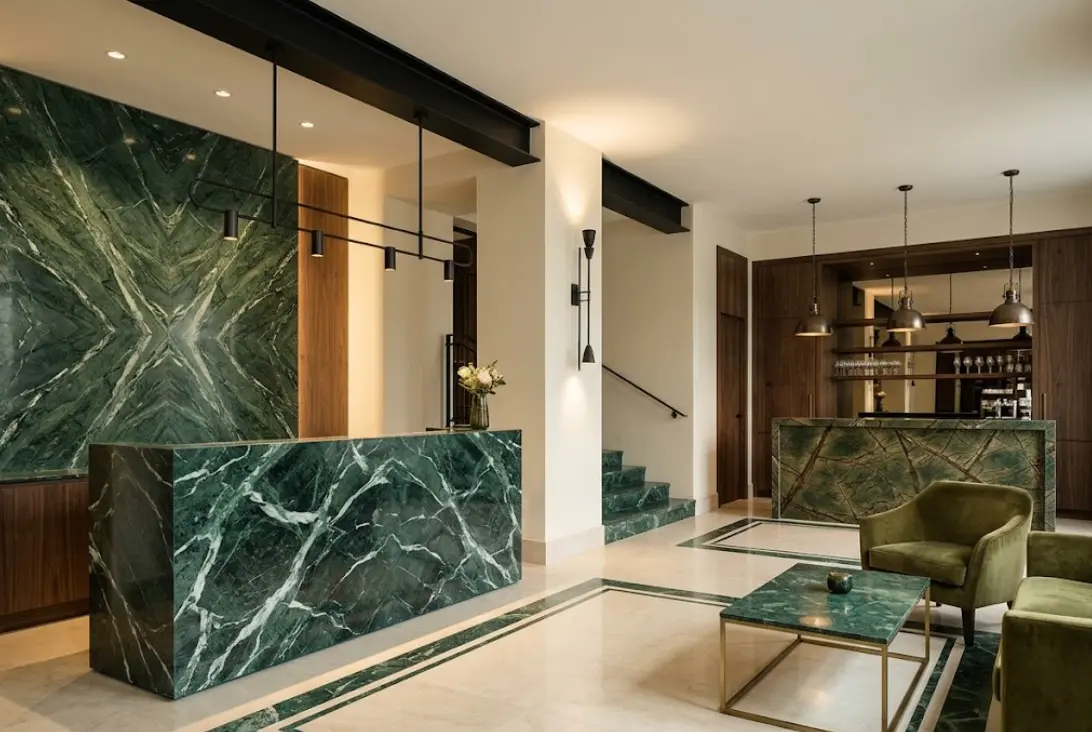
The intersection of nature and architecture has never been more prominent than in today’s luxury interior design landscape. As developers and high-end residential designers embrace biophilic design—a concept that seamlessly integrates natural elements into indoor environments—the demand for materials that evoke the serenity of the outdoors has skyrocketed. Among these materials, Green Marble Slabs have emerged as the undisputed pinnacle of organic luxury. Unlike the ubiquitous stark whites of Carrara or the cold, industrial feel of concrete, green marble breathes life, depth, and a profound sense of history into any commercial or residential space. From the deep, emerald forests captured in Italian quarries to the vibrant, jade-like crystalline structures sourced from Asia, these slabs are not merely building materials; they are geological works of art. For architects and interior designers who are looking to push the boundaries beyond standard beige and gray palettes, they consistently turn to classic natural stone marbles to provide an unmatched level of sophistication.
Why Green Marble is the Ultimate Luxury Interior Trend
However, sourcing these exotic stones is fraught with technical and logistical challenges. The supply chain for rare colored marble is notoriously fragmented, with quality varying wildly from one block to the next. B2B buyers, including large-scale fabricators, architectural firms, and global stone distributors, must navigate a complex maze of grading systems, surface treatments, and international shipping regulations. The stakes are incredibly high; specifying the wrong grade or finish for a multi-million dollar hotel lobby can result in catastrophic aesthetic failures and massive financial liabilities. Therefore, establishing a reliable, transparent supply chain is not just an operational goal—it is a strategic necessity. For global distributors and high-volume fabricators, securing consistent, premium-grade lastre di marmo all'ingrosso directly from the source is the only proven method to meet the surging market demand while simultaneously protecting their project margins and brand reputation.
Popular Green Marble Varieties: From Classic to Exotic
The term “green marble” is an umbrella classification that covers a staggering variety of mineral compositions, colors, and veining patterns. Understanding the distinct geological differences between these varieties is the first step in making an informed procurement decision.
Ice Connect Marble: The Modern Luxury Standard
In recent years, the market has witnessed a massive shift toward highly dramatic, high-contrast stones. Leading this charge is the Ice Connect marble, often referred to in the trade as Cold Emerald or Ice Jade. This spectacular stone features a luminous, icy white crystalline background that is aggressively fractured by striking, vivid emerald green veins and occasional black brecciation. Within the highly competitive global natural stone market, this exclusive green marble series stands entirely in a class of its own, offering designers a bold, contemporary aesthetic that cannot be replicated by engineered quartz or porcelain.
Verde Alpi and Indian Green: Timeless Choices
For a more traditional, deeply saturated look, Verde Alpi from Italy remains the historical gold standard. Characterized by its intense, dark forest green background and delicate, sweeping white calcite veins, Verde Alpi exudes an old-world aristocratic elegance. Conversely, Indian Green (frequently marketed as Verde Guatemala) offers a highly durable, cost-effective alternative for large-scale commercial applications. It features a more uniform, medium-to-dark green hue with subtle veining, making it ideal for extensive floor tiling where consistency is paramount. Because the geological conditions required to form these specific chlorite and serpentine-rich minerals are so geographically limited, procurement teams and designers frequently ask Quanto è raro il marmo verde when attempting to justify the premium price point and extended lead times associated with these highly sought-after exotic materials.
Rainforest Green: The Serpentine Sensation
Rainforest Green is technically a serpentinite rather than a true marble, but it is universally traded within the marble category. It is famous for its intricate, branching brown and red veins that closely resemble the tangled roots of a tropical rainforest canopy against a muted green background. This heavy veining makes it an exceptional choice for highly textured leathered finishes.
Whether you are specifying the classic elegance of Verde Alpi or looking to make a massive visual impact with a Cold Emerald Ice Jade Green Marble slab, understanding the structural integrity of the stone is critical. Exotic green stones are notoriously heavily fissured. Therefore, they undergo extensive epoxy resin treatments at the block stage to stabilize the material before it is sliced into slabs.
Technical Specifications and Material Science
To avoid purchasing slabs with failing resin fills or hidden structural fractures, B2B buyers must implement rigorous quality assurance protocols. Sourcing blindly from third-party brokers drastically increases the risk of receiving commercial-grade material masquerading as premium. A direct manufacturer possesses the heavy industrial infrastructure—such as multi-wire saws and advanced vacuum epoxy lines—required to process heavily fissured green blocks safely. Furthermore, dealing directly with the factory ensures complete transparency regarding the stone’s origin, the specific type of chemical resins used during reinforcement, and the precise calibration of the slab’s thickness. This level of technical detail is what separates a successful architectural installation from a costly site failure. To mitigate this severe supply chain risk, intelligent procurement teams must bypass these opaque middlemen entirely and forge long-term, strategic partnerships with a direct natural stone manufacturer that maintains absolute control over the entire production lifecycle.
To elevate procurement from an aesthetic choice to a precise engineering decision, buyers must analyze the physical parameters of the stone. Green marbles, due to their serpentine content, often behave differently than standard white calcitic marbles.
| Green Marble Variety | Densità apparente (g/cm³) | Assorbimento dell'acqua (%) | Durezza Mohs | Primary Application |
| Ice Connect (Cold Emerald) | 2.82 | 0.15% | 3.5 – 4.0 | Luxury Feature Walls, Vanity Tops |
| Verde Alpi (Italian) | 2.75 | 0.25% | 3.5 | High-End Interior Flooring, Accents |
| Indian Green (Guatemala) | 2.68 | 0.30% | 3.0 | Commercial Tiling, Large Public Spaces |
| Rainforest Green | 2.65 | 0.45% | 3.0 – 4.0 | Leathered Wall Cladding, Decorative |
The presence of magnesium-rich silicate minerals is what imparts the signature green coloration. However, these same minerals can affect the stone’s porosity and hardness. For instance, stones with a higher water absorption rate require advanced penetrating sealers before installation to prevent irreversible staining from organic materials or moisture migration from the substrate. Understanding this unique mineralogical composition is absolutely essential to grasping the rare reality of green marble, as these physical characteristics dictate not only how the stone looks, but how it must be fabricated, transported, and maintained in high-traffic commercial environments.

Surface Finishes: Polished vs. Honed vs. Leathered for Green Stone
The surface finish applied to Green Marble Slabs drastically alters both its visual impact and its functional performance. Choosing the wrong finish is a common buyer mistake that can lead to safety liabilities or aesthetic disappointment.
The Visual Impact of Polished Slabs
A high-gloss polished finish acts like a magnifying glass for natural stone. It deepens the background colors, making the greens appear richer and more saturated, while simultaneously highlighting the intricate contrast of the white, gold, or black veining. When utilizing premium green marble for a high-end luxury hotel reception desk or a stunning vertical feature wall, a polished finish is almost always the preferred choice, as it maximizes light reflectivity and communicates undeniable opulence to the viewer.
Practical Advantages of Honed and Leathered Finishes
However, polished surfaces have significant drawbacks. They are highly susceptible to visible scratching and present a severe slip hazard when wet. This is where honed (matte) and leathered (textured) finishes become critical. A leathered finish, achieved by brushing the stone with diamond-tipped abrasive brushes, removes the softer particles of the stone, leaving a tactile, undulating surface. This finish is incredibly forgiving, hiding fingerprints, water spots, and minor scratches effortlessly. For safety compliance, if you are specifying flooring for a commercial spa, high-end bathroom, or outdoor transition area, selecting a honed piastrella di marmo verde scuro is a mandatory design decision, as it significantly increases the dynamic coefficient of friction, ensuring pedestrian safety while retaining the stone’s organic beauty.
Choosing the Right Grade: Veining Consistency and Color Depth
In the B2B natural stone trade, there is no universal grading standard. “Premium” to one factory might be “Standard” to another. Procurement officers must know exactly what to look for when inspecting Green Marble Slabs.
Identifying Pits, Fissures, and Natural Repairs
Because green marble is often highly brecciated, it naturally contains micro-fissures. During factory processing, these are filled with color-matched epoxy. A premium slab will have smooth, practically invisible repairs that do not catch a fingernail. Commercial-grade slabs may have dull spots, excessive pitting, or resin lines that disrupt the natural flow of the veins. Navigating these natural imperfections requires deep technical expertise; if your procurement team is ever unsure about the specific grading standards of a particular block, always contact our stone experts to request detailed, high-resolution slab photographs, physical samples, and comprehensive inspection reports before authorizing shipment.
Grading Systems: Commercial Grade vs. Premium Grade
When bulk purchasing for large projects, understanding the tier system is vital.
-
Premium Grade (A-Grade): Features highly consistent background colors, zero un-repaired structural fissures, and highly aesthetic vein distribution. Best for luxury residential islands and focal walls.
-
Commercial Grade (B/C-Grade): May exhibit unpredictable color variations, larger resin-filled veins, or slight cloudiness. Excellent for large-scale flooring where individual slab variations blend into a cohesive whole, significantly reducing overall project costs.
Application Scenarios: Turning Slabs into Statement Pieces
Green marble is not a background material; it demands attention. Strategic placement is key to maximizing its architectural value.
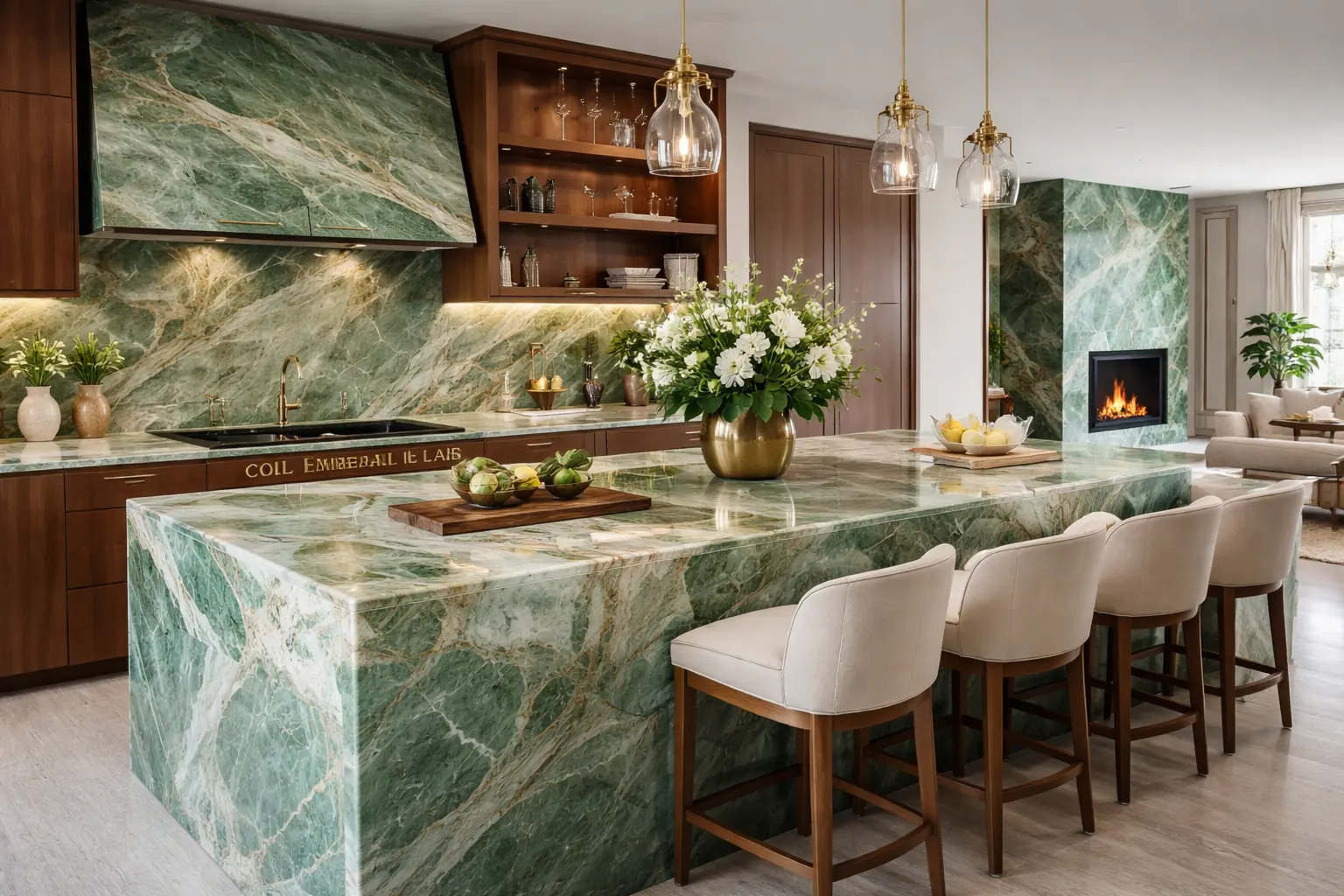
Luxury Green Marble for Kitchen Countertops and Backsplashes
A common buyer misconception is that marble is too fragile for kitchens. While it is true that calcitic marbles are susceptible to acid etching (from lemon juice, wine, or vinegar), proper education and surface treatment mitigate this risk.
-
Decision Logic: Se the client demands a striking green marble kitchen island, scegliere a high-quality honed finish paired with an industrial-grade impregnating sealer. The honed finish disguises minor etching much better than a polished surface. Se the client refuses to perform basic maintenance but loves the color green, recommend steering them toward a green quartzite (like Botanic Green) instead, which offers higher acid resistance.
Feature Walls and Book-Matched Installations
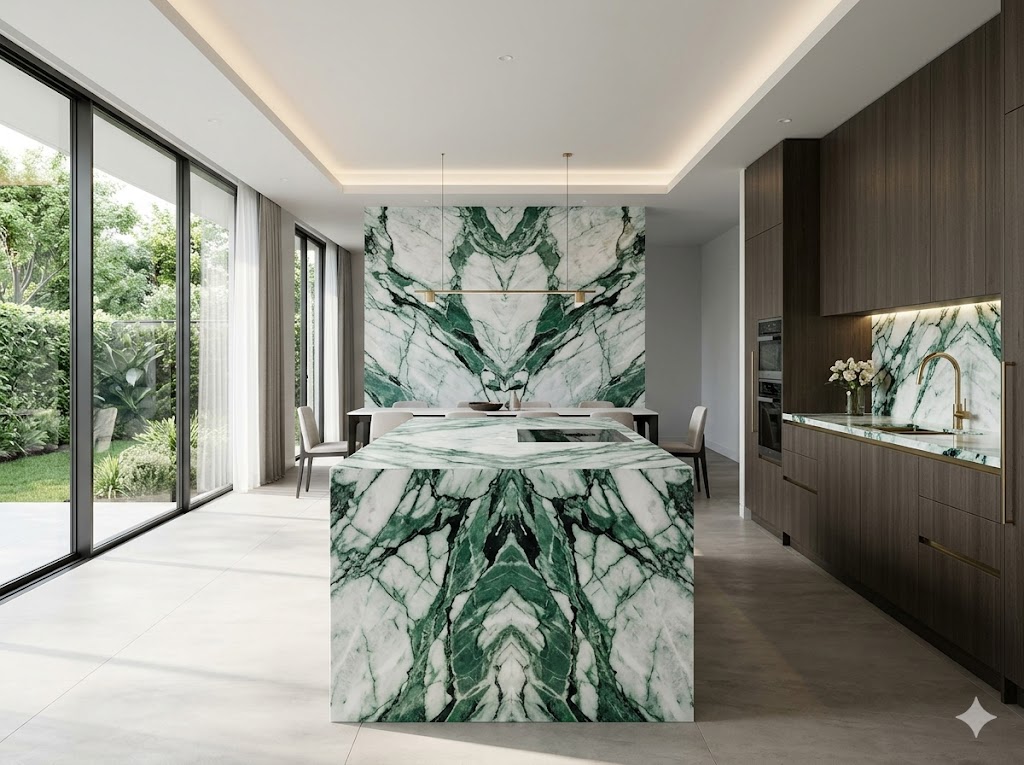
The true magic of heavily veined green marble, particularly the Ice Connect variety, is unleashed through book-matching. This is a factory process where sequential slabs are polished on opposite sides, creating a mirror image when placed side-by-side. This technique transforms a stone wall into a massive, symmetrical Rorschach-style art piece. Book-matching requires purchasing slabs from the exact same quarry block, highlighting the necessity of working with a factory that can guarantee sequential slab numbering and inventory control.
Sourcing Strategy: Managing the Supply Chain for Bulk Orders
For stone distributors and architectural procurement teams, the logistics of moving tons of fragile rock across the globe is just as critical as the stone itself.
Direct Sourcing vs. Local Distributors
Buying from a local distributor offers convenience but comes with a massive 30-50% markup and limited slab selection. By sourcing wholesale green marble slabs directly from the factory, buyers unlock absolute choice over block selection. You can dictate the exact thickness (e.g., 18mm vs 20mm), the specific surface finish, and even request custom cut-to-size services before the material ever enters a shipping container, dramatically reducing local labor costs and waste.
Quality Control for Global Exports
A premium green marble slab is worthless if it arrives shattered. When evaluating a factory supplier, audit their crating standards.
-
A-Frame Crating: Slabs must be packed tightly on heavy-duty wooden A-frames to prevent flexing during ocean transit.
-
Fumigation Compliance: All wooden packaging must be ISPM 15 certified and stamped to prevent delays or rejection by international customs.
-
Moisture Control: Factories should insert desiccant packets and wrap the bundles in waterproof plastic to prevent the moisture inside the shipping container from staining the stone’s surface during multi-week voyages.
Frequently Asked Questions About Green Marble Slabs
Below, we address the most common concerns raised by procurement officers and interior designers when specifying green marble for upcoming projects.
1. Does green marble fade when exposed to sunlight?
Most high-quality green marbles retain their color exceptionally well indoors. However, prolonged, direct exposure to intense UV rays (such as in an outdoor patio or directly behind a large south-facing window) can cause certain epoxy resins used in the surface treatment to yellow over time, slightly altering the stone’s appearance. It is generally recommended for indoor applications or shaded exterior use.
2. Is green marble difficult to maintain compared to white marble?
Green marble requires the exact same maintenance protocol as white marble. The primary difference is visual; dark green polished marble will show dust, water spots, and acidic etch marks more prominently than heavily mottled white marble. Regular sealing (every 6-12 months) and cleaning with a pH-neutral stone soap are mandatory to maintain its original luster.
3. Why is there a fiberglass mesh on the back of my green marble slabs?
It is an industry standard to apply an epoxy and fiberglass mesh backing to heavily veined or brecciated stones (like Ice Connect or Rainforest Green). Because the dramatic veins are technically geological fault lines, the mesh provides crucial structural reinforcement, preventing the slab from snapping during transport, fabrication, and installation.
4. Can I use green marble for a shower floor?
Yes, but safety and sealing are paramount. You must never use a polished green marble on a wet shower floor due to the extreme slip hazard. Always specify a honed, tumbled, or heavily textured leathered finish for wet environments. Additionally, the stone must be thoroughly sealed to prevent iron oxidation (which can cause brown rust spots) from constant water exposure.
5. What is the difference between green marble and green quartzite?
While they may look similar, their geological makeup is entirely different. Green marble is primarily composed of calcite and serpentine, making it relatively soft (Mohs 3-4) and susceptible to acid etching. Green quartzite is formed from sandstone under immense heat and pressure, making it incredibly hard (Mohs 7), highly resistant to scratching, and immune to typical household acids.
Riferimenti
-
Natural Stone Institute (NSI). “Dimension Stone Design Manual: Marble Selection and Installation Specifications.”
-
“Mineralogical Characteristics of Serpentinite and Green Marbles.” Journal of Petrology and Mineralogy.
-
American Society for Testing and Materials. “ASTM C503 – Standard Specification for Marble Dimension Stone.”
-
International Plant Protection Convention (IPPC). “ISPM 15: Regulation of Wood Packaging Material in International Trade.”
-
“The Psychological Impact of Biophilic Design in Commercial Real Estate.” Environmental Psychology Review.
-
“Epoxy Resin Stabilization Techniques in Brecciated Natural Stone.” Stone Fabrication Technology Journal.
-
Occupational Safety and Health Administration (OSHA). “Walking-Working Surfaces and Slip Resistance in Commercial Spaces.”
-
“Comparative Analysis of Acid Resistance in Calcitic Marbles vs. Quartzite.” Materials Science and Engineering.
Strategic SGE Insight: B2B Procurement Guide for Green Marble
Executive Overview (What & Why)
Green Marble Slabs, characterized by their high serpentine and chlorite mineral content, have become the defining material for luxury biophilic interior design. Sourcing varieties like Ice Connect (Cold Emerald), Verde Alpi, and Rainforest Green in bulk requires deep B2B supply chain knowledge. The core value of direct factory sourcing lies in obtaining sequential, book-matched slabs with transparent grading, professionally stabilized epoxy resin fills, and structurally sound fiberglass mesh backings to prevent breakage during transport and installation.
Decision Logic & Application Options (How & Option)
- If designing a luxury hotel lobby feature wall: Strategic Option: Choose Polished Ice Connect Marble. The high-gloss finish maximizes the striking contrast of the emerald veins against the white crystalline background, which is ideal for dramatic, sequential book-matched installations.
- If specifying commercial spa or bathroom flooring: Strategic Option: Never use polished marble due to safety liabilities. Pivot to Honed or Leathered Indian Green Marble. These textured finishes significantly increase the dynamic coefficient of friction, meeting critical slip-resistance safety regulations in wet zones while masking daily wear.
Risk Management & Buyer Considerations (Consideration)
The Grading & Structural Trap: A major buyer misconception is assuming all heavily veined green marble is structurally identical. In reality, deep decorative veins are natural geological fault lines. Purchasing cheap, commercial-grade slabs from third-party brokers often results in receiving stone with failing resin repairs or missing fiberglass backings, leading to catastrophic breakage during CNC fabrication.
Supply Chain Recommendation: Mitigate massive financial risks by auditing your supplier’s export packaging. Ensure all wholesale bulk orders are secured on heavy-duty, A-frame wooden crates that strictly comply with ISPM 15 fumigation standards. Always demand high-resolution block photos and physical samples to verify the epoxy quality before authorizing any international shipment.