Choosing Between Calm Gray and Bold Black Marble
Client (Aiden): I’m torn between gray marble and black marble. I want modern elegance, but I also need durability for real life.
Designer (Rhea): Great news—you don’t have to compromise. Gray marble gives calm, airy luxury and photographs beautifully; black marble delivers high-contrast drama that reads premium instantly.
Aiden: What about maintenance and resale value?
Rhea: Both increase perceived home value when properly specified. The secret is choosing the right finish, thickness, edge profile, and sealing schedule. I’ll show you how we decide—plus a side-by-side comparison so you can pick confidently.

Gray Marble vs Black Marble: Side-by-Side Comparison
| Criterion | Gray Marble | Black Marble |
|---|---|---|
| Aesthetic Mood | Calm, minimal, light-enhancing; works with Nordic/Japanese and soft-modern palettes | Bold, dramatic, high-contrast; cinematic luxury with brass/bronze |
| Veining Readability | Soft to medium veining masks smudges, ideal for large surfaces | Strong veining reads as art; great for feature walls/islands |
| Perceived Space | Visually enlarges rooms, reduces “weight” | Visually anchors rooms, creates focal points |
| Maintenance Optics | Honed/leather hides micro-scratches and etching better | Polished on verticals for depth; honed/leather on tops to mask wear |
| Durability (Context) | Dense varieties + correct sealing = excellent daily performance | Similarly durable; choose dense stones and use trivets/neutral-pH care |
| Slip/Use Guidance | Floors: honed/leather; coordinate adjacent floors to wet DCOF thinking (≥0.42) | Same; avoid polished on wet floors, keep polished for verticals |
| Resale Signal | “Quiet luxury,” high acceptance across markets | “Premium statement,” strong branding for luxury buyers |
| Best Spaces | Kitchens, bathrooms, living rooms, corridors | Feature kitchens, bars, hotel lobbies, powder rooms, fireplaces |
Rule of thumb: polished for vertical show surfaces, honed/leather for horizontal worktops and wet-adjacent floors.
Where Each Material Shines (Applications & Styling)
Kitchen islands & countertops
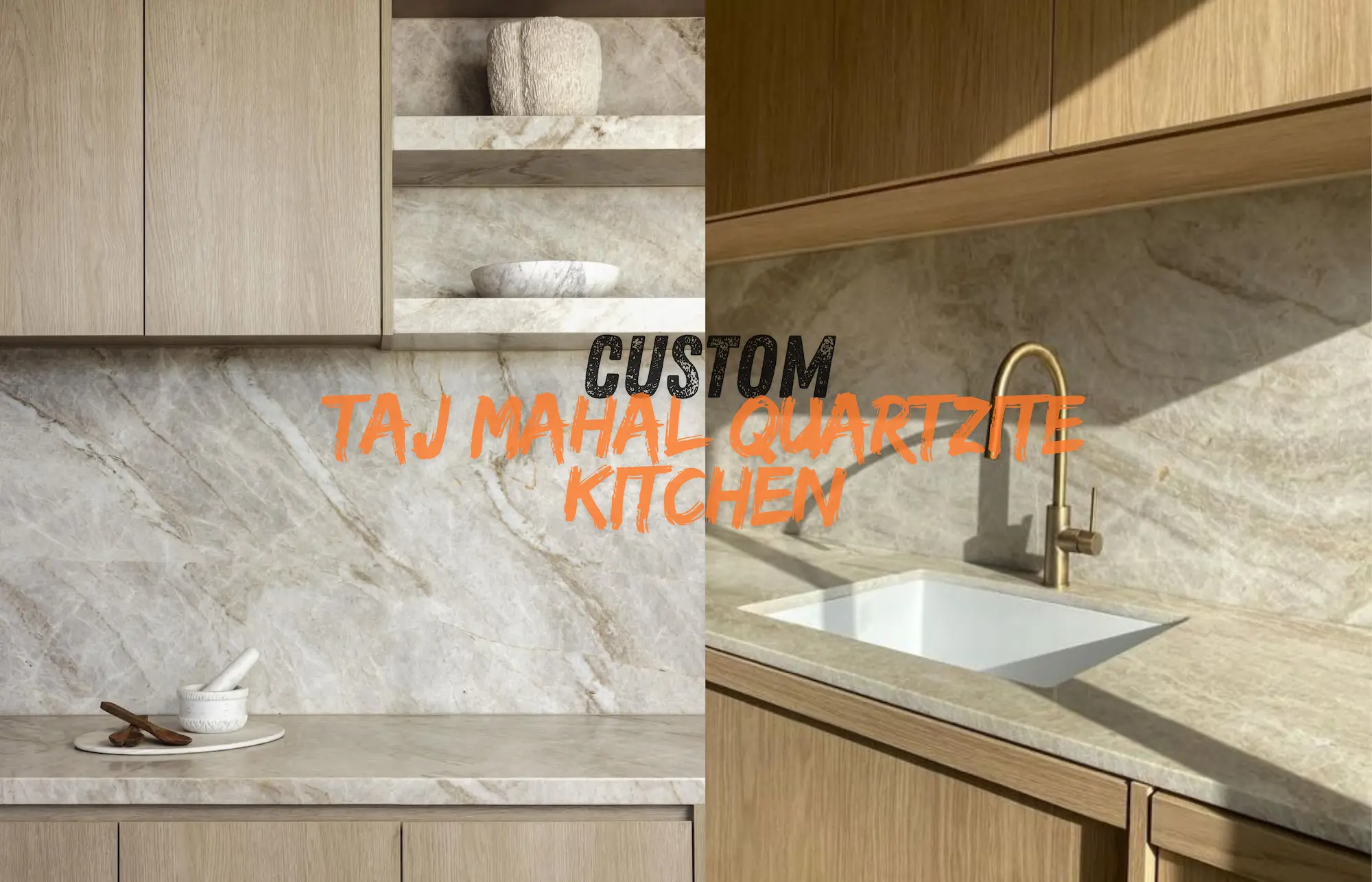
Gray: honed/leather with eased or 2 mm bevel edge; pairs with oak/ash cabinetry.
Black: honed top + polished end-panel; pairs with walnut + brushed brass.
Bathrooms & spas
Gray: honed floors for traction; polished walls to reflect light in compact spaces.
Black: polished walls for theatrical depth; anti-slip honed floors; warm lighting for balance.
Living & hospitality
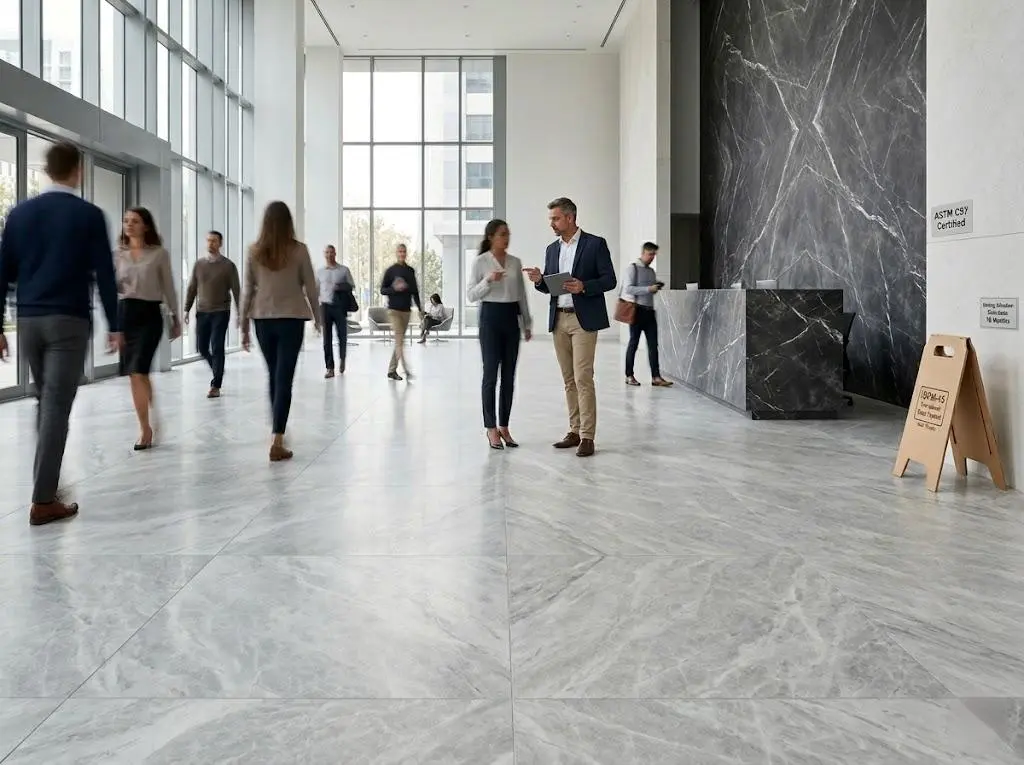
Gray: large, continuous floors and stair cladding for gallery-like calm.
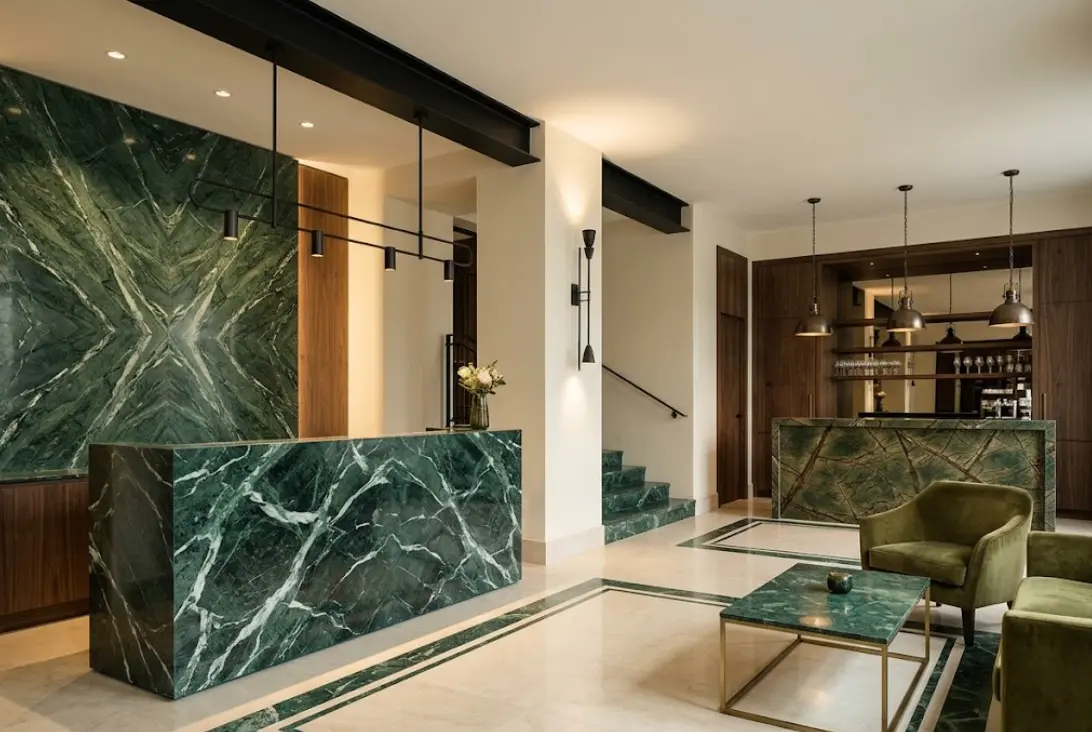
Black: concierge desks, back-bars, fireplace surrounds; book-matched feature walls.

For U Stone: Our Gray Marble (Selection • Processing • Why It’s Better)
Materials Selection (What we screen)
Traceable quarries & lot integrity: reserve sequential blocks for big projects to minimize color drift.
Petrographic checks covering density, water absorption, flexural/compressive behavior to match kitchens/baths/humid climates.
Aesthetic curation: prioritize soft-medium veining that reads clean in minimal interiors.
Processing & QC (How we make it perform)
CNC calibration for thickness/flatness/squareness → seamless mitred islands & long runs.
Italian polishing lines and controlled honing for a fine, low-glare surface.
Resin reinforcement & mesh backing on select stones for edge stability.
Why ours outperforms “generic gray”
Tighter color consistency across crates, vein-match maps for quick approvals.
Finish-first guidance (honed/leather for tops; polished for verticals) reduces call-backs.
Low-VOC penetrating sealer matched to porosity; documented re-seal cycles (kitchens 6–12 months; baths 12–18 months).
For U Stone: Our Black Marble (Selection • Processing • Why It’s Better)
Materials Selection (What we screen)
Focus on deep field color with vein sharpness; avoid fragile, sugary textures.
Test alignment with ASTM C97 (absorption/density) & ASTM C170 (compressive strength) for countertop duty.
Pre-sort lots by vein intensity (Subtle / Medium / Dramatic) for precise design intent.
Processing & QC (How we make it perform)
Precision edgework (eased/bevel/mitred waterfall) for crisp joins on black surfaces.
Selective resin fill to stabilize micro-fissures without clouding the black field.
Export-ready packaging(edge guards、anti-scratch film、recyclable crates)to cut transit risk.
Why ours outperforms “generic black”
Photographic depth on polished verticals; gloss uniformity across panels.
Leathered finishes tuned to hide fingerprints in high-touch hospitality.
Installer playbook:sequence labels + book-match drawings speed on-site layout.

Expert Insights, Science & Market Signals
Durability fundamentals: Dimension marble frequently tests at >100 MPa compressive strength with low water absorption in dense varieties—adequate for kitchen/bath tops when sealed and maintained per SOP.
Slip safety: For wet-adjacent floors, designers reference ANSI A326.3 wet DCOF methodology (≥0.42 commonly used threshold) while retaining polished marble mainly on verticals.
Thermal & energy: Stone’s thermal mass moderates indoor temperature swings; light/partly translucent stones in façades can support daylight quality and—in modeled scenarios—cooling-load reductions.
Sustainability: Natural stone provides industry-wide EPD/HPD documentation; long life + repairability strengthen its lifecycle profile vs. many synthetics.
Market trend 2025: “Quiet luxury” drives gray marble for calm minimalism; black marble anchors luxury branding in hotels, bars, and prestige residences.
Real-World Practice: 3 Field Snapshots
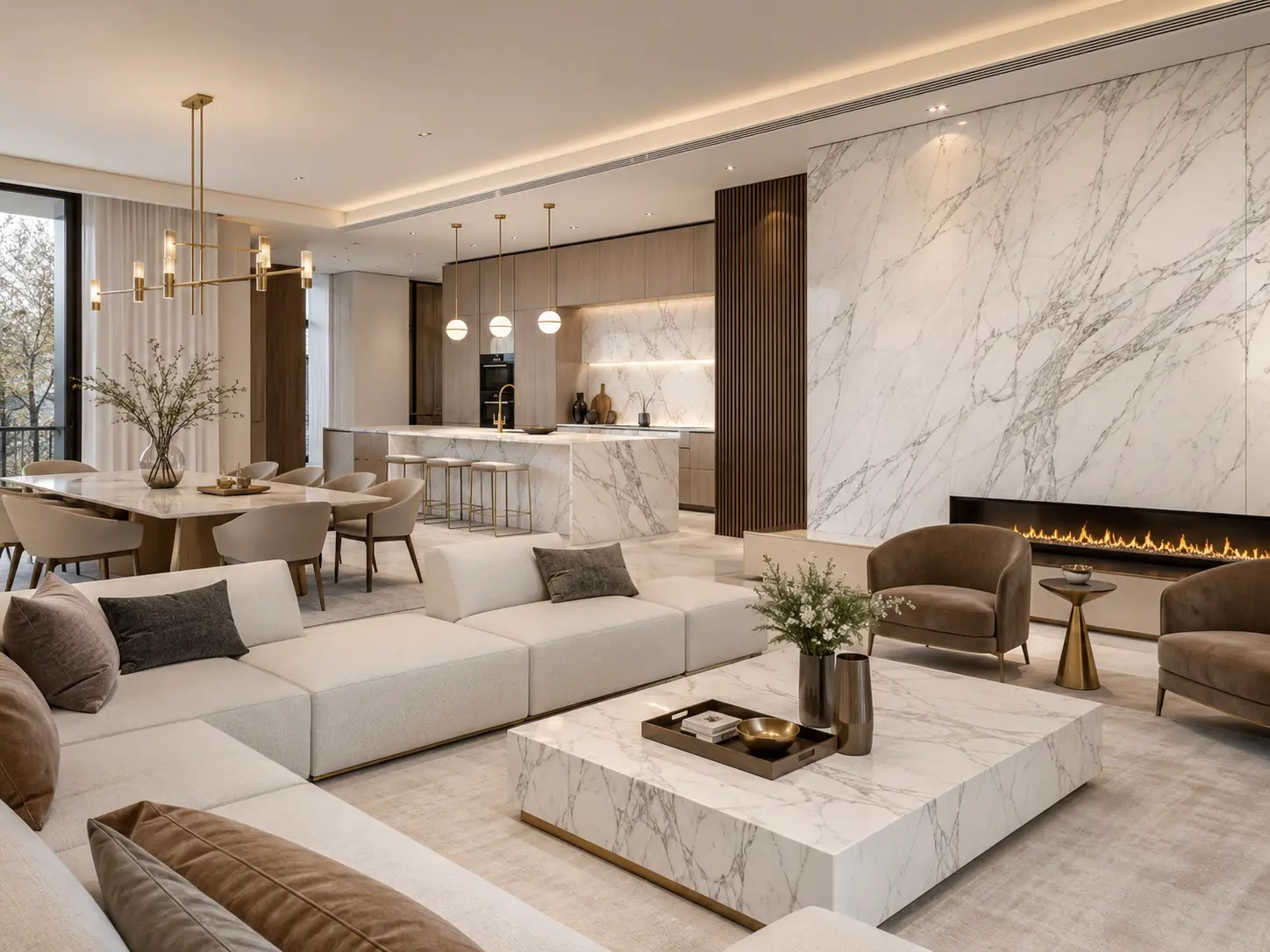
Case 1 — Minimalist Penthouse Kitchen (Gray Marble, Honed)
Spec: 3.2 m mitred waterfall island; neutral-pH care; scheduled sealing.
Outcome: After 18 months, no visible etching; natural light makes the top read seamless and soft.
Case 2 — Boutique Hotel Lobby (Black Marble, Polished + Leather)
Spec: Book-matched black marble wall (polished); concierge counter top (leather).
Outcome: Strong brand presence; fingerprints minimized on the leathered top; high photo share on social media.
Case 3 — Spa & Wellness Suite (Gray + Black, Mixed)
Spec: Gray honed floors; black polished wall behind reception with warm lighting.
Outcome: Biophilic calm + focal drama; staff report simple nightly wipe-downs with neutral-pH cleaners.
User feedback (condensed)
“The leathered black counter hides fingerprints brilliantly in our bar.”
“Our gray honed island still looks soft and new—no glare, no fuss.”
“Switching to water-based penetrating sealers removed odor complaints during handover.”

Performance, Maintenance & Risk Control (Data-Backed)
Sealing: Kitchens every 6–12 months; bathrooms 12–18 months(adjust by use intensity).
Cleaning: Neutral-pH only(avoid vinegar/lemon);microfiber cloths;blot spills quickly(wine/oil)。
Heat: Marble tolerates heat better than many engineered surfaces; still use trivets for thermal shock control.
Finishes: Honed/leather on tops & wet-adjacent floors;polished on verticals for depth。
Edges: Eased/2 mm bevel for resilience;mitred waterfalls for visual continuity。
Bowing (for cladding): Use ventilated cavities, drainage, and correct anchors—modern assemblies mitigate historic pathologies.
Buying Checklist (Before You Place an Order)
-
Define use case(kitchen, bath, wall, lobby)
-
Choose gray vs black by mood & lighting conditions
-
Pick finish by zone(honed/leather for tops;polished for walls)
-
Approve sequence-cut + book/vein-match layouts
-
Confirm edge profiles & overhang support
-
Specify penetrating sealer + written SOP(neutral-pH kit)
-
Align delivery/packaging & site protection plan
FAQ
Which is more durable for daily kitchen use—gray or black marble?
Both perform well when you choose dense varieties, specify honed/leather on tops, and follow sealing + neutral-pH care.
Will black marble show fingerprints or water marks?
Polished black shows more; a leathered finish on counters reduces visibility. Use soft cloths for quick wipes.
Does gray marble make small bathrooms look bigger?
Yes. Light-medium grays reflect light and reduce visual weight—use polished on walls, honed on floors.
Is marble suitable for outdoor kitchens or façades?
With the right variety and ventilated/anchored assemblies, yes. Confirm freeze-thaw and moisture management details.
Why buy from For U Stone?
We provide lot-consistent slabs, tight calibration, vein-match maps, and export-ready packaging—reducing install risk and speeding approvals.
References
-
Natural Stone Institute — Sustainability Resources (EPDs & HPDs).
-
Natural Stone Institute — Testing Services & ASTM Methods for Natural Stone.
-
ASTM International — C97: Absorption and Bulk Specific Gravity of Dimension Stone.
-
ASTM International — C170: Compressive Strength of Dimension Stone.
-
Tile Council of North America (TCNA) — ANSI A326.3 Wet DCOF Test Method (Overview).
-
Daltile — DCOF AcuTest®: Understanding Slip Resistance.
-
MDPI Sustainability (Rosso et al., 2014) — Integrated Thermal-Energy Analysis of Translucent White Marble.
-
ArchDaily — Marble: The Latest Architecture and News.
-
Dezeen — Marble Interiors and Contemporary Projects.
-
Walkway Management Group — Updated Standard ANSI A326.3-22.
-
For U Stone — Marble Collections & Export Guidance. https://forustone.com/
Choosing between gray marble and black marble is not a competition—it’s a dialogue between serenity and power. Gray marble embodies balance and modern minimalism, reflecting natural light to make interiors feel spacious and calm. Black marble radiates confidence and prestige, creating powerful contrasts that define focal points and luxury aesthetics.As Dr. Amelia Wright, senior researcher at the Marble Institute of America, notes:
“Color in stone is not merely decorative—it sets the emotional rhythm of architecture. Gray marble soothes; black marble commands.”
Similarly, Ar. Hiroshi Tanaka of the Tokyo Interior Design Council emphasizes:
“For designers, the real mastery lies in blending both—using gray for flow and black for emphasis. That’s where timeless interiors are born.”
At For U Stone, we combine both philosophies—precision-cut slabs, honed or polished finishes, and moisture-resistant sealing—to ensure beauty endures for decades. Whether you lean toward the quiet elegance of gray or the commanding drama of black, marble remains the universal language of refined design and enduring value.