Résumé rapide
Résumé rapide : Hotel lobby stone should be selected by application area, traffic level, finish, slab size, maintenance plan, and visual layout. Marble often works well for refined walls and lower-wear feature areas, granite is practical for heavy floor traffic, and quartzite can suit statement walls, counters, and selected floor zones when slab movement is reviewed carefully.
Marble, Quartzite, or Granite for Hotel Lobby Stone: How to Choose the Right Surface
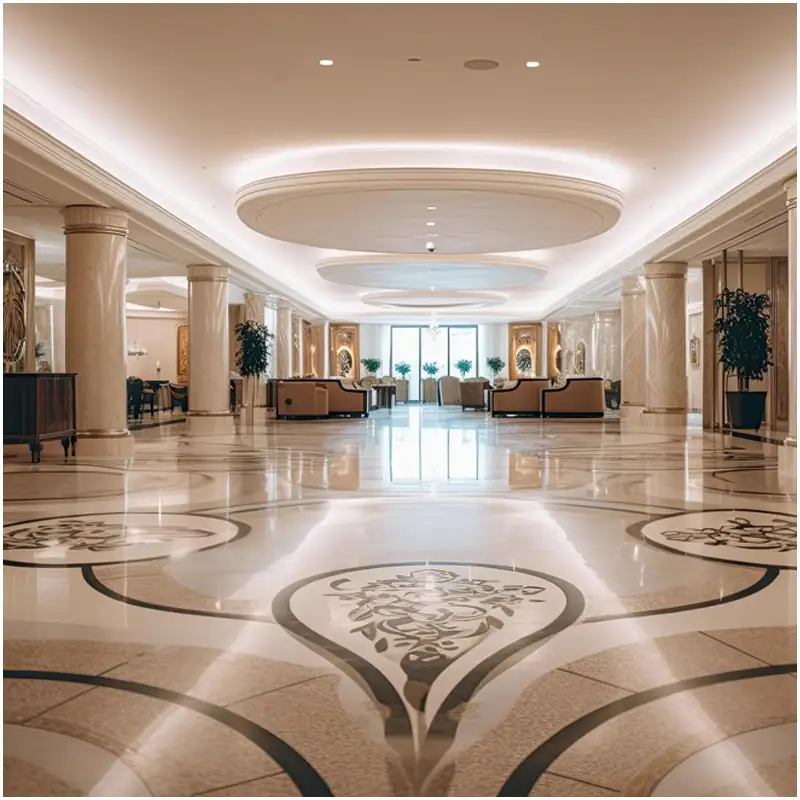
Marble, quartzite, and granite can all be used in hotel lobby projects, but they should not be treated as interchangeable. Marble gives soft movement and a refined interior look, but it needs careful finish and maintenance planning. Granite is often stronger for heavy-use floors and thresholds. Quartzite can bring dramatic natural movement, yet the slab layout needs close review before production.
Pour U STONE's hotel lobby stone, marbre, granit, quartzite, stone materialset stone projects pages should be reviewed together for this type of order. A lobby may use marble on the wall, granite on the floor, quartzite on the reception counter, and a different finish near the entrance.
Technical references support this practical split. ASTM C1528 provides guidance for selecting dimension stone, while Natural Stone Institute resources address stone design, workmanship, and care. For walking surfaces, slip resistance should be reviewed through the project specification and local requirements, not guessed from photos. ANSI A326.3 is commonly referenced for dynamic coefficient of friction testing on hard surface flooring materials.
1. Start with lobby zones, not material names
The better starting point is the lobby plan. Mark the entrance path, reception queue, luggage route, lift lobby, seating area, stair area, wall feature, column cladding, and any wet transition near the doorway. Each zone may need a different stone, finish, thickness, or module size.
The entrance floor usually has the highest wear. It may receive dust, rainwater, sand, luggage wheels, delivery carts, and frequent cleaning. A polished marble that looks good in a sample room may not be the best choice directly inside the door unless the maintenance plan is realistic. Granite, selected quartzite, or a more textured finish may be more practical depending on the design and local slip requirements.
Wall panels have a different problem. They are not walked on, but they are highly visible. A marble or quartzite wall can look strong in a lobby because vertical panels show vein movement clearly. The risk is layout, not foot traffic. If the slab sequence is not planned, the wall can look broken after installation.
Reception counters sit between those two conditions. They need visual presence and daily use resistance. Spilled drinks, bags, pens, devices, cleaning products, and hand contact all matter. A counter material should be reviewed for finish, edge detail, stain care, and whether the selected slab has natural lines near cutouts or mitered corners.
2. Marble for hotel lobbies: refined, but not automatic
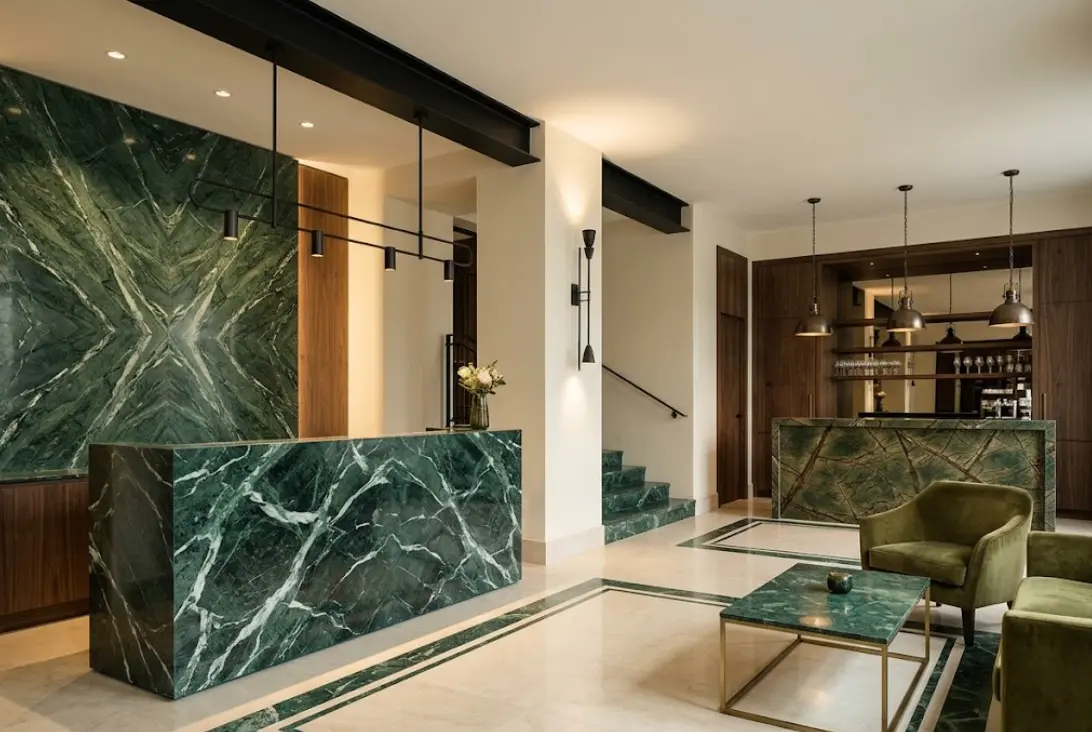
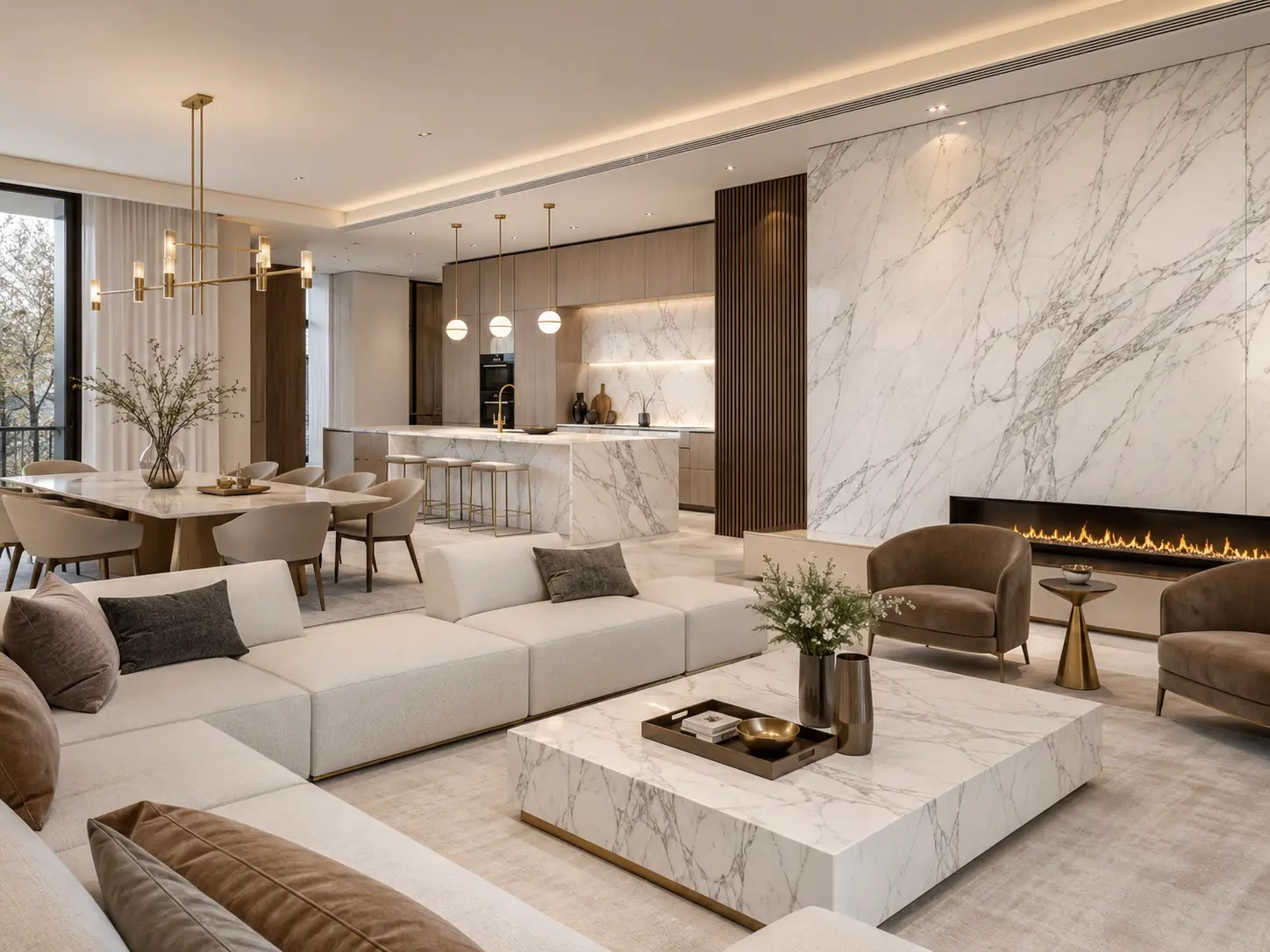
Marble is often chosen for hotel interiors because it has a softer visual depth than many hard surfaces. It can work well on lobby walls, lift surrounds, reception fronts, columns, vanity areas, and selected floor patterns. Natural dalles de marbre can also be cut into bookmatched panels when the design needs a controlled feature wall.
The caution is use. Marble is a calcium-based stone and may be more sensitive to acids, scratches, abrasion, and some cleaning routines than granite. That does not mean marble should be avoided. It means the finish, location, and maintenance plan need to match the real hotel operation.
For floors, a honed or textured marble finish may be considered where reflection and slip risk need review. For walls, polished marble can be easier to justify because the surface receives less abrasion. For reception fronts and decorative panels, slab selection matters more than hardness alone because guests see these surfaces at close range.
Marble also needs shade control. White, beige, grey, and black marbles can vary across slabs. A lobby wall with several large panels should be approved from full-slab photos and, when possible, layout drawings. Small samples cannot show the final wall movement.
3. Granite for hotel lobbies: practical for heavier traffic
Granite is often a practical option for hotel floors, entrance zones, stair treads, thresholds, service corridors, and areas that take more wear. It is generally harder than many marbles and is commonly used in commercial floors. Still, each granite should be checked by type, finish, thickness, and project conditions.
Granite does not have to look plain. Black, grey, white, red, green, and patterned granites can all be used in hotel interiors. The material can support a calm floor field, a border pattern, or a darker base zone near walls. For many lobby projects, granite is useful because it can carry daily traffic without demanding the same visual protection as a soft decorative stone.
Finish choice still matters. A high polish may look formal but can show dust, water marks, and scratches more clearly in an entrance area. A flamed, brushed, honed, or leathered finish may be considered for specific zones, but the feel underfoot, cleaning routine, and local requirements need review.
Pour U STONE's pierre de granit category is relevant when the lobby plan needs durable flooring, stair pieces, wall bases, or darker contrast areas. The project team should send drawings and expected use conditions rather than choosing granite from color alone.
4. Quartzite for hotel lobbies: strong movement needs strong planning
Quartzite can be an excellent lobby material when the design needs natural movement, crystal structure, or a more dramatic slab face. It is often considered for feature walls, reception counters, bar counters, lift lobby walls, and selected floor areas. Some quartzites may offer stronger wear expectations than many marbles, but they still need stone-specific review.
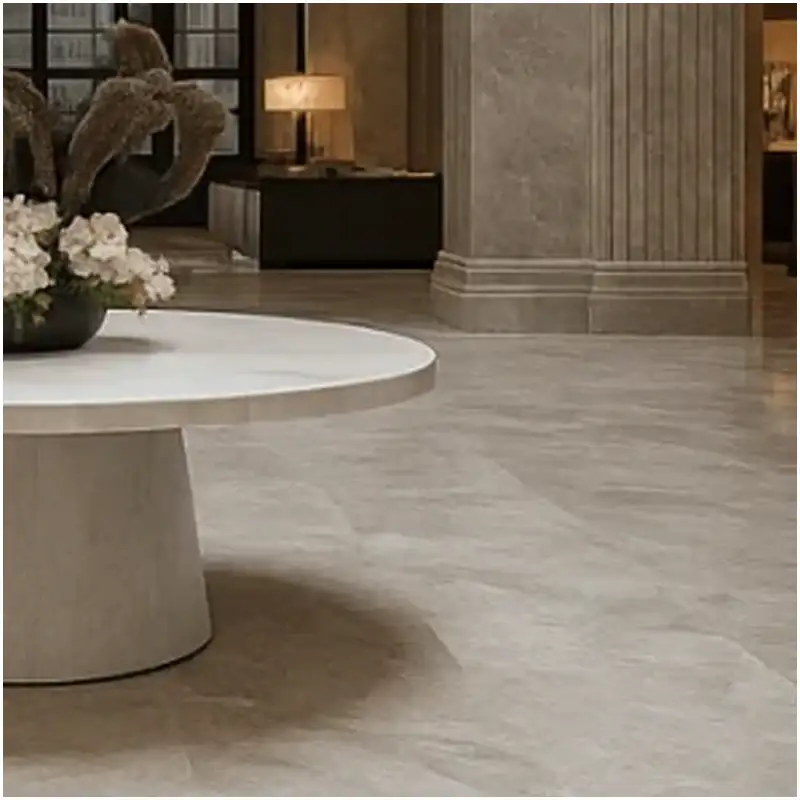
The main issue is layout. Dalles de quartzite can have bold veins, translucent-looking areas, color blocks, and crystal bands. On a small sample, this may look attractive. Across a 6 meter wall or a large reception counter, those features need planning. Bookmatch direction, slab sequence, cutouts, mitered edges, and lighting all affect the result.
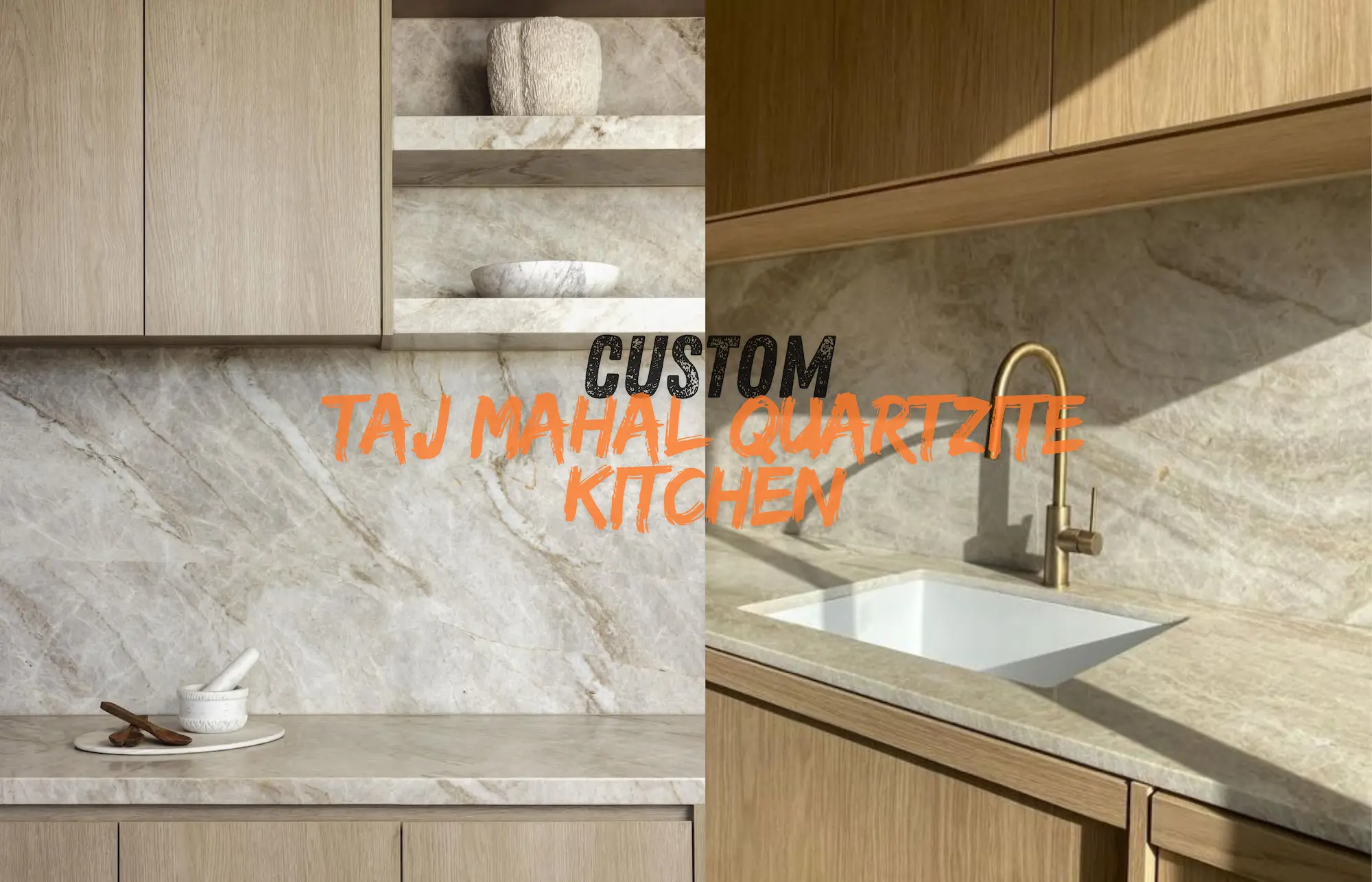
For stones such as quartzite exotique, Taj Mahal Quartziteou Quartzite de Patagonie, full-slab photos should be reviewed before any cutting decision. The strongest part of the slab may be best for a wall or counter front, while quieter areas may be better for side returns or less visible panels.
Quartzite should also be discussed with care guidance. Some quartzites are dense, while others sold under quartzite-related names may have different behavior. Sealing, finish, cleaning routine, and application area should be confirmed with the supplier or fabricator before final approval.
5. How to match material with lobby application
The best lobby stone plan may combine materials rather than forcing one stone into every area. A hotel can use granite for the entry floor, marble for the lift surround, quartzite for the reception feature, and a different stone for bathroom vanity tops. The decision should follow the surface’s job.
| Lobby area | Useful stone options | Main review point |
|---|---|---|
| Main entrance floor | Granite, selected quartzite, durable marble in suitable finish | Foot traffic, slip resistance, cleaning routine, finish wear |
| Reception counter | Quartzite, granite, selected marble | Front slab movement, mitered edges, stain care, lighting |
| Feature wall | Marble, quartzite, backlit stone in selected designs | Bookmatch layout, slab sequence, panel size, vein direction |
| Lift surround | Marble, granite, quartzite | Panel alignment, edge protection, corner details, cleaning access |
| Stair treads | Granite, selected marble or quartzite with reviewed finish | Thickness, nosing, slip review, traffic, edge durability |
| Decorative wall base | Granite, marble, quartzite | Impact resistance, color continuity, maintenance access |
6. Finish is not a small detail
Polished stone can look formal and reflective, which is why it appears often in hotel lobbies. The problem is that polished floors near entrances may show water, dust, scratches, and slip concerns more clearly. The finish should be chosen by location, not only by how the sample looks in a showroom.
Honed finishes can reduce glare and make some spaces feel quieter. They may also show oils, dirt, or traffic marks differently from polished surfaces. Brushed, leathered, flamed, or sandblasted textures can add grip or visual softness, but they also change cleaning needs. A textured floor may require different maintenance from a polished wall panel.
For stair treads, ramps, entrance areas, and wet transition zones, slip resistance should be checked through the project specification. ANSI A326.3 provides a test method for measuring dynamic coefficient of friction on hard surface flooring materials. The final decision should also consider local codes, cleaning products, mats, drainage, and expected hotel operation.
For wall panels and reception fronts, finish affects reflection and lighting. A polished quartzite panel behind reception may reflect ceiling lights strongly. A honed marble wall may look calmer, but its color may feel lighter than the polished sample. These differences should be reviewed before slab approval.
7. Slab layout should be approved before cutting
Hotel lobbies often use large panels and repeated modules. This makes slab layout as important as material selection. A slab may be suitable as a stone, but unsuitable for a particular wall if the vein direction or color range cannot be controlled across the elevation.
For floors, the layout should show tile size, pattern, border lines, entrance mat position, expansion joints, columns, and transitions to other materials. For walls, the elevation should show panel size, bookmatch direction, lift door position, reception desk height, signage, lighting, and corner returns.
Full-slab photos should be reviewed with those drawings. This step is already covered in FOR U STONE’s natural stone slab photo review workflow, and it matters even more in a hotel lobby because the viewing distance changes. Guests may see the same stone from the entrance, reception queue, seating area, and lift doors.
If the project uses bookmatched marble or quartzite, approve the sequence before production. Do not assume that two slabs will match simply because they are from the same material name. The slab numbers, cutting direction, and panel order should be recorded.
8. Maintenance planning should happen before material approval
A lobby is cleaned often. That makes maintenance planning part of material selection. The project team should ask how the stone will be cleaned, which products will be used, how often the floor will be maintained, whether entrance mats are planned, and who is responsible for resealing or periodic care.
Marble may require more careful cleaning because acidic products can affect calcium-based stone. Granite may be more forgiving in heavy-use floor areas, but it still needs appropriate cleaning and finish care. Quartzite can work well in selected lobby areas, yet sealing and care should be confirmed for the exact slab and finish.
Traffic patterns should be discussed honestly. A boutique hotel with a small lobby may accept a more decorative stone in more places. A busy urban hotel with rolling luggage and constant cleaning may need a stronger floor material and a simpler replacement plan. The right stone depends on the real operation.
Packing and replacement should also be discussed. If a lobby uses special marble or quartzite slabs, replacement pieces may not match later. Ordering attic stock or extra pieces can be useful for future repairs, but the quantity should be decided by the project team, not guessed after installation.
9. Related Stone Selection Guides
10. Checklist before confirming hotel lobby stone
- Mark each lobby zone on the drawing before choosing the stone type.
- Separate floor, wall, counter, stair, column, and lift surround requirements.
- Compare marble, granite, and quartzite by use area, not by sample appearance alone.
- Confirm finish, thickness, module size, edge detail, and slip review for walking areas.
- Approve full-slab photos and layout drawings before cutting large panels.
- Review cleaning products, entrance mats, resealing needs, and future maintenance responsibilities.
- Ask whether extra pieces are needed for future repair or replacement.
- Record material names, slab numbers, finish, quantity, packing notes, and project location.
FAQ of Hotel Lobby Stone
1. Is marble suitable for hotel lobby floors?
Marble can be used for hotel lobby floors, but the decision depends on traffic, finish, cleaning routine, slip review, and maintenance expectations. It may work better in controlled interior areas than in wet entrance zones. For busy lobbies, the project team should compare marble with granite or selected quartzite before approval.
2. Is granite better than marble for a hotel lobby entrance?
Granite is often more practical than marble for heavy entrance traffic because it is commonly used in commercial floors and can handle wear well when properly selected. The final choice still depends on finish, slip resistance, thickness, cleaning plan, and design requirements. A polished sample alone is not enough for approval.
3. Where does quartzite work best in a hotel lobby?
Quartzite can work well on feature walls, reception counters, lift lobby walls, selected floor areas, and decorative panels when the slab layout is controlled. It is especially useful when the design needs natural movement. Full-slab photos, vein direction, finish, and sealing guidance should be reviewed before production.
4. What stone finish is best for hotel lobby flooring?
There is no single best finish for every hotel lobby floor. Polished stone can look formal but needs slip and maintenance review, especially near entrances. Honed or textured finishes may reduce glare or improve surface feel, but they change cleaning needs. The finish should be checked against local requirements and actual use.
5. What should be included in a hotel lobby stone inquiry?
A hotel lobby stone inquiry should include drawings, application areas, target materials, finish, thickness, tile or panel sizes, traffic expectations, photos of the design area, quantity, packing needs, and project location. If the lobby includes bookmatched walls, stairs, or a reception counter, include elevations and cutout details as well.
Final Conclusion
Marble, quartzite, and granite can all work in hotel lobby stone projects, but each material should be assigned to the right surface. Marble is often stronger for refined walls, lift surrounds, and controlled feature areas. Granite is often a practical choice for heavy-use floors, thresholds, and stair zones. Quartzite can give a lobby a stronger natural focal surface when slab movement, finish, and layout are reviewed before cutting.
The safest approach is to plan by zone: entrance floor, reception counter, feature wall, lift surround, stairs, and decorative base. Once each surface has a job, the project team can compare stone type, finish, thickness, module size, maintenance, packing, and future replacement needs with fewer surprises.
Natural stone project procurement guide
Use this complete guide to connect material selection, slab approval, drawings, inspection, packing, and export-ready delivery.

Ask FOR U STONE to review hotel lobby stone with your drawings
Send the lobby drawings, application areas, preferred marble, granite, or quartzite, finish, thickness, quantity, panel or tile sizes, and project location. FOR U STONE can help review material options, slab photos, layout notes, and production details for hotel lobby floors, walls, counters, stairs, and feature areas.
Références
- Title: Dimension Stone Design Manual 2024, Author: Natural Stone Institute Technical Committee, Institution: Natural Stone Institute, Source: Natural Stone Institute Resource Library.
- Title: ASTM C1528/C1528M Standard Guide for Selection of Dimension Stone, Author: ASTM Committee C18 on Dimension Stone, Institution: ASTM International, Source: ASTM Standards.
- Title: ASTM C503/C503M Standard Specification for Marble Dimension Stone, Author: ASTM Committee C18 on Dimension Stone, Institution: ASTM International, Source: ASTM Standards.
- Title: ASTM C615/C615M Standard Specification for Granite Dimension Stone, Author: ASTM Committee C18 on Dimension Stone, Institution: ASTM International, Source: ASTM Standards.
- Title: ASTM C616/C616M Standard Specification for Quartz-Based Dimension Stone, Author: ASTM Committee C18 on Dimension Stone, Institution: ASTM International, Source: ASTM Standards.
- Title: ANSI A326.3 Test Method for Measuring Dynamic Coefficient of Friction of Hard Surface Flooring Materials, Author: Accredited Standards Committee A108, Institution: ANSI and Tile Council of North America, Source: ANSI / TCNA Standards.
- Title: Natural Stone Flooring Care and Maintenance Guidance, Author: Natural Stone Institute Consumer Education Team, Institution: Natural Stone Institute, Source: Natural Stone Institute Consumer Resources.
- Title: Standards and Specifications for Natural Stone Products, Author: Natural Stone Institute Standards Team, Institution: Natural Stone Institute, Source: Natural Stone Institute Professional Resources.