Quick Summary: What Granite Tiles Are and Why They Matter
Granite Tiles Are More Than Just Small Pieces of Stone
Granite tiles are one of the most practical natural stone materials used in modern architecture, residential interiors, commercial buildings, outdoor paving, and renovation projects. They are made by cutting natural granite into specific tile sizes, then processing the surface into polished, honed, flamed, bush-hammered, brushed, or leathered finishes. Because granite is hard, dense, and naturally resistant to wear, it is widely used where the floor, wall, stair, or work surface needs to look premium and survive real use.
Many people first think of granite as a countertop material, but granite tiles can do much more. They can be used for kitchen floors, bathroom walls, hotel lobbies, office corridors, swimming pool surroundings, outdoor terraces, commercial entrances, public plazas, garden paths, and even feature walls. In simple words, granite tiles are not only decorative. They are a functional building material. Pretty, yes. But also tough enough to avoid crying every time someone walks on it.
If you are comparing natural stone options for residential or commercial projects, browsing professional granite tiles can help you understand the wide range of colors, patterns, finishes, and sizes available. The right product should not be selected by appearance alone. You also need to check the installation environment, expected traffic, maintenance plan, tile thickness, surface finish, and whether the supplier can control batch consistency for your order.
What Are Granite Tiles?
Basic Definition of Granite Tiles
Granite tiles are cut-to-size natural stone tiles produced from granite blocks or slabs. Granite itself is an igneous rock formed when molten magma cools slowly beneath the Earth’s surface. This slow cooling process allows visible crystals to form, creating the speckled or granular look that makes granite different from veined marble or engineered porcelain.
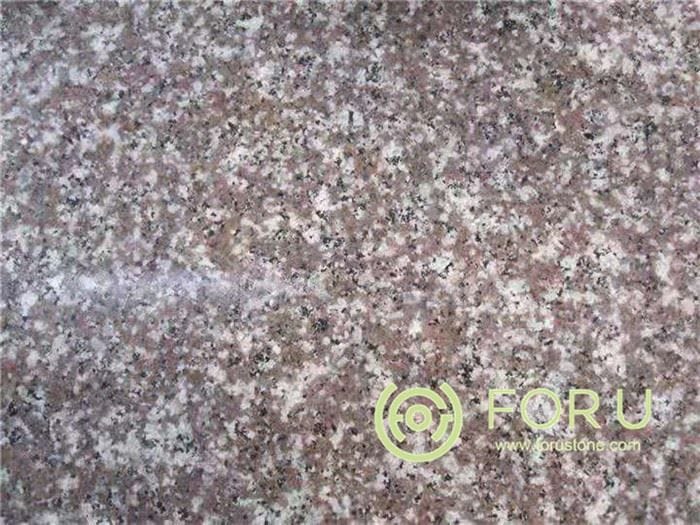
Most granite contains quartz, feldspar, mica, and other minerals. Quartz contributes hardness, feldspar adds color variation, and mica creates small reflective mineral points. This mineral structure is why granite tiles are usually stronger, harder, and more scratch-resistant than many decorative stones. The surface may show white, grey, black, yellow, red, brown, green, blue, or mixed crystal patterns depending on the quarry source and mineral composition.
For buyers, the definition matters because granite tiles are not manufactured prints. Every piece comes from natural stone. This means patterns, mineral particles, and color tones can vary from batch to batch. A good project result depends on careful selection, batch control, surface finishing, and installation planning.
How Granite Tiles Are Made
The production of granite tiles begins with block selection at the quarry or factory stockyard. Large granite blocks are cut into slabs using gang saws, diamond wire saws, or block cutters. After slab cutting, the surface is inspected for cracks, color consistency, mineral distribution, and structural quality. Some slabs may receive resin treatment to improve surface stability before polishing or further processing.
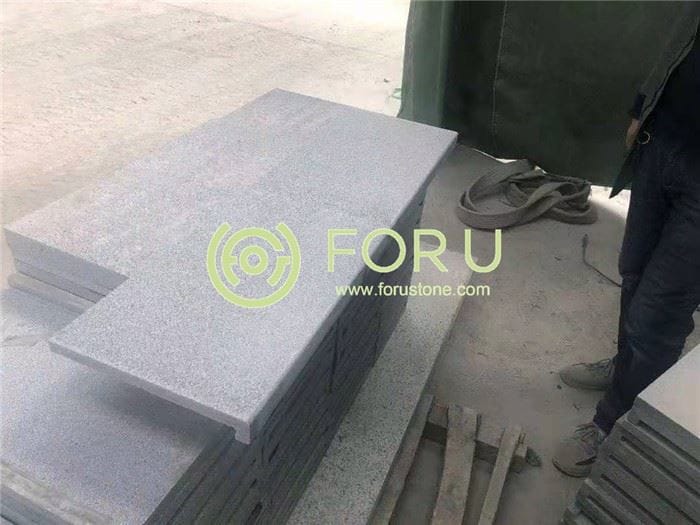
After slab inspection, the material is cut into tile sizes such as 300×300 mm, 300×600 mm, 400×400 mm, 600×600 mm, 600×900 mm, or custom project sizes. The surface is then finished according to the application. Polished granite tiles are glossy and reflective. Flamed granite tiles are rough and suitable for outdoor use. Honed granite tiles offer a soft matte surface. Bush-hammered and brushed finishes provide more texture and grip.
Finally, tiles are calibrated, edges are processed, dimensions are checked, and the finished products are packed into strong wooden crates. For export orders, packing quality is not a small detail. Weak packing can turn a good granite tile order into a box of expensive sadness.
What Makes Granite Tiles Different from Other Tiles?
Granite Tiles vs Ceramic Tiles
Ceramic tiles are manufactured from clay and other raw materials, then fired at high temperatures. They are affordable, widely available, and useful for walls or light-use indoor floors. Granite tiles, on the other hand, are cut from natural stone. They are denser, heavier, stronger, and more suitable for high-traffic or outdoor applications.
If your project needs a decorative wall surface with limited traffic, ceramic tiles may be enough. If the area needs natural stone value, stronger wear resistance, and better long-term performance, granite tiles are usually the better choice. This is especially true for building entrances, stair treads, exterior paving, hotel corridors, and public spaces.
Granite Tiles vs Porcelain Tiles
Porcelain tiles are engineered, consistent, and usually very low in water absorption. They are excellent for bathrooms, kitchens, and modern interiors where uniformity and easy maintenance matter. Granite tiles offer a different value: natural stone texture, mineral depth, outdoor strength, and premium architectural character.
If the buyer wants extremely consistent color and low maintenance, porcelain tiles can be practical. If the project needs real natural stone, durability under outdoor conditions, and long service life, granite tiles are often the stronger choice. For commercial and public projects, granite is frequently selected because it can handle heavy foot traffic better when the correct thickness and finish are used.
Granite Tiles vs Marble Tiles
Marble is usually chosen for elegant veins and luxury interior design. Granite is usually chosen for hardness, wear resistance, and outdoor performance. Marble can make a bathroom, lobby, or feature wall look refined and artistic. Granite performs better in areas exposed to shoes, sand, rain, luggage, public traffic, or frequent cleaning.
So the answer is not “granite is better” or “marble is better.” The correct answer is application-based. Use marble when design emotion and veining matter most. Use granite when strength, maintenance, and durability matter more. In many projects, both materials can work together beautifully.
| Material | Main Strength | Main Limitation | Best Use |
|---|---|---|---|
| Granite tiles | Hard, durable, weather-resistant | Less veined than marble | Outdoor paving, floors, stairs, and commercial areas |
| Marble tiles | Elegant veins and a luxury look | More acid-sensitive | Bathrooms, walls, lobbies, decorative interiors |
| Porcelain tiles | Consistent and low absorption | Less natural character | Bathrooms, kitchens, and indoor floors |
| Ceramic tiles | Affordable and decorative | Lower strength for heavy use | Walls and light-use interiors |
Key Properties of Granite Tiles
Hardness and Scratch Resistance
Granite is generally harder than marble, limestone, sandstone, and many decorative stones. Its Mohs hardness is commonly around 6–7, depending on mineral composition. This makes granite tiles highly suitable for flooring, stairs, outdoor paving, commercial corridors, and areas where foot traffic is frequent.
Scratch resistance is especially important for entryways, kitchens, public buildings, and commercial floors. Shoes carry sand and small particles that can quickly damage softer materials. Granite tiles are more forgiving in these conditions. However, they are not impossible to damage. Poor installation, heavy impact, wrong thickness, or unstable substrate can still cause cracking or edge damage.
Density, Strength, and Water Absorption
Granite tiles are dense and strong, which helps them perform well in both indoor and outdoor applications. Compared with more porous stones, granite often has lower water absorption and better resistance to weather exposure. This is one reason granite is commonly used for paving, stairs, exterior cladding, plazas, and building entrances.
| Property | Typical Granite Tile Range | Buyer Meaning |
|---|---|---|
| Density | About 2.60–2.80 g/cm³ | Strong and stable natural stone |
| Water absorption | Often 0.1%–0.4% | Good for wet and outdoor areas |
| Compressive strength | Often 100–250 MPa | Useful for flooring and load areas |
| Flexural strength | Often 10–25 MPa | Important for larger tiles and cladding |
| Mohs hardness | About 6–7 | Strong scratch resistance |
These values are general reference ranges. Actual performance depends on quarry source, mineral composition, finish, thickness, processing quality, and test method. For commercial flooring, outdoor paving, heavy-use stairs, or bulk export procurement, buyers should request actual test data instead of relying only on product photos.
Weather Resistance and Outdoor Performance
One of the biggest advantages of granite tiles is outdoor durability. Granite can resist wear, moisture, sunlight, and temperature changes better than many softer stones. This makes it suitable for garden paths, courtyards, terraces, pool surroundings, plazas, building entrances, and public walkways.
However, outdoor success depends on more than the stone name. You still need the right surface finish, proper thickness, suitable base layer, drainage design, and installation method. If the surface is wet or exposed to rain, polished granite is usually not the best choice. Flamed, bush-hammered, or other textured finishes are safer for slip resistance.
Popular Surface Finishes for Granite Tiles
Polished Granite Tiles
Polished granite tiles have a glossy, reflective finish. They are often used for indoor floors, hotel lobbies, luxury walls, commercial interiors, reception areas, and decorative surfaces. The polished finish enhances the natural color and crystal pattern of granite, making the material look more premium.
The downside is slip risk. Polished granite can become slippery when wet, so it should be used carefully in bathrooms, outdoor areas, pool surroundings, and public entrances. It may also show dust, water marks, and fingerprints more clearly than matte finishes.
Honed Granite Tiles
Honed granite tiles have a smooth matte or satin surface. They are less reflective than polished granite and create a softer, more modern look. Honed granite is suitable for interior flooring, walls, bathrooms, commercial spaces, and design projects where glare control is important.
For buyers who want natural stone but dislike strong reflection, honed granite is a practical option. It still needs proper sealing and cleaning, but it can look calmer and more architectural than polished stone.
Flamed Granite Tiles
Flamed granite is created by exposing the stone surface to high heat, causing mineral grains to expand and form a rough texture. This finish is widely used outdoors because it improves surface grip and creates a more slip-aware walking surface.
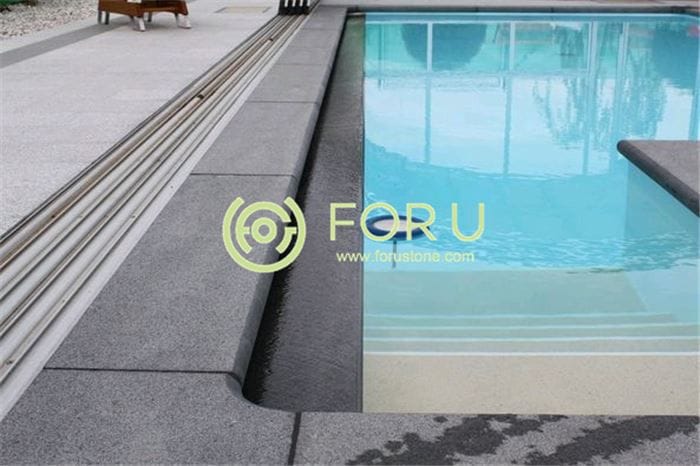
Flamed granite tiles are suitable for outdoor paving, public walkways, stairs, garden paths, driveways, pool areas, and commercial entrances. If the project is exposed to rain, shoes, sand, or outdoor traffic, flamed granite is usually a strong option.
Bush-Hammered, Brushed, and Leathered Granite Tiles
Bush-hammered granite has a heavily textured surface created by mechanical impact. It is useful for stairs, ramps, plazas, public spaces, and areas requiring a stronger grip. Brushed and leathered finishes create a softer texture, often used for modern interiors, walls, countertops, and premium floors.
Before ordering textured granite tiles in bulk, buyers should always request samples. Texture affects not only appearance but also cleaning difficulty, slip behavior, and maintenance. A finish that works well outdoors may feel too rough for an indoor luxury floor.
| Finish | Appearance | Best Use | Buyer Warning |
|---|---|---|---|
| Polished | Glossy and reflective | Interior floors, walls, lobbies | Can be slippery when wet |
| Honed | Matte and smooth | Modern interiors, bathrooms, and walls | Needs proper sealing |
| Flamed | Rough and textured | Outdoor paving, stairs, walkways | Harder to clean indoors |
| Bush-hammered | Strong surface texture | Ramps, plazas, public areas | Not ideal for elegant interiors |
| Brushed | Soft texture | Walls, floors, feature areas | Confirm the sample before the bulk order |
| Leathered | Premium tactile texture | Luxury interiors and counters | The processing cost may be higher |
Where Are Granite Tiles Used?
Granite Tiles for Flooring
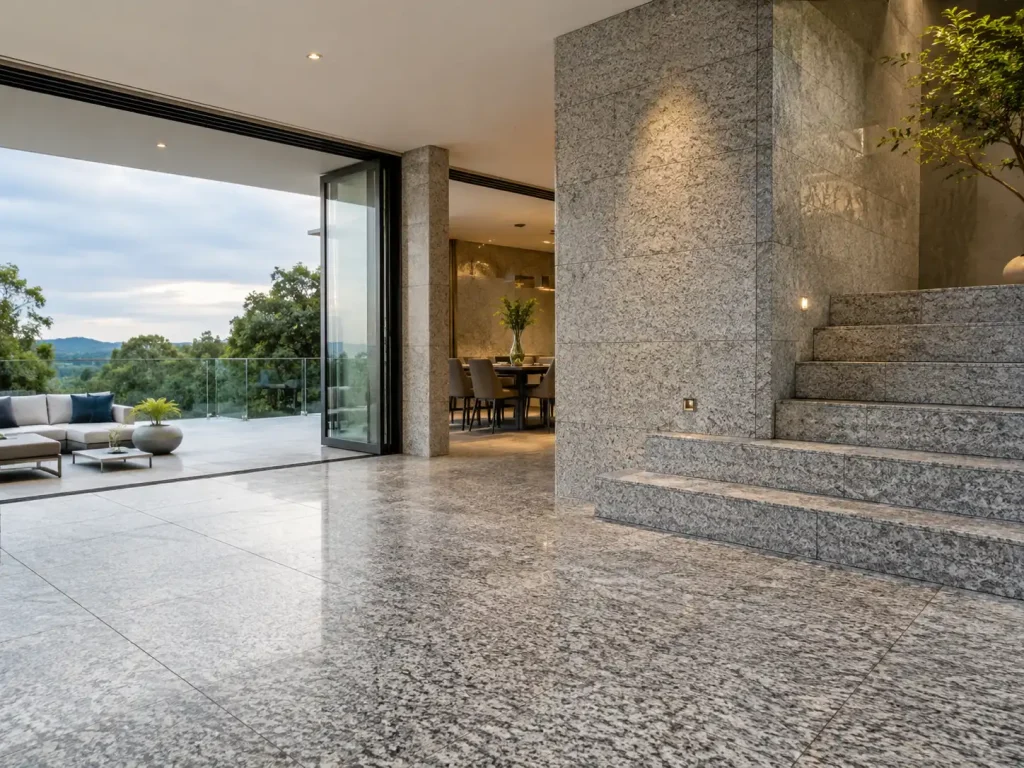
Granite tiles for flooring are used in residential, commercial, and public spaces because they offer strength, wear resistance, and long-term value. In homes, granite tiles work well in entryways, kitchens, bathrooms, hallways, and living areas. In commercial buildings, they are used in corridors, lobbies, elevator halls, shopping centers, and office entrances.
The finish should match the environment. Polished granite creates a premium indoor effect, while honed granite gives a softer and more modern look. For wet or outdoor-connected floors, textured finishes are usually safer. Buyers should also consider grout width, tile size, substrate quality, and maintenance method.
Granite Tiles for Outdoor Paving
Outdoor granite tiles are common for terraces, patios, garden paths, sidewalks, driveways, pool areas, plazas, and commercial landscapes. Granite is naturally suitable for exterior conditions because it is dense, durable, and resistant to weathering. With the correct finish and installation, it can provide a long service life in outdoor environments.
For outdoor paving, flamed or bush-hammered granite is usually better than polished granite. In freeze-thaw climates, low absorption, proper drainage, correct bedding, and expansion planning are important. For vehicle areas, thicker granite tiles or paving stones may be required. Do not use thin indoor tiles for outdoor heavy-load areas unless you enjoy replacing stone as a hobby.
Granite Tiles for Stairs and Steps
Granite tiles are widely used for stairs because they resist wear and impact better than many softer stones. Stair treads can be polished, honed, flamed, grooved, or bush-hammered depending on location. For outdoor stairs, slip resistance and edge safety should be prioritized.
The key risks include slippery polished surfaces, weak edges, incorrect thickness, poor base support, and inconsistent installation. For commercial buildings, hotels, schools, office towers, and public areas, stair materials should be selected with safety and maintenance in mind.
Granite Tiles for Kitchens and Bathrooms
Granite tiles can also be used in kitchens and bathrooms. In kitchens, they are used for floors, backsplashes, wall features, and sometimes countertop alternatives. In bathrooms, granite tiles can be used for vanity walls, floors, shower walls, and decorative surfaces.
Granite countertops are usually made from slabs, but granite tiles may be used when budget, installation conditions, or design layout requires smaller pieces. Compared with full slabs, tile countertops may reduce material cost, but grout lines must be managed carefully. If the project needs a seamless luxury countertop, slabs are usually better. If cost control and modular installation matter more, granite tiles may be considered.
Granite Tiles for Countertops: Smart Option or Compromise?
Granite tiles can be used for countertops, especially when the buyer wants the look of granite but cannot justify the price of full granite slabs. Tile countertops may reduce cost and make installation easier in certain renovation projects. They also allow creative layouts, borders, and backsplash integration.
However, buyers should understand the trade-off. Granite tile countertops have grout lines, and those grout lines require cleaning and sealing. Most granite tiles also do not have fully polished slab-like edges, so edge detail should be planned before installation. If the project is a high-end kitchen island, a full granite slab usually provides a better visual result. If the project is a budget-sensitive rental kitchen or utility counter, granite tiles can still be practical.
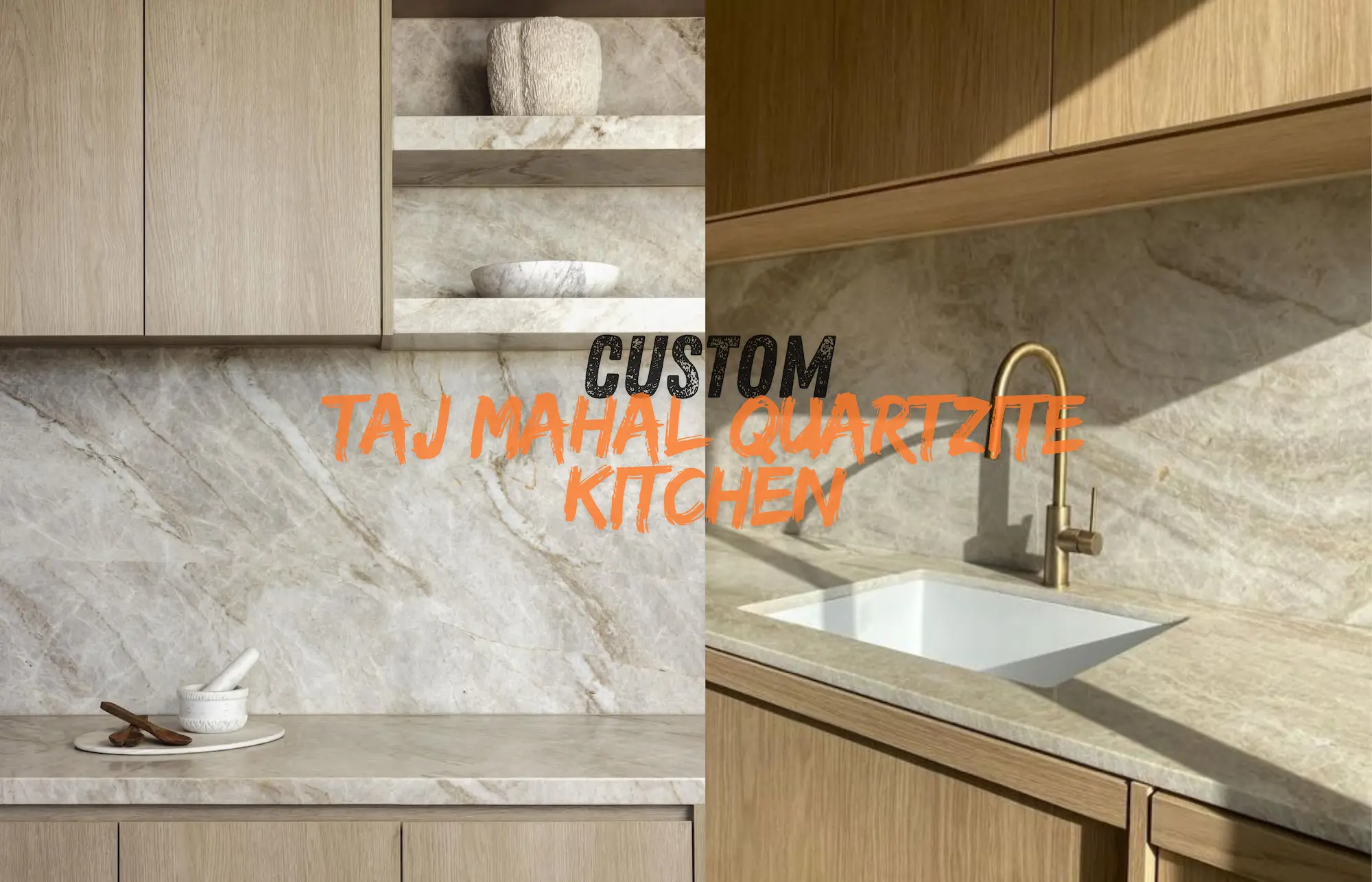
Color selection also matters. Kitchen buyers often compare black, white, grey, beige, brown, and exotic granite tones before making a decision. A resource about granite countertop colors for kitchens can help you understand how color, pattern, and maintenance expectations influence the final countertop look.
Granite Tiles for Commercial and Project Applications
Hotels, Resorts, and Luxury Interiors
Hotels and resorts often use granite tiles in entrance areas, public corridors, exterior walkways, service zones, stairs, and commercial bathrooms. Granite is practical because it can withstand frequent cleaning, luggage traffic, shoes, and public use. In controlled indoor spaces, polished or honed granite can look elegant. In outdoor or wet areas, textured granite is safer.
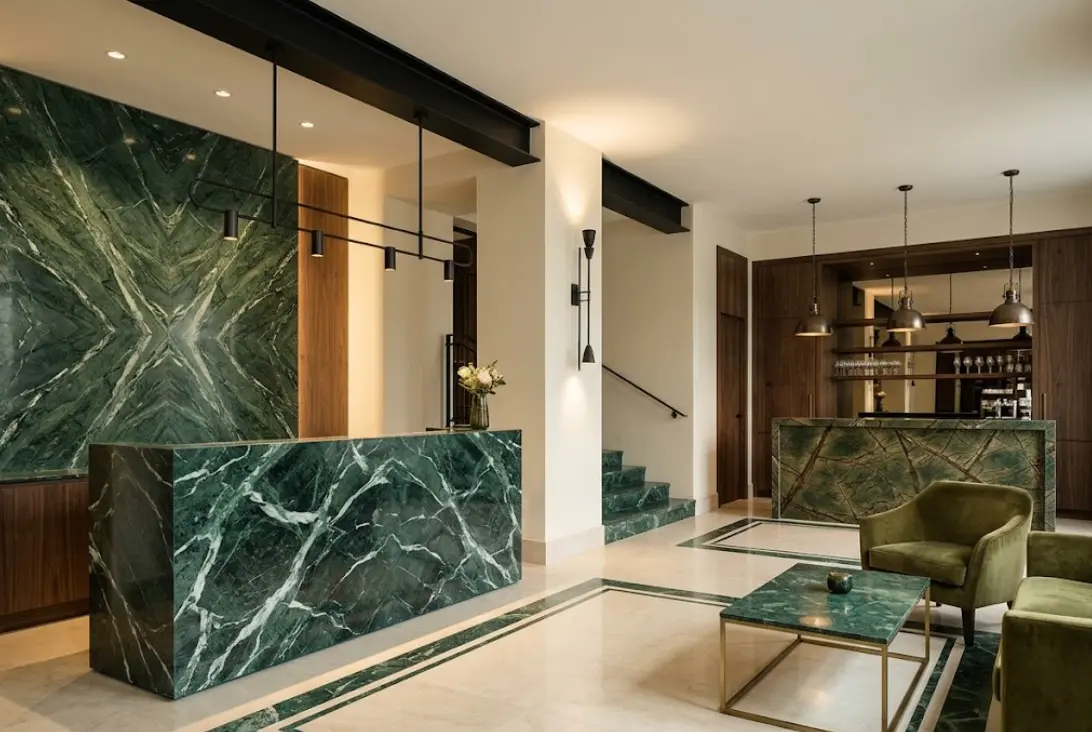
Granite also supports luxury design when used carefully. Some granite varieties have dramatic color movement, blue minerals, gold accents, or dark premium patterns. For high-end interiors, a guide on granite slabs for luxury interiors can help designers avoid the common mistake of overusing strong stone patterns in every corner.
Apartment and Real Estate Projects
Apartment projects need cost control, easy maintenance, repeatable supply, and fewer after-sales complaints. Granite tiles are strong for shared entrances, elevator areas, corridors, landscape paving, exterior stairs, and public spaces. For interior kitchens and bathrooms, they can also be used where durability is more important than dramatic veining.
For developers, the main advantage is lifecycle value. Granite may cost more than basic ceramic tiles, but it can reduce replacement frequency in heavy-use zones. That is why many real estate projects choose granite for common areas while using other materials in private rooms.
Public Infrastructure and Commercial Buildings
Granite tiles are often used in swimming pools, airports, metro stations, schools, office buildings, shopping centers, municipal plazas, and transportation spaces. These environments need materials that can handle traffic, cleaning machines, weather exposure, and long service cycles.
For public projects, buyers should not choose purely by appearance. They should review finish, thickness, absorption, slip resistance, compressive strength, flexural strength, and supplier project experience. Granite is strong, but the wrong specification can still fail.
Granite Tile Sizes and Thickness Options
Common Granite Tile Sizes
Granite tiles are available in many standard and custom sizes. Common sizes include 300×300 mm, 300×600 mm, 400×400 mm, 600×600 mm, 600×900 mm, and 600×1200 mm. Custom cut-to-size granite tiles are also available for commercial floors, exterior cladding, stairs, wall panels, and landscape projects.
Large tiles can create a cleaner visual effect with fewer grout lines, while smaller tiles are easier to install in complex layouts. For outdoor paving, larger units may require stronger base preparation and better installation control. For stairs, dimensions must match tread width, riser height, nosing detail, and safety requirements.
Common Granite Tile Thickness
Thickness should match the application. Thin tiles may work for interior walls, while outdoor paving and stairs require thicker material. Heavy vehicle areas need engineering review because stone thickness alone is not enough; the base structure must also be designed correctly.
| Application | Common Thickness | Buyer Recommendation |
|---|---|---|
| Interior wall tiles | 10–15 mm | Control weight and installation method |
| Interior floor tiles | 15–20 mm | Match traffic and substrate quality |
| Outdoor paving | 20–30 mm or more | Check load, climate, and drainage |
| Stairs | 20–30 mm or more | Confirm edge strength and anti-slip design |
| Exterior cladding | Project-specific | Confirm anchoring system and wind load |
| Heavy vehicle areas | 30 mm or more | Requires engineering review |
Granite Tiles vs Granite Slabs
Granite tiles and granite slabs come from the same natural material, but they are used differently. Granite tiles are smaller and modular, making them suitable for floors, walls, stairs, paving, and large-area installations. Granite slabs are larger and usually used for countertops, islands, feature walls, stair panels, and custom fabricated surfaces.
If the project needs a seamless surface with strong visual continuity, granite slabs are often better. If the project needs cost control, easier handling, modular installation, or large-area flooring, granite tiles are more practical. For premium projects, designers sometimes combine both: slabs for countertops and feature walls, tiles for floors and stairs.
| Factor | Granite Tiles | Granite Slabs |
|---|---|---|
| Size | Smaller, modular | Large-format |
| Installation | Easier for floors and paving | Requires fabrication and handling |
| Main use | Flooring, walls, stairs, paving | Countertops, islands, feature walls |
| Cost control | Easier for large areas | More layout planning and handling costs |
| Visual effect | Tile layout with grout lines | More seamless luxury surface |
| Shipping risk | Lower per piece | Higher handling risk |
Popular Granite Colors and Premium Stone Options
Granite tiles come in a wide range of colors, but not all colors behave the same in design. Black granite feels formal and strong. Grey granite is versatile and practical. White granite brightens interiors while hiding some dust better than pure black surfaces. Brown and beige granite create warmer residential spaces. Blue, green, and exotic granite varieties are often used as premium design statements.
Some rare granite materials are selected not only for durability but also for exclusivity. For example, Extra Blue Azul Bahia granite is valued because of its intense blue tone, limited availability, and high-end decorative impact. Materials like this are not usually chosen for every floor tile project; they are better used in feature walls, luxury counters, reception areas, and signature design spaces.
When designers want more natural stone inspiration, they may also compare granite with quartzite and other premium stones. A guide to premium natural granite and quartzite stones can support early-stage material planning for villas, hotels, showrooms, and upscale commercial interiors.
Quality Standards and Testing for Granite Tiles
For serious projects, granite tiles should be evaluated through more than photos and price sheets. ASTM C615 is commonly used as a reference for granite dimension stone. ASTM C97 helps evaluate absorption and bulk specific gravity. ASTM C170 is used for compressive strength, and ASTM C880 can be used for flexural strength. For flooring, ANSI A326.3 / DCOF testing may help evaluate hard surface flooring slip performance.
Testing is especially important for outdoor paving, public flooring, commercial buildings, exterior cladding, and heavy-use areas. Even when formal testing is not required for a small residential project, buyers should still ask for material information, surface samples, and supplier recommendations.
Export Quality Inspection Checklist
| Inspection Item | Why It Matters | Buyer Action |
|---|---|---|
| Stone variety and quarry source | Controls color and performance expectations | Confirm before production |
| Color range | Prevents visible batch mismatch | Request slab or tile photos |
| Size tolerance | Affects installation accuracy | Check the QC report |
| Thickness tolerance | Affects flatness and installation cost | Confirm project requirement |
| Surface finish | Affects safety and appearance | Approve the sample first |
| Edge quality | Affects final look and breakage risk | Inspect before packing |
| Packing strength | Reduces shipping damage | Request crate photos |
| Container loading | Prevents transport claims | Request loading photos |
Common Mistakes When Buying Granite Tiles
Choosing Polished Granite for Wet Outdoor Areas
Polished granite looks premium, but it can be slippery when wet. For outdoor paving, stairs, pool surroundings, and public entrances, flamed, bush-hammered, or textured finishes are usually more practical.
Ignoring Thickness and Load Conditions
Outdoor paving, stair treads, commercial floors, and vehicle areas require suitable thickness and base preparation. A thin tile used in the wrong place may crack even if the granite itself is strong.
Buying Only by Price per Square Meter
Low price can hide problems such as uneven thickness, poor polishing, color inconsistency, cracks, weak packing, or unreliable delivery. Always compare the total project risk, not only the unit price.
Not Checking Batch Consistency
Granite is a natural stone, so mineral patterns can vary. Even speckled granite may look different from block to block. For large areas, request batch photos and sample approval before cutting.
Forgetting Maintenance and Cleaning Method
Granite is low maintenance, not zero maintenance. Clean spills quickly, avoid harsh chemicals, use suitable cleaners, and reseal when needed based on stone type and use environment.
How to Evaluate a Granite Tile Manufacturer or Supplier
A professional granite tile supplier should help you choose the right material, size, thickness, finish, and packing method based on the project. If the supplier only asks how many square meters you need, the discussion is too thin. Good suppliers ask where the tiles will be used, whether the area is indoor or outdoor, what traffic level is expected, what finish is required, and whether the destination climate has freeze-thaw risk.
When evaluating a granite tile manufacturer, check production capability, quarry sourcing, surface finishing quality, cut-to-size accuracy, packing standards, export experience, and project communication. For wholesale granite tiles, custom granite tiles, or granite tiles bulk orders, supplier reliability can decide whether your project finishes smoothly or turns into a complaint festival.
Before placing an order, prepare your project location, application area, tile size, thickness, finish, quantity, installation environment, and required delivery time. A professional granite tile project consultation helps reduce the risk of choosing the wrong finish, wrong thickness, wrong color batch, or wrong packing method.
For internal product planning, final approval, or backend content review, this granite tiles project reference should be replaced with a public-facing page before publishing to external visitors. Backend links may not be accessible to customers and should not be used as final SEO links on a live article.
Buyer Decision Table: Which Granite Tiles Should You Choose?
| Project Need | Recommended Granite Tile Choice | Best Finish | Key Risk to Avoid |
|---|---|---|---|
| Indoor luxury floor | Selected premium granite tiles | Polished or honed | Slippery wet surface |
| Outdoor paving | Dense granite paving tiles | Flamed or bush-hammered | Wrong thickness |
| Hotel entrance | Strong granite floor tiles | Honed, flamed, or textured | Poor slip control |
| Stair treads | Thick granite tiles | Flamed, grooved, or textured | Weak edge design |
| Bathroom floor | Slip-aware granite tiles | Honed or textured | Polished wet floor |
| Wall cladding | Cut-to-size granite wall tiles | Polished, honed, or brushed | Wrong anchoring |
| Public plaza | Heavy-duty granite tiles | Flamed or bush-hammered | Poor drainage |
| Bulk export order | Factory-inspected granite tiles | Project-specific | Weak packing and batch mismatch |
|
|
|
Final Recommendation: Choose Granite Tiles by Application, Finish, and Supplier Quality
Granite tiles are an excellent choice when your project needs durability, natural stone value, outdoor performance, and long-term wear resistance. They are suitable for flooring, paving, stairs, walls, kitchens, bathrooms, hotels, apartments, public buildings, and commercial spaces. But the best granite tile is not simply the darkest, hardest, or cheapest option.
Choose polished or honed granite tiles for controlled indoor spaces. Choose flamed or bush-hammered granite tiles for outdoor paving and wet areas. Choose thicker granite tiles for stairs, public spaces, and load-bearing conditions. Choose custom sizes when the project requires special layout, edge detail, or architectural coordination.
Most importantly, choose a supplier that can support color control, surface finish approval, size tolerance, packing quality, and project communication. The right granite tile should look good, install smoothly, perform safely, and reduce long-term maintenance risk. That is the kind of stone decision your future self will not complain about.
FAQ About Granite Tiles
1. What are granite tiles made of?
Granite tiles are made from natural granite stone, an igneous rock formed from slowly cooled magma. They usually contain quartz, feldspar, mica, and other minerals, which create the speckled crystal texture commonly seen in granite. The stone is quarried in blocks, cut into slabs, processed into tile sizes, finished on the surface, inspected, and packed for installation. Because granite is natural, color and mineral patterns may vary between batches.
2. Are granite tiles good for flooring?
Yes, granite tiles are very good for flooring because they are hard, dense, wear-resistant, and suitable for both residential and commercial traffic. They are commonly used in entrances, kitchens, hallways, hotel lobbies, office corridors, shopping centers, and public buildings. The most important point is choosing the correct finish. Polished granite works well in controlled indoor areas, while honed, flamed, or textured granite is usually better for wet or high-traffic locations.
3. Can granite tiles be used outdoors?
Yes, granite tiles are widely used outdoors for paving, stairs, terraces, garden paths, plazas, walkways, pool surroundings, and building entrances. Granite has strong weather resistance and low water absorption compared with many other natural stones. For outdoor use, flamed, bush-hammered, or textured finishes are usually recommended because they provide better grip than polished surfaces. Outdoor projects should also consider thickness, drainage, base preparation, and climate conditions.
4. Are granite tiles slippery?
Granite tiles can be slippery if the surface is polished and exposed to water, especially in bathrooms, pool areas, outdoor entrances, or public floors. However, granite can also be processed into honed, flamed, bush-hammered, brushed, grooved, or textured finishes to improve grip. For public flooring, stairs, ramps, and wet areas, buyers should evaluate slip resistance, surface finish, cleaning method, slope, and actual use conditions before final selection.
5. How do I choose a reliable granite tile supplier?
To choose a reliable granite tile supplier, check material sourcing, production capability, surface finish quality, size tolerance, thickness control, batch consistency, inspection process, export packing, and project communication. A good supplier should ask where the granite tiles will be used, whether the area is indoor or outdoor, what traffic level is expected, what finish is required, and whether custom sizes are needed. For bulk orders, request samples, batch photos, QC details, and packing photos before shipment.
References
- “ASTM C615/C615M Standard Specification for Granite Dimension Stone” — ASTM Committee C18 — ASTM International — ASTM Standards Catalogue
- “ASTM C97/C97M Standard Test Methods for Absorption and Bulk Specific Gravity of Dimension Stone” — ASTM Committee C18 — ASTM International — ASTM Stone Testing Standards
- “ASTM C170/C170M Standard Test Method for Compressive Strength of Dimension Stone” — ASTM Committee C18 — ASTM International — ASTM Stone Testing Standards
- “ASTM C880/C880M Standard Test Method for Flexural Strength of Dimension Stone” — ASTM Committee C18 — ASTM International — ASTM Stone Testing Standards
- “Dimension Stone Design Manual” — Natural Stone Institute Technical Committee — Natural Stone Institute — Dimension Stone Design Manual
- “Which ASTM Standards Are Relevant to Natural Stone?” — Natural Stone Institute Technical Team — Natural Stone Institute — Design Professionals Resources
- “ANSI A326.3 Test Method for Dynamic Coefficient of Friction of Hard Surface Flooring Materials” — Tile Council of North America Technical Team — TCNA — Resource Center
- “Natural Stone Flooring Maintenance and Installation Guidance” — Natural Stone Institute Education Team — Natural Stone Institute — Technical Resource Library
Ready Buyer Insight for Granite Tiles
What should buyers understand first? Granite tiles are natural stone tiles made from granite blocks or slabs. They are valued for hardness, wear resistance, low water absorption, outdoor durability, and long service life in flooring, paving, stairs, wall cladding, kitchens, bathrooms, and commercial projects.
Why are granite tiles widely used? Granite tiles perform well in high-traffic and outdoor environments where softer materials may scratch, stain, or wear quickly. They are especially useful for entrances, public walkways, stairs, plazas, hotel corridors, commercial floors, and landscape paving.
How should the right granite tile be selected? If the project is indoors and design-focused, polished or honed granite tiles may be suitable. If the area is outdoors, wet, or public-facing, flamed, bush-hammered, or textured granite tiles are usually safer. If the area carries heavy traffic or vehicle load, thickness and substrate design must be reviewed carefully.
Option insight: Polished granite tiles create a premium interior look. Honed granite tiles offer a modern matte finish. Flamed granite tiles are strong for outdoor paving. Bush-hammered granite tiles support public stairs and ramps. Brushed or leathered granite tiles provide a premium textured effect for walls, floors, and luxury interiors.
Consideration insight: Buyers should not choose granite tiles by color alone. Important factors include water absorption, surface finish, thickness, slip resistance, size tolerance, batch consistency, edge quality, packing strength, and supplier export experience.
Recommendation: Choose granite tiles when your project needs natural stone durability, long-term value, and practical performance. For wholesale granite tiles, custom granite tiles, or bulk commercial orders, request samples, technical data, batch photos, finish approval, and packing details before production.
If your project involves flooring, outdoor paving, stairs, hotels, apartments, commercial buildings, or custom stone layouts, share the application area, finish requirement, size, thickness, and quantity with a professional supplier before ordering. A project-based recommendation helps reduce cost, risk, and installation problems.