MỘT Mosaic wall is not simply a small-tile decoration. It is a flexible design system that can turn bathrooms, kitchens, hotel lobbies, spas, bars, restaurants, powder rooms, and commercial interiors into textured, detailed, and highly memorable spaces. Unlike large tiles or plain painted walls, mosaic wall supplies use many small pieces to create pattern rhythm, light reflection, color variation, and material depth.
The features of Mosaic wall supplies come from their size, shape, material, backing system, installation method, and design flexibility. They can fit curved walls, niches, columns, backsplashes, vanity walls, shower walls, feature panels, and small decorative zones where large slabs or tiles may be difficult to install. They are also available in many materials, including marble, travertine, glass, ceramic, porcelain, shell, metal, stainless steel, and mixed-material combinations.
For buyers and designers who want to understand how mosaic can be used in real home interiors, a practical article on how to incorporate marble mosaics in home design can help connect material choice with bathroom walls, kitchen backsplashes, decorative borders, feature niches, and luxury interior details.
What Are Mosaic Wall Supplies?
Mosaic wall supplies refer to small-format tiles, mosaic sheets, panels, borders, decorative inserts, and wall cladding materials used to create patterned or textured wall surfaces. Most modern mosaic wall products are supplied as mesh-mounted sheets, which makes installation faster than placing every small piece one by one. Common sheet sizes include 300×300mm, 305×305mm, and other project-specific dimensions.
Individual mosaic chip sizes can vary widely. Some are tiny 10×10mm pieces. Others are rectangular strips, hexagons, fish scale shapes, penny rounds, basketweave pieces, herringbone patterns, subway mosaics, or irregular natural stone chips. This gives mosaic wall supplies a high level of design freedom. A designer can create subtle texture in a bathroom, a dramatic backsplash in a kitchen, or a branded decorative wall in a hotel or restaurant.
The biggest difference between mosaic walls and large-format tiles is flexibility. Mosaics can cover small corners, curved surfaces, niches, column faces, shower benches, vanity backgrounds, and detailed wall sections more easily. The tradeoff is that mosaics have more grout lines, so grout quality, alignment, cleaning, and maintenance planning are important.
| Tính năng | Mosaic Wall Supplies | Buyer Meaning |
|---|---|---|
| Small format | Many small chips or pieces | Flexible for curves, niches, and detailed areas |
| Mesh backing | Tiles pre-mounted on sheets | Faster installation than loose pieces |
| Material variety | Glass, ceramic, marble, stone, metal, shell | Wide design choices |
| Pattern flexibility | Herringbone, hexagon, basketweave, penny round, strip | Suitable for custom interiors |
| Grout lines | More joints than large tiles | Needs correct grout and cleaning |
| Decorative value | Strong texture and visual detail | Good for feature walls and backsplashes |
Main Features of Mosaic Wall Supplies
The first major feature of Mosaic wall supplies is high design flexibility. Mosaic tiles can create classic, modern, Mediterranean, luxury, artistic, spa-inspired, boutique, and commercial design styles. They can be used for full walls, partial walls, borders, mirror backgrounds, backsplash zones, shower niches, column wraps, fireplace faces, and accent bands.
The second feature is strong decorative texture. Mosaic walls add visual depth because each small piece catches light differently. Glass mosaics reflect light and make rooms brighter. Marble mosaics create luxury detail. Natural stone mosaics create organic warmth. Shell mosaics create pearlescent effects. Metal mosaics add a modern reflective edge. Mixed mosaics combine several effects into one surface.
The third feature is practical wall protection. Mosaic wall tiles can protect walls from water splashes, cooking stains, bathroom moisture, and cleaning contact. Their performance depends on material type, grout quality, waterproofing, adhesive compatibility, and installation method. When selected correctly, a mosaic wall can be both decorative and functional.
For buyers who want a broader view of design and practical benefits, the article on lợi ích của gạch mosaic đá cẩm thạch is relevant because marble mosaics remain one of the most popular luxury options for bathrooms, feature walls, hotels, and refined interior details.
| Tính năng | Design Benefit | Practical Benefit |
|---|---|---|
| Small pieces | More pattern freedom | Fits curves and corners |
| Many materials | Supports different styles | Matches different budgets |
| Mesh sheets | Creates repeatable layout | Reduces labor compared with loose pieces |
| Rich texture | Adds depth and luxury | Hides small wall imperfections |
| Splash protection | Good for kitchens and bathrooms | Protects wall surface |
| Custom patterns | Supports brand identity | Useful for hotels and commercial interiors |
Popular Materials for Mosaic Wall Tiles
Glass mosaic wall tiles are bright, reflective, colorful, and usually water-resistant. They work well in bathrooms, pool walls, kitchen backsplashes, spas, and modern interiors. However, transparent or translucent glass mosaics can show adhesive marks if the installation is poor, so suitable adhesive and skilled installation are important.
Ceramic mosaic tiles are practical, affordable, easy to clean, and widely available. They are commonly used in kitchens, bathrooms, laundry rooms, and decorative walls. Porcelain mosaics are denser and often lower in water absorption, making them useful for wet walls and commercial interiors. Marble mosaic wall tiles are more premium and natural, often selected for hotels, luxury bathrooms, vanity backsplashes, and feature walls. Natural stone mosaics may include travertine, limestone, slate, granite, onyx, basalt, and mixed stone patterns.
Metal, shell, and mixed-material mosaics are usually chosen for decorative accents rather than broad wall coverage. They can create strong visual identity in bars, restaurants, boutique hotels, retail interiors, and powder rooms. However, buyers should confirm whether the material is suitable for wet areas, high-heat zones, or chemical exposure before ordering.
| Vật liệu | Hiệu ứng hình ảnh | Sử dụng tốt nhất | Buyer Warning |
|---|---|---|---|
| Khảm kính | Bright, reflective, colorful | Bathrooms, pools, backsplashes | Needs correct adhesive |
| Ceramic mosaic | Practical and affordable | Kitchens, bathrooms, walls | Check glaze quality |
| Porcelain mosaic | Dense and durable | Wet walls, commercial areas | Harder to cut |
| Khảm đá cẩm thạch | Elegant and natural | Luxury bathrooms, hotels | Needs sealing and gentle cleaning |
| Travertine mosaic | Warm and textured | Spas, villas, rustic interiors | Filling and sealing may be needed |
| Metal mosaic | Modern and reflective | Bars, restaurants, accents | Avoid harsh chemicals |
| Mosaic vỏ sò | Pearlescent and decorative | Powder rooms, feature walls | Avoid heavy-abuse areas |
| Mixed mosaic | Rich and custom | Boutique interiors | Confirm material compatibility |
Mosaic Wall Design Shapes and Pattern Options
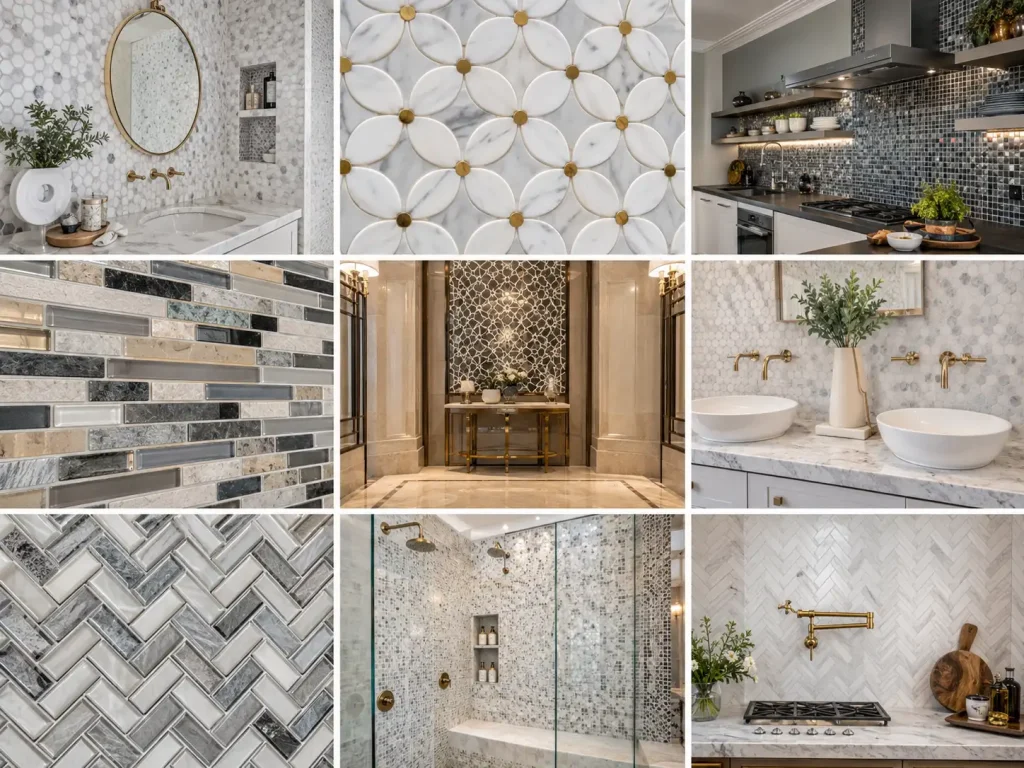
Mosaic wall supplies offer more pattern flexibility than most wall finishes. Square and rectangular mosaics are classic, simple, and easy to align. Hexagon mosaics create a modern geometric effect and are popular in bathrooms, hotel walls, and contemporary interiors. Herringbone and chevron mosaics add movement and direction, making them strong choices for kitchen backsplashes, vanity walls, and shower feature panels.
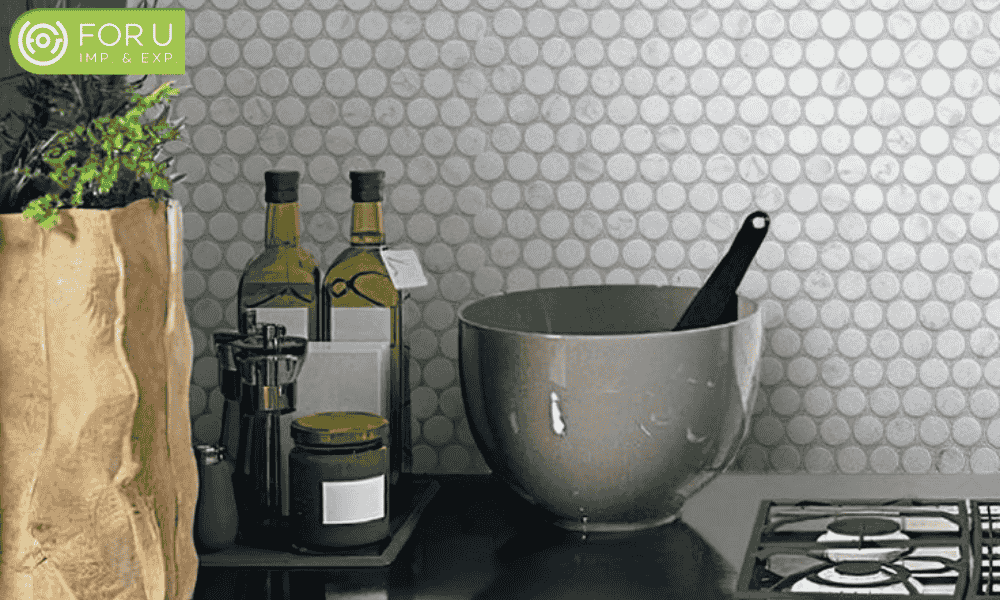
Penny round mosaics feel soft, retro, and playful. They are often used in bathrooms, powder rooms, boutique cafes, and small decorative areas. Basketweave mosaics are more classic and luxurious, especially when made with marble. Irregular stone mosaics and strip mosaics create natural, textured, handcrafted surfaces suitable for spa walls, fireplaces, garden walls, and feature areas.
Because mosaic pattern selection can change the whole room’s mood, buyers should not choose by pattern name alone. They should consider room size, lighting, grout color, surrounding tiles, furniture style, cleaning needs, and whether the wall should be calm or visually active. For long-term market awareness, buyers can also review discussions around marble mosaic design practice and market possibility to understand how mosaic is moving beyond decoration into practical project planning.
| Mẫu | Style Feeling | Best Space | Installation Note |
|---|---|---|---|
| Square mosaic | Clean and classic | Bếp, phòng tắm | Easy alignment |
| Hexagon mosaic | Modern geometric | Bathrooms, hotel walls | Watch grout consistency |
| xương cá | Dynamic and refined | Backsplashes, vanity walls | Needs precise layout |
| Chevron | Sharp and decorative | Tường điểm nhấn | Direction must be planned |
| Penny round | Soft and retro | Bathrooms, cafes | More grout lines |
| Basketweave | Classic luxury | Marble bathrooms | Good layout control needed |
| Strip mosaic | Linear and modern | Spa walls, lobbies | Align horizontal lines |
| Irregular stone | Natural and rustic | Feature walls, fireplaces | Variation must be accepted |
Real Application Scenarios for Mosaic Wall Supplies
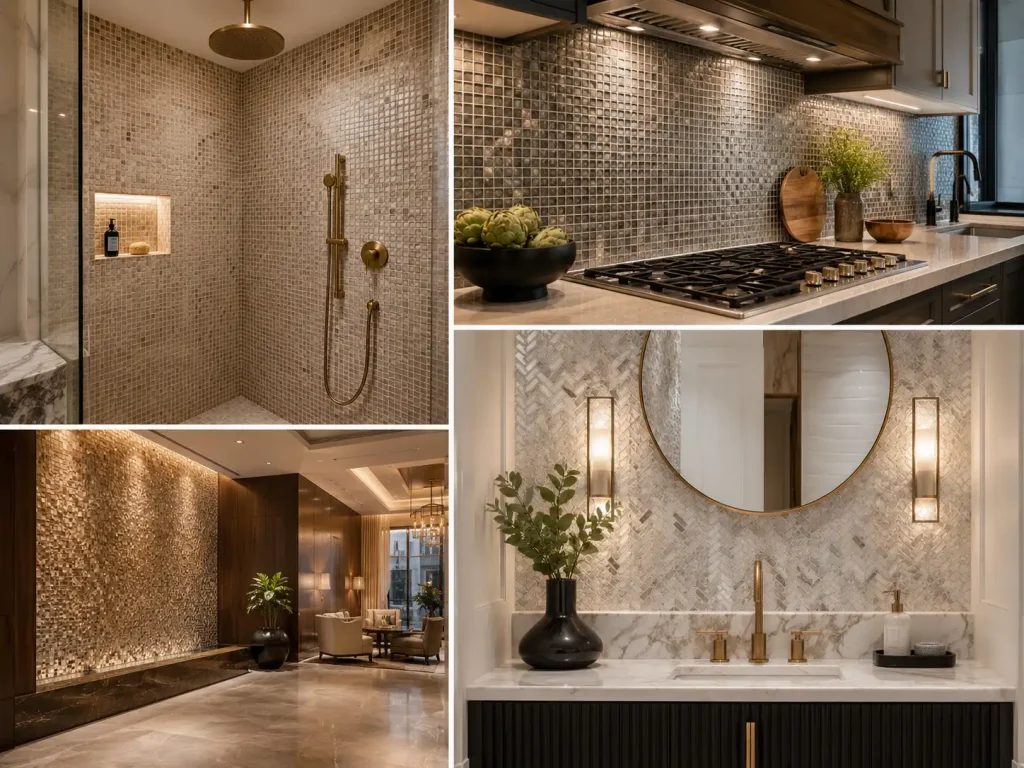
Bathroom mosaic walls are one of the most common applications. Mosaic tiles can be used in shower walls, vanity backsplashes, bathtub surrounds, niches, spa-style walls, and decorative bathroom borders. Glass, porcelain, ceramic, and marble mosaics are popular choices. Wet areas need waterproofing, suitable adhesive, sealing when natural stone is used, and mold-resistant grout.
Kitchen mosaic backsplashes protect walls from water, oil, steam, and cooking stains. Glass, ceramic, porcelain, marble, and mixed mosaics can work well, but easy-clean surfaces and stain-resistant grout are important. Hotel and spa feature walls use mosaics to create atmosphere, texture, and visual branding. Restaurants and bars use dark stone, metal, glass, or mixed mosaics to create mood under warm lighting.
For bathroom-specific inspiration, buyers can study marble mosaic bathroom designs because bathrooms are one of the strongest areas for mosaic wall supplies. The best bathroom mosaic design balances pattern, grout color, moisture resistance, lighting, and long-term cleaning.
| Ứng dụng | Recommended Mosaic Type | Key Requirement | Risk If Ignored |
|---|---|---|---|
| Tường phòng tắm | Glass, porcelain, marble mosaic | Waterproofing and grout quality | Mold, staining, loose tiles |
| Tấm ốp tường bếp | Ceramic, glass, porcelain mosaic | Easy cleaning and stain resistance | Grease stains and grout discoloration |
| Hotel spa wall | Marble, travertine, glass mosaic | Sealing and soft lighting | Surface damage or dull effect |
| Bar wall | Metal, glass, dark stone mosaic | Cleaning and impact resistance | Scratches or chemical damage |
| Feature wall | Marble, stone, shell, mixed mosaic | Pattern and lighting control | Visual clutter |
| Pool wall | Glass or porcelain mosaic | Low absorption and proper adhesive | Tile detachment |
| Retail display wall | Custom decorative mosaic | Brand color and layout control | Inconsistent visual effect |
Technical Parameters Buyers Should Check
Before ordering Mosaic wall supplies, buyers should check chip size, sheet size, thickness, water absorption, mesh backing, surface finish, grout width, chemical resistance, and material compatibility. Individual chip size affects visual detail and installation complexity. Sheet size affects installation speed and alignment. Common sheet sizes are around 300×300mm or 305×305mm, but suppliers may offer custom formats.
Thickness varies by material. Some glass and ceramic mosaics may be thinner, while natural stone mosaics may range from around 7mm to 10mm or more depending on the design. Water absorption is especially important for bathrooms, pools, kitchens, and wet walls. Glass and porcelain usually offer low absorption. Natural stone varies and may need sealing.
Mesh backing quality is another key feature. The mesh should hold the pieces firmly and evenly. Weak backing can lead to loose chips, uneven sheets, poor alignment, and installation delays. Adhesive compatibility also matters. Glass mosaics may require white adhesive. Natural stone mosaics may require stone-safe adhesive. Wet areas require waterproof-compatible installation systems.
| Tham số | Tại sao điều đó quan trọng | Buyer Check |
|---|---|---|
| Kích thước chip | Controls pattern detail | Match design scale |
| Kích thước tờ | Affects installation speed | Check sheet alignment |
| Độ dày | Affects wall leveling | Confirm before installation |
| Sự hấp thụ nước | Affects wet-area use | Choose suitable material |
| Mesh backing | Affects tile stability | Check glue and mesh quality |
| Bề mặt hoàn thiện | Controls look and cleaning | Compare polished, matte, tumbled |
| Grout width | Affects final appearance | Plan color and joint size |
| Khả năng chống hóa chất | Important for kitchens and bars | Confirm cleaning method |
Mosaic Wall Supplies vs Large Tiles, Slabs, Wallpaper, and Paint
Mosaic wall supplies are better than large tiles when the project needs curves, niches, detailed decoration, or strong texture. Large tiles are faster for big flat surfaces and have fewer grout lines. Stone slabs create a more seamless luxury surface, but they are heavier, more expensive, and less flexible for small or curved areas. Mosaic panels offer pattern freedom and easier handling.
Compared with wallpaper and paint, mosaic walls are more durable in wet or splash-prone areas. Wallpaper is easier to install but weaker in bathrooms, kitchens, and commercial cleaning conditions. Paint is affordable and simple, but it does not provide the same depth, texture, water resistance, or premium material value. Wood panels create warmth but may not be suitable for high-moisture areas unless properly treated.
For buyers comparing the broader application value of mosaic and patterns, application advantages of mosaic and patterns can help explain why small-format materials remain useful in spaces where large tiles, slabs, and flat wall finishes cannot solve every design challenge.
| Lựa chọn vật liệu | Sức mạnh | Limitation | Sử dụng tốt nhất |
|---|---|---|---|
| Mosaic wall tiles | Flexible, decorative, textured | More grout lines | Backsplashes, bathrooms, feature walls |
| Large tiles | Fewer joints and clean look | Less flexible for curves | Large flat walls |
| Stone slabs | Seamless luxury | Higher cost and weight | Feature walls and hotels |
| Wallpaper | Fast and decorative | Weak in wet areas | Dry decorative rooms |
| Sơn | Low cost and simple | Low texture and protection | Budget walls |
| Wood panels | Warm and decorative | Moisture risk | Living rooms and dry areas |
Installation Requirements for Mosaic Wall Supplies
A successful Mosaic wall depends heavily on installation quality. The wall must be flat, clean, dry, and stable. Wet areas need waterproofing before mosaic installation. Uneven walls can make mosaic sheets appear wavy. If the installer does not align sheets carefully, visible sheet lines may appear after grouting.
Adhesive selection depends on the material and environment. Glass mosaics may need white adhesive to avoid color distortion. Natural stone mosaics may need stone-safe adhesive. Wet areas need adhesive systems compatible with waterproofing. Grout selection is also important. Grout color can make the mosaic look softer, stronger, cleaner, or more graphic. Epoxy grout may be useful in wet or stain-prone areas, while cement grout is common but may need sealing.
After installation, grout haze must be removed properly. Natural stone mosaics should not be cleaned with acidic products. Marble, limestone, travertine, and onyx mosaics may etch or stain if wrong cleaners are used. Good installation is not just about sticking tiles to a wall; it is about creating a surface that stays beautiful after daily use begins.
| Installation Step | Key Requirement | Risk If Ignored |
|---|---|---|
| Wall preparation | Flat, clean, stable wall | Uneven surface and loose tiles |
| Waterproofing | Required in wet zones | Moisture damage |
| Keo dán | Match material and environment | Tile detachment |
| Sheet alignment | Keep joints consistent | Visible sheet marks |
| Vữa | Choose correct color and type | Stains or poor appearance |
| Vệ sinh | Remove haze safely | Surface damage |
| Niêm phong | Needed for many natural stones | Stains and water marks |
Maintenance and Cleaning Features
Many Mosaic walls are easy to clean when the right material and grout are selected. Glass, porcelain, and glazed ceramic mosaics can usually be wiped with mild cleaners. Kitchen backsplashes need grease-resistant surfaces and grout that does not discolor easily. Bathroom mosaics need ventilation, mold-resistant grout, and regular cleaning to prevent buildup.
Natural stone mosaics need more care. Marble, travertine, limestone, and onyx mosaics may need sealing. They should be cleaned with pH-neutral products. Acidic cleaners, vinegar, lemon-based cleaners, and abrasive pads should be avoided because they can etch or damage the surface. Metal and shell mosaics also need gentle cleaning to avoid scratching, dulling, or corrosion.
| Loại Mosaic | Cleaning Difficulty | Maintenance Advice |
|---|---|---|
| Khảm kính | Thấp | Wipe with mild cleaner |
| Porcelain mosaic | Thấp | Suitable for wet walls |
| Ceramic mosaic | Low-medium | Protect grout from stains |
| Khảm đá cẩm thạch | Trung bình | Use sealing and pH-neutral cleaner |
| Travertine mosaic | Trung bình | Fill or seal pores when needed |
| Metal mosaic | Trung bình | Avoid abrasive chemicals |
| Mosaic vỏ sò | Medium-high | Use gentle cleaning only |
Industry Trends in Mosaic Wall Design
Mosaic wall design is shifting toward smaller high-impact zones rather than covering every wall. Designers use mosaics for vanity walls, niche interiors, backsplash bands, shower features, spa corridors, bar fronts, restaurant walls, and branded commercial surfaces. This creates stronger design value while controlling material cost and installation complexity.
Natural stone and mixed materials are also becoming more popular. Marble mosaics, travertine mosaics, glass-stone mixes, shell accents, and metal-stone combinations allow designers to create richer textures. Warm neutrals such as beige, cream, white, grey, and soft green are strong in spa and hotel interiors. Metallic tones are popular in restaurants, bars, and boutique retail spaces.
Custom patterns are also important for hospitality and retail. Hotels and brands may use mosaic walls to express identity through color palettes, pattern repetition, and material combinations. Buyers interested in a quick luxury upgrade can also consider the message behind order your marble mosaic for a luxurious makeover, especially when the project needs a strong decorative effect in a focused area.
Regulations, Safety, and Compliance Considerations
Bathrooms, pools, spas, and wet areas require waterproofing, suitable adhesive, and correct grout selection. Indoor air quality may also matter when adhesives, sealers, and installation products are used in commercial interiors. Buyers should check local building requirements, especially for hotels, public spaces, restaurants, spas, and high-humidity areas.
Mosaic walls do not need floor slip ratings, but touch safety still matters. Exposed trims, sharp corners, metal pieces, and transition edges should be safe and cleanly finished. In commercial interiors, fire rating, moisture performance, cleaning chemicals, and long-term maintenance should be reviewed according to local standards and project requirements.
Common Mistakes When Buying Mosaic Wall Supplies
The first mistake is choosing only by color. A mosaic may look beautiful, but the material may not suit wet areas, cleaning needs, or project traffic. The second mistake is ignoring grout color. Grout can make the wall look soft and seamless or busy and broken. The third mistake is using natural stone mosaics without sealing, which may lead to staining, water marks, and cleaning complaints.
The fourth mistake is poor sheet alignment. Visible sheet marks can make even expensive mosaics look cheap. The fifth mistake is choosing the wrong adhesive, leading to tile detachment, discoloration, or weak bonding. The sixth mistake is buying only by the lowest price. Low-cost mosaics may have weak mesh backing, uneven chips, color inconsistency, poor polishing, poor packaging, and higher breakage risk.
How to Choose a Reliable Mosaic Wall Supplier
A reliable Mosaic wall supplier should provide actual product photos, material options, sheet size, chip size, thickness, mesh backing details, sample support, packing photos, and application advice. The supplier should understand bathrooms, kitchens, hotels, spas, bars, restaurants, and commercial interiors differently. A bathroom shower wall does not need the same mosaic solution as a dry restaurant feature wall.
Buyers should ask whether the supplier can support custom patterns, wholesale quantities, consistent color batches, export packing, and after-sales communication. A good supplier should be able to explain which materials are suitable for wet areas, which need sealing, which are easier to clean, and which are mainly decorative. Buyers can review an experienced marble mosaic supplier profile before discussing project requirements, production capability, export packing, and material recommendations.
| Supplier Check | Good Signal | Risk Signal |
|---|---|---|
| Actual product photos | Shows real color and texture | Only catalog images |
| Mesh backing quality | Firm and even sheets | Loose pieces |
| Size consistency | Stable chip and sheet sizes | Uneven joints |
| Material knowledge | Application-based advice | Only price discussion |
| Sample support | Buyer can approve before order | No sample available |
| Đóng gói | Strong cartons and pallets | Weak packaging |
| Custom ability | Patterns and materials available | Only fixed stock |
| Communication | Clear technical answers | Vague replies |
|
|
|

If This Is Your Project, Choose This Mosaic Wall Strategy
Mosaic wall selection should always start from application. A bathroom shower wall needs water resistance, waterproofing, grout quality, and sealing if stone is used. A kitchen backsplash needs grease resistance and easy cleaning. A hotel spa wall needs soft lighting, moisture control, and premium texture. A restaurant bar wall needs impact and chemical consideration. A curved column needs small mesh-mounted mosaics rather than large rigid tiles.
The right strategy is not to ask, “Which mosaic is most beautiful?” The better question is, “Which mosaic material, pattern, grout, adhesive, and finish fits this exact wall condition?” Buyers who answer that question reduce risk and improve the final effect.
| If Your Project Needs | Chọn | Tránh |
|---|---|---|
| Bathroom shower wall | Glass, porcelain, or sealed stone mosaic | Unsealed porous stone |
| Tấm ốp tường bếp | Glazed ceramic, glass, porcelain mosaic | Rough porous surfaces |
| Luxury hotel spa | Marble, travertine, glass-stone mosaic | Harsh glossy colors everywhere |
| Pool wall | Low-absorption glass or porcelain mosaic | Natural stone without review |
| Restaurant bar wall | Glass, metal, dark stone mosaic | Materials damaged by chemicals |
| Small powder room | Shell, marble, or decorative mosaic | Oversized heavy patterns |
| Curved column | Mesh-mounted small mosaic | Large rigid tiles |
| Budget wall project | Ceramic mosaic | Complex custom mixed materials |
Những câu hỏi thường gặp
1. What are Mosaic wall supplies?
Mosaic wall supplies include small-format tiles, mesh-mounted sheets, decorative panels, borders, inserts, and wall cladding materials used to create textured or patterned wall surfaces. They may be made from glass, ceramic, porcelain, marble, travertine, limestone, shell, metal, or mixed materials. Mosaic wall supplies are commonly used in bathrooms, kitchens, spas, hotels, bars, restaurants, feature walls, and commercial interiors. Their value comes from design flexibility, texture, material variety, and the ability to fit complex spaces.
2. Where can Mosaic wall tiles be used?
Mosaic wall tiles can be used in bathroom walls, shower niches, vanity backsplashes, kitchen backsplashes, hotel spa walls, restaurant bars, pool walls, powder rooms, fireplace features, retail display walls, elevator backgrounds, and commercial reception areas. They are especially useful in spaces where large tiles or slabs are difficult to install, such as curved walls, columns, corners, small niches, and decorative borders. The best location depends on material type, water exposure, cleaning needs, and installation method.
3. Which material is best for Mosaic wall tiles?
The best material for Mosaic wall tiles depends on the project. Glass mosaics are bright, reflective, and suitable for bathrooms, pools, and backsplashes. Porcelain mosaics are dense and practical for wet or commercial areas. Ceramic mosaics are affordable and easy to clean. Marble mosaics create a luxury natural stone effect for bathrooms, hotels, and feature walls, but they need sealing and pH-neutral cleaning. Metal, shell, and mixed mosaics are better for decorative accents and boutique interiors.
4. Are Mosaic walls easy to clean?
Many Mosaic walls are easy to clean if the correct material and grout are selected. Glass, porcelain, and glazed ceramic mosaics are usually easier to wipe and maintain. Natural stone mosaics such as marble, travertine, limestone, and onyx need more care because they may absorb stains or react with acidic cleaners. Grout maintenance is also important because mosaic walls have more joints than large tiles. Good grout selection, sealing when needed, and regular cleaning help keep Mosaic walls looking fresh.
5. What should buyers check before ordering Mosaic wall supplies?
Before ordering Mosaic wall supplies, buyers should check material type, chip size, sheet size, thickness, mesh backing, water absorption, surface finish, grout width, adhesive compatibility, color consistency, packing method, sample availability, and supplier experience. For wet areas, waterproofing, adhesive, grout, and sealing requirements are especially important. For hotels, restaurants, and commercial projects, buyers should also confirm whether the supplier can support custom patterns, bulk quantity, consistent batches, export packing, and technical advice.
Tài liệu tham khảo
- “Tile Installation Handbook” — Tile Council of North America — Tile Installation Reference
- “ANSI A108/A118/A136.1 Installation Standards” — American National Standards Institute — Tile Installation Standard
- “Dimension Stone Design Manual” — Natural Stone Institute — Natural Stone Design Resource
- “Natural Stone Care and Maintenance Guidelines” — Natural Stone Institute — Stone Maintenance Resource
- “Ceramic Tile: Selection and Use in Interior Applications” — Ceramic Tile Institute of America — Tile Material Reference
- “Glass Tile Installation Guidelines” — Tile Council of North America — Glass Tile Installation Resource
- “Interior Wet Area Waterproofing Guidelines” — National Tile Contractors Association — Wet Area Installation Resource
- “Hospitality Interior Surface Trends Report” — International Interior Design Association — Design Practice Resource
Final Buyer Insight: Why Mosaic Wall Supplies Are Small Materials With Big Design Value
What should buyers understand first?
Mosaic walls should be understood as both decorative and functional wall systems. Their value comes from pattern flexibility, material variety, texture, moisture protection, and ability to fit complex spaces.
How should Mosaic wall supplies be selected?
The best choice depends on application, material, water exposure, cleaning needs, pattern, grout, adhesive, sheet backing, and supplier quality. Glass and porcelain are practical for wet areas, while marble and natural stone are better for luxury interiors with proper sealing.
Why do Mosaic wall projects fail?
Common failures include wrong material selection, poor grout color, unsealed natural stone, weak adhesive, bad sheet alignment, visible sheet marks, staining, loose chips, and buying only by lowest price.
Option logic: If the wall is in a shower, choose low-absorption glass, porcelain, or sealed stone. If the wall is a kitchen backsplash, choose easy-clean ceramic, glass, or porcelain. If the project is a luxury hotel spa, choose marble, travertine, or glass-stone mosaics. If the wall is a curved column, choose small mesh-mounted mosaics.
Recommendation: Before ordering, prepare project area, wall size, preferred material, pattern style, sheet size, quantity, wet or dry condition, and target market. Buyers can send these details through the Mosaic wall project consultation page to request material matching, quotation, sample support, and application advice.
Soft CTA: Mosaic wall supplies prove that small pieces can create large design impact when material, pattern, installation, and maintenance are chosen correctly.