
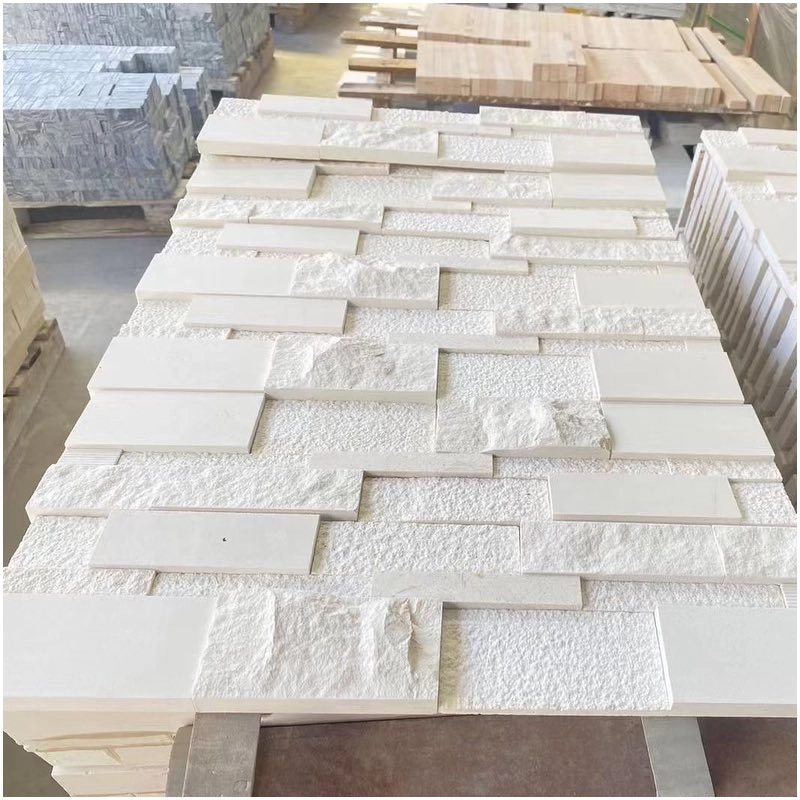
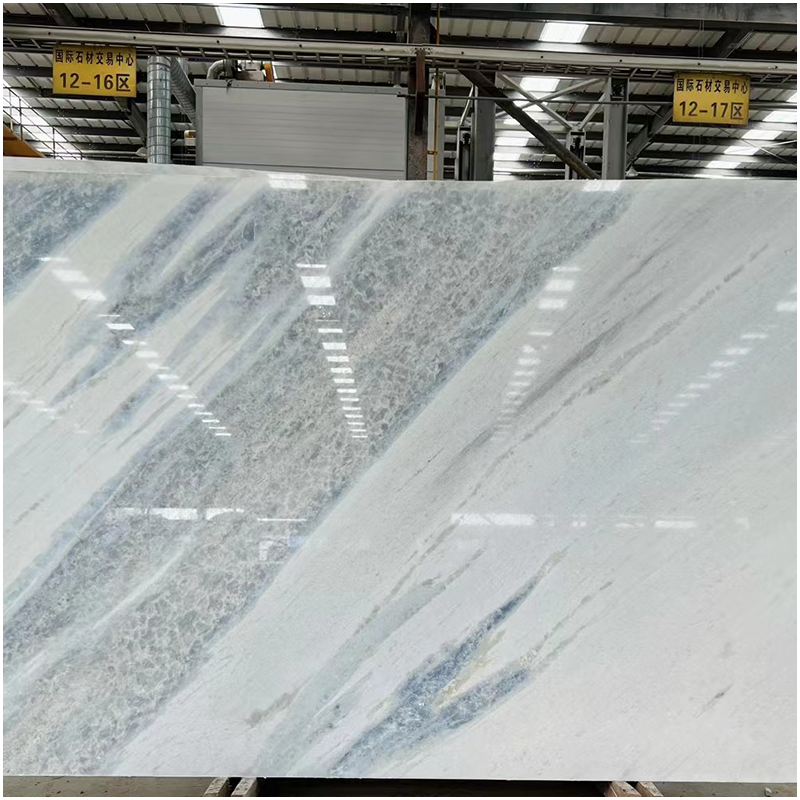


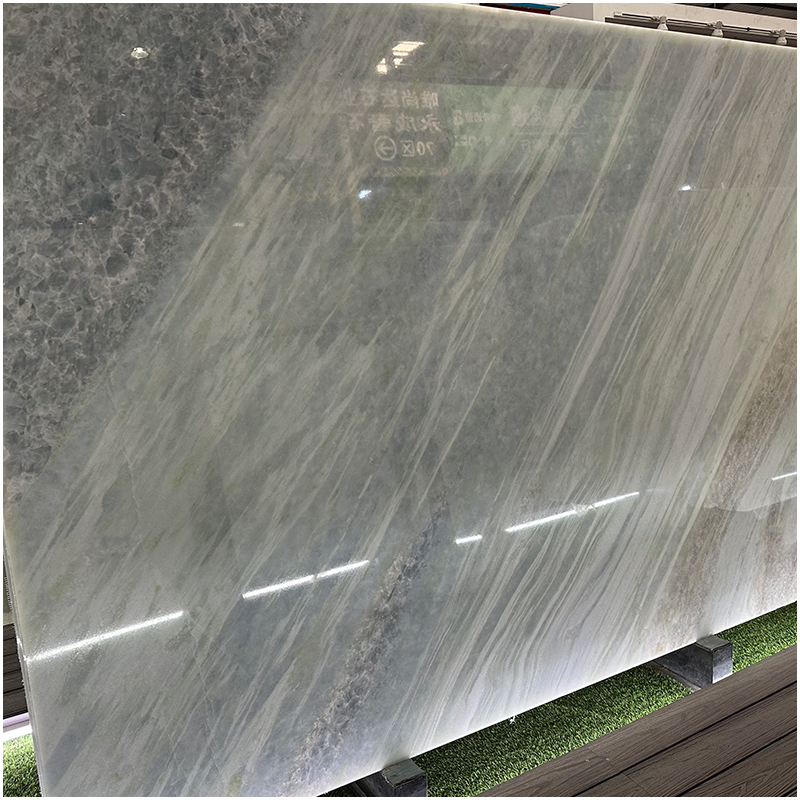
The Showroom Moment That Turns Into a Jobsite Decision
“Should we go 20mm to keep it sleek—or 30mm so it feels ‘premium’ and safer?”
That question comes up a lot, usually right after someone falls in love with a slab sample and then realizes… thickness isn’t an aesthetic detail. It changes cân nặng, hỗ trợ kết cấu, Hình dạng cạnh, installation method, and even how seams and lippage Nhìn under real lighting. In other words: choosing the wrong marble thickness doesn’t just hurt the budget—it can quietly create future cracks, callbacks, and “why does this feel flimsy?” regret.
This guide breaks down how professionals choose Độ dày đá cẩm thạch for floors, walls, and countertops—using field logic you can actually apply on-site, plus project lessons seen across ĐÁ CHO BẠN supply and fabrication workflows.
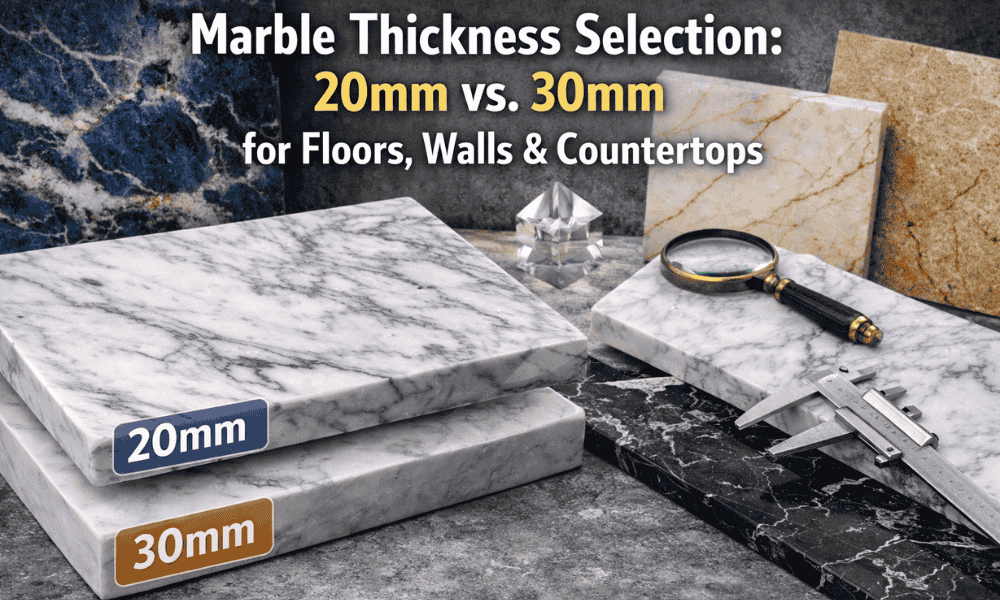
Why thickness is a performance decision, not a preference
A 20mm slab can be the perfect choice in the right build-up. A 30mm slab can be overkill in the wrong situation. The difference isn’t “thin vs thick.” It’s how thickness interacts with:
-
Substrate stiffness and flatness (especially for floors)
-
Span and overhang (especially for countertops)
-
Anchoring and wind loads (especially for wall cladding)
-
Edge detailing (the “visual thickness” you want without the mass)
-
Site realities (elevator limits, handling risk, jobsite cutting)
Across high-end projects, European stone-industry discussions—often echoed in ESTA-related circles—have increasingly treated thickness selection as part of a “performance spec,” not a finish choice. That mindset reduces failures and raises long-term satisfaction.
And if you’re wondering who’s behind the material and process guidance you’ll see referenced here, the easiest background check is Giới thiệu về chúng tôi—because thickness decisions only work when quarry selection, slab calibration, and fabrication standards are controlled end-to-end.
20mm vs 30mm in numbers: the “weight reality” most buyers miss
Before we even talk design, let’s talk physics.
Đá cẩm thạch density varies, but a practical planning value is 2,700 kg/m³ (typical calcite-based stone). That means:
-
20mm (0.02 m) marble weighs ≈ 0.02 × 2,700 = 54 kg/m²
-
30mm (0.03 m) marble weighs ≈ 0.03 × 2,700 = 81 kg/m²
That extra 10mm adds roughly 27 kg/m². Over a 50 m² floor, that’s about 1,350 kg more stone. This affects:
-
Handling and breakage risk
-
Structural load checks (especially elevated slabs)
-
Wall anchoring requirements
-
Shipping efficiency and install manpower
When teams want the “thicker look” without the extra mass, they often use laminated edges, miters, or drop-front details—especially on countertops.
If you want thickness recommendations tailored to your project type and installation approach (not just a generic “30mm is better”), start with Liên hệ với chúng tôi so your team can match thickness to slab size, layout, edge profile, and jobsite constraints.
Where 20mm wins: floors, walls, and modern detailing
Floors: 20mm is often the professional default—when the substrate is right
For large-format marble flooring, 20mm is extremely common because it balances:
-
Easier handling for installers
-
Better yield from slab processing
-
Cleaner transitions at thresholds
-
Compatibility with leveling systems and modern floor build-ups
But here’s the catch: 20mm flooring assumes a properly prepared substrate. If the slab isn’t flat, or if the floor system has deflection, thin stone highlights those problems faster. That’s why many specifications pair 20mm with tighter substrate tolerances and proper mortar coverage.
Walls: 20mm is the “smart engineering” choice most of the time
On interior wall cladding and feature walls, 20mm is often preferred because:
-
Lower dead load reduces anchor stress
-
Easier panel handling reduces chip risk
-
More efficient cutting and matching for bookmatch layouts
In fact, many commercial interiors choose 20mm panels with professional anchoring systems because the performance is predictable and the installation is cleaner.
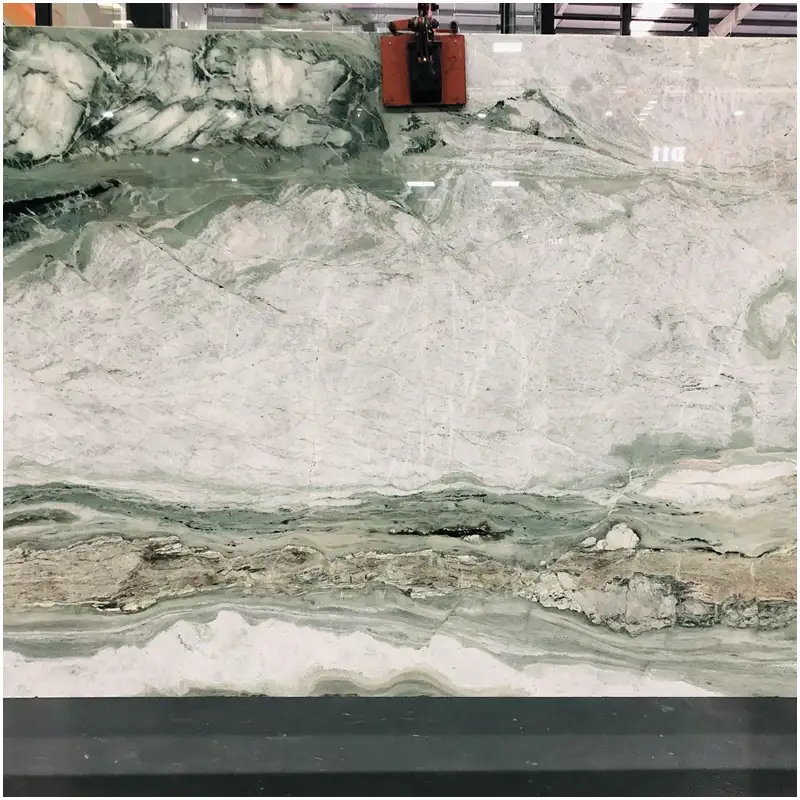
If you’re browsing options across different finishes and sourcing categories, start at the broad đá cẩm thạch selection so you can shortlist by color tone, movement, and intended application before locking thickness.
Where 30mm wins: countertops, heavy-use zones, and “feel” under hand
Countertops: 30mm shines in spans, overhangs, and heavy daily use
Countertops are the place where 30mm genuinely earns its keep. The reasons are simple:
-
Increased stiffness reduces risk over dishwashers or cabinet gaps
-
Better edge durability around sinks and cutouts
-
Stronger “monolithic” visual in luxury kitchens
-
More forgiving for minor cabinet irregularities
If your design has overhangs, waterfall edges, or wide islands, 30mm gives you more engineering margin—especially when the stone has pronounced veining or natural variation.
But… you don’t always need 30mm everywhere
Many high-end projects use 20mm slabs with thickness-enhancing details:
-
20mm slab + laminated edge to create a “40mm look”
-
20mm mitered waterfall edges
-
20mm with concealed steel support for overhangs
This approach can reduce weight while still delivering the thick-edge luxury effect.
When you’re evaluating what formats are available and what slab families suit countertops vs cladding, it helps to filter the range specifically through tấm đá cẩm thạch so you’re choosing from materials commonly supplied in slab-ready formats for fabrication.
The decision matrix: 20mm vs 30mm by application
Here’s a practical table you can drop into your article:
| Ứng dụng | 20mm Recommended When | 30mm Recommended When | Common Pro Tip |
|---|---|---|---|
| Sàn nhà | Flat substrate, large-format tiles, modern transitions | Heavy traffic + uncertain substrate, thick aesthetic | If substrate quality is unknown, fix the substrate—not the thickness. |
| Interior Walls | Most feature walls, bookmatch panels, lighter load | Rarely needed except niche aesthetic or special anchoring | 20mm reduces anchor load and handling chips. |
| Lớp phủ bên ngoài | Engineered anchoring + panelization | Only if spec demands thicker panels | Exterior is about anchoring and panel design more than thickness alone. |
| Mặt bàn bếp | Laminated edge, short spans, controlled cabinetry | Islands, long spans, heavy use, luxury feel | Thickness does not replace proper support at overhangs. |
| Bàn trang điểm | Clean modern look, easier handling | Heavier-duty public bathrooms | Cutout reinforcement matters as much as thickness. |
How to choose thickness based on slab behavior, not marketing
This is the part that separates “pretty stone buying” from real procurement.
Step 1: Identify stress zones (not room types)
Instead of saying “kitchen = 30mm,” map stress:
-
Cutouts (sink, cooktop): higher fracture risk
-
Overhangs: deflection risk
-
Long unsupported spans: stiffness risk
-
Edges that get hit: durability risk
Step 2: Match thickness to fabrication strategy
-
If you want a thick-edge luxury look → 20mm + laminated edge can win
-
If you want simplest fabrication + fewer steps → 30mm often wins
-
If you want bookmatch wall panels → 20mm often wins
Step 3: Validate with real slab formats
Not every material behaves the same. Some marbles have calmer structure; others have dramatic veining that behaves differently around cutouts and corners. That’s why thickness selection is usually finalized only after selecting the slab family.
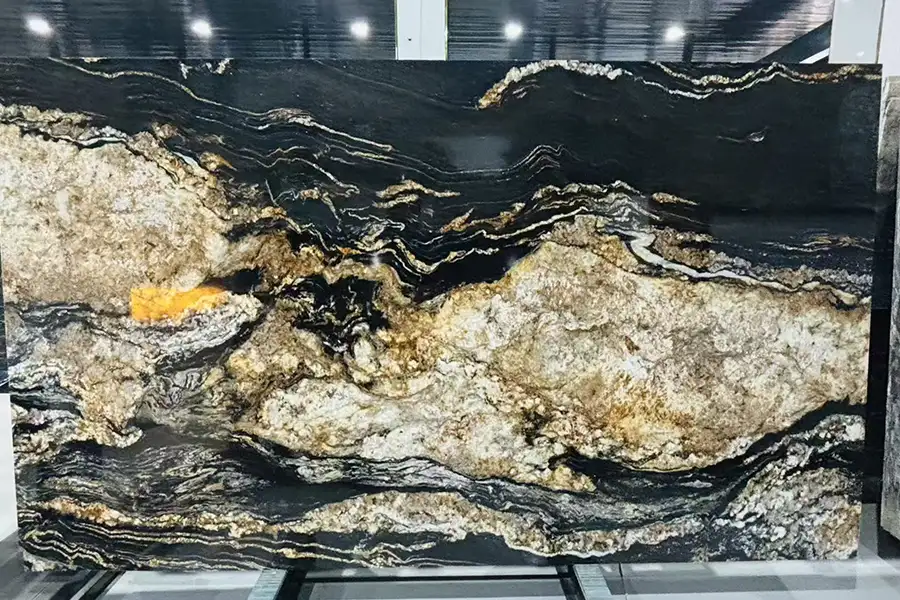
If you’re specifically planning wall features or large clean panels, it helps to evaluate the options through tấm đá cẩm thạch tự nhiên because that context naturally aligns thickness with panelization, movement, and finish choices.
Common mistakes buyers make (and how to avoid them)
-
Assuming 30mm fixes a bad substrate
It doesn’t. You’ll still see lippage and stress—just with heavier stone. -
Choosing 20mm for a wide island with big cutouts and no reinforcement
20mm can work, but the support strategy must be intentional. -
Ignoring weight implications for walls
30mm on a tall feature wall is often unnecessary load. -
Confusing “thicker look” with “thicker slab”
Edges can be designed. Structure must be engineered. -
Not aligning thickness with edge profile
Some edge profiles look best on 30mm; others are designed for 20mm + build-up.
For a deeper dive specifically on kitchen surfaces and thickness logic, this internal reference is worth using as your supporting pillar: Độ dày hoàn hảo của mặt bàn đá cẩm thạch và đá granite.
Câu hỏi thường gặp
1. Is 20mm marble thick enough for countertops?
Yes—20mm can work well for countertops when cabinets are properly leveled and spans/overhangs are engineered correctly. Many projects also use a laminated edge to create a thicker visual while keeping the slab lighter.
2. Why do some designers prefer 30mm marble for kitchen islands?
30mm often provides better stiffness across longer spans and feels more substantial at edges, especially around sink cutouts and heavy-use zones. It can also simplify fabrication when a thicker edge appearance is desired without lamination.
3. What marble thickness is best for wall cladding and feature walls?
20mm is commonly preferred for wall cladding because it reduces dead load and improves handling safety, while still delivering the premium slab look. Proper anchoring and panel layout typically matter more than increasing thickness.
4. Does thicker marble mean better durability?
Not automatically. Durability depends on crystal structure, veining behavior, finish choice, sealing, and installation quality. Thickness can improve stiffness and impact resistance in certain scenarios, but it won’t fix structural or maintenance mistakes.
5. How do I choose marble thickness for floors in high-traffic spaces?
Start with substrate quality and traffic type. 20mm performs well with a flat, stable base and proper installation coverage. If the substrate is uncertain or loads are heavy, address the substrate and consider thickness only as part of a full performance plan.
Choose thickness like a pro, not like a shopper
The best Độ dày đá cẩm thạch choice is the one that matches how the stone will live, not how it looks in a sample rack.
Sử dụng 20mm when panelization, weight, and modern detailing matter—and your substrate or anchoring system is engineered correctly. Use 30mm when spans, cutouts, and heavy daily stress demand more stiffness and edge durability. And if you want the thick look without the thick slab? Design the edge instead of overbuilding the stone.
Done right, thickness becomes invisible—because nothing cracks, nothing feels flimsy, and the marble ages the way it should: quietly, beautifully, and without drama.


