Tóm tắt nhanh
Sourcing White Marble factory-direct from China can help wholesalers, fabricators, contractors, and project buyers control budgets, customize slabs or cut-to-size panels, and improve production communication. The safest approach is to verify supplier capacity, inspect full slabs, confirm material parameters, review packing, and prepare import documentation before placing bulk orders.
Smarter White Marble Sourcing Starts Before the Quotation
A hotel contractor in California needs white marble wall panels for 120 bathrooms. A stone distributor in the Middle East wants stable slabs for repeat wholesale orders. A villa developer in Europe needs elegant bookmatched panels for living rooms and stair walls. Different projects, same problem: how do you source Đá cẩm thạch trắng from China without losing control of quality, timing, packing, and total landed cost?
Factory-direct sourcing can be a powerful strategy, but only when buyers understand what they are really buying. A low FOB price is not the same as a good deal. The real value comes from slab quality, factory capacity, technical support, packing safety, export documentation, and honest communication. Buyers researching sourcing premium White Marble should focus on the full procurement chain, not only the first quotation.
White marble is widely used in luxury bathrooms, villa floors, kitchen islands, lobby walls, vanity tops, staircases, fireplaces, and hotel interiors. It delivers brightness, natural veining, and timeless elegance. But because marble is a natural stone, every slab varies. That variation is beautiful when planned well and painful when ignored. The goal is not to find the cheapest supplier. The goal is to find a factory that can help you select, fabricate, inspect, pack, and ship the right material for your project.

Bypassing Middlemen to Maximize Project Budgets
Factory-direct sourcing allows buyers to communicate closer to the production side. Instead of passing details through multiple layers, buyers can discuss slab selection, finish, thickness, size tolerance, dry layout, cutting drawings, packing requirements, and loading schedules directly with the source. This is especially useful for large projects where one small misunderstanding can multiply across hundreds of pieces.
Middlemen can be helpful when buyers need small mixed orders or do not have sourcing experience. But in bulk white marble projects, each additional layer may add markup, delay, and communication loss. A factory-direct model can improve transparency, especially when the buyer has drawings, target sizes, clear applications, and inspection standards.
For buyers comparing types, finishes, and project suitability, a detailed reference on tấm đá cẩm thạch trắng can help clarify the difference between polished slabs, honed slabs, tiles, cut-to-size panels, and bookmatched surfaces. This matters because the same marble may perform differently as a bathroom wall panel, lobby floor, vanity top, or kitchen countertop.
| Sourcing Channel | Main Advantage | Main Risk | Tốt nhất cho | Buyer Recommendation |
|---|---|---|---|---|
| Factory-Direct Supplier | Direct customization, clearer production communication | Requires stronger due diligence | Hotels, villas, fabricators, distributors | Best when drawings and inspection needs are clear |
| Công ty thương mại | Easier mixed-material sourcing | May have less production control | Small multi-material orders | Useful when buyers need variety |
| Local Dealer | Fast local availability | Higher cost and limited customization | Small residential jobs | Best for urgent local purchases |
| Importer / Distributor | Stock and market familiarity | Less factory-level control | Retail and small contractors | Good for convenience |
The real savings should be calculated through total landed cost, not only FOB price. Buyers must include packing, inspection, freight, insurance, duty, customs broker fees, inland transport, breakage allowance, and installation waste. In marble sourcing, the cheapest quote can become the most expensive shipment if the slabs arrive cracked, mismatched, or wrongly fabricated.
Why China Remains Important for White Marble Processing
China has a mature stone-processing ecosystem. Many factories support slab cutting, polishing, waterjet cutting, CNC shaping, mosaics, stair treads, wall panels, countertops, vanity tops, and cut-to-size project packages. This gives buyers flexibility. A project can combine slabs, tiles, stairs, countertops, and mosaic details in one coordinated shipment.
For buyers comparing multiple natural stone options, reviewing a broader marble materials range helps evaluate whether white marble is the best choice or whether grey marble, beige marble, black marble, or green marble would better match the design intent. White marble is excellent for brightness and classic luxury, but it is not always the right material for every surface.
Factory-direct sourcing from China works best when the buyer knows the application. A lobby floor needs different technical checks than a bathroom wall. A countertop needs different maintenance expectations than a feature panel. A bookmatched wall needs different layout planning than standard tiles. The more specific the buyer is, the better the factory can recommend suitable material and fabrication methods.
Evaluating Supplier Capacity and Factory Certifications
A real marble factory should be able to show more than a website gallery. Buyers should ask for factory videos, cutting-machine photos, polishing-line details, dry-layout areas, packing zones, inspection procedures, and recent loading records. A supplier that cannot show production capacity may be a trader, a reseller, or simply not prepared for project-level orders.
For B2B buyers, supplier evaluation should include business documents, export experience, quality-control procedures, project references, packing standards, and communication speed. A credible White Marble manufacturer should be able to explain what it can produce, what it cannot guarantee, and how it handles inspection before shipment. Silence on quality control is not mysterious professionalism. It is usually a warning sign wearing a tie.
| Capacity Item | Tại sao điều đó quan trọng | Buyer Question | Risk If Ignored |
|---|---|---|---|
| Monthly Output | Confirms supply ability | Can you support my project quantity? | Delay or partial shipment |
| Slab Inventory | Supports selection | Can you show current full slab photos? | Color or vein mismatch |
| Cut-to-Size Ability | Supports project drawings | Can you fabricate to drawings? | Site cutting waste |
| Dry Layout Area | Controls visual matching | Can you arrange panels before packing? | Broken vein flow |
| QC System | Reduces defects | What is checked before shipment? | Cracks, chips, wrong sizes |
| Export Packing | Prevents damage | How are slabs or tiles packed? | Breakage in transit |
| Tài liệu | Supports import process | Can you provide invoice, packing list, COO? | Customs delay |
| Communication | Reduces mistakes | Who confirms technical details? | Rework and disputes |
Certifications should be checked carefully. ISO certificates, quality-system documents, material test reports, business licenses, export records, and project references are useful only when they are current, relevant, and matched to the supplier’s legal name. Do not accept screenshots like sacred scrolls. Ask for proper files.
Inspecting White Marble Quality Before Ordering
The biggest mistake buyers make is choosing white marble from close-up photos only. Close-ups can show surface beauty, but they hide the full slab. Full slab photos reveal color movement, vein direction, resin lines, cracks, cloudy areas, black spots, and overall tone. Video inspection is even better because it shows reflection, polish consistency, and actual surface behavior under light.
Before confirming bulk production, buyers should request samples, full slab photos, bundle photos, thickness confirmation, finish details, and inspection images. For complex projects, dry layout is highly recommended. If the project involves bookmatched walls or repeated bathroom panels, layout approval before cutting is not optional. It is the seatbelt.
Buyers ready to discuss drawings, quantity, finish, and project packing can contact a factory-direct marble supplier with clear details instead of sending only “best price?” A serious inquiry should include application, size, thickness, finish, destination country, estimated quantity, and whether the buyer needs slabs, tiles, or cut-to-size fabrication.
| Inspection Item | Tại sao điều đó quan trọng | Buyer Check | Risk If Ignored |
|---|---|---|---|
| Full Slab Image | Shows true movement | Request complete slab photos | Hidden color inconsistency |
| Độ dày | Affects installation | Measure sample and batch | Uneven installation |
| Finish Quality | Controls luxury appearance | Check polish or honed consistency | Dull or patchy surface |
| Cracks and Resin | Affects strength and appearance | Inspect surface and back side | Breakage or visible repair |
| Tông màu | Matters for matching | Compare batch photos | Mismatched walls or floors |
| Edge Quality | Important for cut-to-size pieces | Check chips and straightness | Installation defects |
| Đóng gói | Prevents transit damage | Review crate and loading photos | Breakage on arrival |
| Labels | Supports site control | Confirm crate marks | Wrong installation sequence |
|
|
|


Choosing the Right White Marble for Different Applications
White marble is not one product. It can be used as slabs, tiles, countertops, stair treads, wall panels, vanity tops, mosaics, fireplaces, and bookmatched decorative surfaces. Each application needs different technical thinking.
For buyers reviewing the White Marble series, the key is to match stone character with use. Softer veining may suit hotel bathrooms and residential floors. Stronger veining can work for feature walls and bookmatched panels. Bright white stones can expand visual space, while warmer white stones may feel more comfortable in hospitality interiors.
For flooring, buyers should consider thickness, finish, abrasion resistance, and slip behavior. Polished white marble looks luxurious in dry interiors but can become slippery in wet areas. Honed or textured finishes are usually safer for bathrooms, entryways, and public areas. For wall panels, full-slab pattern and dry layout matter more. For countertops, maintenance expectations matter because marble can react to acids and staining if not properly cared for.
| Ứng dụng | Định dạng được khuyến nghị | Finish Choice | Main Risk | Buyer Recommendation |
|---|---|---|---|---|
| Hotel Bathroom Wall | Cut-to-size panels | Đánh bóng hoặc mài nhẵn | Color mismatch | Dry layout before cutting |
| Lobby Floor | Tiles or slabs | Honed or polished with slip review | Slip and abrasion | Request technical data |
| Villa Feature Wall | Large slabs | Đánh bóng | Broken vein flow | Use bookmatch layout |
| Bàn trang điểm | Cut-to-size top | Đánh bóng hoặc mài nhẵn | Etching and staining | Explain maintenance to owner |
| Bậc cầu thang | Cut-to-size pieces | Honed or textured | Slip risk | Confirm nosing and finish |
| Vách ốp lò sưởi | Slabs or panels | Đánh bóng | Joint planning | Confirm installation details |
Sealing, Maintenance, and Long-Term Protection
White marble is elegant, but it is still marble. Buyers should not treat it like engineered quartz or porcelain. Marble is calcium-based and can be sensitive to acidic substances such as lemon juice, vinegar, wine, and harsh cleaners. Sealing can help reduce staining risk, but it does not make marble indestructible.
A professional guide on how to seal and protect White Marble is useful for owners, contractors, and fabricators because post-installation care affects long-term satisfaction. Many disputes happen not because the material is defective, but because the owner expects marble to behave like plastic armor. It will not. It is beautiful, natural stone, not a superhero cape.
Best practices include using pH-neutral cleaners, wiping spills quickly, avoiding acidic chemicals, using mats in entry areas, applying sealers when appropriate, and following the supplier or installer’s maintenance recommendations. For commercial projects, maintenance instructions should be handed over to the owner before project completion.
White Marble Kitchens and Design Selection
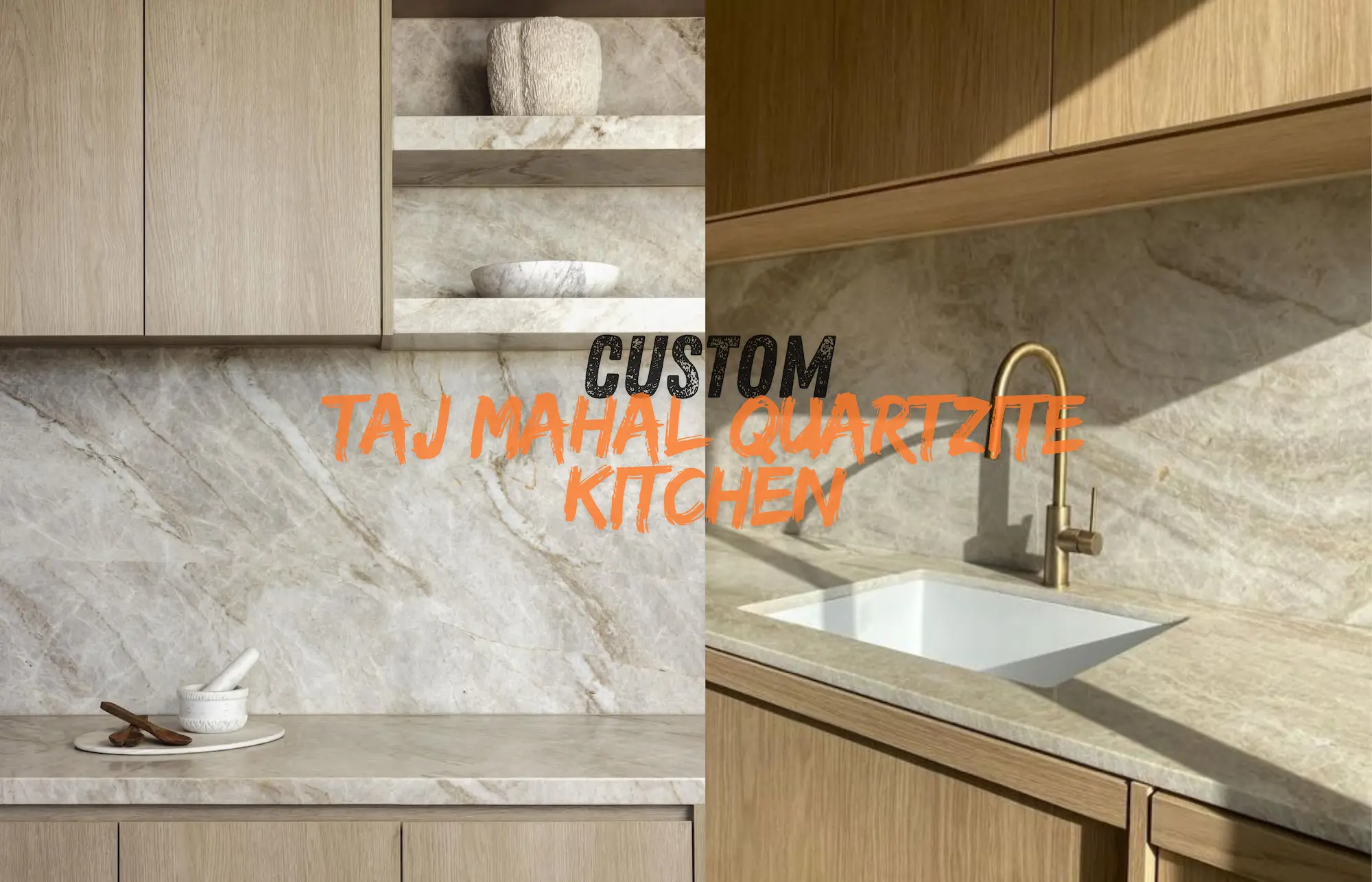
White marble remains highly desirable in kitchens because it brightens the space and pairs beautifully with wood, brass, stainless steel, black cabinets, soft grey tones, and natural textures. However, kitchen applications need careful expectations. Marble countertops can etch and stain if exposed to acidic liquids or poor cleaning habits. Some buyers love the natural patina; others do not.
For designers exploring white marble kitchen design ideas, the best strategy is to match the stone with lifestyle. Use white marble for islands, backsplashes, waterfall edges, or feature surfaces when the owner understands care requirements. For heavy-use commercial kitchens, compare alternative materials carefully.
White marble also works well in bathroom vanities, powder rooms, pantry counters, reception counters, and decorative furniture. The more visible the surface, the more important slab selection becomes. A countertop is not only a working surface; in luxury design, it is also a visual statement.

Calacatta, Carrara, and Other White Marble Choices
White marble selection often comes down to tone, vein movement, rarity, and application. Carrara-style marble is usually softer, greyer, and more subtle. Calacatta-style marble is often brighter with stronger, more dramatic veining. Other white marbles may offer warmer tones, cloudier patterns, or bolder contrast.
Khi so sánh Calacatta vs Carrara White Marble, buyers should not ask only which one is “better.” They should ask which one fits the project. Carrara-style materials can be better for calm interiors and larger coverage areas. Calacatta-style materials may be better for statement walls, luxury bathrooms, kitchen islands, and feature surfaces.
If the project requires consistency across many rooms, choose a white marble with stable background tone and manageable veining. If the project needs high visual impact, choose stronger veining and confirm slab layout before cutting. If the surface is a floor, do not choose only by beauty; check finish and slip risk. If the project is a countertop, discuss sealing and maintenance before approval.
Import Compliance and Documentation Buyers Should Prepare
For international buyers, documentation is not a boring afterthought. It is what keeps goods moving. Common export documents include commercial invoice, packing list, bill of lading, certificate of origin when required, fumigation or ISPM 15 marking for wooden packing where applicable, insurance documents if used, and inspection photos.
For US importers, country-of-origin marking, HTS classification, valuation, customs broker review, and reasonable-care responsibilities matter. Importers should not rely only on a supplier’s HS code. Marble slabs, tiles, and worked stone products may fall under different classifications depending on processing. Always confirm with a customs broker.
Buyers should also pay attention to wooden packing requirements. Marble slabs and tiles usually need strong crates, A-frames, or reinforced bundles. If wood packaging enters the United States, it generally must comply with ISPM 15 treatment and marking requirements. Good packing is not just logistics. It is insurance in wooden clothing.
Common Mistakes Buyers Make When Sourcing White Marble from China
The first mistake is choosing only by low price. Low price may mean lower grade, unstable color, weak packing, poor finish, or hidden defects. Cheap marble is not cheap if half the shipment becomes site waste.
The second mistake is not checking full slab photos. Close-ups can hide large color patches, cracks, resin repairs, or inconsistent veining.
The third mistake is ignoring project quantity control. Large projects need batch planning. If materials come from different bundles or production periods, color matching may become difficult.
The fourth mistake is treating marble like engineered quartz. Marble needs sealing, proper cleaning, and realistic expectations.
The fifth mistake is skipping pre-shipment inspection. For large orders, third-party inspection can prevent disputes over size, finish, quantity, and packing.
The sixth mistake is not confirming documentation. Missing or incorrect documents can delay customs clearance, increase storage cost, and damage project schedules.

Final Buyer Recommendation: Source Direct, But Verify Everything
Factory-direct sourcing of White Marble from China can be a smart choice for wholesalers, fabricators, contractors, hotel developers, villa builders, and stone distributors. It can improve budget control, customization flexibility, and direct production communication. But it works best when buyers are prepared.
Choose factory-direct sourcing if you need bulk quantity, custom sizes, cut-to-size panels, bookmatched walls, repeated project supply, or mixed stone products from one production source. Be careful if you need very small quantities, urgent local delivery, or cannot verify supplier capacity.
Before ordering, confirm full slab photos, samples, thickness, finish, technical parameters, drawings, dry layout, packing, inspection, documentation, and shipping terms. If importing into the US, work with your customs broker to verify classification, origin marking, duty, tariff exposure, and wood packing compliance.
The best factory-direct White Marble order is not the cheapest one. It is the one where material, fabrication, packing, documentation, and communication all survive the journey from factory floor to project site. That is how buyers protect budget, design intent, and client trust.
Câu hỏi thường gặp
1. Liệu Trung Quốc có phải là nơi tốt để tìm nguồn cung đá cẩm thạch trắng không?
Vâng, Trung Quốc có thể là một địa điểm tốt để tìm nguồn cung ứng Đá cẩm thạch trắng, đặc biệt là đối với các tấm đã qua xử lý, gạch lát, mặt bàn, mặt bàn trang điểm, tấm ốp tường, bậc cầu thang, khảm và các sản phẩm gia công theo yêu cầu. Nhiều nhà máy đá của Trung Quốc sở hữu thiết bị xử lý tiên tiến và kinh nghiệm xuất khẩu phong phú. Tuy nhiên, người mua không nên chỉ chọn nhà cung cấp dựa trên giá cả. Việc xác minh nhà máy, chụp ảnh toàn bộ tấm đá, lấy mẫu, kiểm tra chất lượng, quy định đóng gói và chứng từ xuất khẩu đều là những yếu tố thiết yếu trước khi đặt hàng số lượng lớn.
2. Làm thế nào để tôi tìm được một nhà máy đá cẩm thạch trắng đáng tin cậy tại Trung Quốc?
Để tìm một nhà máy đá cẩm thạch trắng đáng tin cậy tại Trung Quốc, người mua nên kiểm tra các hình ảnh nhà máy, video sản xuất, tài liệu kinh doanh, kho hàng tấm, thiết bị cắt, năng lực đánh bóng, khu vực bố trí khô, quy trình kiểm định, phương thức đóng gói và kinh nghiệm xuất khẩu. Một nhà máy tốt cần cung cấp đầy đủ hình ảnh tấm, mẫu thử, các công trình tham khảo, giao tiếp rõ ràng và hỗ trợ kiểm tra trước khi giao hàng. Người mua nên thận trọng nếu nhà cung cấp chỉ cung cấp hình ảnh cận cảnh, trả lời chung chung hoặc đưa ra những lời hứa giao hàng không thực tế.
3. Đá cẩm thạch trắng bán trực tiếp từ nhà máy có rẻ hơn so với mua từ đại lý địa phương không?
Đá cẩm thạch trắng trực tiếp từ nhà máy có thể giảm các lớp trung gian và giúp kiểm soát chi phí dự án tốt hơn, đặc biệt đối với các đơn hàng số lượng lớn, kích thước tùy chỉnh và cung cấp cho nhiều dự án liên tục. Tuy nhiên, người mua nên so sánh tổng chi phí đến nơi thay vì chỉ xem xét giá FOB. Cước vận chuyển, bảo hiểm, đóng gói, kiểm tra, thuế nhập khẩu, phí môi giới hải quan, vận chuyển nội địa, phụ phí do hư hỏng và rác thải lắp đặt đều ảnh hưởng đến chi phí cuối cùng. Giá nhà máy thấp không phải là một thỏa thuận tốt nếu chất lượng, bao bì hoặc chứng từ gây ra sự chậm trễ trong dự án.
4. Những giấy tờ nào cần thiết để nhập khẩu Đá cẩm thạch Trắng?
Các tài liệu nhập khẩu thông thường cho Đá cẩm thạch trắng bao gồm hóa đơn thương mại, bảng kê đóng gói, vận đơn, giấy chứng nhận xuất xứ nếu cần thiết, ảnh kiểm tra, báo cáo thử nghiệm vật liệu nếu được yêu cầu, các tài liệu bảo hiểm nếu có liên quan, và việc xử lý đóng gói bằng gỗ hoặc dán nhãn ISPM 15 khi sử dụng thùng gỗ. Các nhà nhập khẩu Hoa Kỳ cũng nên xác minh dấu hiệu quốc gia xuất xứ, phân loại HS, mức thuế, mức độ chịu tác động của thuế quan, cũng như các yêu cầu đối với đại lý hải quan trước khi hàng hóa được vận chuyển.
5. Người mua nên kiểm tra Đá cẩm thạch trắng như thế nào trước khi giao hàng?
Người mua nên kiểm tra đá cẩm thạch trắng bằng cách xem các ảnh toàn bộ tấm, video, độ dày, kích thước, chất lượng hoàn thiện, độ đồng nhất màu sắc, hướng vân, vết nứt, đường nhựa, vết sứt mẻ, chất lượng cạnh, nhãn mác, bao bì và ảnh tải lên container. Đối với các dự án lớn, việc kiểm tra trước khi giao hàng bởi bên thứ ba được khuyến nghị mạnh mẽ. Đối với các bức tường ghép đôi hoặc các tấm cắt theo kích thước cụ thể, người mua nên yêu cầu các ảnh bố trí khô trước khi cắt và đóng gói để giảm thiểu sự không phù hợp về mặt thị giác cũng như các vấn đề trong quá trình lắp đặt.
Tài liệu tham khảo
- Marking of Country of Origin on U.S. Imports, U.S. Customs and Border Protection, CBP
- Tips for New Importers and Exporters, U.S. Customs and Border Protection, CBP
- Which ASTM Standards Are Relevant to Natural Stone, Natural Stone Institute, Design Professionals Resource
- ASTM Standards Test Laboratory for Natural Stone, Natural Stone Institute, Material Testing Resource
- UFLPA Operational Guidance for Importers, U.S. Customs and Border Protection, CBP
- Import ISPM 15-Compliant Wood Packaging Material, USDA Animal and Plant Health Inspection Service, APHIS
- Dimension Stone Design Manual, Natural Stone Institute, Technical Design Guide
- Incoterms 2020 Rules, International Chamber of Commerce, ICC
White Marble Factory-Direct Sourcing Guide for Global Buyers
How does factory-direct White Marble sourcing help buyers?
Factory-direct sourcing helps buyers communicate closer to production, control customization details, review full slab photos, confirm cut-to-size drawings, and reduce unnecessary middle layers. It is especially useful for wholesalers, fabricators, hotel contractors, villa projects, and distributors who need bulk quantity or project-specific fabrication.
Why should buyers verify supplier capacity before ordering?
White Marble quality depends not only on the stone itself, but also on factory equipment, slab selection, dry layout, cutting accuracy, polishing quality, inspection systems, packing strength, and export experience. A verified supplier can reduce risks such as color mismatch, wrong sizes, breakage, delayed shipment, and weak after-sales communication.
What should buyers check before confirming White Marble slabs?
Buyers should check full slab photos, vein direction, color tone, thickness, finish, cracks, resin lines, polish consistency, edge quality, size tolerance, and available quantity. For feature walls, fireplaces, and hotel projects, dry layout confirmation is strongly recommended before cutting and packing.
Option logic: When should buyers choose factory-direct sourcing?
Choose factory-direct sourcing when the project needs large quantity, custom fabrication, direct communication, tấm đá cẩm thạch trắng, cut-to-size panels, countertops, or bookmatched layouts. Choose a local dealer when the order is small and urgent. Choose a trading company when the buyer needs many unrelated materials and does not want to manage factory verification.
What risks should importers avoid?
Importers should avoid choosing only by low price, accepting close-up photos only, skipping inspection, ignoring packing standards, forgetting maintenance expectations, and failing to verify customs documents. For US-bound orders, buyers should also review origin marking, HS classification, wood packing requirements, and broker guidance before shipment.
Final recommendation for project buyers
Factory-direct White Marble sourcing from China is best for buyers who want better customization, bulk supply, and project cost control. The safest approach is to combine supplier verification, full-slab inspection, technical parameter review, strong packing, proper documentation, and clear communication before payment and shipment.