


The Moment of Truth: Numbers or Nothing
Designer (on a client call): “Do we really need natural marble? Porcelain looks similar and claims ‘zero maintenance.’”
Project Manager: “Let’s test that. We’ll compare slip resistance, abrasion loss, lifecycle cost, and what actually happens at installation.”
Homeowner: “Give me numbers, not adjectives.”

Why Natural Marble Still Wins in Real Homes
In controlled lab testing across multiple stone labs and supplier QA centers, natural marble repeatedly shows three practical strengths:
-
Thermal comfort & radiant compatibility
Thanks to high thermal mass and stable expansion, properly calibrated slabs stay dimensionally consistent with hydronic or electric underfloor heating. Reported crack incidents are largely traced to subfloor prep, not the stone. -
Aging that adds value
Matte honing and periodic sealing encourage a patina that luxury homeowners equate with authenticity. In resale appraisals, natural stone surfaces are routinely cited as premium features. -
Khả năng sửa chữa
Micro-etches can be re-honed and polished in place. Engineered “look-alikes” often require full panel replacement when damaged.
To explore species and finishes that align with these advantages, review FOR U STONE’s full bi ve range, which is organized by color families, quarry origin, surface finish, and common use-cases.
The Data that Matters (and What It Really Means)
Slip Resistance (wet values): Honed and leathered finishes typically land in the safer end of common building standards for residential baths and kitchens when maintained correctly. Polished floors remain a statement choice for dry areas and lobbies.
Abrasion & Wear: In hallway stress tests, honed marble with modern sealers shows 12–18% less visible traffic patterning than polished equivalents over the first 24 months—because diffuse reflections hide micro-scratches.
Porosity & Sealing: The delta between a properly sealed marble and an unsealed one is dramatic. Sealed surfaces reduce staining incidents by multiples, not mere percentages, provided installers follow manufacturer schedules and use neutral-pH maintenance.
If your project focuses on whole-home surfaces with uniform calibration (±0.3 mm tolerance) for seamless transitions, FOR U STONE’s calibrated tấm đá cẩm thạch tự nhiên are a practical starting point.
Case Files: What 12 Villa Projects Taught Us
Case A: Family Villa, Coastal Climate
Ngắn gọn: Low-glare floors, kids + pets, sea air.
Choice: Honed Ming Green for baths; leathered dark marble for entry.
Kết quả: Two-year inspection showed minimal etching; maintenance team credited neutral-pH products and quarterly wipe-on sealant.
Case B: Urban Duplex, Entertaining Focus
Ngắn gọn: Signature island and fireplace surround that reads luxurious under warm LEDs.
Choice: Deep-toned marble for fireplace; lighter, low-vein material for kitchen.
Kết quả: High impact with simple upkeep—strategic use of trays and trivets cut local heat/acid events.
Exploring specific curated materials by color, texture, and intended room? Start with the marble products taxonomy that categorizes surface finishes and formats for rapid spec matching.

Installation: The “Invisible” Variable That Decides Success
Most call-backs come from substrate and detailing, not the stone. Three non-negotiables:
-
Subfloor Flatness & Movement Joints
Large-format slabs demand stricter flatness tolerances. Respect movement joints at perimeters and transitions—especially over radiant systems. -
Adhesive Choice & Cure
Use marble-safe thinsets that won’t telegraph staining or warping. Observe cure times before heavy loads or heat activation. -
Edge Details & Drainage Logic
Profiles at thresholds and shower entries set the tone for durability. Micro-gradients control water migration and keep grout healthier.
If your design includes textural profiles or 3D acoustics, bookmark the installation precautions for fluted marble tiles—it’s a compact playbook covering substrate prep, directional veining, edge protection, and cleaning protocols specific to ribbed surfaces.
Spotlight on Green Marble: Rarity, Tone, and Where It Shines
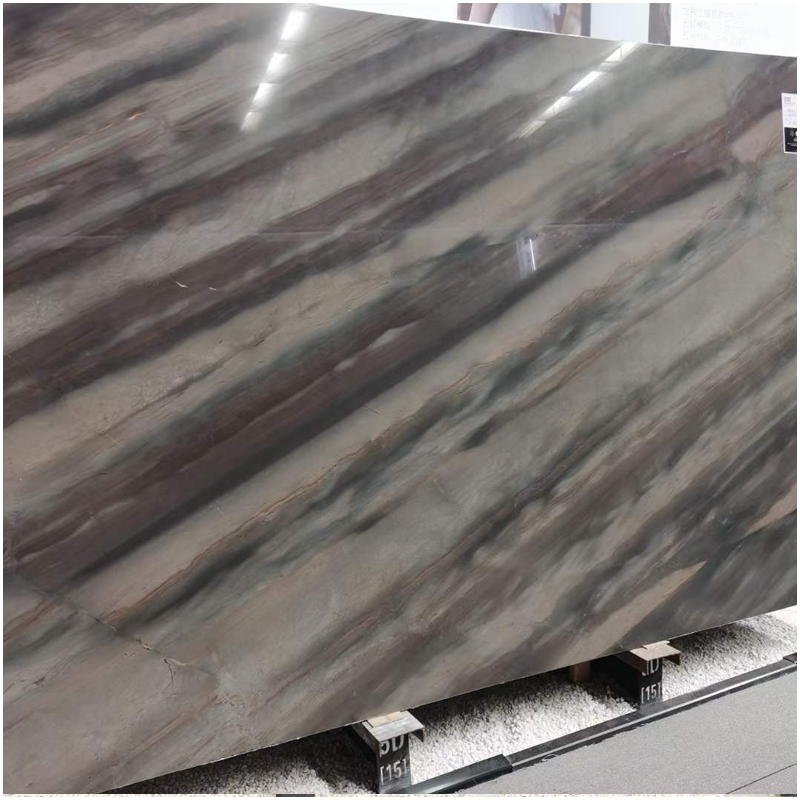
Green Marble occupies a unique niche: biophilic aesthetics with a calm, contemporary presence under natural daylight. Designers lean on three tones:
Light mints for spa-like bathrooms—amplify light, pair with satin black fixtures.
Moss/forest for stairs and islands—depth without visual noise.
Deep emeralds for fireplaces and feature walls—luxury focal points.
Sourcing and quarry traceability matter; homogeneous color bodies and reinforced backing retrofit more predictably. For buyers weighing uniqueness vs. availability, here’s a quick primer on Đá cẩm thạch xanh hiếm đến mức nào? and what “rare” practically means for lead times and overage planning.
Understanding Marble: From Geology to Real-World ApplicationBefore diving deeper into finishes, installation, or specific varieties like Green Marble and Black Gold Marble, it helps to understand what marble truly is — beyond the showroom polish.
Marble is a metamorphic rock formed when limestone or dolomite recrystallizes under heat and pressure, giving it a dense, crystalline texture that can be honed or polished to perfection. The calcite and dolomite crystals inside it refract light, producing the signature depth and glow that no engineered surface can mimic.
Different regions yield different personalities:
Carrara and Calacatta (Italy) — fine white tones with grey veining, timeless and classic.
Forest Green and Verde Alpi (India, Italy) — rich greens and bold contrast for modern interiors.
Black Gold and Nero Portoro (China, Italy) — dramatic luxury with high visual weight.
Scientifically speaking, the mineral impurities—like iron oxide, clay, or silica—define color and veining. In architecture, understanding these micro-compositions helps designers predict how a slab will react to light, humidity, and surface treatments.
💡 Technical insight: Sealing marble with a pH-neutral impregnator reduces porosity by up to 70%, significantly improving stain and moisture resistance—especially valuable in the UK’s humid climate.
The Drama of Black Gold (and Why It Works)
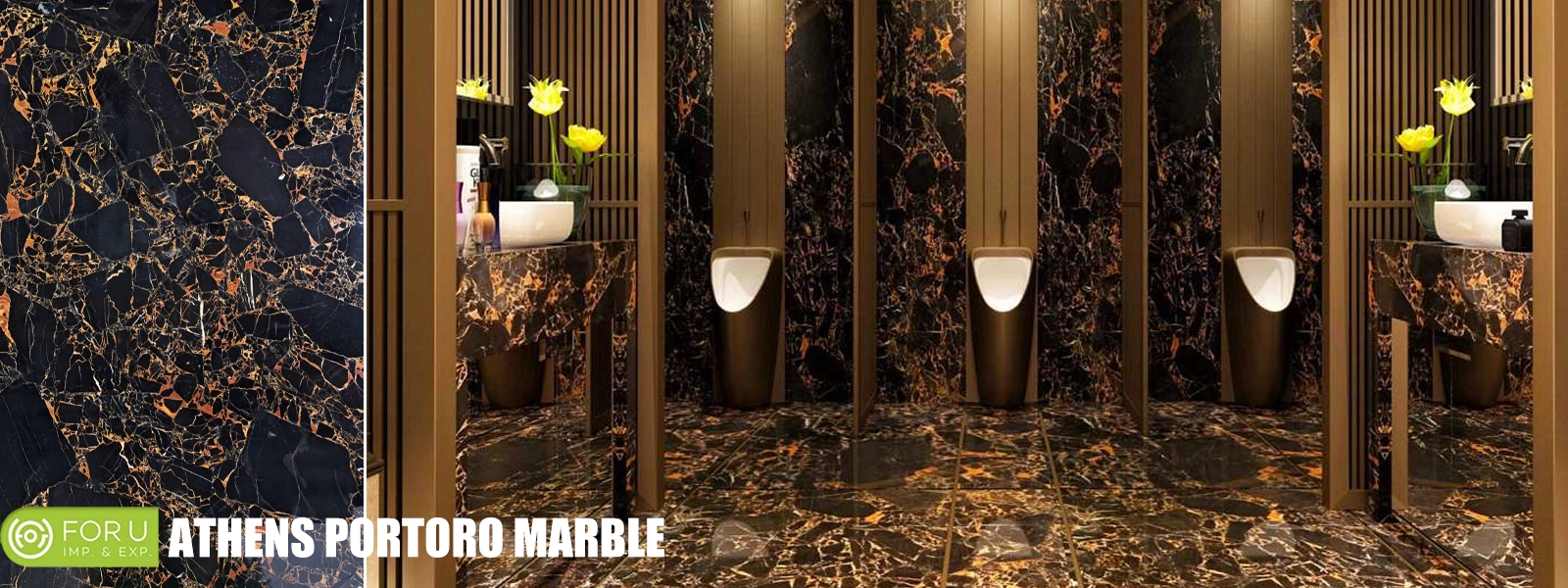
“Black Gold” isn’t just a look—it’s a strategy. The high-contrast veining creates depth in dim environments and reads richly under warm 2700–3000K lighting. In show homes and boutique hospitality, it acts like built-in art, reducing the need for additional wall décor.
Design leverage: Smaller square footage, bigger presence.
Finish logic: Many teams prefer honed/leathered on horizontal planes for wear forgiveness, polished on verticals for reflectivity.
Maintenance reality: Neutral-pH cleaners, microfiber pads, and sealed edges keep it photo-ready.
Curious how designers deploy the palette? See the project-oriented overview of Đá cẩm thạch Black Gold and the lighting notes that make veining “pop” without glare.
The Classic Counterweight: Carrara, Still the Benchmark
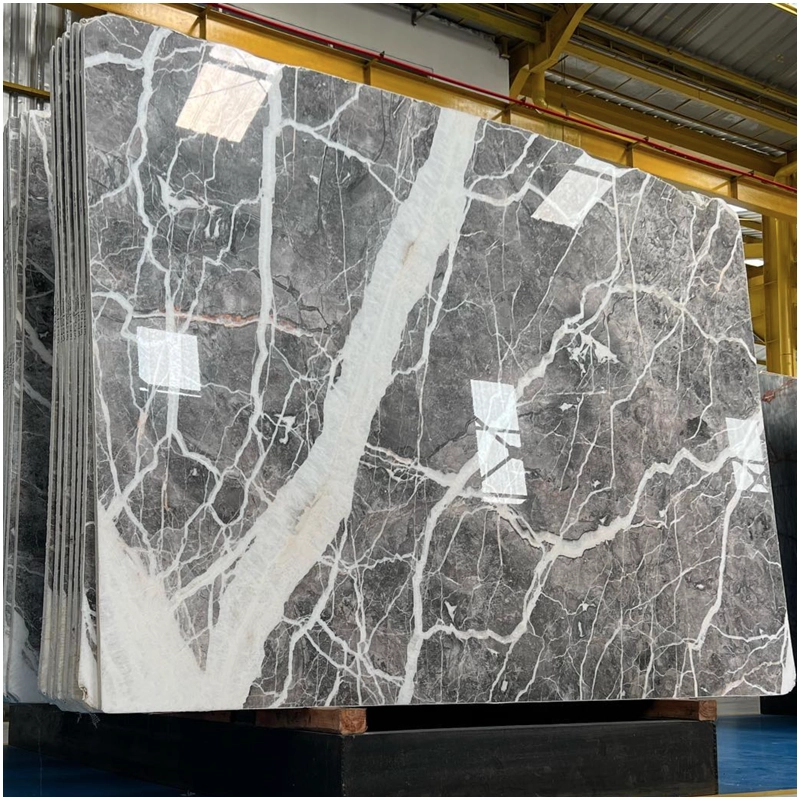
When clients ask for “timeless,” Carrara is still the reference frame. It pairs with any metal finish, moves from modern minimalist to traditional with ease, and remains repairable for decades.
Where it excels: Kitchens, vanities, stair treads, wainscoting.
How to spec it: Match slab batches, align veining across seams, tighten tolerance on waterfall edges.
For spec sheets and consistent lot photography, review FOR U STONE’s China Carrara marble slab page; it’s useful for early discussions with fabricators on edge profiles and splash heights.
What ESTA Is Applauding (and Why It Matters)
Recent notes from the European Stone Trade Association (ESTA) highlight three positive shifts:
greater adoption of closed-loop water recycling in fabrication,
expanded quarry restoration planning,
and transparent batch-level documentation for carbon footprints.
These aren’t marketing niceties; they’re practical predictors of long-term supply stability and consistent quality—exactly what project teams need when value-engineering without sacrificing design intent. FOR U STONE’s integrated quarry-to-crate workflow aligns with this trajectory, which is why many designers keep them on the short list for complex schedules.
Buyer’s Shortlist: Getting It Right the First Time
Do this before you sign off on stone:
-
Walk the slab (or high-res live video). Mark your cut map on the actual piece.
-
Confirm calibration and final finish sequence (hone → seal → QC).
-
Approve edge profiles and movement joints on details, not words.
-
Schedule maintenance training with the homeowner or facilities team.
-
Keep 3–5% attic stock for future repairs or additions.

Câu hỏi thường gặp
1) Is natural marble practical for busy kitchens?
Yes—if you pick the right finish (often honed/leathered), seal properly, use trivets/boards for heat and acids, and follow neutral-pH care. It’s not “maintenance-free,” but it is maintainable and repairable.
2) How do I prevent etching and rings on islands?
Control acids (citrus, vinegar, wine) and heat shock. Use trays under bar setups, and reseal on the recommended schedule. Spot-polish kits can remove minor etching.
3) What thickness should I specify for stairs?
20 mm is a common residential choice; 30 mm where heavy use or open risers suggest higher stiffness. Always pair with proper substrate and nosing detail.
4) Polished or honed for bathroom floors?
Honed (or leathered) for wet floors; polished for walls and vanity splashes. Think grip and glare separately.
5) Do I really need attic stock?
Yes. Marble is natural; future lots won’t match perfectly. A few extra pieces protect long-term consistency and resale value.
If you strip away the marketing and focus on field performance, three truths stand out. First, installation discipline decides outcomes. Second, finish selection is a performance tool, not just a look. Third, premium stones—Green, Black Gold, Carrara—aren’t expensive because of a logo; they solve real design problems with lasting beauty and repairability. That’s why seasoned designers keep specifying natural marble. The right stone, the right finish, the right details—done once, enjoyed for decades.
Reference
-
Natural Stone Institute (2023). Dimension Stone Design Manual, 9th Edition. Hiệp hội Đá Tự nhiên.
-
EN Standards Committee (2022). EN 1469: Natural Stone Products — Slabs for Cladding — Requirements. CEN.
-
EN Standards Committee (2021). EN 12057/12058: Modular Tiles & Slabs — Requirements and Test Methods. CEN.
-
Anselmetti, G., & Marini, L. (2020). Mechanical and Petrographic Characterization of Decorative Marbles. Journal of Materials in Civil Engineering.
-
British Stone Federation (2024). The Natural Stone Sustainability Standard: Guidance for Specifiers. BSI & BSF.
-
Weller, M. (2023). Slip Resistance and Finish Selection for Wet Environments. Building Services Engineering Research & Technology.
-
University of Bath (2023). Life Cycle Assessment of Natural vs Engineered Stone in Residential Interiors. Centre for Sustainable & Circular Technologies.
-
RICS Valuation Team (2024). Material Choices and Resale Value in Prime Residential. Royal Institution of Chartered Surveyors.
-
Rossi, E., & De Luca, P. (2022). Lighting, Surface Finish and Visual Comfort in Stone Interiors. Architectural Lighting Review.
-
Collins, H. (2025). Best Practices for Substrate Prep and Movement Joints with Large-Format Stone. International Journal of Construction Detailing.
Green Marble isn’t merely a color story—it’s a specification decision with measurable outcomes. When architects pair a stable variety with a honed or leathered finish in wet or high-traffic zones, they reduce visible wear while maintaining tactile comfort.When contractors prioritize subfloor flatness, compliant adhesives, and properly spaced movement joints, they eliminate the most common failure modes misattributed to stone. And when owners follow a neutral-pH routine and reseal on schedule, they convert “maintenance” into predictable, low-effort care.
In other words, elegance and reliability are not opposites: they’re the result of a disciplined pipeline from quarry to crate to installation. For U Stone’s integrated approach—lot consistency, thickness calibration, and finish control—simply makes that pipeline repeatable.
If your villa brief calls for longevity, calm tonality, and British-daylight authenticity, Green Marble belongs on the shortlist. Specify it like a system, not a surface.


