A beautiful mosaic sample can be dangerously persuasive. A designer sees a marble pattern, the hotel owner loves the mood, and the contractor approves the color. Then installation begins. The mesh backing is weak, the sheets do not align, the grout color makes the pattern look too busy, and the material absorbs stains in a wet bathroom. The pattern was beautiful, but the material choice was wrong. That mistake is not cute. It is expensive with a hard hat.
Gạch mosaic đá is widely used in bathrooms, kitchens, spas, hotel lobbies, feature walls, floors, fireplace surrounds, and luxury commercial interiors. But not every natural stone mosaic works for every space. Marble, travertine, limestone, slate, quartzite, granite, onyx, and mixed stone-metal mosaics all behave differently. Buyers exploring a wider natural marble mosaic material selection should compare not only color and pattern, but also porosity, finish, thickness, backing, maintenance, installation conditions, and long-term performance.
What Is Stone Mosaic?
Stone Mosaic Explained for Interior and Project Buyers
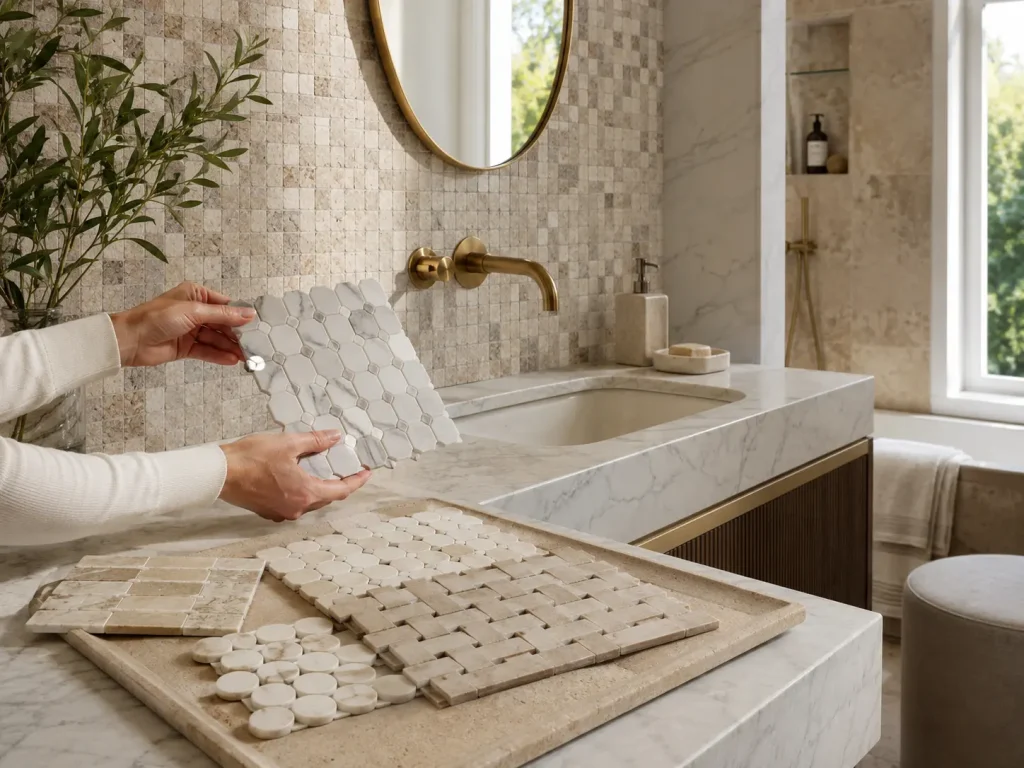
Stone mosaic refers to small pieces of natural stone arranged into decorative or functional patterns. These pieces are usually mounted on mesh sheets, paper-faced sheets, or assembled as custom panels for easier installation. Common stone mosaic materials include marble, travertine, limestone, slate, quartzite, basalt, granite, onyx, and mixed-material combinations with brass, stainless steel, glass, or shell.
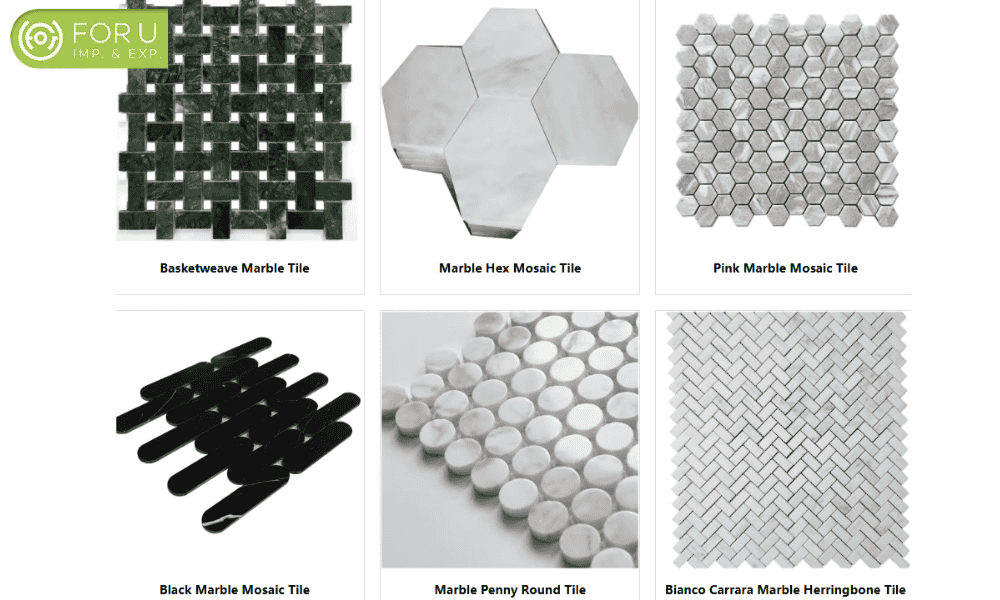
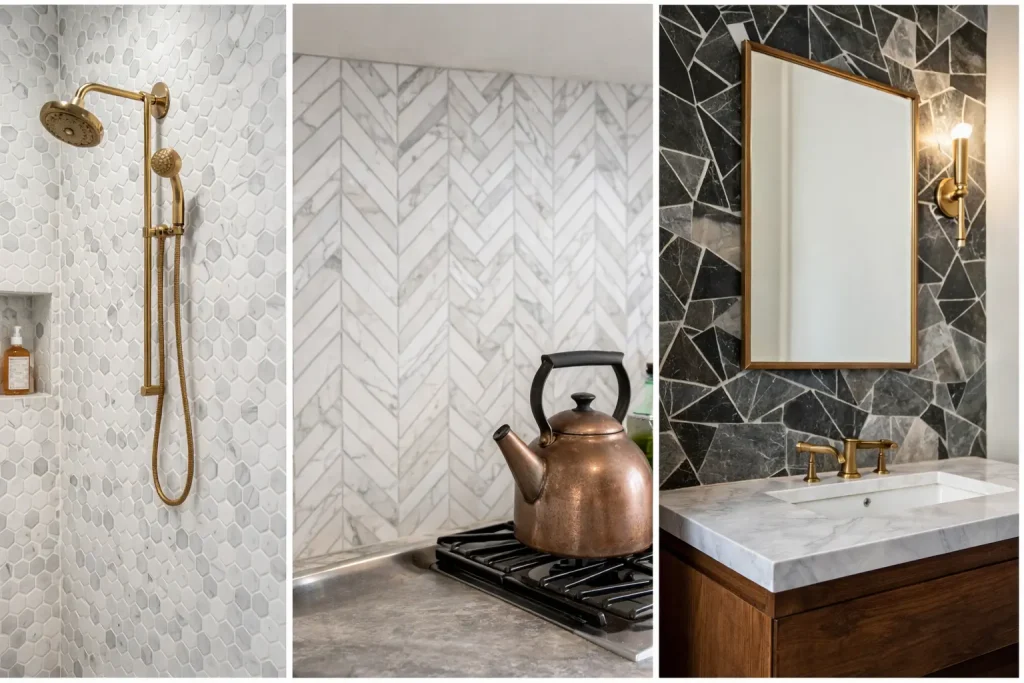
Common formats include square mosaic, hexagon mosaic, herringbone, basketweave, chevron, penny round, fan shape, irregular chip mosaic, waterjet mosaic, and custom inlay patterns. Stone mosaic is used for bathroom walls, shower floors, kitchen backsplashes, hotel feature walls, spa rooms, fireplace surrounds, elevator walls, and decorative borders.
Why Stone Mosaic Is Still Popular in Modern Interiors
Stone mosaic remains popular because it adds texture, natural variation, craftsmanship, and visual rhythm. Large flat slabs can look elegant, but small mosaic pieces create surface detail that feels more tactile and human. In modern interiors, mosaic helps prevent minimalist spaces from becoming cold or empty.
If a space feels flat, use stone mosaic texture. If the design needs refined luxury, choose marble or onyx accents. If the room needs warmth, choose travertine or limestone. If the space needs stronger durability, consider quartzite, granite, or dense alternatives. If the area is wet, technical suitability must come before visual beauty. The wall may forgive drama; the shower floor will not.
Main Materials Used for Stone Mosaic
Marble Stone Mosaic
Marble is one of the most classic and widely used materials for stone mosaic. It offers natural veining, elegant color movement, and a premium interior feeling. White, beige, grey, black, green, brown, and exotic marble mosaics are commonly used in bathrooms, vanity walls, hotel suites, feature walls, fireplace surrounds, kitchen backsplashes, and decorative borders.
Marble is ideal when the project needs visible natural veining and refined luxury. A clean khảm đá cẩm thạch trắng can create a bright and timeless surface, while darker or colorful marble can become a dramatic accent. For example, Thassos marble stone mosaic tile can be suitable for projects that need a crisp, bright, high-end white stone effect.
The risk is maintenance. Marble can be sensitive to acidic substances such as lemon juice, vinegar, wine, or harsh cleaners. It usually benefits from sealing, especially in wet areas or kitchens. If buyers want marble on shower floors, they should confirm finish, slip resistance, sealing, grout, and cleaning guidance before approval.
Travertine Stone Mosaic
Travertine has warm beige, cream, ivory, walnut, and honey tones. It creates a spa-like, Mediterranean, natural, and slightly rustic-luxury feeling. Tumbled travertine mosaics are especially popular when designers want soft edges and an aged surface.
Travertine works well for spa walls, bathroom feature walls, shower surrounds, fireplace surfaces, hospitality interiors, and warm minimalist spaces. However, it is more porous than many dense stones, so filling, sealing, and maintenance are important. If the area is wet or high-use, do not treat travertine as a maintenance-free material.
Limestone Stone Mosaic
Limestone offers calm color, subtle texture, and architectural softness. It usually has less dramatic veining than marble, which makes it suitable for quiet luxury interiors, hotel bathrooms, spa walls, and understated feature surfaces. Beige, cream, grey, and soft taupe limestone mosaics work well with wood, plaster, brushed metal, and warm lighting.
If the project needs subtle texture and calm elegance, limestone is a strong choice. If the project needs dramatic movement, marble or exotic stone may be better. Since limestone can also be porous, buyers should confirm sealing requirements and wet-area suitability before ordering.
Slate, Quartzite, Granite, and Onyx Mosaic
Slate provides dark, layered, textured character and works well in rustic, industrial, outdoor-inspired, or commercial feature areas. Quartzite and granite are generally harder and denser than many marbles, making them suitable for stronger wear conditions, although cutting and fabrication may be more demanding. Onyx and semi-precious stone mosaics are mainly decorative and should be used in controlled accent areas rather than heavy-traffic floors.
If the project needs rugged texture, choose slate. If durability matters more than softness, consider quartzite or granite. If the design needs dramatic luxury, use onyx or semi-precious stone mosaic in limited areas such as boutique hotel bars, feature walls, vanity niches, and backlit panels.
| Vật liệu | Đặc điểm hình ảnh | Độ xốp | Sử dụng tốt nhất | Buyer Recommendation |
|---|---|---|---|---|
| Đá cẩm thạch | Elegant, veined, luxurious | Trung bình | Bathrooms, walls, backsplashes, hotels | Choose for refined luxury, but confirm sealing. |
| Đá travertine | Warm, earthy, spa-like | Cao hơn | Spas, bathrooms, Mediterranean interiors | Use with proper filling and sealing. |
| Đá vôi | Soft, calm, understated | Medium to high | Hotel bathrooms, spa walls, calm interiors | Choose for quiet luxury and subtle texture. |
| Quartzite / Granite | Dense, durable, natural | Lower to medium | Floors, commercial walls, high-use areas | Choose when durability matters more. |
How to Choose Stone Mosaic for Bathrooms and Showers
Bathroom Wall Applications
Bathroom walls can use many stone mosaic materials because walls are not exposed to the same abrasion as floors. Marble, travertine, limestone, and mixed stone mosaics are all common choices. For luxury bathrooms, honed marble or soft beige limestone can create a quiet, refined mood. For hotel bathrooms, batch consistency, sheet alignment, replacement allowance, and easy maintenance matter more than a single beautiful sample.
Buyers who need broader project direction can review custom marble mosaic for walls floors and backsplashes to understand how application, pattern, and material selection work together.
Shower Floor Applications
Shower floors require more caution than walls. Small mosaic chips can improve grip because grout lines add traction, but polished stone may still become slippery. Natural stone may also absorb moisture if not properly sealed. Travertine and limestone require particular care because of their porosity. Porcelain or dense stone alternatives may be easier for high-use hotel showers.
If the shower floor needs natural luxury, choose honed or textured stone mosaic with proper sealing. If the project is a commercial bathroom with heavy use, consider denser materials and stricter slip testing. If a client wants polished marble on a wet floor, explain the risk clearly before installation. Better an awkward conversation today than a lawsuit-flavored headache tomorrow.
| Khu vực phòng tắm | Recommended Stone Mosaic | Hoàn thành | Key Risk | Buyer Recommendation |
|---|---|---|---|---|
| Vanity wall | Marble, limestone, mixed stone | Đánh bóng hoặc mài nhẵn | Water splash and staining | Seal natural stone and choose suitable grout. |
| Tường phòng tắm | Marble, travertine, porcelain-backed options | Honed or matte | Moisture and cleaner damage | Confirm waterproofing, adhesive, and sealing. |
| Sàn phòng tắm | Textured stone, dense stone, porcelain mosaic | Honed, matte, or textured | Slip risk | Avoid polished finish unless tested. |
How to Choose Stone Mosaic for Kitchens
Kitchen Backsplash Applications
Kitchen backsplashes need stain and cleaning consideration. Marble mosaic looks elegant, but oil, wine, lemon, vinegar, tomato sauce, and strong cleaners may affect the surface if the stone is not sealed or maintained correctly. Travertine and limestone can also work beautifully, but they need sealing and careful cleaning.
If the kitchen is decorative and light-use, marble mosaic can be an excellent choice. If the kitchen is heavy-use, rental, commercial, or near strong cooking zones, buyers may consider denser stone, porcelain, or stronger sealing. Grout color also matters because cooking areas can stain light grout quickly.
Matching Stone Mosaic with Countertops and Cabinets
White marble mosaic pairs well with wood cabinets and neutral countertops. Beige stone mosaic works with warm cabinetry and cream walls. Black or dark stone mosaics create contrast with light kitchens. Exotic marble mosaics should be used carefully because too much visual movement can fight with strongly veined countertops.
If the countertop already has dramatic veining, choose a quieter mosaic. If the countertop is plain, a stronger mosaic can become the focal point. Buyers can also read how to incorporate marble mosaics in home design for more practical space-by-space design ideas.
How to Choose Stone Mosaic for Commercial and Hotel Projects
Hotel Bathrooms and Spa Interiors
Hotels need durability, cleaning efficiency, consistent supply, and replacement support. Stone mosaic creates luxury, but it must still be practical for maintenance teams. Honed marble, beige limestone, travertine, and warm neutral mosaics are strong choices for hotel bathrooms and spa interiors. Bulk orders should include sample approval, color range approval, sheet quality checks, and pre-shipment inspection.
Lobby Feature Walls and Reception Areas
Feature walls allow more decorative freedom because slip risk is not the main concern. Exotic marble, waterjet mosaic, brass-inlay mosaic, and mixed stone patterns can work well in lobbies, reception desks, elevator walls, and boutique commercial interiors. Lighting should be tested because stone surface reflection can change the appearance significantly.
For commercial buyers planning future projects, marble mosaic trends and project practice provides useful context on design direction, sourcing, and application possibilities.
| Không gian thương mại | Best Stone Mosaic Material | Main Requirement | Risk if Ignored |
|---|---|---|---|
| Hotel bathroom | Marble, limestone, porcelain-backed options | Maintenance and consistency | Cleaning complaints and color mismatch |
| Spa wall | Travertine, limestone, honed marble | Warm texture and sealing | Moisture staining or surface change |
| Lobby feature wall | Exotic marble, waterjet mosaic, mixed stone | Visual impact and sheet precision | Uneven pattern or weak focal point |
Technical Parameters Buyers Should Check
Chip Size, Sheet Size, and Mesh Backing
Small chips create detailed texture, while larger chips feel calmer and more architectural. Tiny mosaics usually require more grout and more cleaning. Larger mosaics may show stone variation more clearly. Buyers should match pattern scale to room size, viewing distance, and design mood.
Most stone mosaic products are mesh-mounted for easier installation. Mesh quality affects installation speed and alignment. Weak backing can detach during handling or wet-area installation. Buyers should confirm whether the backing is suitable for the intended application, especially in showers, spas, and exterior environments.
Thickness, Size Tolerance, and Surface Finish
Thickness consistency affects flatness and installation quality. Mixed-material mosaics can have thickness differences, especially when stone is combined with metal or glass. Floor mosaics need tighter thickness control than many wall mosaics. Finish selection also matters: polished surfaces shine but may be slippery; honed surfaces feel soft and refined; tumbled finishes create aged texture; brushed and textured finishes add grip.
Water Absorption, Sealing, and Grout
Natural stone absorbs water differently depending on material. Marble, limestone, and travertine often need sealing. Dense stones may be less porous but still need application-specific review. Sealing reduces staining and absorption risk, but it does not make natural stone maintenance-free. Grout selection also changes the final appearance. Matching grout creates a seamless look; contrast grout makes the pattern stronger.
| Thông số kỹ thuật | Tại sao điều đó quan trọng | Buyer Check | Risk if Ignored |
|---|---|---|---|
| Kích thước chip | Controls pattern detail | Match chip scale to room size | Surface may look too busy or too flat |
| Mesh backing | Affects installation quality | Check bonding and wet-area suitability | Loose chips and uneven installation |
| Hoàn thành | Affects appearance and slip risk | Choose polished, honed, tumbled, or textured | Maintenance or safety complaints |
| Niêm phong | Reduces stain and moisture risk | Ask for sealing guidance | Staining, water marks, surface change |
Stone Mosaic Finish Selection Guide
Polished Stone Mosaic
Polished stone mosaic is best for decorative walls, feature panels, luxury bathrooms, and low-touch surfaces. It reflects light and enhances stone depth, but it may show scratches, water marks, or slip risk if used on wet floors. Use polished finishes where visual drama matters more than floor traction.
Honed Stone Mosaic
Honed stone mosaic offers soft reflection and quiet luxury. It is suitable for bathrooms, spas, walls, and some floors depending on slip performance. It is one of the safest design choices for modern warm interiors because it looks refined without feeling too glossy.
Tumbled, Brushed, and Textured Stone Mosaic
Tumbled stone mosaic has softened edges and aged character. It works well with travertine and limestone. Brushed or textured stone adds tactile quality and may improve grip, but too much texture can trap dirt in commercial environments. Buyers should balance beauty with cleaning expectations.
Common Mistakes When Choosing Stone Mosaic Materials
Mistake 1: Choosing Only by Photo
Photos do not show real texture, thickness, finish, or installation effect. Request physical samples and approve them under project lighting.
Mistake 2: Using the Wrong Stone in Wet Areas
Some stones absorb more water or become slippery when wet. Check water absorption, sealing, finish, grout, adhesive, and waterproofing before ordering.
Mistake 3: Ignoring Mesh Backing Quality
Weak backing causes uneven installation, sheet deformation, loose chips, and higher labor cost. Inspect backing strength and sheet alignment before bulk orders.
Mistake 4: Forgetting Grout Color
Grout can make the mosaic look calmer, busier, darker, or cheaper. Approve grout color with actual samples before installation.
Mistake 5: Choosing Soft Stone for Heavy Traffic Floors
Soft or porous stone may scratch, stain, or wear quickly in heavy-traffic areas. Use harder stone or practical alternatives for demanding floors.
How to Choose a Reliable Stone Mosaic Supplier
What a Professional Supplier Should Provide
A professional stone mosaic supplier should provide physical samples, material details, chip size, sheet size, thickness tolerance, backing quality, finish options, color range photos, water absorption guidance, wet-area suitability advice, custom pattern support, waterjet cutting capability, OEM/ODM service, packing method, installation guidance, maintenance instructions, bulk order consistency, pre-shipment inspection, and export documentation.
If you need custom designs, choose a stone mosaic manufacturer with cutting, assembly, quality inspection, and project support capability. If you need bulk stock, compare stone mosaic wholesale options but check batch consistency. If you need hotel or commercial projects, prioritize sample approval, project documentation, packing, and replacement support.
For material selection, custom pattern discussion, or project sourcing support, buyers can contact FOR U STONE for stone mosaic projects with application area, stone preference, finish requirement, quantity, wet-area condition, drawing, and installation location.

FAQ: Stone Mosaic Material Selection
1. Vật liệu nào là tốt nhất để làm khảm đá?
Vật liệu tốt nhất cho khảm đá phụ thuộc vào mục đích sử dụng. Đá cẩm thạch lý tưởng cho các bức tường sang trọng, các hạng mục trong phòng tắm, tấm chắn bồn rửa và những bề mặt trang trí tinh tế. Đá travertine và đá vôi thích hợp cho nội thất ấm áp mang phong cách spa và những không gian kiến trúc yên bình. Đá phiến phù hợp với các khu vực mộc mạc có kết cấu nổi bật, trong khi đá quartzite hoặc đá granit có thể là lựa chọn tốt hơn nếu độ bền và khả năng chống mài mòn quan trọng hơn.
2. Có thể dùng khảm đá trong phòng tắm không?
Vâng, gạch khảm đá có thể được sử dụng trong phòng tắm, bao gồm cả tường lavabo, tường nhà tắm, hốc tường và một số sàn nhà tắm. Người mua nên xác nhận các yêu cầu về độ thấm nước, khả năng chống thấm, độ chống trượt, chất kết dính, vữa chà ron, khả năng chống thấm nước cũng như yêu cầu bảo dưỡng trước khi đặt hàng. Sàn nhà tắm cần đặc biệt cẩn thận, vì đá đánh bóng hoặc đá xốp có thể gây ra tình trạng trơn trượt hoặc ố màu nếu được chỉ định không đúng cách.
3. Mosaic đá có cần phủ kín không?
Hầu hết các loại mosaic đá tự nhiên đều được hưởng lợi từ việc xử lý chống thấm, đặc biệt là đá cẩm thạch, đá travertine, đá vôi và các vật liệu xốp khác. Việc xử lý chống thấm giúp giảm tình trạng ố màu và hấp thụ nước, nhưng không làm cho việc bảo dưỡng đá trở nên không cần thiết. Người mua vẫn nên sử dụng các chất tẩy rửa an toàn cho đá, tránh các hóa chất axit mạnh, đồng thời tuân thủ các khuyến nghị bảo dưỡng của nhà cung cấp dành cho phòng tắm, nhà bếp và các không gian thương mại.
4. Mosaic đá cẩm thạch có phù hợp để làm vách ngăn bếp không?
Gạch khảm đá cẩm thạch có thể là lựa chọn tuyệt vời cho tấm ốp bếp vì chúng mang đến những đường vân tự nhiên, nét sang trọng và sức hấp dẫn mạnh mẽ về mặt thị giác. Tuy nhiên, cần phải bảo vệ bằng cách phủ kín và lau chùi cẩn thận, bởi các chất axit hoặc dầu mỡ có thể làm ảnh hưởng đến bề mặt. Đối với những căn bếp thường xuyên sử dụng, người mua có thể cân nhắc các loại đá đặc hơn, vật liệu thay thế bằng sứ, hoặc các lớp hoàn thiện ít cần bảo dưỡng hơn.
5. Làm thế nào để chọn nhà cung cấp khảm đá đáng tin cậy?
Hãy chọn nhà cung cấp khảm đá cung cấp các mẫu vật thực, thông số kỹ thuật vật liệu, kích thước viên gạch, kích thước tấm, dung sai độ dày, chất lượng lớp đế, các lựa chọn hoàn thiện, phê duyệt dải màu, hướng dẫn xử lý khu vực ướt, hỗ trợ tạo mẫu tùy chỉnh, chi tiết đóng gói, hướng dẫn lắp đặt, hướng dẫn bảo dưỡng và đảm bảo tính đồng nhất khi đặt hàng số lượng lớn. Đối với các dự án khách sạn hoặc thương mại, việc kiểm tra trước khi giao hàng và hỗ trợ đổi trả cũng rất quan trọng.
Tài liệu tham khảo
1. Dimension Stone Design Manual — Natural Stone Institute — Natural Stone Technical Guidance.
2. Tile Council of North America Handbook for Ceramic, Glass, and Stone Tile Installation — TCNA — Tile Installation Reference.
3. Standard Test Methods for Absorption and Bulk Specific Gravity of Dimension Stone — ASTM International — ASTM C97.
4. Standard Test Method for Abrasion Resistance of Stone Subjected to Foot Traffic — ASTM International — ASTM C241/C1353 Reference Standards.
5. Standard Test Method for Flexural Strength of Dimension Stone — ASTM International — ASTM C880.
6. Interior Design Materials and Specifications — Lisa Godsey — Fairchild Books.
7. Time-Saver Standards for Interior Design and Space Planning — Joseph DeChiara, Julius Panero, Martin Zelnik — McGraw-Hill.
8. Stone in Architecture: Properties, Durability — Siegfried Siegesmund and Rolf Snethlage — Springer.
How Buyers Should Choose Stone Mosaic Materials
How should buyers understand stone mosaic?
Gạch mosaic đá is a decorative and functional surface made from small natural stone pieces arranged into patterns. It is used in bathrooms, kitchens, spas, hotels, feature walls, fireplace surrounds, floors, and commercial interiors. Its value comes from natural texture, visual rhythm, handcrafted detail, and material depth.
Why does material selection matter?
Material selection matters because every stone performs differently. Marble offers luxury and veining, travertine creates warmth, limestone feels calm, slate adds texture, quartzite and granite improve durability, and onyx creates dramatic accent value. The wrong material can cause staining, slippery surfaces, uneven installation, maintenance complaints, or expensive replacement.
What option should different projects choose?
If the project needs luxury walls or bathroom features, choose marble stone mosaic. If it needs warm spa atmosphere, choose travertine or limestone. If it needs stronger performance on floors, consider quartzite, granite, dense stone, or practical alternatives. If it needs dramatic accent surfaces, use onyx or mixed stone mosaics in controlled areas. If the area is wet, check sealing, slip resistance, grout, adhesive, and waterproofing before approval.
What should buyers consider before ordering?
Buyers should confirm project application, wall or floor use, wet or dry area, indoor or outdoor use, stone type, color tone, pattern type, chip size, sheet size, thickness, mesh backing, surface finish, slip requirement, water absorption, sealing requirement, grout color, adhesive compatibility, maintenance guide, sample approval, color range approval, custom drawing, quantity, packing, lead time, supplier experience, and after-sales support.
What is the practical recommendation?
Do not choose stone mosaic only by photo or pattern name. Request physical samples, test the material under project lighting, confirm wet-area suitability, inspect sheet backing, approve grout direction, and ask for maintenance guidance. The right stone mosaic should look beautiful, install smoothly, perform safely, and stay practical after the design excitement fades.