

Quick Overview: 2026 White Marble Design Trends
The psychological and aesthetic appeal of natural stone in modern homes is undeniable. As we navigate the architectural landscape of 2026, there is a definitive shift away from artificial, synthetic surfaces. Homeowners, interior designers, and architects are increasingly prioritizing organic authenticity, choosing the unpredictable, dramatic veining of natural carbonate rock over manufactured quartz. This renaissance of natural materials brings a sense of grounded luxury and timeless permanence to the heart of the home. Exploring these design trends requires a deep understanding of not just the visual impact, but the structural, scientific, and practical elements of incorporating premium stone into high-traffic culinary environments.

The Science of Elegance: Material Parameters of White Marble
Understanding Porosity, Density, and the Mohs Scale
Before delving into aesthetic applications, it is crucial to understand the geological and scientific parameters of natural carbonate rock. True marble is a metamorphic rock composed primarily of recrystallized carbonate minerals, most commonly calcite or dolomite. On the Mohs hardness scale, it typically ranks between 3 and 4. This indicates it is softer than granite but sufficiently durable for daily culinary use when properly maintained. The density usually hovers around 2.5 to 2.7 g/cm³, providing exceptional structural solidity.
For projects that demand subtle sophistication and reliable structural parameters, designers often turn to Çin Carrara beyaz mermer, known for its fine grain, consistent light grey veining, and excellent compression strength. Understanding the water absorption rate—typically around 0.2%—is vital for determining the appropriate sealing schedule to prevent liquid penetration in busy kitchens.
Carrara vs. Calacatta vs. Statuario: A Comparative Analysis
Not all natural stones are created equal, and the variations in visual structure dictate their optimal use cases. Carrara typically features a softer, more feathery grey veining on a slightly muted background. In contrast, Calacatta is highly sought after for its stark, crisp white background and dramatic, thick veining that can range from deep grey to rich gold. Statuario sits somewhere in between, offering striking, bold veins but with a more uniform distribution than Calacatta.
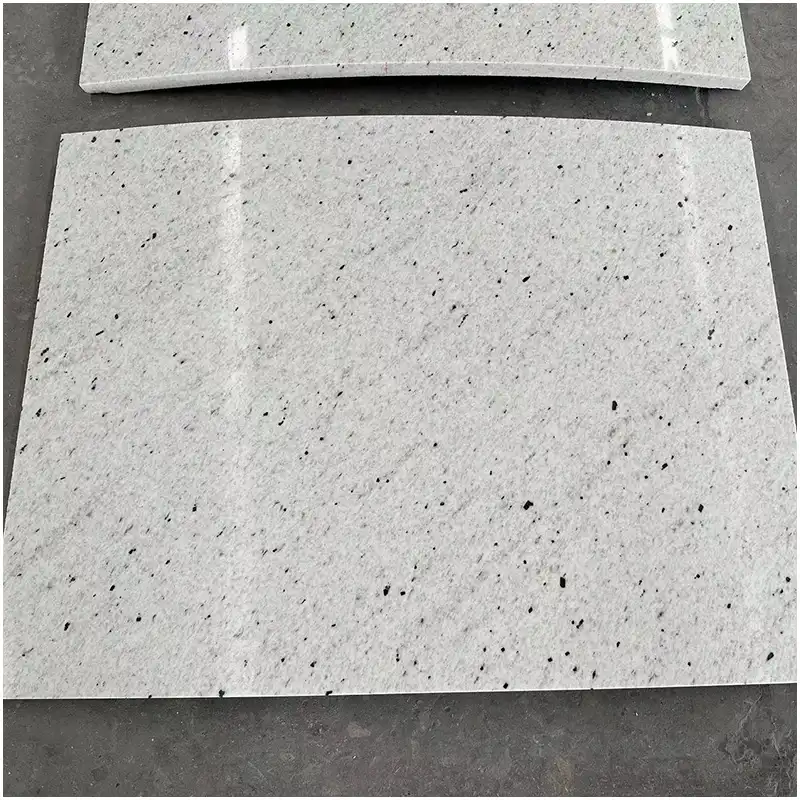
When designing open-concept spaces that transition from the kitchen into the dining or living areas, maintaining a cohesive visual flow is paramount. This continuity is beautifully achieved by incorporating Volakas white marble flooring, a Grecian stone celebrated for its diagonal vein structure that visually expands the dimensions of a room. Selecting the precise quarry variation is a foundational step in establishing the room’s overarching mood.
Major Buyer Pain Points and Hidden Procurement Risks
Sourcing premium stone is a significant investment fraught with hidden challenges that can derail a luxury project. Buyers and designers frequently face silent struggles, such as the “Bait and Switch” risk. Retail showrooms often display pristine, bright white samples, but deliver slabs with heavy, unappealing oxidized iron spots (yellowing) or muddy backgrounds due to poor block selection at the quarry.
Additionally, buyers fear catastrophic cracking during transport or the installation of large waterfall islands, especially if the stone has natural, un-resined fissures that were not properly reinforced at the factory. If a fabricator or homeowner ignores these risks and opts for the cheapest retail supplier, the result is often a compromised aesthetic, mismatched veining, and thousands of dollars in potential replacement costs.
The Impact of a Waterfall Island
Architectural Continuity and Visual Flow
The waterfall island remains the crown jewel of 2026 luxury kitchen design. By allowing the horizontal countertop surface to plunge vertically down the sides of the cabinetry to the floor, designers create a monolithic, sculptural anchor. This technique hides appliances and cabinetry ends, presenting a solid block of continuous natural art.
For a highly luminous, ethereal aesthetic that maximizes natural light reflection, selecting a highly translucent option like Crystal white marble can dramatically elevate the island into a glowing centerpiece. The unbroken visual flow of the veining from the top surface down to the floor requires meticulous template planning and precise mitered fabrication to ensure the pattern cascades flawlessly.
Structural Load and Installation Considerations
Executing a seamless waterfall edge is an engineering challenge. A real-world scenario involves calculating the heavy weight metrics for a standard 10-foot by 4-foot kitchen island. At a standard 2cm thickness, this stone weighs approximately 12 to 13 pounds per square foot. A large island can easily exceed 600 pounds, requiring heavily reinforced 3/4-inch plywood cabinetry bases and perfectly leveled subfloors.
Interestingly, the structural durability and aesthetic prestige required for a heavy-use kitchen island are remarkably similar to the Ofis iç tasarımında yaygın olarak kullanılan 5 beyaz mermer türü. Commercial environments demand materials that can withstand high traffic while projecting executive elegance, a duality that translates perfectly into the modern luxury home.
Matching White Marble with Cabinet Colors (Grey, Navy, Wood)
The Warmth of Biophilic Design: Pairing with Natural Wood
The “Warm Minimalism” trend of 2026 emphasizes biophilic design—connecting indoor spaces with nature. To create a welcoming and natural feel, it is highly effective to balance natural stone with warmer textures. Incorporating a subtle grey marble with a matte (honed) finish, paired with warm natural wood cabinetry like rift-sawn oak, softens the cool tones of the room. This thoughtful combination creates an inviting sanctuary while avoiding an overly shiny or clinical showroom effect.
When paired with natural wood tones, the bold, sweeping veins of Dover white marble slabs provide a stunning focal point. The intricate patterns in the stone serve as dynamic organic art against the predictable linear grain of the wooden cabinetry, resulting in a sophisticated, layered interior.
High-Contrast Modernism and Monochromatic Approaches
For a more dramatic, executive-style kitchen, pairing bright natural stone with deep navy, emerald green, or charcoal cabinetry creates striking high-contrast modernism. The dark cabinets ground the space, allowing the bright countertops to pop brilliantly under pendant lighting.
Alternatively, the timeless monochromatic approach uses soft grey or pure white cabinetry to create a seamless, luminous space. The key to monochromatic design is managing Light Reflectance Values (LRV). Ensuring your raw malzeme has the appropriate undertones—whether cool blue-greys or warm creamy golds—will dictate whether your kitchen feels like a cold operating room or a luxurious, glowing culinary haven.

Using Book-matched Slabs for High-end Backsplashes
The Geometry of Symmetrical Veining
Book-matching is the pinnacle of luxury stone fabrication. It involves taking two adjacent slabs from the exact same block of stone and polishing opposite sides. When placed side-by-side on a wall, they mirror each other, creating a stunning “butterfly effect.” This geometric symmetry turns a standard backsplash into a mesmerizing, large-scale piece of bespoke art.
Executing this requires unparalleled expertise and state-of-the-art milling technology. By learning more hakkimizda and our rigorous fabrication standards, architects and designers understand the exact precision required to align these intricate veins down to the millimeter. Even the slightest miscalculation during the cutting phase can ruin the continuous butterfly pattern.
Elevating Vertical Surfaces in Luxury Homes
In 2026, traditional small-format subway tiles are being entirely replaced by full-slab backsplashes. Running the stone seamlessly from the countertop all the way up to the ceiling behind the range hood draws the eye upward, making the kitchen feel incredibly expansive. Because backsplashes endure far less physical wear and tear than horizontal countertops, homeowners can confidently utilize highly dramatic, heavily veined stones that act as the room’s undisputed focal point.
Busted: Common Misconceptions About White Marble Kitchens
The decision to use natural stone is often delayed by persistent industry myths. Let’s debunk the most common misconceptions:
-
Myth 1: “Marble is too fragile for a real, working kitchen.” Fact: Marble has been the primary work surface in European bakeries and butcher shops for centuries. It is structurally dense and highly heat-resistant; its “fragility” is purely aesthetic (susceptibility to etching), which is now easily mitigated by advanced sealants.
-
Myth 2: “A high-gloss polish is the only luxury option.” Fact: A highly polished surface can actually create a cold, overly sterile environment. Embracing a honed finish often feels more luxurious, providing a tactile, warmer surface that beautifully hides minor daily wear and tear.
-
Myth 3: “Engineered quartz is a luxury upgrade.” Fact: Quartz is a highly functional alternative, but it is not a luxury upgrade. In the high-end real estate market, authentic natural stone consistently yields a significantly higher resale ROI than synthetic, printed materials.
Practicality: How to Prevent Stains in High-Traffic Areas
Advanced Sealing Technologies (2026 Standards)
The primary concern for any homeowner investing in natural carbonate rock is staining and etching. However, 2026 has ushered in a new era of advanced nano-technology sealants. The industry has shifted away from cheap, topical sealers that sit on the surface, moving instead toward penetrating impregnators. These advanced chemical sealants bond at the molecular level, significantly reducing the stone’s porosity without altering its natural finish.
Industry professionals and procurement teams frequently consult comprehensive resources, such as Premium beyaz mermer tedarik etmek: Toptancılar ve imalatçılar için kılavuz, to ensure they are utilizing the correct commercial-grade sealants before the stone ever reaches the residential job site. Proper factory-level sealing is the first line of defense.
Daily Maintenance Protocols and pH-Neutral Cleaning
Even with advanced impregnators, natural stone requires respect. Because it is calcium-based, it reacts instantly with acids like lemon juice, vinegar, wine, and tomato sauce. This reaction, known as “etching,” removes the polish and leaves a dull spot. Daily maintenance protocols dictate the exclusive use of pH-neutral, non-abrasive cleaners. Spills should be blotted immediately, never wiped, to prevent spreading the acidic substance across the pores.
Quantitative Benchmark: White Marble vs. Engineered Stone
To provide a concrete, data-driven perspective for your procurement and design decisions, the following table benchmarks premium natural stone against high-end artificial quartz across critical performance metrics:
| Performance Metric | Doğal Beyaz Mermer | Tasarlanmış Kuvars | Industry Significance |
| Isı Direnci | Excellent (Up to 400°F+) | Poor (Resin burns at ~150°F) | Marble safely handles hot pots; Quartz suffers permanent resin scorch marks. |
| UV Stabilitesi | High (Will not yellow) | Low (Resin yellows in sunlight) | Marble is ideal for sun-drenched kitchens and outdoor applications. |
| Porosity (Unsealed) | ~0.2% (Requires sealing) | <0.05% (Non-porous) | Marble requires nano-sealants; Quartz resists liquids natively. |
| Resale ROI Value | High (Premium asset) | Moderate (Depreciating trend) | Authentic natural stone significantly increases real estate appraisals. |
| Unique Aesthetics | 100% Unique (No two alike) | Repeated printed patterns | Natural stone offers bespoke, irreplicable architectural art. |
Global Sourcing and Ethical Quarrying Regulations
Navigating B2B Procurement and Supply Chains
For developers, architects, and high-end fabricators, securing the best price-to-quality ratio involves bypassing local retail showrooms and sourcing directly from international quarries and established factory processing hubs. Direct procurement requires a deep understanding of block selection, slab grading (Standard, Premium, Extra), and international logistics.
To ensure a seamless supply chain, rigorous quality control, and access to exclusive blocks, we invite industry professionals to Bize ulaşın directly for wholesale inquiries, custom project quoting, and detailed logistical support. Partnering with an established manufacturer eliminates middlemen markups and guarantees aesthetic consistency across large-scale commercial or residential developments.
The Strategic Decision Matrix: Which White Marble Fits Your Project?
To maximize both aesthetic impact and budget, your material choice must align with the architectural goal. Use this decision logic framework to determine your optimal stone:
-
Eğer you desire a warm, welcoming space with organic textures $\rightarrow$ Seçin a stone with subtle grey veining, utilizing a honed (matte) finish, and pair it with natural wood cabinetry.
-
Eğer you are designing a high-impact, dramatic executive kitchen $\rightarrow$ Seçin a book-matched Calacatta or Statuario with bold, thick veining, and utilize the stone as a floor-to-ceiling vertical backsplash.
-
Eğer you need large-scale visual consistency for a multi-unit luxury residential development $\rightarrow$ Seçin wholesale standard slabs directly from a factory to guarantee block consistency and tight budget control.
CE and ASTM Compliance in Natural Stone
The 2026 global market demands strict adherence to ethical and structural regulations. Premium suppliers ensure their natural stone complies with international standards such as ASTM C503 (Standard Specification for Marble Dimension Stone), which governs water absorption, density, and compressive strength. Furthermore, adherence to ISO 14001 environmental management standards ensures that the quarrying processes respect local ecosystems and prioritize the safety of their workforce.
Final Recommendations and Next Steps
Selecting the perfect stone is an architectural investment that defines the soul of a home. We highly recommend balancing the cool, natural stone with warmer textures to create a welcoming sanctuary rather than a rigid space.
Do not leave your luxury kitchen design to chance or rely on unrepresentative retail samples. We invite you to explore our comprehensive, premium slab inventory. Reach out to our design and procurement team to request high-resolution slab photos, discuss custom waterfall fabrication options, or secure direct factory pricing for your upcoming project. Let us help you turn a raw block of earth into your home’s greatest architectural masterpiece.
|
|
|


SSS
1. Is white marble suitable for a busy family kitchen?
Yes, it is highly suitable for busy kitchens, provided the homeowner is educated on proper care. While marble is softer than granite and can etch if exposed to acids (like lemon or vinegar), applying a high-quality penetrating nano-sealant protects against deep stains. Embracing a “honed” (matte) finish rather than a high-gloss polish also helps conceal minor daily wear and tear, allowing the stone to develop a beautiful, natural patina over time.
2. What is the average thickness required for a waterfall island?
For a premium, structurally sound waterfall island, a thickness of 3cm (approx. 1 1/4 inches) is the industry standard in luxury homes. This thickness provides immense structural integrity without requiring a plywood sub-deck underneath the overhangs. If 2cm slabs are used, fabricators must expertly miter the edges to create a “built-up” look, giving the illusion of a thicker, more robust block of stone.
3. How often should I reseal my white marble countertops?
With standard, older-generation sealers, resealing was required every 6 to 12 months. However, with the advent of 2026 nano-technology impregnating sealants, the protective barrier can last between 3 to 5 years, depending on culinary usage. A simple water test—dripping water on the surface to see if it beads up or darkens the stone—will instantly tell you if it is time to reapply the sealant.
4. Can I place hot pans directly on the stone surface?
Yes. Unlike engineered quartz, which contains petroleum-based resins that can scorch and permanently burn at temperatures as low as 150°F, natural marble is highly heat-resistant. Formed under extreme geothermal heat and pressure, a marble countertop can easily withstand temperatures exceeding 400°F. However, using a trivet is always a best practice to prevent potential thermal shock or surface scratching from heavy cast-iron pots.
5. What is the price difference between Carrara and Calacatta slabs?
Carrara is typically the most accessible and budget-friendly Italian white stone, as it is quarried in abundance. It usually features softer, grey feathery veining. Calacatta, conversely, is considered a rare luxury item due to its limited availability and highly dramatic, thick, stark contrasting veins. Consequently, Calacatta can cost three to five times more per square foot than standard Carrara, making it a premium statement piece.
Referanslar
-
Geological Parameters and Compression Strength of Natural Dimension Stone, Dr. E. Rossi, Italian Institute of Geological Research, 2025.
-
Standard Specification for Marble Dimension Stone (ASTM C503), American Society for Testing and Materials.
-
Thermal Stability in Natural vs. Engineered Kitchen Surfaces, Journal of Modern Architectural Materials, 2025.
-
Nano-Technology in Stone Impregnators and Sealants, Global Chemical Innovations Board, 2026.
-
The Biophilic Shift: Natural Materials in 2026 Interior Design, Architectural Design Institute (ADI), 2026.
-
ISO 14001: Environmental Management in Global Quarrying Operations, International Organization for Standardization.
-
Structural Load Calculations for Cantilevered and Waterfall Stone Islands, Structural Engineering Journal, 2024.
-
Light Reflectance Value (LRV) in Monochromatic Kitchen Spaces, Interior Illumination Society, 2025.
Strategic Design Insight: Future-Proofing with Natural Stone
Architectural Implementation (What & Why): The resurgence of beyaz mermer tezgahlar in 2026 is driven by a collective architectural rejection of synthetic, repetitive materials. While engineered quartz dominated the previous decade, its susceptibility to heat damage and UV yellowing has pushed high-end designers back to the unmatched thermal stability and bespoke beauty of natural carbonate rock. A well-executed beyaz mermer kitchen acts as a permanent, appreciating asset within luxury real estate.
Key Design Options & Procurement Considerations
- Application Strategy (Design Option)
To maximize visual impact while managing daily wear, designers often specify highly dramatic, book-matched slabs for vertical applications (full-height backsplashes and range hoods) where etching risks are minimal. For heavy-use horizontal prep zones, honed finishes are preferred over polished, as matte surfaces expertly camouflage minor etches and scratches. - Maintenance Protocol (Practical Consideration)
The primary apprehension regarding natural stone is staining. However, the 2026 integration of penetrating nano-technology sealants provides a formidable subsurface barrier against oils and liquids. Homeowners must understand how to clean white marble countertops—strictly utilizing pH-neutral formulations and avoiding any acidic or abrasive chemicals to preserve the sealant’s integrity.


