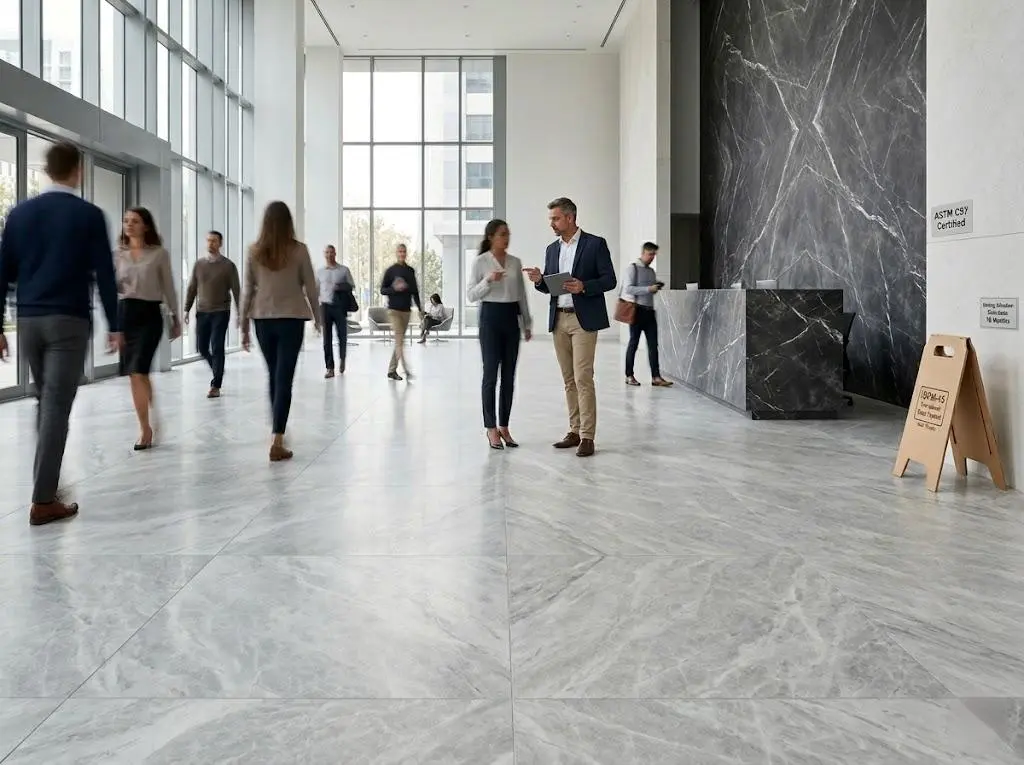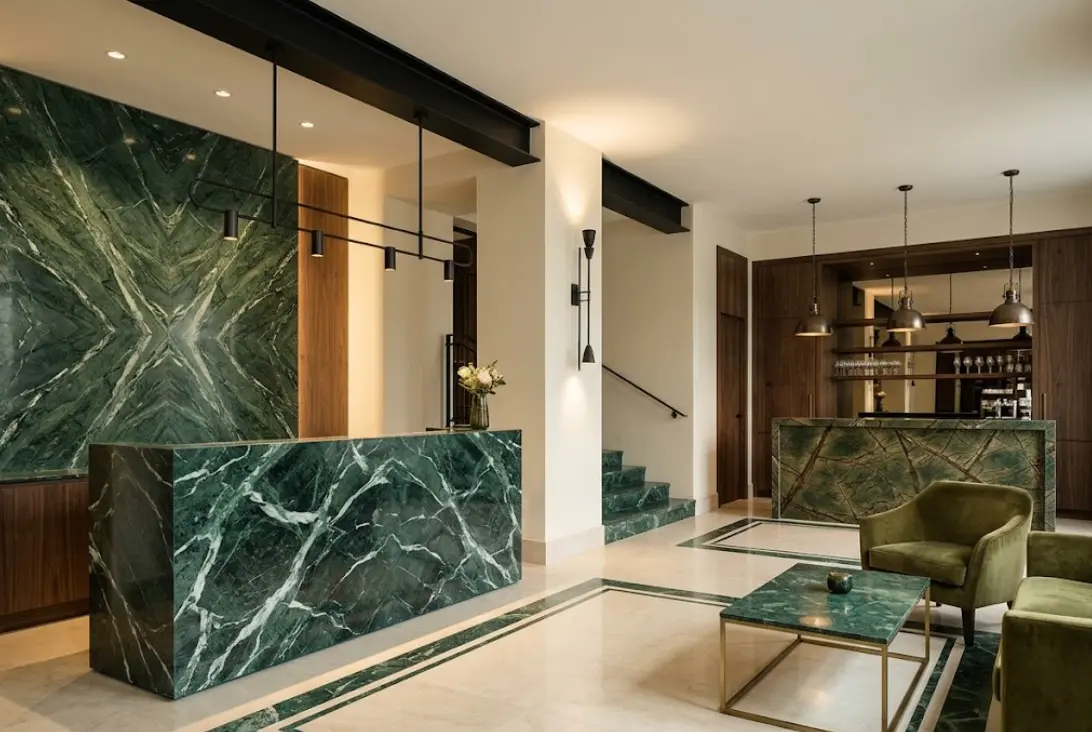
Hızlı Özet:Marble Floor Tiles are not automatically unsafe, but slip risk depends on finish, moisture, cleaning residue, tile size, drainage, and user type. Polished marble can become slippery when wet, while honed, brushed, tumbled, textured, or mosaic marble flooring can improve traction for bathrooms, kitchens, entryways, hotels, and modern interiors.
A homeowner falls in love with polished marble for a bathroom floor. A hotel developer wants a glossy marble lobby that feels expensive from the first step. A villa owner wants a natural stone entrance hall that impresses guests but does not become a skating rink when it rains. The question is simple: are Mermer Yer Karoları Kaygan mı?
The honest answer is not “yes” or “no.” Marble Floor Tiles can be safe or risky depending on the surface finish, water exposure, cleaning routine, tile size, drainage, footwear, and the people using the space. Dry marble in a formal living room behaves very differently from polished marble in a wet bathroom. A large polished slab near a shower is not the same as honed marble mosaic with many grout joints. Same stone family, very different safety logic.
For buyers comparing natural marble flooring options by category, the Mermer Yer Karoları collection provides a useful starting point for reviewing tile formats, surface finishes, colors, and residential or commercial applications.
This guide explains when marble flooring becomes slippery, which finishes are safer, how to choose marble tiles for bathrooms, kitchens, entryways, living rooms, and hotel lobbies, what slip-resistance data buyers should understand, and how to avoid common purchasing mistakes. The goal is not to scare buyers away from marble. The goal is to help them use it intelligently, because beautiful flooring should make people stop and admire it—not slip and remember it forever.
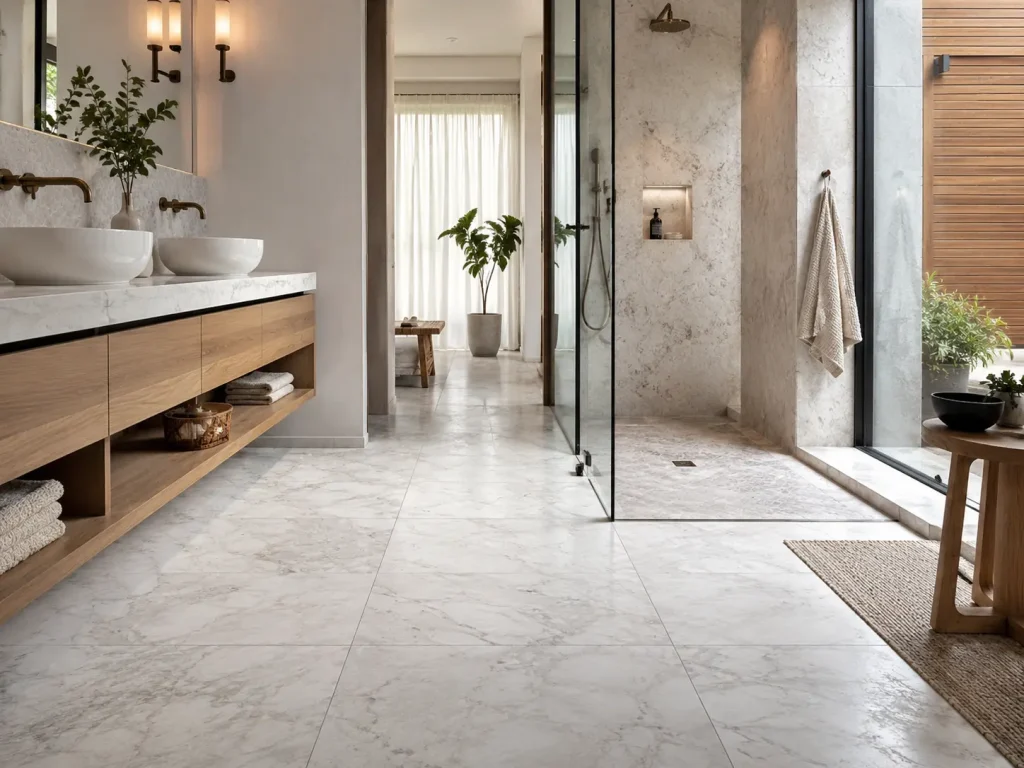
Are Marble Floor Tiles Slippery?
The Short Answer for Buyers
Dry Marble Floor Tiles are usually safe under normal indoor conditions, especially when installed in living rooms, bedrooms, dining areas, or formal entrance halls. The risk increases when marble is wet, polished, poorly cleaned, waxed, installed in sloped areas, or used in spaces where people walk barefoot, wear socks, or carry water from outdoors.
Wet polished marble is the highest-risk combination. Honed, brushed, tumbled, sandblasted, or textured marble usually provides better traction because the surface has more grip. The real problem is rarely marble alone. It is usually marble plus the wrong finish, plus moisture, plus cleaning residue, plus poor drainage. That little team can turn elegance into liability. Not very glamorous, but very real.
Why Marble Can Feel Slippery
Marble is a dense natural stone that can be polished into a smooth reflective surface. This glossy finish looks luxurious, but it reduces surface texture. When water, soap, oil, detergent residue, wax, dust, or polishing chemicals sit on that surface, friction drops. Shoes, bare feet, socks, and high heels also interact with the floor differently.
For dry interiors where a high-gloss luxury look is desired, cilalı mermer yer karoları can work well when the space has controlled moisture, good maintenance, and proper entrance matting.
When Marble Flooring Is Least Risky
Marble flooring is usually least risky in dry living rooms, bedrooms, formal dining rooms, wall-adjacent low-traffic areas, residential entrance halls with proper mats, and commercial lobbies where cleaning and moisture control are actively managed. In these cases, polished or honed marble may both be suitable depending on the design goal.
When Marble Flooring Needs More Caution
More caution is needed in bathrooms, shower floors, kitchens, spa interiors, hotel lobbies, public corridors, elderly care interiors, pool-adjacent interiors, and wet entrance areas. These locations require smarter finish selection, drainage planning, cleaning protocols, and sometimes technical slip-resistance data.
What Actually Determines Marble Flooring Slip Resistance?
Yüzey İşlemi
The finish is the biggest factor. Polished marble has high gloss and strong reflection, but lower slip resistance when wet. Honed marble has a matte or satin surface and usually provides better traction. Brushed, tumbled, sandblasted, leathered, or textured finishes increase surface roughness and can improve grip. The finish should be selected according to the room’s function, not just showroom appearance.
Moisture and Cleaning Residue
Water reduces friction. Soap residue, oil, detergent buildup, wax, and dust can make even a good floor unsafe. This is why cleaning routines matter. Marble should generally be cleaned with pH-neutral stone cleaners rather than harsh acidic products, waxy polishes, or slippery detergents. Maintenance is not decoration. It is part of the floor system.
Foot Traffic and User Type
A private living room and a hotel lobby are not the same safety environment. Homes with elderly users, children, pets, or barefoot bathroom use need safer finish choices. Commercial interiors face higher foot traffic, more liability, and more moisture from outdoor shoes. Buyers should not use residential assumptions for commercial flooring projects.
Tile Size, Grout Lines, and Layout
Smaller tiles create more grout lines, which can improve traction. Large-format polished tiles look clean and luxurious, but they have fewer grout joints and can be more slippery in wet conditions. Marble mosaics are often better for shower floors because grout joints add grip. Slope and drainage are also critical in bathrooms, spas, and wet entries.
| Faktör | Impact on Slip Risk | Buyer Action |
|---|---|---|
| Yüzey İşlemi | Biggest influence | Match finish to room type |
| Water Exposure | Increases slip risk | Use textured finish in wet areas |
| Cleaning Residue | Reduces friction | Use pH-neutral cleaner |
| Karo Boyutu | Large tiles have fewer grout lines | Use smaller tiles in wet zones |
| User Type | Elderly/children need safer floors | Choose higher traction finish |
| Drainage | Standing water increases risk | Plan slope and drainage |
Polished vs Honed vs Textured Marble Floor Tiles
Polished Marble Floor Tiles
Polished marble floor tiles deliver the classic high-gloss luxury look many buyers associate with villas, hotels, formal living rooms, and premium interiors. They reflect light, enhance stone color, and create an expensive finish. However, polished marble can become slippery when wet. It can also show scratches, etching, and wear more visibly than less reflective finishes.
Use polished marble in dry interiors, controlled lobbies, formal rooms, and low-moisture residential areas. Avoid using polished marble blindly in shower floors, wet bathroom floors, pool-adjacent interiors, or rain-exposed entrances unless safety control is carefully planned.
Honed Marble Floor Tiles
Honed marble has a matte or satin surface. It offers softer modern luxury and usually provides better traction than polished marble. It is often more suitable for bathrooms, kitchens, living rooms, and daily-use interiors where a less slippery surface is preferred. However, honed marble may absorb stains differently and still needs proper sealing and cleaning.
For buyers comparing floor finishes and real-world living room performance, this guide on anti-slip marble floor tiles gives useful context for grey marble flooring, wear resistance, and safer surface choices in residential interiors.
Brushed, Tumbled, Sandblasted, and Textured Marble
Textured finishes improve grip by increasing surface roughness. Brushed marble feels tactile and modern. Tumbled marble has a softer aged texture. Sandblasted marble provides stronger traction but a less refined appearance. Flamed marble is usually associated with outdoor or semi-outdoor stone surfaces, although not all marbles are suitable for flaming. These finishes work well in bathrooms, spa interiors, covered transitional spaces, and areas where safety matters more than mirror-like shine.
| Bitirmek | Görsel Efekt | Kayma Direnci | Best Area | Buyer Risk |
|---|---|---|---|---|
| Cilalı | Glossy, reflective, luxury | Low when wet | Dry living areas, controlled lobbies | Slippery if wet |
| Honlanmış | Matte, soft, modern | Orta | Bathrooms, kitchens, living areas | Needs sealing and care |
| Fırçalanmış | Textured, tactile | Medium-high | Bathrooms, spa interiors | Less glossy |
| Eskitme | Soft aged texture | Medium-high | Small wet areas, rustic interiors | More irregular look |
| Kumlanmış | Rougher texture | Yüksek | Wet or transitional areas | Less refined appearance |

Best Marble Floor Tiles for Bathrooms and Wet Areas
Can Marble Be Used in Bathroom Floors?
Yes, marble can be used in bathroom floors, but the finish selection is critical. Marble floor tiles for bathroom should usually prioritize traction, drainage, and maintenance over pure gloss. Polished marble may work in a powder room with low water exposure, but it is risky for daily wet floors or shower floors without additional safety control.
Honed marble, tumbled marble, brushed marble, textured marble, or small-format marble mosaics are usually better choices for bathrooms. They provide more traction and better wet-area logic. Sealing is also important because marble is natural and porous.
Best Bathroom Marble Tile Options
Recommended bathroom options include honed marble tiles, tumbled marble tiles, small-format marble mosaics, brushed marble tiles, and marble tiles with anti-slip treatment. The best option depends on whether the area is a dry vanity zone, a wet bathroom floor, or a shower floor.
Shower Floor Considerations
Shower floors require more slip resistance. Small marble mosaics are often safer than large polished tiles because grout lines increase traction. Drainage slope is essential. Water must move toward the drain rather than sit on the stone. Large-format polished marble on a shower floor may look beautiful in photos, but in real use it can be a bad idea wearing a luxury costume.
Bathroom Buyer Decision Logic
If the floor gets wet every day, choose honed, textured, or mosaic marble. If the space is a powder room with low water exposure, honed or polished marble may work depending on risk tolerance. If elderly people use the bathroom, prioritize traction over shine. If a hotel bathroom needs marble, ask for slip-resistance data and use controlled cleaning protocols.

Marble Floor Tiles for Kitchens, Entryways, and Living Rooms
Mutfak Mermer Döşeme
Kitchens involve water, oil, food spills, dropped utensils, frequent cleaning, and heavy daily use. Honed marble is usually safer than polished marble in kitchens because it offers better traction and a softer visual appearance. Rugs or mats near sink zones can reduce slip risk, but they must have non-slip backing.
Cleaning matters in kitchens. Waxy cleaners, oily residue, and detergent buildup can make floors slippery. A pH-neutral stone cleaner is safer for marble surfaces and helps reduce residue-related slip risk.
Entryway Marble Flooring
Entryways collect rainwater, dust, dirt, and outdoor debris. Polished marble can be risky when shoes are wet. Honed or textured marble is usually safer for busy entrances. Proper entrance mats are not optional decoration; they are part of the safety system.
Oturma Odası Mermer Döşeme
Living rooms are generally drier, so polished marble can work well if the buyer wants high-gloss luxury. Honed marble creates a softer and more contemporary look. Large-format tiles can produce seamless elegance, while smaller tiles can introduce more joints and subtle traction. Light marble brightens a room; dark marble creates drama.
Buyers who want to compare marble flooring with other tile types can review this guide on marble floor tiles and ordinary floor tiles to understand differences in natural texture, durability, visual value, maintenance, and project suitability.
| Interior Area | Önerilen Bitiş | Sebep | Risk Control |
|---|---|---|---|
| Bathroom Floor | Honed / mosaic / textured | Wet use | Drainage and sealing |
| Shower Floor | Mosaic / textured | More grout grip | Avoid polished large tiles |
| Kitchen Floor | Honed / brushed | Spill risk | Mats and pH-neutral cleaning |
| Antre | Honed / textured | Wet shoes | Entrance mats |
| Oturma Odası | Cilalı / honlanmış | Mostly dry | Regular maintenance |
| Hotel Lobby | Honed / polished with control | Luxury + traffic | Matting and cleaning protocol |
Anti-Slip Standards and Technical Data Buyers Should Understand
Coefficient of Friction Explained
Coefficient of friction measures traction between a foot or shoe and the floor. Higher friction generally means better slip resistance. However, results differ between dry and wet conditions. Buyers should not judge safety by visual appearance alone. A matte finish is not always safe, and a glossy finish is not always unsafe in every dry setting. The condition of use matters.
DCOF and Wet Slip Resistance
Dynamic Coefficient of Friction, often called DCOF, is commonly used in tile evaluation to understand friction under movement. Wet DCOF matters for bathrooms, entries, lobbies, and commercial areas exposed to moisture. Standards and requirements vary by market, project type, and local regulations, so commercial buyers should ask for relevant test data where safety is critical.
R-Rating System
Some markets use R9 to R13 slip-resistance ratings. Higher R ratings generally indicate more slip resistance based on ramp testing. Indoor dry floors may require lower ratings than wet commercial spaces, kitchens, or public areas. Buyers should confirm local requirements before specifying marble flooring for public or hospitality projects.
Why Standards Matter for Commercial Projects
Hotels, spas, retail spaces, and public corridors face higher safety responsibility. Technical data protects buyers, contractors, designers, and end users. In commercial projects, selecting flooring only by appearance can lead to falls, complaints, replacement costs, and liability issues. That is not “luxury”; that is paperwork with a headache.
| Ölçüm | Ne anlama geliyor | Why Buyers Should Care |
|---|---|---|
| COF | General friction measurement | Indicates traction potential |
| DCOF | Dynamic friction under movement | Important for wet areas |
| Wet Test Data | Slip performance with moisture | Critical for bathrooms and lobbies |
| R Rating | Ramp test slip classification | Used in some markets |
| Surface Roughness | Texture level | Affects grip and cleaning |
How to Make Marble Floor Tiles Less Slippery
Choose the Right Finish from the Start
The best anti-slip strategy is selecting the correct finish before installation. Honed or textured marble is safer than polished marble in wet areas. Do not install polished marble in a wet bathroom and hope to “fix it later.” That is like buying white shoes for a mud race and blaming the weather.
For buyers considering engineered alternatives where visual consistency and practical decoration matter, suni̇ mermer yer karolari may be reviewed as a decorative option for projects that need controlled appearance and alternative material performance.
Use Anti-Slip Treatments
Anti-slip treatments can increase traction on existing marble floors. However, they may slightly change the surface feel, gloss, or appearance. Always test on a sample area first. Professional application is recommended, especially for commercial projects, bathrooms, and hotel interiors.
Improve Cleaning and Maintenance
Remove soap residue, oil, wax, dust, and detergent buildup. Use pH-neutral stone cleaners. Avoid waxy products that make marble slippery. Maintain sealers correctly. A floor can be well selected and still become dangerous if cleaning turns it into a polished soap plate.
Use Rugs, Mats, and Drainage Planning
Entrance mats reduce water and dirt. Bathroom mats reduce barefoot slip risk. Proper slope and drainage prevent standing water. Rugs should have non-slip backing. In hotels and commercial buildings, matting strategy should be part of the flooring specification, not an afterthought.
Refinish Existing Marble Floors
Existing polished marble can sometimes be honed, textured, or treated by professional stone restoration specialists. This may improve traction while preserving the stone. Avoid harsh DIY chemicals, acid treatments, or untested coatings that can damage marble permanently.
Marble Floor Tiles vs Porcelain, Granite, and Terrazzo for Slip Safety
Marble vs Porcelain Tiles
Porcelain tiles can be manufactured with predictable anti-slip ratings, making them easier for technical specification in wet areas. Marble offers natural luxury and unique beauty, but requires finish-specific safety checks. Choose porcelain when technical slip control and low maintenance are the top priority. Choose marble when natural stone value and luxury identity matter.
Marble vs Granite Flooring
Granite is harder and often more suitable for heavy-duty or outdoor conditions. Textured granite can provide strong slip resistance. Marble is softer and more elegant, making it better suited for luxury interiors, bathrooms, and living spaces where the right finish can be selected.
Marble vs Terrazzo
Terrazzo can be polished or textured depending on design needs. It works well in commercial interiors and modern buildings. Marble tiles provide clearer natural stone identity and a more classic luxury feel. Slip resistance for both materials depends heavily on finish and maintenance.
| Malzeme | Luxury Appearance | Slip Control | Bakım | En İyi Kullanım |
|---|---|---|---|---|
| Mermer Yer Karoları | Çok yüksek | Depends on finish | Orta | Luxury interiors |
| Porselen Karolar | Medium-high | More predictable | Düşük | Bathrooms, commercial floors |
| Granite Flooring | Yüksek | Dokulu yüzey ile iyi | Medium-low | Entryways, outdoor areas |
| Terrazzo | High modern look | Depends on finish | Orta | Commercial interiors |
Common Buyer Mistakes When Choosing Marble Floor Tiles
Choosing Polished Marble for Wet Floors
This is the most common mistake. Polished marble can become slippery when wet, especially in bathrooms, showers, pool-adjacent interiors, and wet entrances. The consequence can be falls, complaints, replacement costs, and in commercial spaces, liability issues.
Judging Safety by Appearance Only
A beautiful tile may not meet the safety needs of the room. Buyers should consider finish, water exposure, user type, and test data where relevant. Beauty is important, but gravity is very committed to its job.
Ignoring Cleaning Residue
Wax, soap, detergent residue, and oil buildup can make marble floors slippery. A proper cleaning routine is part of slip prevention.
Using Large Tiles in Shower Floors
Large tiles have fewer grout joints. In shower floors, this can increase slip risk. Small mosaics or textured tiles are usually safer.
Forgetting Elderly Users and Children
Homes with elderly residents, children, or barefoot users need safer finishes. In these cases, traction should take priority over maximum gloss.
Not Asking for Slip Resistance Data
Commercial projects should request relevant slip-resistance data when available. This helps protect buyers, contractors, and end users.
|
|
|


How to Choose a Marble Floor Tile Supplier
What a Reliable Supplier Should Provide
A reliable marble tile supplier should provide full tile or slab photos, finish options, sample testing support, thickness options, slip resistance data if available, surface finish explanation, batch consistency, custom sizes, tile packaging details, quality inspection, installation guidance, sealing and maintenance suggestions, export experience, and commercial project support.
Buyers can review the marble floor tiles manufacturer background to understand factory capability, natural stone experience, quality control, export support, and project service strength before confirming bulk orders.
For project quotations, custom tile sizes, finish recommendations, or anti-slip flooring discussions, buyers can contact a custom marble flooring supplier with drawings, area photos, room type, finish preference, thickness requirements, and safety expectations.
| Evaluation Factor | Ağırlık | What to Check |
|---|---|---|
| Bitiş Seçenekleri | 20% | Polished, honed, brushed, tumbled, textured |
| Slip Data Support | 15% | COF/DCOF/R rating if available |
| Application Advice | 15% | Bathroom, lobby, kitchen, wet area guidance |
| Tile Quality | 15% | Thickness, calibration, surface consistency |
| Packing Quality | 10% | Reinforced export packaging |
| Maintenance Guidance | 10% | Cleaning and sealing advice |
Practical Recommendation: Which Marble Floor Tile Finish Should You Choose?
Choose Polished Marble If
Choose polished marble if the area is mostly dry, the project needs high-gloss luxury, maintenance is controlled, slip risk is low, and entrance matting or cleaning control can be managed. Polished marble is better for living rooms, formal halls, and controlled lobbies than for wet bathrooms.
Choose Honed Marble If
Choose honed marble if the space needs softer modern luxury, moderate moisture risk exists, the buyer wants better traction than polished marble, or bathrooms and kitchens are involved. Honed marble is often the safest middle path for modern interiors.
Choose Textured Marble If
Choose textured marble if the area is wet, high-risk, or used by elderly people or children. Spa areas, shower zones, entries, and wet transitional spaces usually benefit from brushed, tumbled, sandblasted, or other textured finishes.
Choose Marble Mosaic If
Choose marble mosaic if the floor is a shower floor, more grout lines are needed for traction, or the design requires small-format detail. Mosaic marble can help improve grip while still keeping a luxury natural stone appearance.

Final Recommendation: Marble Flooring Can Be Safe When Beauty Follows Function
Marble Floor Tiles can be slippery, but they do not have to be unsafe. The correct decision depends on the room, finish, water exposure, user type, cleaning routine, drainage, and technical requirements. Polished marble can work beautifully in dry luxury interiors. Honed marble is a stronger everyday option. Textured marble and mosaics are better for wet or high-risk areas.
The smartest buying logic is simple. If the area is dry and formal, polished or honed marble can work. If the area is a bathroom, choose honed, textured, or mosaic marble. If the floor is for a shower, avoid large polished tiles. If the project is a hotel lobby or spa, request slip data and cleaning protocols. If elderly users are involved, prioritize traction over gloss. Luxury flooring should look beautiful, but it should also let people walk with confidence. Fancy floors are great; accidental ice rinks are not.
FAQ About Marble Floor Tiles and Slip Resistance
1. Mermer Zemin Karoları Kaygan mıdır?
Mermer Zemin Karoları, yüzey bitimi, nem seviyesi, temizlik kalıntıları, karo boyutu, su tahliyesi ve kullanıcı koşullarına göre kaygan olabilir. Kuru mermer zeminler genellikle normal kapalı alanlarda güvenlidir, ancak ıslak cilalı mermer kaygan hale gelebilir. Cilalanmış, fırçalanmış, yuvarlatılmış, dokulu veya mozaik mermer karolar genellikle daha iyi çekiş sağlar. Alıcılar sadece görünüme göre değil, yüzey bitimini odaya uygun şekilde seçmelidir.
2. Cilalı mermer zemin ıslakken kaygan mıdır?
Evet, cilalı mermer zeminler ıslakken kaygan olabilir, çünkü pürüzsüz parlak yüzeyin dokusu azdır ve nem altında çekiş gücü düşüktür. Bu durum özellikle banyolar, duş alanları, mutfaklar, havuz kenarındaki iç mekanlar ve ıslak girişlerde önemlidir. Cilalı mermer kuru oturma odaları, resmi salonlar veya kontrollü otel lobilerinde hâlâ iyi çalışabilir, ancak ıslak alanlarda genellikle daha iyi güvenlik için cilalanmamış, dokulu veya mozaik mermer tercih edilmelidir.
3. Hangi mermer yüzeyi en az kaygan?
Dokulu mermer kaplamalar genellikle cilalı mermerden daha az kaygan olur. Fırçalanmış, yuvarlanmış, kumlanmıştırmalı ve belirli anti-kayma işlemi uygulanan mermer yüzeyleri daha iyi tutuş sağlayabilir. Parlatılmış mermer yerine elmas parlatılmış mermer de aynı zamanda zarif ve modern bir görünüm korurken daha iyi çekiş sağlar. Duş zeminleri veya sık ıslak kalınan alanlar için küçük ebatlı mermer mozaikler, ekstra derz çizgileri ayak altındaki çekişi artırarak tutuşu iyileştirebilir.
4. Mermer Zemin Fayansları Banyolarda Kullanılabilir mi?
Evet, Mermer Zemin Karoları banyolarda kullanılabilir, ancak kaplama ve montaj detayları dikkatlice seçilmelidir. Parlatılmış büyük ebatlı mermerler yerine, cilalı olmayan, yuvarlanmış, fırçalanmış, dokulu veya mozaik mermer karolar genellikle ıslak banyo zeminlerinde daha güvenlidir. Alıcılar ayrıca gerektiğinde sızdırmazlık, drenaj eğimi, havalandırma, pH nötr temizlik ve kaymazlık verilerini de dikkate almalıdır. Yaşlı kullanıcılar veya otel banyoları için, maksimum parlaklıkten ziyade çekiş gücü daha önemli olmalıdır.
5. Mermer zeminleri nasıl daha az kaygan hale getirirsiniz?
Mermer zeminlerin kayganlığını azaltmak için, montaj öncesinde cilalı, dokulu, fırçalanmış, dövülmüş, kumlanan veya mozaik yüzey bitimini tercih edin. Mevcut cilalı mermer zeminlerde ise profesyonel kaymazlık tedavisi veya yenileme işlemi, sürtünmeyi artırabilir. Alıcılar ayrıca sabun, mum, yağ ve deterjan kalıntılarını temizlemeli, pH nötr temizleyiciler kullanmalı, ıslak alanlara kaymaz matlar yerleştirmeli, drenajı iyileştirmeli ve sık sık ıslak kalan alanlarda cilalı mermer kullanmaktan kaçınmalıdır.
Referanslar
1. Dimension Stone Design Manual, Natural Stone Institute, Technical Design Resource.
2. ANSI A326.3 American National Standard Test Method for Measuring Dynamic Coefficient of Friction of Hard Surface Flooring Materials, Tile Council of North America.
3. Natural Stone: A Guide to Selection, Michael S. Lewis, Architectural Stone Reference.
4. Stone in Architecture: Properties, Durability, Siegfried Siegesmund and Rolf Snethlage, Springer.
5. Marble and Natural Stone Maintenance Guide, Natural Stone Institute, Care and Maintenance Resource.
6. Interior Design Materials and Specifications, Lisa Godsey, Fairchild Books.
7. Architectural Graphic Standards, American Institute of Architects, Wiley.
8. Slip Resistance of Pedestrian Surface Materials, Health and Safety Executive, Technical Guidance.
Strategic Insight: How Buyers Should Evaluate Marble Floor Tile Slip Resistance
What makes Marble Floor Tiles slippery? Slip risk usually comes from the combination of smooth finish, moisture, cleaning residue, poor drainage, large tile format, and high-risk users. Polished marble is more slippery when wet, while honed, textured, and mosaic marble can improve traction.
Why does finish selection matter? Finish is the strongest design and safety variable. Polished marble gives high-gloss luxury but needs dry or controlled environments. Honed marble offers softer traction for everyday interiors. Textured and mosaic marble are better for wet areas, bathrooms, spas, and shower floors.
How should buyers choose by application? If the project is a dry living room, polished or honed marble can work. If the project is a bathroom floor, choose honed, textured, or mosaic marble. If the project is a hotel lobby, request slip data and plan cleaning control. If elderly users or children are involved, choose traction over shine.
What risks should buyers avoid? Avoid polished marble in wet areas, judging safety by appearance only, ignoring cleaning residue, using large polished tiles in shower floors, forgetting user safety, and failing to ask for slip-resistance data in commercial projects. These mistakes can create fall risk, complaints, replacement costs, and liability concerns.
Buyer consideration: A reliable supplier should provide finish options, sample support, tile photos, thickness details, batch consistency, packing quality, maintenance guidance, and slip-resistance data where available. The best marble flooring choice is not the shiniest option; it is the finish that matches the actual use environment.