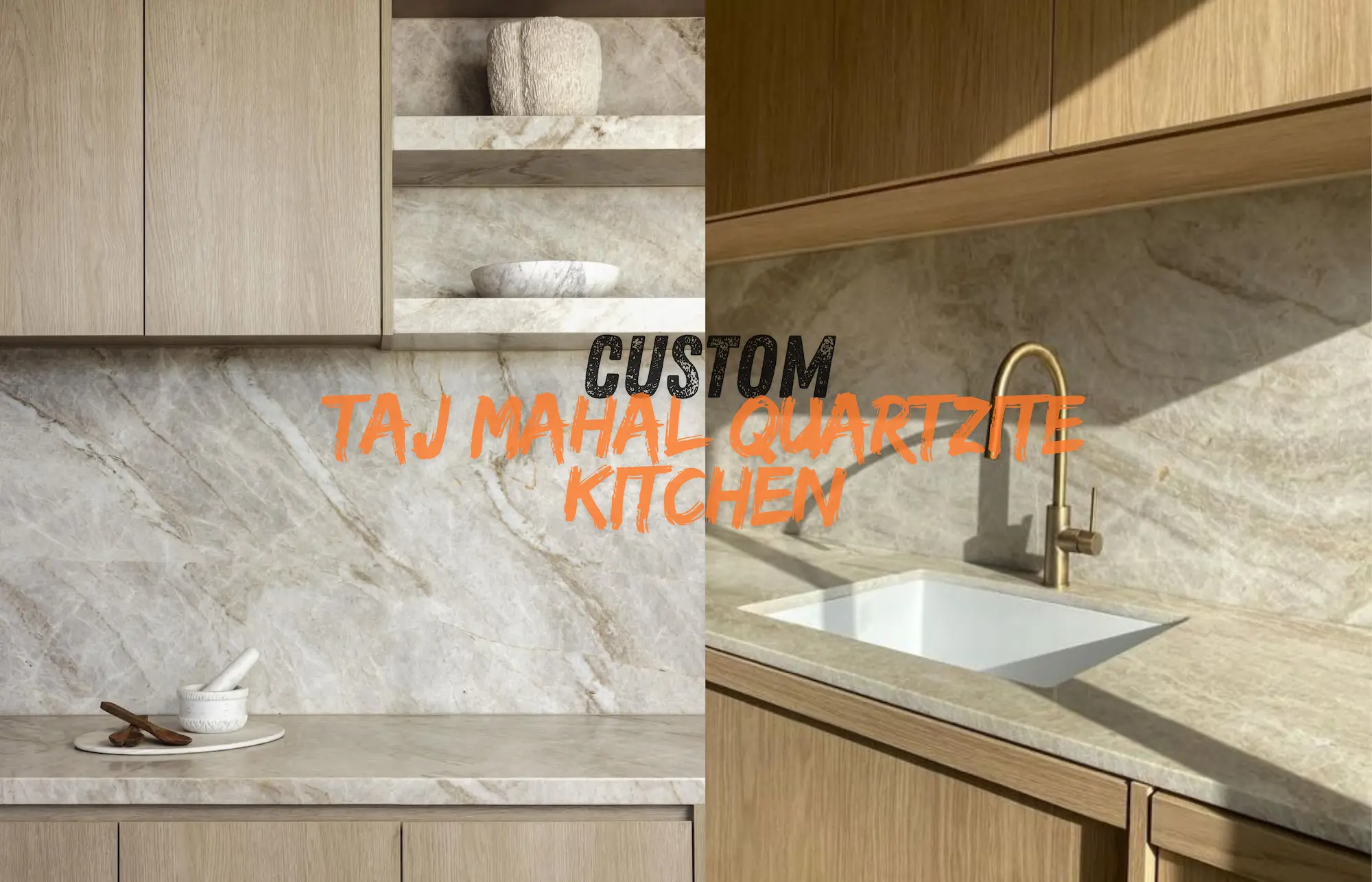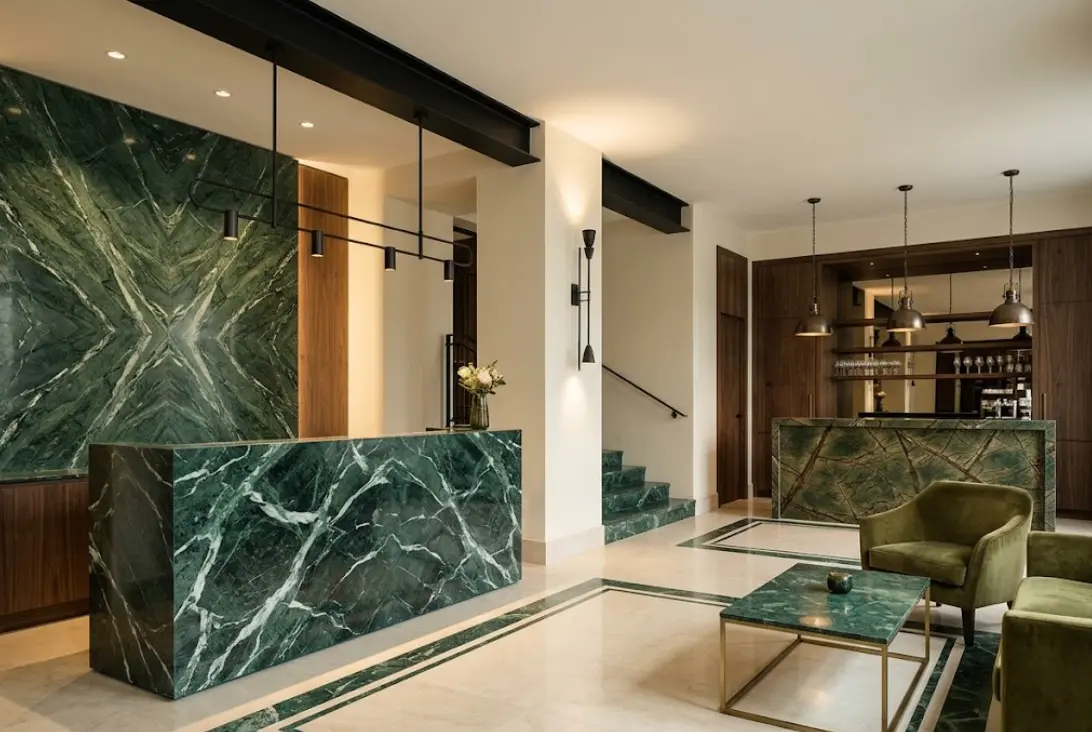
สรุปอย่างรวดเร็ว:Granite is one of the most durable natural stones for countertops, flooring, stairs, wall cladding, outdoor paving, kerbstones, and commercial projects. Its main advantages include strong hardness, heat resistance, scratch resistance, low water absorption, outdoor durability, wide colour variety, multiple finish options, and long service life when properly selected, sealed, installed, and maintained.
A homeowner wants a kitchen countertop that can handle hot pans, coffee, oil, family cooking, and daily cleaning. A hotel developer needs flooring that can survive luggage wheels, shoes, cleaning machines, and thousands of guests. A landscape contractor wants outdoor paving that can handle rain, sun, freeze-thaw cycles, and vehicle pressure. A stone importer wants a natural material that is durable, market-proven, widely accepted, and suitable for multiple countries.
This is why หินแกรนิต remains one of the most trusted natural stones in architecture and interior design. It is not the newest material in the showroom, but it is one of the most dependable. Granite offers a strong balance of hardness, heat resistance, low water absorption, design variety, outdoor performance, and long-term value. It can be used in residential kitchens, commercial floors, hotel lobbies, bathroom vanities, outdoor paving, stair treads, façades, kerbstones, and luxury interiors.
For buyers comparing available colours, finishes, and project-ready materials, the แผ่นหินแกรนิต category is a useful starting point to explore different natural granite options for indoor and outdoor applications.
However, Granite is not magic stone from the mountain gods. It still needs correct selection, finish matching, sealing, installation, and maintenance. A polished Granite floor in a wet outdoor area can create slip risk. A light-coloured Granite countertop without sealing may stain. A low-quality slab with cracks, poor polish, or weak packing can cause project delays. The advantage of Granite is real, but only when the buyer chooses it properly.
What Is Granite and Why Is It So Widely Used?
A Practical Definition of Granite
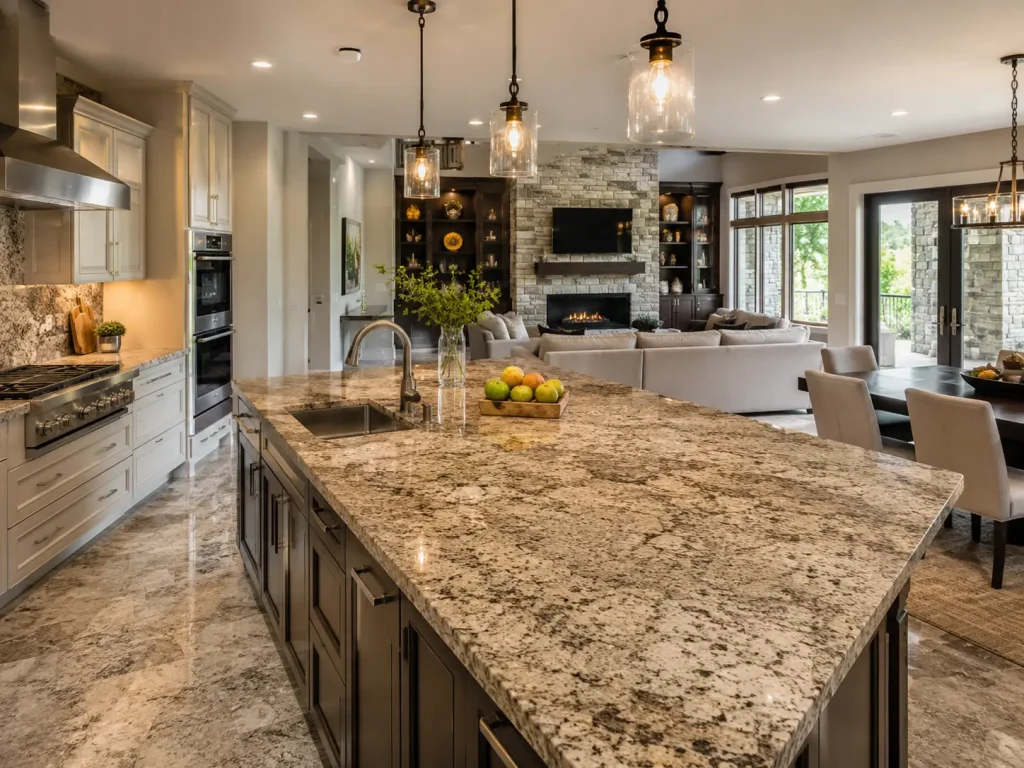
Granite is a natural igneous stone formed from slowly cooled magma deep within the earth. It is mainly composed of quartz, feldspar, mica, and other minerals. This crystalline mineral structure gives Granite its hardness, strength, granular appearance, and long-term durability.
Because it is formed under intense geological conditions, Granite is dense, strong, and suitable for demanding use. It can be cut into slabs, tiles, paving stones, stair treads, kerbstones, monuments, wall panels, and custom architectural pieces. That is why it appears everywhere from private kitchens to airports, public plazas, hotels, office lobbies, and landscape projects.
Why Granite Is Different from Softer Stones
Compared with marble, limestone, and travertine, Granite is generally harder and more resistant to scratching. Marble is often chosen for classic beauty, soft veining, and luxury interiors, while Granite is often selected for durability, practicality, and heavier-use surfaces. If marble is the elegant dinner jacket, Granite is the strong work boot that still looks good when polished.
This does not mean Granite is always better than marble. It means the application matters. For high-use kitchens, outdoor paving, stairs, and commercial floors, Granite often performs better. For soft decorative walls or classic luxury interiors, marble may still be preferred.
Common Granite Applications
Granite is used for kitchen countertops, bathroom vanity tops, flooring, stair treads, wall cladding, fireplace surrounds, outdoor paving, kerbstones, monuments, hotel flooring, commercial lobbies, building façades, landscaping projects, and public infrastructure. Its versatility is one of its strongest advantages for buyers who need one material category that can serve many markets.
Advantage 1: Granite Offers Excellent Durability for Long-Term Use
Hard Natural Stone Structure
The first major advantage of Granite is durability. Its dense crystalline structure helps it resist daily wear, pressure, abrasion, and surface damage better than many softer stones. In real projects, this means Granite can perform well in kitchens, corridors, stairs, entrance floors, hotel lobbies, shopping areas, office buildings, outdoor paths, and public spaces.
Buyers who need a stable project material should not only look at the colour. They should consider density, hardness, absorption, thickness, finish, slab quality, and intended use. A beautiful stone selected for the wrong environment can become a beautiful problem.
Granite in High-Traffic Areas
Granite is widely used in high-traffic areas because it can withstand repeated foot traffic when properly finished and installed. Hotel lobbies, commercial corridors, office floors, public staircases, and shopping centres often need materials that do not wear quickly. Granite’s high abrasion resistance makes it a strong candidate for these spaces.
For buyers interested in how Granite can support more premium interiors without making the space visually heavy, this guide on Granite slabs for luxury interiors explains how to use natural stone with restraint, balance, and stronger design control.
Buyer Pain Point
Many buyers make the mistake of choosing softer stones for heavy-use areas simply because the sample looks beautiful. The consequence can include scratches, dullness, edge wear, higher maintenance cost, and early replacement. Granite reduces that risk when correctly specified. The material is especially valuable when the project needs both natural stone beauty and long-term service life.

Advantage 2: Granite Has Strong Heat Resistance
Why Heat Resistance Matters in Kitchens
Kitchen surfaces face heat every day. Hot pans, kettles, baking trays, cookware, and cooking steam can damage weaker materials if the surface is not suited for heat exposure. Granite generally performs well under heat because it is natural stone formed under high-temperature geological conditions.
นี่คือหนึ่งในเหตุผล เคาน์เตอร์หินแกรนิต remain popular in kitchens. They provide a natural look while handling normal cooking environments better than many resin-based surfaces. Still, buyers should use trivets and heat pads because sealers, resins, natural fissures, or sudden thermal shock can still create risk. Granite is tough, not invincible. No stone enjoys being treated like a barbecue grill.
Granite vs Engineered Surfaces for Heat Exposure
Engineered quartz contains resin binder, which can be sensitive to prolonged direct heat. Granite, by contrast, is a natural mineral material and usually tolerates heat better. This makes Granite a practical choice for kitchens where cooking activity is heavy and homeowners want both durability and natural stone character.
For buyers evaluating whether Granite is a practical investment for kitchen surfaces, this article on เคาน์เตอร์หินแกรนิต provides a deeper buyer-focused discussion about value, performance, appearance, and long-term use.
Recommendation Logic
If the buyer prioritizes heat resistance, choose Granite. If the buyer prioritizes perfect pattern consistency, consider engineered quartz. If the buyer wants natural variation plus strong heat performance, Granite is a strong option. If the project involves outdoor exposure, Granite is usually safer than quartz because many quartz surfaces are not recommended for long-term direct UV exposure.
Advantage 3: Granite Resists Scratches Better Than Many Natural Stones
Mohs Hardness and Surface Performance
Granite commonly falls around 6–7 on the Mohs hardness scale, while marble and limestone are usually around 3–4. This makes Granite more resistant to scratching in daily use. It is not completely scratch-proof, but it is much more durable than softer natural stones.
This difference matters for countertops, flooring, stairs, and commercial surfaces. A kitchen countertop may face knives, plates, appliances, and cleaning tools. A floor may face shoes, dust, luggage wheels, and cleaning equipment. Granite’s hardness helps protect the surface from fast wear.
| วัสดุ | Typical Mohs Hardness | ความต้านทานรอยขีดข่วน | การใช้งานที่ดีที่สุด |
|---|---|---|---|
| หินแกรนิต | 6–7 | สูง | Countertops, floors, stairs, outdoor paving |
| หินอ่อน | 3–4 | Medium-low | Walls, bathrooms, luxury interiors |
| หินปูน | 3–4 | Medium-low | Soft interiors, wall cladding |
| ควอตซ์ | 6–7 | สูง | Countertops, vanities |
| พอร์ซเลน | 7–8 | สูงมาก | Walls, floors, thin panels |
Practical Use in Countertops and Flooring
Granite countertops resist knife marks better than marble, although cutting boards are still recommended. Granite flooring performs well in entrances, corridors, and public spaces. For commercial use, finish selection is essential because polished Granite may be elegant but slippery when wet, while flamed or textured Granite provides better grip.

Advantage 4: Granite Has Low Water Absorption and Good Stain Resistance
Why Water Absorption Matters
Water absorption affects stain resistance, freeze-thaw performance, hygiene, and long-term durability. Granite generally has lower water absorption than many softer stones. Typical water absorption may range around 0.05%–0.40%, depending on the specific variety and structure. Dense Granite is especially useful for kitchens, bathrooms, outdoor paving, and commercial floors.
Low absorption does not mean zero maintenance. Proper sealing improves stain resistance, especially for lighter colours and honed finishes. Oil, wine, coffee, sauces, pigments, and acidic liquids should still be cleaned quickly.
Does Granite Stain Easily?
Granite is stain-resistant when properly selected, sealed, installed, and maintained. It can still stain if it is unsealed, poorly sealed, porous, or exposed to strong pigments for a long time. Dark Granite often hides stains better than light Granite. Polished finishes usually resist absorption better than some honed finishes, but finish behaviour varies by stone type.
Buyer Mistake
The wrong assumption is: Granite never stains. The better logic is: Granite offers strong stain resistance when the stone type, finish, sealing, and maintenance plan match the application. This difference matters because buyers who expect “zero care” may be disappointed, while buyers who follow basic maintenance usually enjoy Granite for many years.
Advantage 5: Granite Works Well Outdoors
Weather Resistance
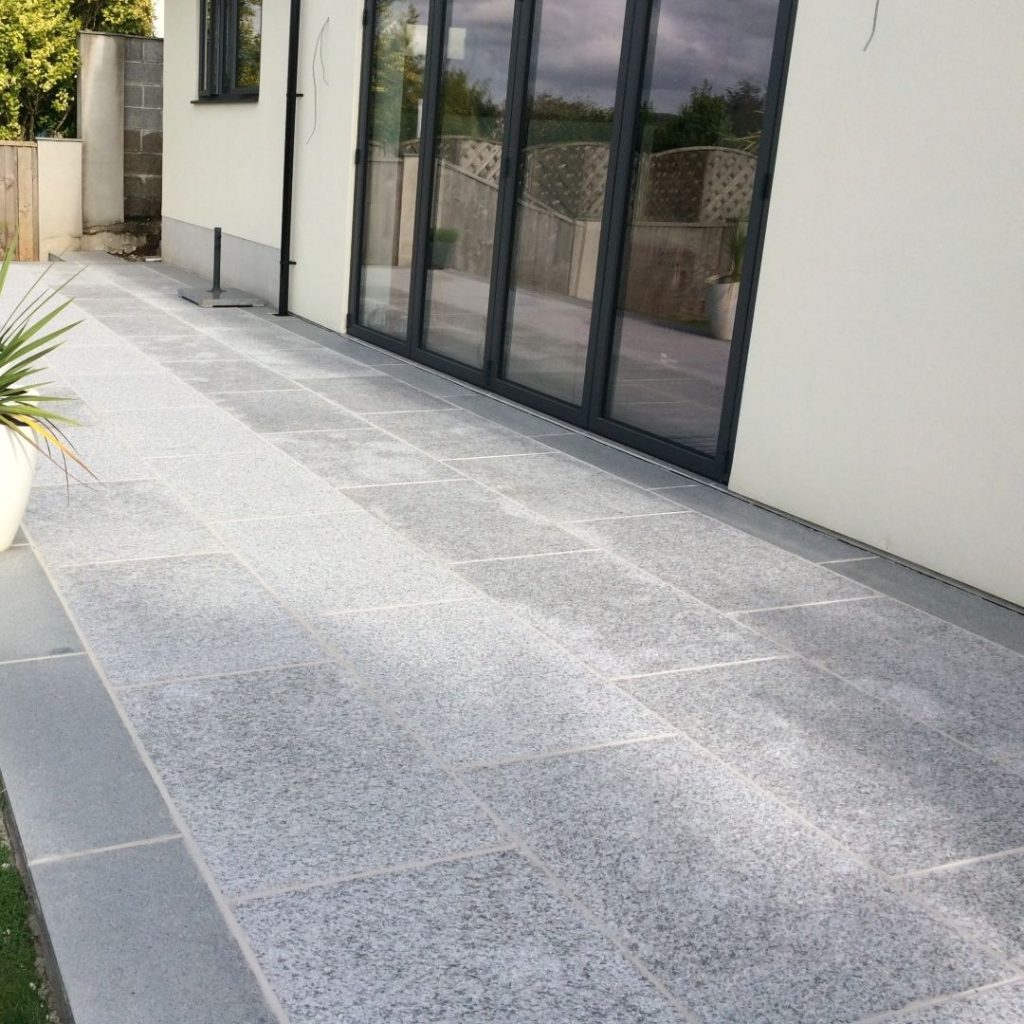
Granite performs well outdoors because it is dense, hard, and resistant to weathering. It is commonly used for paving, kerbstones, exterior steps, garden paths, public plazas, façades, outdoor flooring, landscape walls, and monuments. This makes it one of the most practical natural stones for exterior projects.
Outdoor Granite should usually be specified with a textured finish such as flamed, bush-hammered, sandblasted, or natural split. These finishes improve slip resistance and reduce glare. Polished Granite may look beautiful indoors, but outdoors it can become slippery and impractical.
Freeze-Thaw and Climate Considerations
In freeze-thaw climates, water absorption and installation quality matter. Dense Granite can handle outdoor conditions better than many porous stones, but proper drainage, substrate preparation, joint design, and installation method are still essential. If water collects beneath stone paving and freezes, even strong materials can face stress.
Best Outdoor Granite Applications
Granite is suitable for driveways, garden paths, kerbstones, public plazas, outdoor steps, patios, pool surroundings, exterior wall cladding, landscape edging, and commercial paving. For road and municipal projects, thickness and finish should match traffic load and safety standards.
Advantage 6: Granite Offers Wide Colour and Pattern Variety
Natural Colour Range
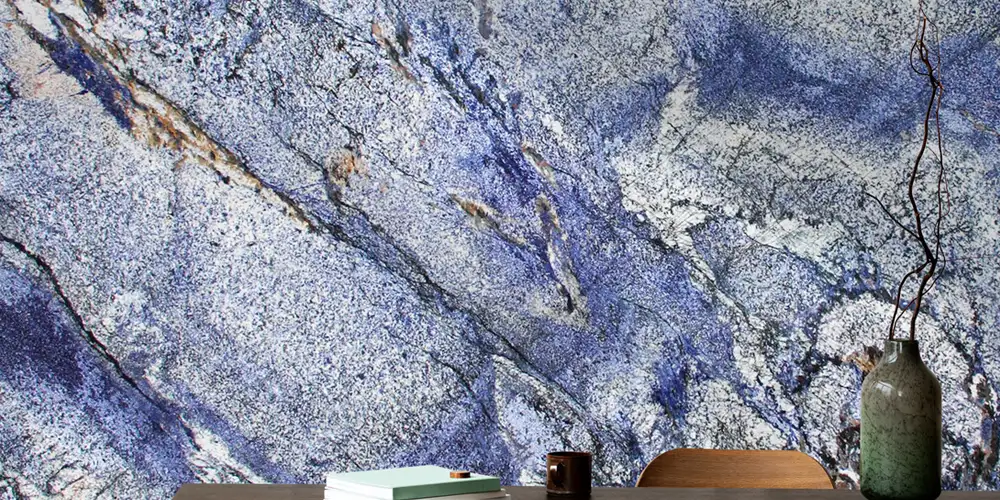
Granite is available in black, grey, white, yellow, red, green, brown, blue-toned, speckled, and veined varieties. Some Granite looks uniform and subtle, while other types have strong movement and colour depth. This makes Granite flexible for modern interiors, classic homes, commercial buildings, landscapes, and luxury projects.
For example, G603 is widely known as a light grey Granite suitable for many construction and design applications. Buyers who need a stable grey stone reference can review G603 Granite slabs for a clearer sense of how neutral Granite can be applied in practical projects.
Why Pattern Variety Helps Designers
Granite can be subtle or bold. It can support minimalist interiors, rustic outdoor designs, luxury commercial spaces, and durable public surfaces. Unlike some highly dramatic stones that dominate a space, many Granite varieties offer visual strength without becoming overwhelming.
Design Matching Logic
If the project needs modern minimalism, choose grey, black, or white Granite. If the project needs warm outdoor style, choose yellow, brown, or beige Granite. If the project needs luxury contrast, choose black or exotic Granite. If the project needs public flooring, choose stable, dense, consistent Granite with a practical finish.
For buyers interested in more expressive natural materials, this guide on Amazon Green Granite Quartzite slab shows how colour, pattern strength, and application logic influence high-end stone selection.
Advantage 7: Granite Supports Multiple Surface Finishes
หินแกรนิตขัดเงา
Polished Granite is glossy, reflective, and elegant. It is commonly used for kitchen countertops, bathroom vanities, interior walls, reception counters, and decorative surfaces. It enhances colour depth and makes the stone look more luxurious. However, polished Granite can be slippery when wet, so it is not always suitable for outdoor floors or wet stairs.
หินแกรนิตขัดหยาบ
Honed Granite has a matte surface with a softer visual effect. It works well in modern interiors, low-glare floors, and understated spaces. However, honed surfaces may show stains, fingerprints, or marks more easily than polished finishes, depending on the stone colour and sealing quality.
Flamed Granite
Flamed Granite is rough, textured, and slip-resistant. It is one of the most practical finishes for outdoor paving, steps, pool surroundings, public walkways, and exterior floors. It sacrifices gloss but gains safety and durability.
หินแกรนิตผิวหนัง
Leathered Granite has a textured but refined surface. It is popular for countertops, feature surfaces, and modern interiors because it hides fingerprints better than polished stone in some colours and adds tactile depth.
| เสร็จ | รูปร่าง | การใช้งานที่ดีที่สุด | Buyer Caution |
|---|---|---|---|
| ขัดเงา | Glossy and reflective | Countertops, walls, vanities | Slippery when wet |
| ลับคม | Matte and soft | Floors, modern interiors | May show stains |
| เปลวไฟ | Rough and textured | Outdoor paving, stairs | Not ideal for delicate interiors |
| หนัง | Textured and refined | Countertops, feature surfaces | Availability varies |
| Bush-Hammered | Strong texture | Public outdoor areas | Harder to clean |
Granite vs Marble vs Quartz: Which One Should Buyers Choose?
Granite vs Marble
Granite is harder, more scratch-resistant, and usually more practical for high-use areas. Marble is softer, more sensitive to acid, and often chosen for classic luxury and decorative surfaces. Choose Granite for durability, kitchens, floors, stairs, and outdoor use. Choose marble for elegant feature walls, bathrooms, and interiors where visual softness matters more than heavy-use performance.
Granite vs Quartz
Granite is natural stone with strong heat resistance and outdoor suitability. Quartz offers more pattern consistency, very low absorption, and easier colour matching for indoor projects. Granite is better when buyers want natural variation, heat performance, and exterior durability. Quartz is better when buyers want controlled patterns and indoor consistency.
Granite vs Porcelain
Porcelain is very hard, thin, and heat-resistant. Granite has natural depth, mass, and strong outdoor use history. Porcelain may require more specialized fabrication for edges, while Granite is traditional for paving, kerbstones, stairs, and heavy-use stonework.
| วัสดุ | Main Strength | Main Weakness | Best Choice If |
|---|---|---|---|
| หินแกรนิต | Durability, heat resistance, outdoor use | ต้องการการปิดผนึก | You want natural strength |
| หินอ่อน | Luxury veining and elegance | Etching, softer surface | You want classic beauty |
| ควอตซ์ | Consistency and low absorption | Heat/UV sensitivity | You want controlled patterns |
| พอร์ซเลน | Thin, hard, heat resistant | Edge complexity | You need thin panels |
Technical Specifications Buyers Should Know Before Choosing Granite
Typical Physical Properties of Granite
The values below are typical reference ranges for Granite. Actual performance varies by quarry, mineral composition, colour, block quality, finish, and testing standard. For large projects, buyers should request product-specific test data and inspection reports.
| คุณสมบัติ | ช่วงอ้างอิงทั่วไป | ทำไมจึงสำคัญ |
|---|---|---|
| ความหนาแน่น | 2.60–2.90 g/cm³ | Affects weight and installation |
| ความแข็งโมห์ส | 6–7 | Indicates scratch resistance |
| การดูดซึมน้ำ | 0.05%–0.40% | Affects stain and freeze-thaw resistance |
| ความแข็งแรงในการบีบอัด | 130–250 MPa | Shows load-bearing durability |
| ความแข็งแรงในการดัด | 10–25 MPa | Important for slabs and transport |
| ความต้านทานการสึกกร่อน | สูง | Important for floors and stairs |
| ความหนาทั่วไป | 18 / 20 / 30 mm | Depends on application |
Granite Weight Calculation
Granite is heavy, so logistics and installation planning matter. A simple estimate is:
Approximate weight = length × width × thickness × density
For example, a 3000 mm × 1400 mm × 20 mm Granite slab at 2.70 g/cm³ weighs around 227 kg before packaging. This affects crate design, container loading, site lifting, wall support, countertop installation, and handling equipment.
Thickness Selection by Application
| แอปพลิเคชัน | ความหนาที่แนะนำ | หมายเหตุ |
|---|---|---|
| เคาน์เตอร์ท็อป | 20–30 มม. | Edge profile and support matter |
| พื้นไม้ | 18–20 มิลลิเมตร | Finish and substrate matter |
| บันได | 20–30 มม. | Strength and anti-slip finish |
| การหุ้มผนัง | 18–20 มิลลิเมตร | Anchoring and weight support |
| การปูพื้นภายนอกอาคาร | 30–50 mm or more | Depends on traffic load |
| Kerbstones | Custom thick sizes | Depends on road/project standard |
Common Buyer Mistakes When Choosing Granite
Choosing Only by Colour
Colour matters, but it is not enough. Buyers should also evaluate finish, thickness, density, water absorption, defects, application, and maintenance requirements. A colour-first decision can create performance problems later.
Ignoring Finish Selection
The same Granite can behave very differently depending on finish. Polished Granite is elegant but slippery when wet. Flamed Granite is practical outdoors but too rough for some interiors. Honed Granite looks modern but may need more care against staining.
Assuming Granite Never Stains
Granite is stain-resistant, not stain-proof. Oil, pigments, wine, and strong liquids can stain if the surface is not sealed or maintained. Buyers should ask about sealing recommendations before installation.
Using Polished Granite Outdoors
Polished Granite outdoors can create glare and slip risk. Outdoor applications usually need textured finishes such as flamed, bush-hammered, sandblasted, or split surfaces.
Not Checking Slab Thickness and Flatness
Thickness variation and slab warping can create fabrication and installation problems. For countertops and large panels, flatness and thickness tolerance should be inspected before shipment.
Mixing Batches Without Inspection
Granite is natural stone. Colour and pattern may vary between batches. Buyers should confirm batch consistency before approving large commercial orders.
Choosing the Cheapest Supplier
The cheapest supplier may offer poor polishing, cracks, weak packing, wrong dimensions, delayed delivery, or unclear communication. A low price is not a bargain if the project loses time, material, and trust.
How to Choose a Reliable Granite Supplier
What a Good Supplier Should Provide
A reliable Granite supplier should provide full slab photos, slab videos, colour batch confirmation, available size and thickness, finish options, inspection reports, polishing quality checks, crack and repair disclosure, cut-to-size capability, packing photos, reinforced crates, export experience, project quantity planning, custom fabrication support, fast communication, and replacement support.
For buyers who need to evaluate company background, stone supply capability, and project service experience, the Granite manufacturer page can help review supplier positioning before requesting samples, slabs, or project quotations. For project communication, drawings, pricing, samples, or bulk order discussion, buyers can contact a Granite factory with size, finish, thickness, application, and quantity requirements.
Supplier Evaluation Scorecard
| Evaluation Factor | น้ำหนัก | What to Check |
|---|---|---|
| คุณภาพของวัสดุ | 20% | Colour, density, defects, surface quality |
| Processing Capability | 15% | Cutting, polishing, finishing |
| Slab Consistency | 15% | Batch control and matching |
| ตัวเลือกการเสร็จสิ้น | 15% | Polished, honed, flamed, leathered |
| Project Support | 10% | Cut-to-size, drawings, layout |
| Packing Quality | 10% | Crates, protection, loading |
| Export Experience | 10% | Documents and shipment handling |
Practical Recommendation: When Should Buyers Choose Granite?
Choose Granite If
Choose Granite if the project needs long-term durability, heat resistance, scratch resistance, outdoor performance, natural stone character, and lower maintenance than many softer stones. It is especially suitable for kitchens, floors, stairs, paving, kerbstones, commercial lobbies, hotel surfaces, and exterior applications.
Choose Marble If
Choose marble if the project prioritizes classic luxury veining, soft visual elegance, decorative wall surfaces, and the client accepts more maintenance. Marble is often better for feature walls, bathrooms, and refined interiors where dramatic durability is not the only goal.
Choose Quartz If
Choose quartz if the buyer wants consistent patterns, very low water absorption, controlled colour, and easy indoor maintenance. Quartz is excellent for many countertops and vanities, but Granite is usually stronger for direct heat tolerance and outdoor use.
Choose Porcelain If
Choose porcelain if thin panels, high heat resistance, wall cladding, or lightweight surfaces matter most. Porcelain can be excellent, but edge fabrication and installation details require careful planning.
Final Recommendation: Granite Is Strongest When Beauty and Function Both Matter
Granite remains one of the most practical natural stones because it combines durability, heat resistance, scratch resistance, low water absorption, outdoor performance, colour variety, finish flexibility, and long service life. It works across many applications, from kitchen countertops and hotel floors to outdoor paving and commercial stonework.
But Granite should not be selected blindly. Buyers should match colour, finish, thickness, surface texture, sealing plan, and supplier capability to the actual project environment. If outdoor paving is required, choose flamed or textured Granite. If kitchen countertops are the goal, polished or leathered Granite may work well. If wet floors are involved, avoid polished finishes. If luxury interior design is the target, use Granite in a controlled way so it adds depth without overdesigning.
For additional design strategy, this second guide on natural Granite stone can help buyers understand how to use Granite slabs in interiors without making the space feel visually heavy.
FAQ About Granite Advantages
1. ข้อดีหลักของหินแกรนิตคืออะไร?
ข้อดีหลักของหินแกรนิต ได้แก่ ความทนทานที่ยอดเยี่ยม ความแข็งแรงสูง ทนความร้อน ทนต่อรอยขีดข่วน การดูดซึมน้ำต่ำ ประสิทธิภาพในการใช้งานกลางแจ้ง สีสันหลากหลาย ผิวหน้าให้เลือกได้หลายแบบ และอายุการใช้งานยาวนาน หินแกรนิตเหมาะสำหรับใช้ทำเคาน์เตอร์ครัว โต๊ะเครื่องแป้งในห้องน้ำ พื้น บันได ผนังตกแต่ง ปูพื้น ขอบทางเท้า และโครงการเชิงพาณิชย์ โดยเฉพาะอย่างยิ่งเมื่อผู้ซื้อต้องการหินธรรมชาติที่สามารถรองรับการใช้งานหนักได้และยังคงรักษาลักษณะภายนอกที่ดูพรีเมียมไว้ได้อย่างดี
2. หินแกรนิตเหมาะสำหรับใช้ทำเคาน์เตอร์ครัวหรือไม่?
ใช่แล้ว หินแกรนิตเหมาะอย่างยิ่งสำหรับเคาน์เตอร์ครัว เพราะมีคุณสมบัติทนความร้อนสูง ทนต่อรอยขีดข่วน มีความสวยงามตามธรรมชาติ และมีความทนทานยาวนาน สามารถใช้งานได้ดีในสภาพแวดล้อมการทำอาหารที่เกิดขึ้นทุกวัน และรองรับเครื่องครัวร้อนได้ดีกว่าพื้นผิวที่ทำจากเรซินหลายชนิด อย่างไรก็ตาม ควรเคลือบผิวหินแกรนิตอย่างถูกต้อง ทำความสะอาดเป็นประจำ และปกป้องด้วยที่วางภาชนะและเขียง เพื่อรักษาสภาพภายนอกและป้องกันการเกิดคราบสกปรก
3. หินแกรนิตดีกว่าหินอ่อนหรือไม่?
โดยทั่วไปแล้ว หินแกรนิตจะดีกว่าหินอ่อนสำหรับพื้นที่ที่มีการใช้งานหนัก เนื่องจากหินแกรนิตแข็งกว่า ทนต่อรอยขีดข่วนได้ดีกว่า และมักเหมาะกับห้องครัว พื้น บันได และการใช้งานภายนอกมากกว่า ขณะที่หินอ่อนนั้นอ่อนกว่า ไวต่อกรดมากกว่า และมักต้องการการดูแลรักษาที่มากกว่า แต่หินอ่อนก็ให้ลวดลายแบบคลาสสิกและความนุ่มนวลทางสายตาที่สง่างาม การเลือกสิ่งที่เหมาะสมที่สุดขึ้นอยู่กับว่าโครงการนั้นให้ความสำคัญกับความทนทานหรือความหรูหราในการตกแต่งเป็นหลัก
4. หินแกรนิตสามารถใช้กลางแจ้งได้หรือไม่?
ใช่ หินแกรนิตสามารถใช้งานกลางแจ้งได้ และมักถูกกำหนดให้ใช้สำหรับปูพื้น บันได ขอบทางเท้า ลานระเบียง เส้นทางเดินในสวน ลานสาธารณะ การหุ้มผนังภายนอก และโครงการจัดภูมิทัศน์ สำหรับการใช้งานกลางแจ้ง ผิวหน้าที่ผ่านการเผาไฟ ตีด้วยค้อนแบบพุ่มไม้ ฉีดทราย หรือผ่าแยก มักจะเหมาะสมกว่าผิวหน้าขัดมัน เพราะช่วยเพิ่มแรงเสียดทานกันลื่นได้ดีกว่า การระบายน้ำที่เหมาะสม การเตรียมพื้นผิว และการติดตั้งที่ถูกต้องล้วนมีความสำคัญต่อประสิทธิภาพในการใช้งานระยะยาว
5. ฉันจะเลือกหินแกรนิตคุณภาพสูงได้อย่างไร?
ในการเลือกหินแกรนิตคุณภาพสูง ผู้ซื้อควรตรวจสอบภาพถ่ายหรือวิดีโอของแผ่นหินทั้งแผ่น ยืนยันความสม่ำเสมอของสี ตรวจสอบความหนาและความเรียบของพื้นผิว ตรวจดูคุณภาพของการตกแต่งผิว หาจุดแตกหรือรอยซ่อมแซม ตรวจสอบความเหมาะสมต่อการใช้งาน และประเมินความน่าเชื่อถือของผู้จัดจำหน่าย สำหรับโครงการขนาดใหญ่ ผู้ซื้อยังควรยืนยันความเข้ากันได้ระหว่างล็อต วิธีการบรรจุภัณฑ์ รายงานการตรวจสอบ ความสามารถในการตัดตามขนาดที่กำหนด และประสบการณ์ในการส่งออก ก่อนสั่งซื้อสินค้าจำนวนมาก
อ้างอิง
1. Dimension Stone Design Manual, Natural Stone Institute, Technical Design Resource.
2. Stone in Architecture: Properties, Durability, Siegfried Siegesmund and Rolf Snethlage, Springer.
3. Natural Stone: A Guide to Selection, Michael S. Lewis, Architectural Stone Reference.
4. ASTM C615 Standard Specification for Granite Dimension Stone, ASTM International.
5. Natural Stone Care and Maintenance Guide, Natural Stone Institute, Care Resource.
6. Architectural Graphic Standards, American Institute of Architects, Wiley.
7. Building Stone: Properties, Durability, and Performance, Geological Society Engineering Group.
8. Exterior Stone Paving and Cladding Performance Guide, Stone Federation Technical Resource.
Strategic Insight: How Buyers Should Evaluate Granite Advantages
What are the main advantages of Granite? Granite offers strong durability, heat resistance, scratch resistance, low water absorption, outdoor performance, wide colour variety, multiple finish options, and long service life. It is suitable for countertops, flooring, stairs, paving, wall cladding, kerbstones, and commercial projects.
Why does Granite perform well in demanding areas? Granite has a dense crystalline structure, typical Mohs hardness of 6–7, and strong compressive strength. These properties make it more resistant to daily wear than many softer natural stones such as marble or limestone.
How should buyers choose the right Granite? If the project is a kitchen countertop, choose polished or leathered Granite with proper sealing. If the project is outdoor paving, choose flamed or textured Granite. If the project is a wet floor or stair, avoid polished finishes and prioritise slip resistance. If the project needs calm luxury, select a stable colour and avoid overly busy patterns.
What options should buyers compare? Buyers should compare Granite with marble, quartz, porcelain, and limestone according to heat resistance, scratch resistance, stain resistance, outdoor suitability, maintenance expectations, finish options, and visual style. Granite is often strongest when both durability and natural stone character are required.
What mistakes should buyers avoid? Avoid choosing only by colour, ignoring finish selection, assuming Granite never stains, using polished Granite outdoors, skipping slab inspection, mixing batches without confirmation, and selecting the cheapest supplier without checking quality control, packing, and export experience.