Quick Summary: Are Marble Tiles a Good Choice for Bathrooms?
Marble Tiles in Bathrooms: Beautiful, Practical, But Not Automatic
Many homeowners, designers, contractors, and hotel project buyers face the same question: should they choose real marble tiles or porcelain tiles that imitate Carrara, Calacatta, Thassos, or other white marble looks? The hesitation is understandable. Porcelain is consistent and easier to maintain, while marble offers natural veining, timeless beauty, and a luxury feeling that printed surfaces often struggle to reproduce.
The honest answer is simple: Мраморная плитка are excellent for bathrooms, but only when the material is matched to the correct surface. Bathroom walls, vanity walls, shower walls, feature panels, and powder rooms are some of the best places to use marble. Bathroom floors and shower floors can also use marble, but finish selection, slip control, waterproofing, grout quality, and maintenance become much more important.
If you are planning a premium bathroom, hotel suite, villa renovation, apartment upgrade, or commercial restroom, professional marble stone selections can help you compare colors, finishes, formats, and project suitability before choosing the final bathroom material. The goal is not to choose marble because it looks beautiful in a photo. The goal is to choose a bathroom surface that still looks good after years of water, soap, cleaning, and daily use.
Что такое мраморная плитка?
Basic Definition of Marble Tiles
Marble Tiles are natural stone tiles cut from marble slabs or blocks and processed into specific sizes, finishes, and thicknesses. Marble itself is a metamorphic natural stone formed from limestone or dolomite under heat and pressure. This geological process creates the natural veining, soft mineral movement, and elegant surface depth that make marble popular in bathrooms, kitchens, hotel interiors, villas, and luxury commercial spaces.
Common finishes include polished, honed, brushed, tumbled, sandblasted, and textured surfaces. Polished marble tiles offer a glossy and reflective look, which is excellent for bathroom walls and vanity backgrounds. Honed marble tiles provide a softer matte finish and are often more practical for bathroom floors. Tumbled or textured marble can be useful where grip and softer visual texture matter.
Why Marble Tiles Are Popular in Bathrooms
Bathrooms are smaller spaces where premium materials create a strong impact. White marble tiles can refresh a bathroom and make it feel brighter, cleaner, and more spacious. Grey marble tiles create a calm modern atmosphere. Beige and cream marble tiles feel warm and hotel-like. Black marble tiles add depth, contrast, and drama to powder rooms or feature walls.
Natural marble also gives each bathroom a unique look. Porcelain can imitate marble, but it cannot fully duplicate the random mineral movement and natural variation of real stone. For luxury projects, this uniqueness matters. A bathroom is not only a functional room; it is often the space where buyers judge craftsmanship, hygiene, comfort, and property value.
Are Marble Tiles Good for Bathroom Walls?
Bathroom Walls Are One of the Best Uses for Marble Tiles
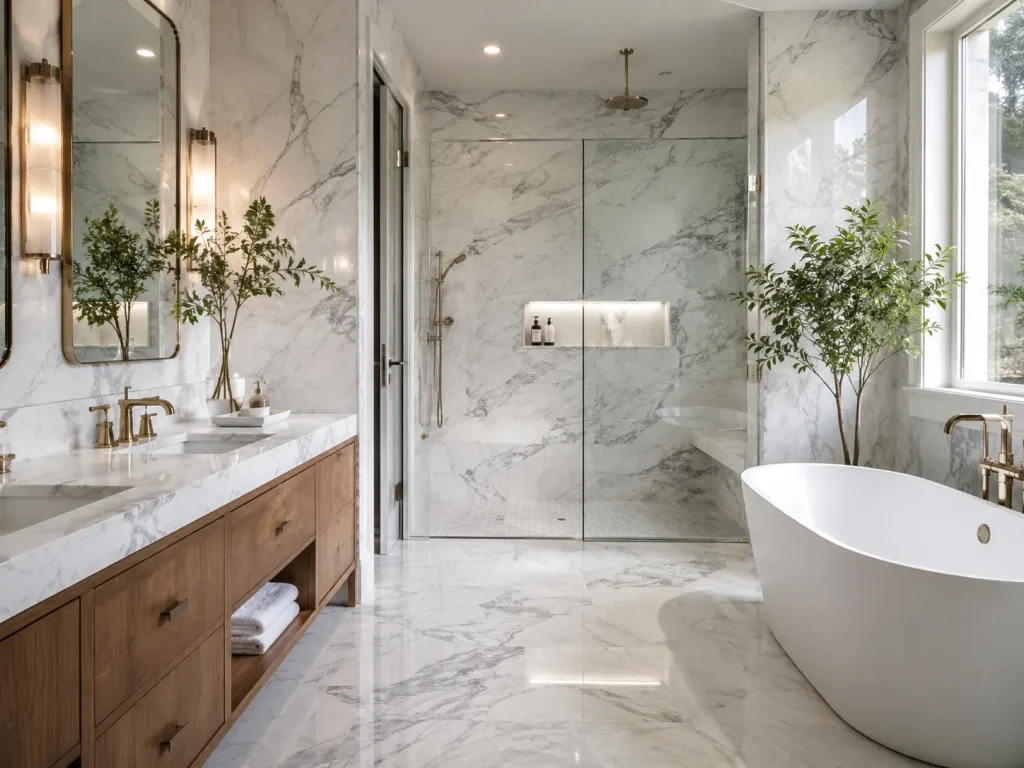
Yes, marble tiles are especially good for bathroom walls. Walls usually face less abrasion than floors, so marble can be used mainly for visual effect, natural veining, brightness, and luxury value. Polished marble wall tiles are very popular because they reflect light and create a clean, spa-like atmosphere. Honed marble wall tiles are better when the bathroom needs a softer and more modern look.
Marble bathroom walls are suitable for shower walls, vanity backgrounds, bathtub surrounds, feature walls, powder rooms, spa walls, and hotel bathroom walls. Large-format marble wall tiles can reduce grout lines and create a slab-like appearance. Smaller marble tiles can create more rhythm and design detail. For large walls, buyers should approve dry layout or slab photos before cutting, because marble color and veins vary naturally.
Best Bathroom Wall Areas for Marble Tiles
Marble tiles work well behind vanities, around bathtubs, inside shower walls, along decorative niches, and on feature walls. For shower walls, waterproofing is critical. Tile is not the waterproofing system by itself. The wall substrate, membrane, adhesive, grout, corners, and sealing all need to be specified correctly.
If the wall is mainly decorative, polished marble can work beautifully. If the wall is inside a wet shower, use natural-stone-compatible adhesive, proper waterproofing, suitable grout, and maintenance-friendly detailing. If the wall uses strong veining, confirm the layout before installation. Otherwise, the finished wall may look like several unrelated stones were invited to the same party.
Are Marble Tiles Good for Bathroom Floors?
Marble Bathroom Floors Can Work, But Finish Matters
Marble tiles can be used for bathroom floors, but the finish must match the wet conditions. Polished marble looks elegant, but it can become slippery when wet, especially with soap residue, shampoo, cleaning products, or standing water. Honed, brushed, tumbled, or textured marble tiles are usually safer choices for bathroom floors and shower floors.
Small-format marble mosaic tiles can also be practical for shower floors because more grout joints may improve grip. However, grout choice, slope, drainage, waterproofing, and cleaning routine still matter. Marble is not the problem when a bathroom floor fails; poor specification and poor installation usually are. Tiny detail, big repair bill. Bathroom floors are not forgiving.
For buyers concerned about wet-floor safety, a detailed guide on marble floor tiles anti-slip performance can help compare polished, honed, textured, and mosaic options before deciding where marble should be installed.
| Bathroom Floor Condition | Recommended Marble Tile Choice | Лучший финиш | Risk to Avoid |
|---|---|---|---|
| Dry powder room floor | Decorative marble tiles | Полировка или шлифовка | Over-polished surface near water |
| Main bathroom floor | Dense marble floor tiles | Отточенный | Slip and stain risk |
| Shower floor | Small marble mosaic tiles | Honed, tumbled, or textured | Polished wet surface |
| Hotel bathroom floor | Durable marble tiles | Honed or textured | Maintenance neglect |
| Spa bathroom floor | Slip-aware marble tiles | Brushed or tumbled | Soap residue buildup |
| Luxury villa floor | Large-format marble tiles | Honed or polished depending on zone | Poor sealing and lippage |
Популярный золотой паук мрамор для пола и стены плитки
|
|
|
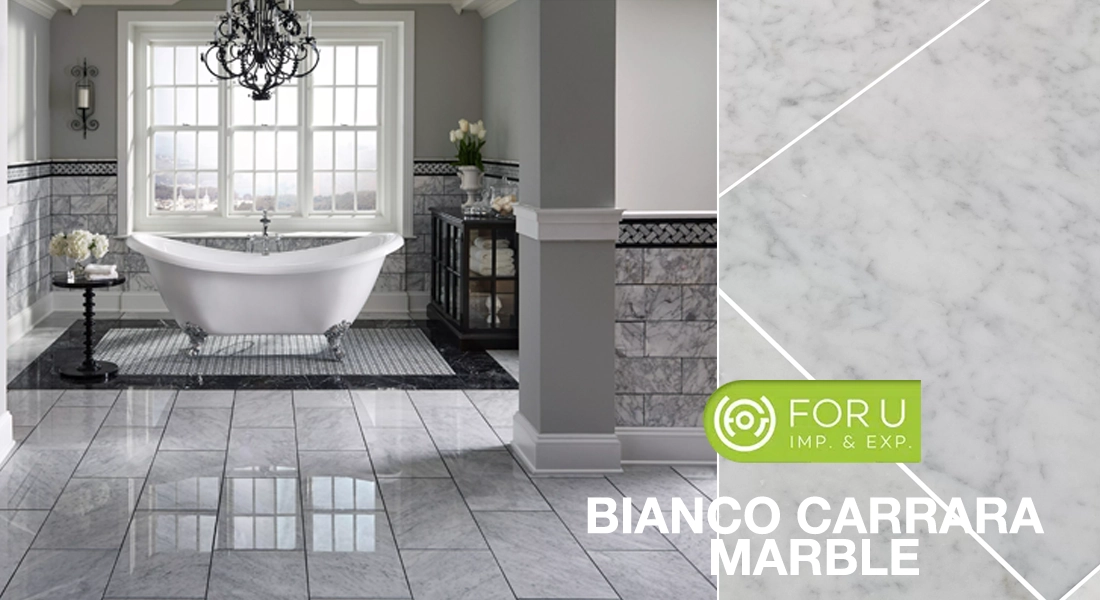

Marble Tiles for Shower Walls and Shower Floors
Marble Tiles for Shower Walls
Shower walls are one of the most attractive places to use marble tiles. The natural veins create a calm luxury effect, especially with white, grey, beige, and soft cream marble. White marble shower walls can make a small bathroom feel larger and cleaner. For buyers comparing different white stone looks, the white marble slabs guide can also help explain how Carrara, Calacatta-style, Thassos-style, and other white marbles differ in tone, veining, and sourcing logic.
For shower walls, the key technical points are waterproofing membrane, natural-stone adhesive, suitable grout, sealing, ventilation, and cleaning routine. Marble can be sealed, but sealing is not a substitute for waterproofing. The wall system must manage moisture before it reaches the stone and substrate.
Marble Tiles for Shower Floors
Shower floors are more demanding than shower walls. They receive direct water, soap, standing moisture, body oils, cleaning products, and daily foot contact. If marble is used on a shower floor, smaller tiles, honed finishes, tumbled surfaces, or textured mosaics are usually safer than large polished tiles.
Some buyers worry about sealing marble in showers. The practical answer is not “always seal everything blindly” or “never seal marble in showers.” The correct approach is to follow the stone supplier and installer’s recommendation based on marble type, finish, waterproofing system, grout, ventilation, and local conditions. If water is trapped behind poorly installed tile, the problem is usually the assembly, not simply the sealer.
Key Advantages of Marble Tiles in Bathrooms
Luxury Appearance and Natural Veining
Marble gives bathrooms a natural luxury that ceramic and porcelain often imitate but rarely fully replace. The veining, depth, and crystal movement make the surface feel alive. This is why marble is widely used in hotel bathrooms, luxury apartments, villas, spas, and premium residential projects.
Brightness and Spacious Feeling
Light marble tiles can make bathrooms feel more open. White, cream, and soft grey marble are especially useful in small bathrooms because they reflect more light and reduce visual heaviness. This is why many homeowners choose Carrara-style, Calacatta-style, Thassos-style, Volakas-style, or other light marble designs for bathroom walls and floors.
Гибкость конструкции
Marble tiles can be used on walls, floors, shower niches, vanity backsplashes, bathtub surrounds, mosaic floors, feature panels, and borders. A bathroom can use large-format marble wall tiles with a small-format mosaic shower floor. It can also combine polished wall tiles with honed floor tiles. This flexibility helps designers balance beauty and safety.
Long-Term Interior Value
High-quality marble tiles support premium property positioning. In hotels, bathrooms influence guest perception. In apartments, marble bathroom packages can help differentiate higher-end units. In villas, marble bathrooms create emotional value. People may forget the brand of the towel rack, but they remember a beautiful marble bathroom.

Risks and Limitations of Marble Tiles in Bathrooms
Marble Is Natural Stone, Not Plastic Armor
Marble is durable, but it is not maintenance-free. It is more sensitive to acids than porcelain or granite. Vinegar-based cleaners, lemon-based cleaners, strong descalers, and harsh bathroom chemicals can dull or etch the surface. Soap residue and hard water can also leave film if the bathroom is not cleaned correctly.
Staining and Surface Care
Bathroom marble tiles may be exposed to cosmetics, hair dye, shampoo, soap, oils, cleaning products, and hard water minerals. Proper sealing helps reduce staining risk, but sealing does not make marble invincible. Spills and chemical residues should be cleaned quickly with pH-neutral products.
For buyers who care about long-term cleanliness, a practical article on how marble tiles keep surfaces spotless can help explain how sealing, cleaner choice, and routine maintenance reduce staining and dullness in real interiors.
Slip Risk on Wet Floors
Polished marble on a dry wall is usually not a problem. Polished marble on a wet floor is a different discussion. Water, soap, shampoo, slope, footwear, and cleaning residue all affect slip behavior. For bathroom floors, honed or textured surfaces are usually more practical than glossy polished finishes.
Color Variation and Batch Matching
Natural marble tiles may have slightly different colors and veins. Replacement tiles from the same batch are easier to match. For large bathrooms, hotel projects, or apartment projects, buyers should request batch photos and keep extra tiles for future replacement. Otherwise, one damaged tile may become surprisingly difficult to match later.
Scientific Material Parameters for Bathroom Marble Tiles
Marble performance varies by quarry, stone type, thickness, surface finish, and test method. The following data gives general reference ranges. For commercial bathroom projects, hotel bathrooms, wet areas, or large orders, buyers should request actual technical data from the supplier.
| Parameter | Typical Marble Reference Range | Why It Matters in Bathrooms |
|---|---|---|
| Плотность | About 2.55–2.75 g/cm³ | Affects tile stability and wall weight |
| Поглощение воды | Often 0.1%–0.6% | Important for wet walls and floors |
| Твердость по Моосу | About 3–4 | Affects scratch sensitivity |
| Прочность на сжатие | Often 50–140 MPa | Relevant for floor durability |
| Прочность на изгиб | Often 7–20 MPa | Important for larger wall and floor tiles |
| Common wall thickness | 10–15 mm | Affects weight and installation method |
| Common floor thickness | 12–18 mm | Affects load and stability |
ASTM C503 is commonly associated with marble dimension stone. ASTM C97 supports absorption and bulk specific gravity testing, ASTM C170 supports compressive strength evaluation, and ASTM C880 supports flexural strength testing. ANSI A326.3 / DCOF may support slip performance evaluation for hard surface flooring, but no test replaces project judgment. Bathroom safety also depends on finish, slope, drainage, soap, cleaning, and maintenance.
Marble Tiles vs Other Bathroom Tile Materials
Marble Tiles vs Porcelain Tiles
Porcelain tiles are easier to maintain, lower in absorption, and more consistent in appearance. They are strong for commercial bathrooms, rental apartments, and low-maintenance projects. Marble tiles offer natural veining, luxury value, and a premium atmosphere that porcelain can imitate but not fully duplicate.
If low maintenance is the top priority, porcelain may be better. If natural beauty and high-end design are the top priority, marble tiles are stronger. If the project is a luxury bathroom wall, marble is often worth the investment. If the project is a high-traffic public shower floor, porcelain may be safer.
Marble Tiles vs Granite Tiles
Granite is harder and often more practical for heavy-use floors. Marble is usually more elegant for bathroom walls and luxury interiors. For bathrooms, the choice depends on application. Marble is excellent for vanity walls, shower walls, and feature surfaces. Granite may be considered for high-use floors where scratch resistance and lower maintenance matter more.
For buyers comparing bathroom materials beyond tile format, the article on marble slabs vs granite slabs for kitchens and bathrooms can help clarify how natural stone type affects performance, maintenance, and design value.
Marble Tiles vs Ceramic Tiles
Ceramic tiles are budget-friendly and easy to source. They work for simple bathroom walls and light-use areas. Marble tiles are more expensive, but they create a much stronger luxury impression. For high-end bathrooms, ceramic may feel ordinary unless the design is intentionally simple or cost-driven.
Marble Tiles vs Quartz Surfaces
Quartz surfaces are mostly used for vanity tops rather than full bathroom floors and walls. They are non-porous and consistent, but they do not offer the same tile flexibility as marble. Marble tiles are easier to apply across walls, floors, niches, and feature zones.
| Материал | Main Strength | Main Limitation | Best Bathroom Use |
|---|---|---|---|
| Мраморная плитка | Natural luxury and elegant veining | Needs sealing and careful cleaning | Walls, floors, shower walls, vanity areas |
| Керамогранит | Low absorption and easy maintenance | Less natural stone character | Wet floors, showers, commercial bathrooms |
| Керамическая плитка | Affordable and decorative | Lower luxury value | Budget walls and light-use floors |
| Гранитная плитка | Hard and durable | Less soft veining | Heavy-use floors and public bathrooms |
| Quartz Surfaces | Non-porous and consistent | Mainly for vanity tops | Bathroom vanities and countertops |
Best Marble Tile Colors for Bathrooms
Белая мраморная плитка
White marble tiles are the classic bathroom choice. They create brightness, cleanliness, and timeless luxury. Carrara-style, Calacatta-style, Thassos-style, Statuario-style, and Volakas-style marble are often used for walls, shower areas, vanity backgrounds, and floors. White marble works especially well with gold fixtures, brushed nickel, natural wood, and soft lighting.
Плитка под серый мрамор
Grey marble tiles are modern, calm, and less visually bright than white marble. They suit apartment bathrooms, hotel bathrooms, minimalist interiors, and spaces where designers want a softer contemporary mood. Grey marble can also hide some daily marks better than pure white surfaces.
Зеленая мраморная плитка
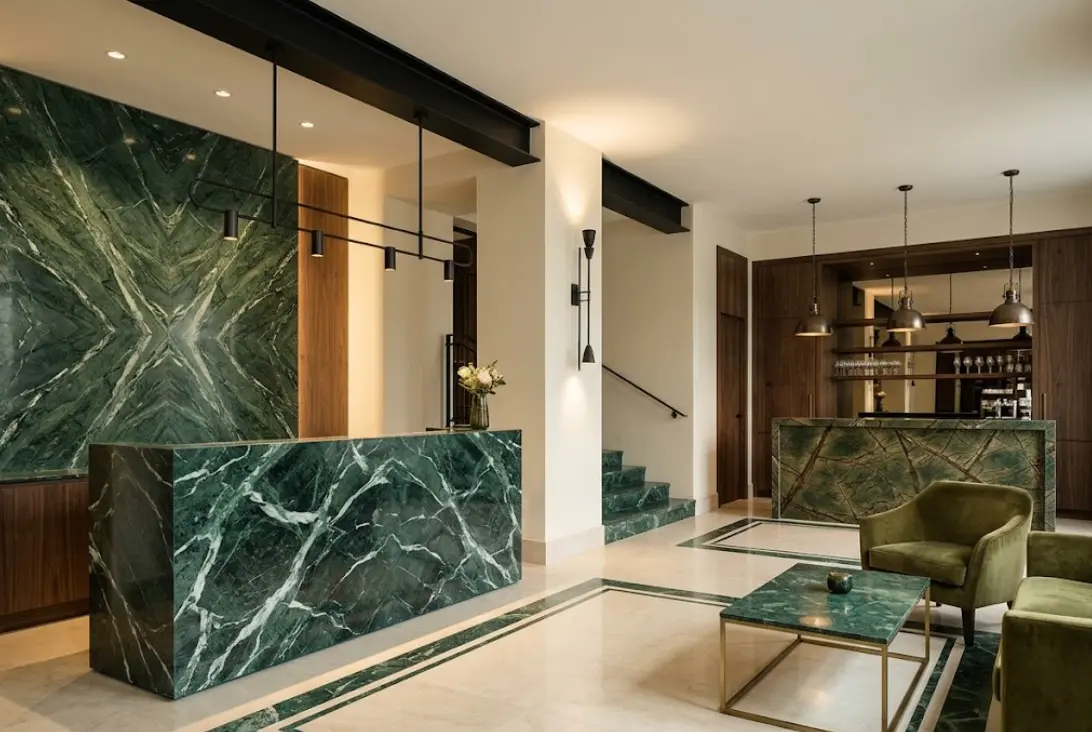
Green marble tiles are more expressive and are often used for statement walls, powder rooms, spa bathrooms, and boutique hotel interiors. They add depth and natural personality. Buyers comparing color direction can review grey marble vs green marble for bathrooms to understand how color affects mood, maintenance perception, and design positioning.
Плитка под черный мрамор
Black marble tiles create drama and contrast. They work well in powder rooms, luxury feature walls, boutique hotel bathrooms, and high-end commercial restrooms. They should be used carefully in small bathrooms because dark stone can make the space feel smaller if lighting is weak.
Common Bathroom Applications for Marble Tiles
Residential Bathrooms
In homes, marble tiles are used for vanity walls, bathroom floors, shower walls, bathtub surrounds, shower niches, and feature panels. For family bathrooms, honed floors and polished walls are a practical combination. For powder rooms, stronger patterns and darker colors can create visual drama.
Hotel Bathrooms
Hotels use marble tiles because bathrooms strongly influence guest satisfaction. Marble can make a room feel more expensive, cleaner, and more memorable. However, hotel bathrooms also require maintenance planning, replacement stock, grout management, and slip-aware floor specification.
Apartment Bathrooms
Apartment projects often use marble tiles in premium units, lobby restrooms, and upgrade packages. For rental or high-use units, porcelain may be used on floors while marble is reserved for walls or vanity zones. This balances design value with maintenance control.
Spa and Wellness Bathrooms
Marble supports a calm, natural, wellness-focused atmosphere. Beige, cream, grey, and warm white marble are popular in spas because they feel soft and relaxing. For wet floors, finish and cleaning method are critical because soap and oils may affect slip behavior.
Installation Requirements for Bathroom Marble Tiles
Waterproofing Comes First
Tile is not waterproofing. This sentence should be printed on every bathroom project folder. Marble tiles can perform well in wet areas, but the substrate and waterproofing system must be correct. Shower walls, shower floors, bathtub surrounds, and wet bathroom zones require proper membranes, corners, drains, and curing time.
Choose the Right Adhesive and Grout
Use natural-stone-compatible adhesive and grout. Some adhesives or grouts may stain light marble or cause installation problems. Grout color also affects design. White grout creates a cleaner look, grey grout can reduce contrast, and dark grout can create stronger pattern lines.
Seal Marble and Grout Properly
Sealing helps reduce staining and moisture absorption, but it does not make marble maintenance-free. The sealing schedule depends on marble type, finish, use intensity, cleaning products, and installer recommendation. In wet showers, sealing must work together with correct waterproofing and ventilation.
Plan Slope and Drainage
Shower floors need proper slope to prevent standing water. Standing water increases maintenance problems, soap film, discoloration, and possible slip risk. Drainage design is not glamorous, but neither is tearing out a failed shower floor.
Dry Layout for Vein Matching
Large-format marble bathroom walls should be laid out before installation. Dry layout helps control vein direction, color transitions, and visual balance. This is especially important for white marble, grey marble, and dramatic colored marble.
Maintenance Guide for Marble Tiles in Bathrooms
Ежедневная уборка
Use a soft cloth, warm water, mild soap, or pH-neutral cleaner. Wipe surfaces regularly to prevent soap film, hard water marks, and cosmetic residue. For shower walls, rinsing and drying after use can greatly reduce buildup.
Avoid Acidic Cleaners
Do not use vinegar, lemon-based cleaners, harsh descalers, abrasive powders, or strong bathroom chemicals on marble. These can etch or dull the surface. Always use cleaners suitable for natural stone.
Manage Soap Residue and Hard Water
Soap residue and hard water are common bathroom issues. Good ventilation, regular wiping, suitable cleaners, and periodic inspection help protect the surface. In hotels or commercial bathrooms, cleaning staff should be trained not to use aggressive chemicals on marble.
Resealing Schedule
Resealing depends on the marble type, finish, frequency of use, and supplier or installer guidance. High-use bathrooms may need more frequent inspection than powder rooms. A simple water-drop test can sometimes indicate whether the surface absorbs moisture quickly, but professional guidance is better for large projects.
Common Mistakes When Using Marble Tiles in Bathrooms
Mistake 1: Choosing Polished Marble for Every Surface
Polished marble is beautiful for walls and vanity backgrounds, but it is not always ideal for wet floors. Use finish selection based on actual water exposure and foot traffic.
Mistake 2: Thinking Marble Is Maintenance-Free
Marble is durable, but it needs pH-neutral cleaning, sealing, and fast spill management. If the buyer wants almost zero maintenance, porcelain should be compared seriously.
Mistake 3: Skipping Waterproofing
Waterproofing failures are installation failures, not marble failures. A beautiful marble shower with poor waterproofing is still a future problem wearing expensive clothes.
Mistake 4: Ignoring Batch Photos
Natural marble varies. Large bathrooms, hotel projects, and apartment projects should request batch photos, slab photos, or dry layout approval before shipment.
Mistake 5: Using Harsh Bathroom Cleaners
Strong cleaners may etch or dull marble. This is common in commercial bathrooms where cleaning teams use aggressive chemicals. Maintenance instructions should be clear before handover.
How to Choose Marble Tiles for Bathroom Projects
If You Need Bathroom Walls
Choose polished or honed marble tiles with beautiful veining, proper sealing, waterproofing, and layout approval. Walls are the safest place to create strong marble impact.
If You Need Bathroom Floors
Choose honed, brushed, tumbled, or textured marble tiles with slip-aware planning. Avoid using polished marble blindly in wet floor zones.
If You Need Shower Walls
Choose marble with suitable absorption performance, compatible adhesive, strong grout, sealing, waterproofing, and ventilation. Large-format tiles should be planned carefully.
If You Need Hotel Bathroom Projects
Request technical data, batch photos, dry layout, replacement stock, packing details, and maintenance instructions. Hotels need not only beauty but also repeatable supply and after-sales control.
If You Need Wholesale or Custom Orders
Work with a reliable marble tiles manufacturer that can support custom size, finish, thickness, quality control, and export packing. For B2B bathroom projects, supplier quality affects installation speed, color consistency, breakage rate, and replacement planning.
Before placing a bulk order, share the bathroom application area, preferred marble color, size, finish, thickness, quantity, drawings, and installation environment through a marble tiles supplier consultation. This helps avoid the classic mistake of buying a beautiful marble tile that is wrong for the bathroom zone.
Buyer Decision Table: Which Marble Tiles Should You Choose for Bathrooms?
| Bathroom Need | Recommended Marble Tile | Лучший финиш | Risk to Avoid |
|---|---|---|---|
| Vanity wall | White or grey marble tiles | Полировка или шлифовка | Poor vein layout |
| Стена душевой | Low-absorption marble tiles | Honed or polished | Weak waterproofing |
| Shower floor | Small-format marble mosaic | Honed or tumbled | Slippery polished surface |
| Main bathroom floor | Dense marble tiles | Отточенный | Stains and slip risk |
| Hotel bathroom wall | Vein-matched marble tiles | Полированный | Batch mismatch |
| Spa bathroom | Beige or warm marble tiles | Honed or brushed | Soap residue buildup |
| Powder room | Dramatic marble tiles | Полированный | Overly busy design |
| Bulk project | Factory-inspected marble tiles | Project-specific | Weak packing and inconsistent color |
Quality Control Checklist for Bathroom Marble Tile Buyers
For bathroom projects, QC should begin before production. Buyers should confirm marble variety, color range, tile size, thickness, finish, water absorption data if needed, batch photos, dry layout for walls, edge quality, packing method, pre-shipment inspection, and maintenance instructions.
| QC Item | Почему это важно | Buyer Action |
|---|---|---|
| Разновидность мрамора | Controls color, veining, and performance | Confirm before production |
| Finish sample | Affects slip behavior and maintenance | Approve before bulk cutting |
| Толщина | Affects wall weight and floor stability | Check tolerance requirement |
| Batch photos | Prevents unexpected color variation | Request current material photos |
| Dry layout | Controls wall visual flow | Required for feature walls |
| Упаковка | Reduces breakage in shipment | Request crate photos |
| Maintenance guidance | Protects long-term surface quality | Ask before handover |
Market Trends: Marble Tiles in Bathroom Design
Large-Format Marble Bathroom Walls
Large-format marble tiles are popular because they reduce grout lines and create a cleaner luxury effect. They are especially strong for shower walls, vanity backgrounds, and hotel bathroom walls.
Warm Minimalist Bathrooms
Cream, beige, soft grey, and warm white marble are increasingly popular because they feel calmer than high-contrast designs. These tones work well with wood, brass, brushed nickel, and soft lighting.
Hotel-Inspired Residential Bathrooms
Homeowners increasingly want hotel-style bathrooms with marble walls, floating vanities, frameless showers, niche lighting, and clean floor layouts. Marble tiles help create that upscale atmosphere without always requiring full slabs.
Mixed Finish Bathroom Design
A practical trend is combining polished walls with honed floors, mosaic shower floors with large wall tiles, and a dramatic feature wall with a neutral floor. This gives designers both visual impact and safer daily use.

Final Recommendation: Marble Tiles Are Excellent for Bathrooms When Specified Correctly
Marble Tiles are good for bathrooms, especially for walls, vanity zones, shower walls, powder rooms, hotel bathrooms, and luxury interiors. They bring natural veining, brightness, elegance, and long-term design value. White marble tiles can make bathrooms feel clean and spacious. Grey marble tiles create modern calmness. Green or black marble tiles can create a stronger design statement.
Bathroom floors can also use Marble Tiles, but finish, sealing, grout, waterproofing, drainage, and slip resistance must be managed carefully. Polished marble should be used carefully in wet floor areas. Honed, tumbled, brushed, textured, or mosaic formats are usually more practical where water is present.
The best decision is application-based. If you need a luxury bathroom wall, marble is an excellent choice. If you need a shower floor, choose slip-aware marble mosaic or compare porcelain. If you need hotel bathrooms, request batch control and maintenance instructions. If you need almost zero maintenance, porcelain may be safer. Marble wins when natural beauty matters. Porcelain wins when convenience is the only boss.
FAQ About Marble Tiles for Bathrooms
1. Хороши ли мраморные плитки для ванных комнат?
Да, мраморная плитка подходит для ванных комнат, если она правильно выбрана, герметизирована, установлена и обслуживается. Она особенно прочна для стен ванных комнат, стен душевых кабин, фонов под раковины, обрамления ванн, туалетных комнат, гостиничных ванных комнат и роскошных жилых интерьеров. Что касается пола в ванной и пола в душевой, покупателям следует обратить особое внимание на отделку, водонепроницаемость, затирку швов, систему водоотвода и устойчивость к скольжению. Мрамор красив и долговечен, однако его выбор должен соответствовать конкретной площади ванной комнаты.
2. Скользкие ли мраморные плитки в ванных комнатах?
Мраморная плитка может быть скользкой в ванных комнатах, если её поверхность сильно полирована и подвергается воздействию воды, мыла, шампуня или остатков чистящих средств. Полированный мрамор отлично подходит для стен, однако матовый, состаренный, щёточный, текстурированный или мозаичный мрамор небольшого формата обычно более практичен для полов в ванных комнатах и душевых. Риск скольжения также зависит от уклона, системы водоотвода, обуви, метода уборки и регулярного технического обслуживания; поэтому выбор отделки следует осуществлять с учётом реальных условий эксплуатации.
3. Можно ли использовать мраморную плитку в душевых?
Да, мраморную плитку можно использовать в душевых, особенно на стенах душевой кабины, однако при её установке необходимо обеспечить надлежащую гидроизоляцию, использовать клей, совместимый с натуральным камнем, подходящий затирочный состав, провести герметизацию, организовать вентиляцию и тщательно следить за чистотой. Для пола душевой кабины обычно безопаснее использовать мраморную мозаику небольшого формата с шлифованной, состаренной или текстурированной поверхностью, чем крупные полированные плитки. Мрамор в душевых следует содержать с помощью средств для уборки с нейтральным уровнем рН и не подвергать воздействию агрессивных кислотных продуктов.
4. Стираются ли мраморные плитки в ванных комнатах?
Мраморная плитка может окрашиваться или тускнеть в ванных комнатах, если она не запечатана, неправильно очищена или не подвергается надлежащему уходу. Косметика, остатки мыла, минералы из жесткой воды, краска для волос, масла и агрессивные чистящие средства для ванной комнаты со временем могут повредить поверхность или затирку. Запечатывание помогает снизить впитывание пятен, однако оно не делает мрамор полностью свободным от ухода. Покупателям следует быстро удалять разливы, избегать кислотных чистящих средств, использовать продукты с нейтральным уровнем рН и следовать инструкциям по уходу, предоставленным поставщиком или установщиком.
5. Какая отделка наилучшим образом подходит для мраморной плитки в ванной комнате?
Лучшая отделка зависит от того, где будет использоваться мрамор. Полированные мраморные плитки отлично подходят для стен в ванной, фонов над туалетными столиками и декоративных зон, поскольку они отражают свет и подчёркивают прожилки. Шлифованные мраморные плитки чаще всего лучше подходят для пола в ванной, так как они менее глянцевые и более практичные. Термически обработанный, матовый, текстурированный или мозаичный мрамор малого формата обычно предпочтителен для пола в душевых и влажных зонах, где важны сцепление и дренаж.
Ссылки
- “ASTM C503/C503M Standard Specification for Marble Dimension Stone” — ASTM Committee C18 — ASTM International — ASTM Standards Catalogue
- “ASTM C97/C97M Standard Test Methods for Absorption and Bulk Specific Gravity of Dimension Stone” — ASTM Committee C18 — ASTM International — ASTM Stone Testing Standards
- “ASTM C170/C170M Standard Test Method for Compressive Strength of Dimension Stone” — ASTM Committee C18 — ASTM International — ASTM Stone Testing Standards
- “ASTM C880/C880M Standard Test Method for Flexural Strength of Dimension Stone” — ASTM Committee C18 — ASTM International — ASTM Stone Testing Standards
- “ANSI A326.3 Test Method for Dynamic Coefficient of Friction of Hard Surface Flooring Materials” — Tile Council of North America Technical Team — TCNA — Resource Center
- “Dimension Stone Design Manual” — Natural Stone Institute Technical Committee — Natural Stone Institute — Dimension Stone Design Manual
- “Care and Cleaning of Natural Stone” — Natural Stone Institute Education Team — Natural Stone Institute — Consumer Care Guide
- “TCNA Handbook for Ceramic, Glass, and Stone Tile Installation” — TCNA Handbook Committee — Tile Council of North America — Tile Installation Handbook
Ready Buyer Insight for Bathroom Marble Tiles
What should buyers understand first? Marble Tiles can be excellent for bathrooms, especially walls, shower walls, vanity backgrounds, powder rooms, hotel bathrooms, and luxury residential spaces. They bring natural veining, brightness, premium value, and timeless design appeal.
Why is bathroom application different from normal interior use? Bathrooms involve moisture, soap residue, hard water, cosmetics, cleaning chemicals, grout joints, drainage, ventilation, and slip risk. Marble can perform well, but it needs correct finish selection, sealing, waterproofing, and maintenance.
How should the choice be made? If the surface is a bathroom wall, polished or honed marble tiles are usually strong options. If the surface is a bathroom floor, honed, brushed, tumbled, textured, or mosaic marble is usually safer. If the surface is a shower floor, small-format marble mosaic with proper slope and grout is more practical than large polished tiles.
Option insight: White marble creates a clean spa-like bathroom. Grey marble supports modern calmness. Beige marble adds warmth. Green marble creates a natural luxury statement. Black marble works well for dramatic powder rooms and feature walls.
Consideration insight: Buyers should not choose bathroom Marble Tiles by photo alone. Important factors include water absorption, finish, thickness, slip behavior, grout, waterproofing, sealer compatibility, ventilation, batch consistency, packing, and maintenance instructions.
Recommendation: Choose Marble Tiles for bathrooms when the project values natural stone beauty, premium design, and long-term visual impact. Choose porcelain or granite alternatives when extreme low maintenance, heavy public use, or maximum slip control is the top priority.
If your project involves bathroom walls, shower walls, floors, hotel bathrooms, spa interiors, or wholesale marble tile procurement, share the application area, finish preference, size, quantity, and drawings with a professional supplier before ordering. A project-based recommendation helps reduce risk and improve the final installation result.