Hospitality Stone Package for Hotels, Villas, and Commercial Interiors
Hospitality stone package planning is mainly about control. A hotel, resort, villa club, or commercial interior may use marble on the lobby floor, stone panels behind reception, wall cladding around elevators, stair treads, bathroom vanity tops, restaurant counters, and exterior transition pieces. If each area is quoted separately without a shared schedule, the project can lose shade control, installation sequence, and packing clarity before the goods leave the factory.
FOR U STONE fits this topic because its work is not limited to one decorative slab. The stronger role is project stone supply: natural marble, quartzite, onyx, travertine, granite, cut-to-size pieces, shop drawing review, production inspection, crate labels, and export coordination. That matters for hospitality work because most problems appear in the small details. A polished lobby looks expensive only when borders meet correctly, wall panels arrive in sequence, and visible edges have been protected during transport.
For material selection, start with live FOR U STONE product routes such as prodotti in pietra, Lastre di marmo Calacatta, Statuario in marmo bianco, Super White quartzite slab, e pietra di travertino. These pages are useful starting points, but the final order should still be built from area schedules, drawings, and actual material photos.
Project procurement brief for hospitality stone package
A hospitality order should begin with a procurement brief, not a color request. The brief should say where the stone will be used, whether the area is public or private, how much traffic it receives, which pieces are visible at eye level, and whether the material must repeat across many rooms. A lobby floor, a resort bathroom, a restaurant bar, and a villa stair may all use natural stone, but they do not have the same fabrication risk.

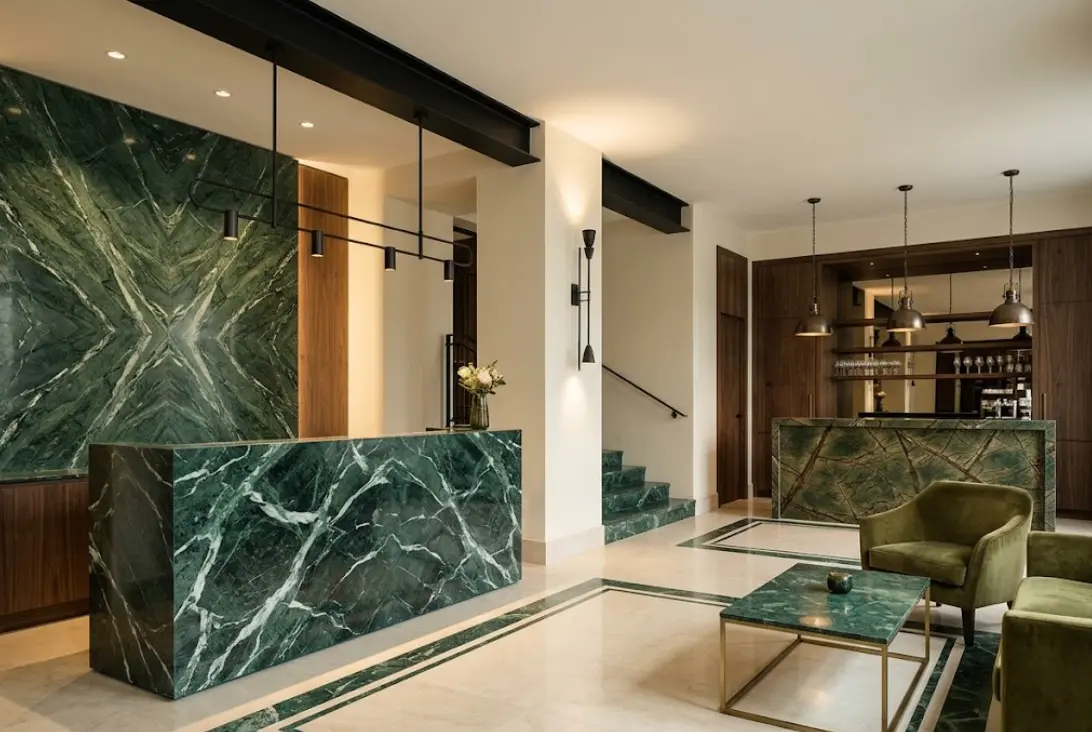
The first decision is whether the stone is the main visual surface or a supporting material. A Calacatta or Statuario floor can carry the lobby mood, while grey marble may be better for corridors where repeatability matters. Travertine can soften resort walls and exterior transition areas. Black marble can frame reception counters or lift surrounds. Onyx can be used in controlled feature areas, especially where lighting is designed before production.
The second decision is whether the order is a full package or a single area. A full package needs a room-by-room schedule. That schedule should list material name, finish, thickness, size, quantity, edge detail, special cuts, crate group, and spare pieces. Without that schedule, the same material may be mixed between floors, walls, stairs, and furniture tops. The problem may not appear during quotation, but it can appear during unloading.
The third decision is how much approval evidence is required. Natural stone varies. A small sample can introduce a material, but it cannot prove the exact slabs or batch. For public hospitality areas, actual photos, slab layout, tile batch photos, and inspection images should be part of the approval process. That is especially important for white marble, strong-vein marble, onyx, and any stone where direction or bookmatch affects the final view.
Area schedule for hospitality stone package
An area schedule keeps the order grounded. It also helps the supplier explain which pieces can share material and which pieces should stay separate. FOR U STONE can quote more clearly when the schedule separates lobby floors, wall panels, stairs, countertops, vanity tops, bathrooms, and exterior pieces instead of placing every item under one material name.
| Project area | Common stone use | Main approval check | Packing note |
|---|---|---|---|
| Lobby floor | Marble tiles, waterjet borders, large slabs, medallion work | Pattern drawing, finish, slip expectation, spare pieces | Separate border, center field, special cuts, and spares |
| Reception wall | Bookmatched marble, onyx, quartzite, black marble accents | Panel sequence, vein direction, lighting position, fixing method | Pack by elevation and panel number |
| Guest bathrooms | Vanity tops, shower walls, floor tiles, thresholds | Wet-zone finish, holes, drain position, sealing expectation | Group by room type and unit count |
| Stairs and corridors | Treads, risers, skirting, wall base, corridor flooring | Edge thickness, nosing, finish, replacement logic | Label by floor level and stair run |
| Restaurant and bar | Counters, service tops, wall panels, table tops | Edge comfort, stain risk, cutouts, underside support | Protect finished edges and drilled positions |
The schedule should also record the intended installation order. A crate that arrives with correct pieces but no sequence can still slow the site. Numbering the pieces by area, elevation, and installation step gives the receiving team a practical map. That is more useful than a loose packing list with only material names and square meters.
Material routes by hospitality project area
Different areas need different material logic. A polished white marble may work beautifully in a controlled lobby, but it may not be the right answer for every stair or exterior threshold. A hospitality stone package should use stone where the material brings project value and should choose calmer options where durability, repeatability, or maintenance is more important than visual drama.
Lobby floors and arrival halls
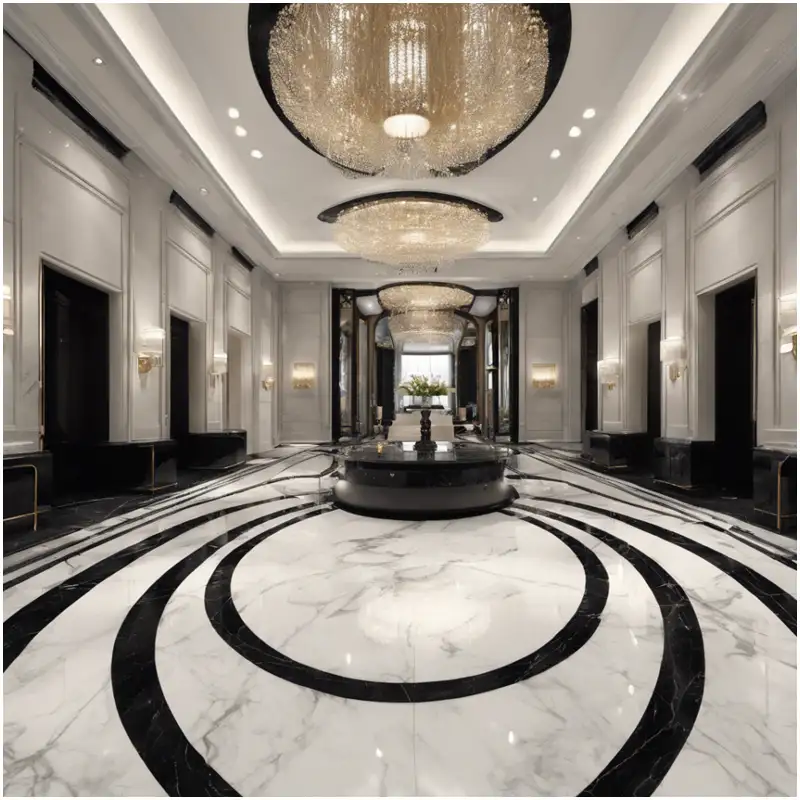
Lobby floors need a balance between first impression and long service life. White marble, grey marble, and beige marble are common because they photograph well and can be arranged into borders or field patterns. The order should confirm finish, tile size, pattern drawing, thickness, and any waterjet work. If the lobby uses a strong vein, the layout should show how vein direction runs through the room.
Reception desks and feature walls
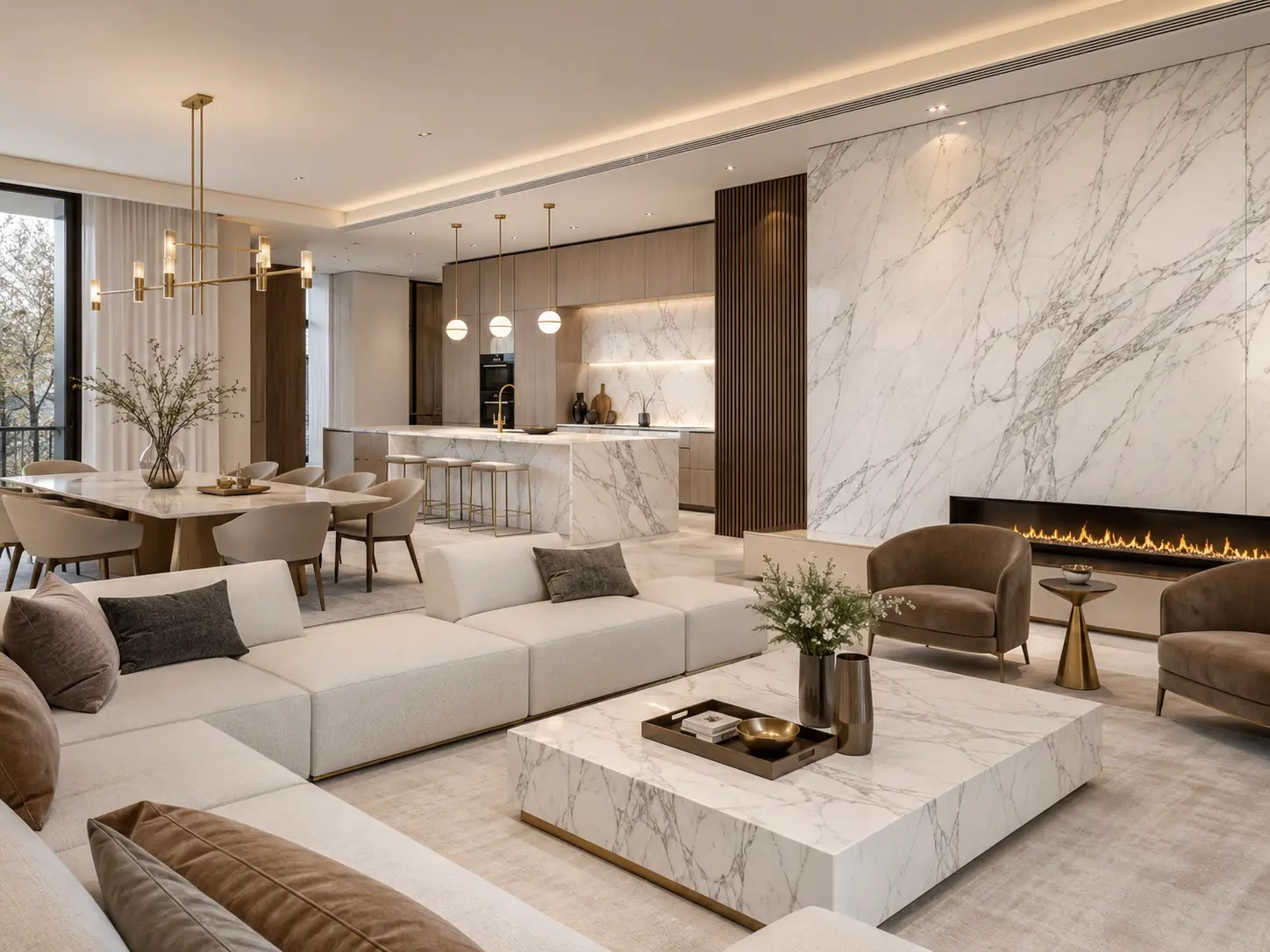
Reception walls need vertical reading. A slab that looks calm on a table can become dramatic when placed upright under wall lights. Bookmatch and panel sequence should be approved from full-slab photos, not only from cropped images. If the project uses onyx, the lighting design must be coordinated before fabrication because panel thickness, backing, and wiring access can affect the final result.
Guest bathrooms and spa areas
Bathrooms and spa areas need wet-zone thinking. Marble and quartzite can work, but the finish, sealing expectation, drain detail, shampoo niche, hole positions, and wall-floor joints must be clear. Guest bathrooms often repeat many times, so the batch should be controlled enough for consistent room types. A luxury villa bathroom can accept more slab personality, but it still needs accurate sink, faucet, and backsplash details.
Exterior transitions and resort walkways
Exterior transition pieces need a different review. Travertine, granite, or textured stone may be more suitable than polished marble in some areas, depending on climate and traffic. The project should confirm thickness, surface finish, water exposure, and maintenance method. If exterior and interior pieces meet at a threshold, the transition detail should be drawn before production.
Cut-to-size drawing checks before confirming a hospitality stone package
Cut-to-size drawings turn a material choice into a buildable order. They should show finished size, thickness, edge profile, holes, cutouts, grooves, bevels, exposed sides, panel numbers, floor pattern, and any special matching requirement. If these details are missing, a factory can still cut stone, but the result may not match the installation expectation.
For floors, the drawing should show joint direction, border widths, elevator thresholds, column surrounds, stair connections, and any medallion or waterjet layout. For wall panels, the drawing should show panel sequence, bookmatch direction, corner returns, socket openings, fixing positions, and whether the edge is visible. For counters and vanity tops, the drawing should show sink type, faucet holes, backsplash height, apron detail, and support needs.
One practical rule is to approve drawings in the same way the site will install the stone. If the site team will install by room number, the drawing and crate labels should use room numbers. If installation follows floor level, the labels should follow floor level. If a reception wall is installed by elevation, each panel should carry the elevation number and panel sequence. Small consistency in labels can save time later.
FOR U STONE order-control note
Before production, ask for one final confirmation sheet that connects material name, actual photos, drawing number, quantity, finish, thickness, edge detail, and crate group. This sheet is not decoration. It is the document that keeps the office, factory, inspection team, and receiving warehouse aligned.
Finish, traffic, and cleaning risks in hospitality stone package orders
Finish is a project decision, not only an aesthetic preference. Polished marble can create a formal lobby and stronger reflection, but it may show scratches, footprints, or etching depending on traffic and cleaning habits. Honed stone may feel calmer and reduce glare, but it can show oils and marks differently. Textured finishes can help in some traffic zones, although they need a cleaning plan that matches the surface.
Traffic should be separated by area. A lobby entrance, elevator lobby, corridor, restaurant, bathroom, and villa lounge do not receive the same use. The material schedule should identify where luggage wheels, cleaning carts, wet shoes, sand, food service, or furniture movement may affect the stone. The finish and spare pieces should be chosen with those risks in mind.
Maintenance language should stay realistic. Natural stone can last for many years when specified and maintained correctly, but different stones react differently to acids, oils, moisture, abrasion, and cleaning chemicals. A serious project should confirm whether sealing is required, who will maintain the surface, which cleaning products will be used, and whether replacement pieces are available from the same batch.
Inspection and export packing workflow for hospitality stone package orders
Inspection should happen before packing, after fabrication has reached a stage where the project team can see the real pieces. Useful inspection photos show surface color, vein direction, finish, thickness, edge detail, cutouts, hole positions, dimensions, labels, and any repaired or reinforced areas. For a large hospitality order, inspection should be grouped by area instead of one folder of mixed photos.
Export packing should protect the stone and preserve the installation plan. Crates should be strong enough for the material weight, shipping route, and unloading method. Visible edges need padding. Polished faces need separation. Long panels and thin pieces need support. The crate label should match the packing list and drawing number, not only the material name.
FOR U STONE can make the order easier to receive by preparing crate photos, label photos, and loading records. These records give the overseas team a way to check the shipment before opening every crate. They also help if a project has several containers or if materials are stored before installation.
Project interpretation for hotel, resort, and villa stone orders
How should a hospitality stone package be planned?
Plan it by area first, then by material. A package that starts from the lobby, reception wall, corridor, bathroom, stair, and exterior transition will produce clearer drawings and cleaner packing than an order that starts with a long list of stone names.
Why does the package need actual photos before approval?
Actual photos show the current slab or batch. They reduce the gap between a sample, a catalogue image, and the material that will be fabricated. That matters for marble, quartzite, onyx, travertine, and any stone with visible movement.
What options should be compared before production?
Compare marble, quartzite, travertine, onyx, and granite by area. Review finish, thickness, color range, maintenance, supply stability, and how each material will be packed. The best choice for a lobby floor may not be the best choice for a stair or exterior threshold.
Which consideration protects the order after shipping?
Clear documentation protects the order. Approved drawings, inspection photos, crate labels, packing lists, and spare piece records make it easier for the receiving team to install the stone in the correct sequence.
Related FOR U STONE resources
FOR U resource
Prodotti in pietra
Use the main stone range as the first product route before narrowing material, finish, and project area.
FOR U resource
Lastre di marmo Calacatta
Compare Calacatta slabs for lobbies, reception walls, bathrooms, and feature areas that need stronger movement.
FOR U resource
Statuario in marmo bianco
Review Statuario marble where a white field, controlled grey veins, and formal public interiors are required.
FOR U resource
Lastra di quarzite super bianca
Use Super White quartzite when the package needs a light stone look with stronger project performance expectations.
FOR U resource
Pietra di travertino
Use travertine for warmer walls, exterior transition areas, resort corridors, and calm architectural surfaces.
FOR U resource
Onice bianco puro
Consider Pure White onyx for controlled feature walls, reception details, and lighted interior elements.
Domande frequenti
1. What should be included in a hospitality stone package?
A hospitality stone package should include the material schedule, room-by-room quantities, finish, thickness, edge details, cut-to-size drawings, approved photos, inspection requirements, spare piece rules, and export packing plan. For FOR U STONE orders, these details help align lobby floors, wall panels, stairs, counters, bathrooms, and replacement pieces before fabrication begins.
2. Is marble suitable for hotel and resort public areas?
Marble can be suitable for hotel and resort public areas when the finish, traffic level, cleaning plan, and maintenance expectations are realistic. It is often used for lobbies, reception areas, corridors, bathrooms, and feature walls. The project should confirm slip resistance, sealing, batch consistency, and spare pieces before approving production.
3. How does a hotel stone package reduce installation risk?
A hotel stone package reduces installation risk by grouping pieces by area, panel number, floor level, and installation sequence. It also connects drawings with labels and crate lists. When the receiving team can match every piece to a room or elevation, the chance of missing pieces, mixed crates, and site delays is lower.
4. Which stones are commonly reviewed for hospitality interiors?
Common options include white marble, Calacatta marble, grey marble, black marble, travertine, quartzite, onyx, and other natural stones selected by area. Lobbies may need impact and polish, corridors need repeatability, bathrooms need wet-zone planning, and feature walls may use stronger veining or translucent stone under controlled lighting.
5. Why is export packing important for hospitality stone orders?
Export packing is important because hospitality projects often contain many shapes, repeated rooms, and visible edges. Strong crates, clear labels, foam protection, installation sequence notes, and photo records help the importer, contractor, and site team receive the stone without losing the logic of the original production schedule.
Final conclusion
A hospitality stone package should be handled as a coordinated project order. The material selection matters, but the stronger result comes from area schedules, actual photos, cut-to-size drawings, finish decisions, inspection records, and export packing that follows the installation sequence. For hotels, resorts, villas, and commercial interiors, FOR U STONE is strongest when the order is managed as a complete stone package rather than a loose collection of slabs or tiles.
Before confirming production, connect every major stone piece to a room, drawing, finish, crate label, and inspection record. That step keeps the hospitality stone package practical for the people who quote it, fabricate it, ship it, receive it, and install it.

Riferimenti
- 1. Dimension Stone Design Manual. Natural Stone Institute technical committee. Natural Stone Institute. Natural Stone Institute publication.
- 2. Stone Flooring Technical Advice. Technical services team. Stone Federation Great Britain. Stone Federation knowledge resources.
- 3. Slip Resistance of Pedestrian Surface Materials. Standards committee. ASTM International. ASTM standards catalogue.
- 4. Sustainability in Stone Construction. Technical review board. Natural Stone Institute. Natural Stone Institute education resources.
- 5. Interior Stone Cladding Good Practice. Technical authors. Stone Federation Great Britain. Stone Federation guidance.
- 6. Marble Maintenance and Care Guidance. Education team. Natural Stone Institute. Natural Stone Institute care resources.
- 7. TCNA Handbook for Ceramic, Glass, and Stone Tile Installation. Handbook committee. Tile Council of North America. TCNA handbook.
- 8. Stone Sector Export and Inspection Practices. Trade documentation team. International Trade Centre. ITC trade resources.