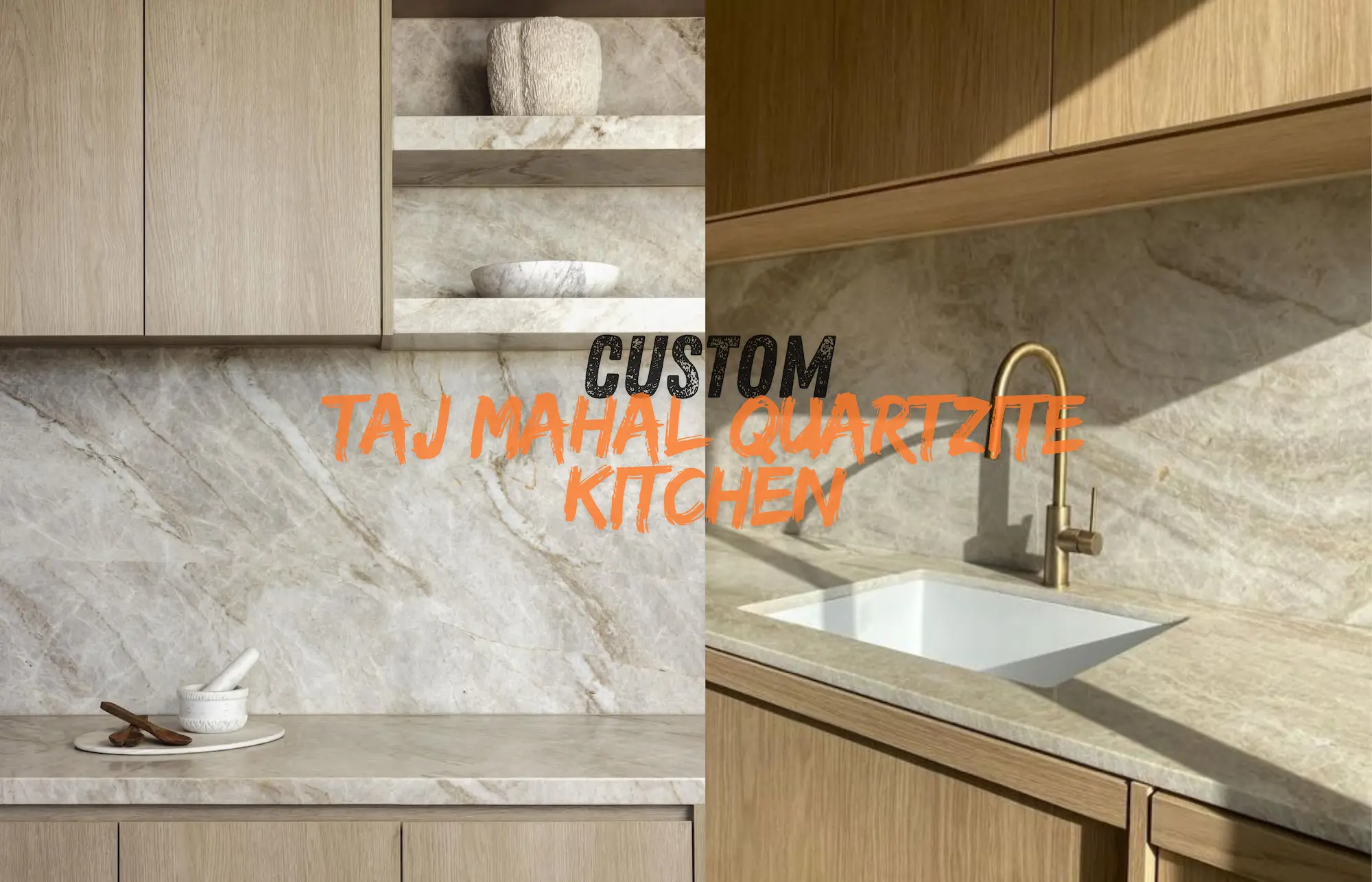
Quick Summary: What Makes Granite a Reliable Natural Stone?
Granite Is More Than a Hard Stone Surface
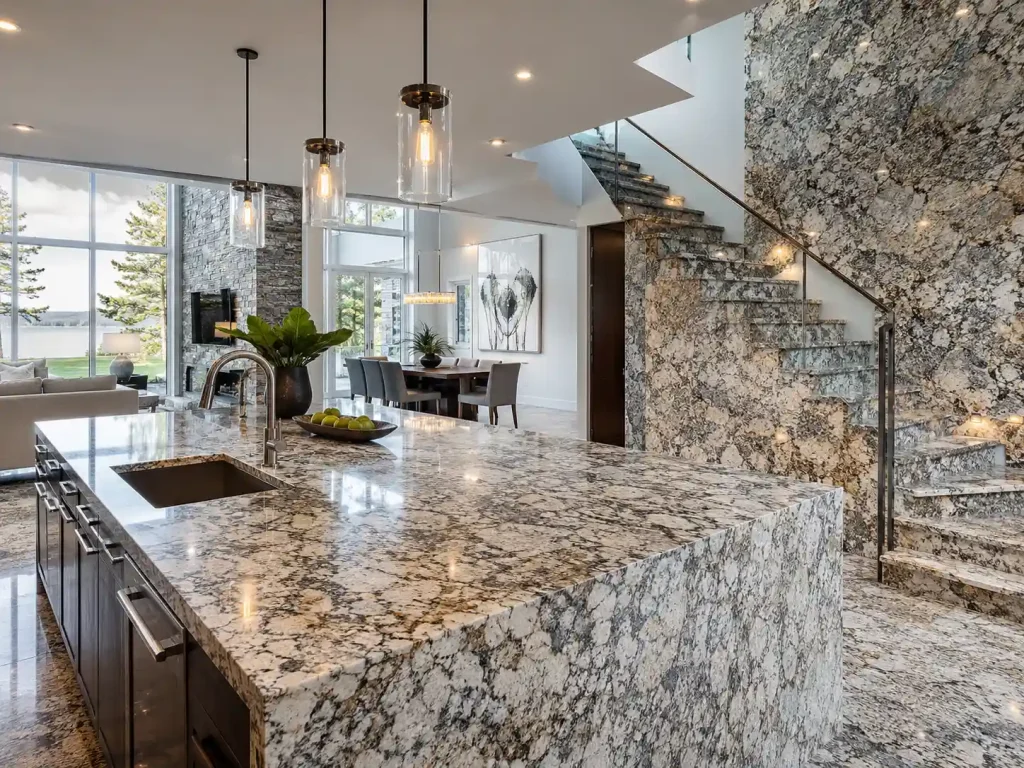
Granite is one of the most widely used natural stones in architecture, interior design, landscaping, and commercial construction. It is valued because its structure is compact, its surface hardness is high, its water absorption is relatively low, and its durability is strong enough for both indoor and outdoor applications. For buyers, this means Granite is not only a decorative stone. It is a long-service material that can support countertops, flooring, stairs, walls, façades, paving, monuments, bathrooms, commercial lobbies, and luxury interiors.
When people ask, “What are the characteristics of Granite?” the simple answer is hardness, durability, low porosity, natural beauty, and broad application flexibility. The better B2B answer is more specific: Granite should be evaluated by mineral composition, compressive strength, flexural strength, density, water absorption, porosity, frost resistance, finish type, color variation, lot consistency, packing quality, and project suitability. A beautiful slab still needs the right technical performance and inspection process.
For buyers comparing product types, reviewing a broad selection of lastre di granito can help connect Granite’s physical characteristics with real countertop, flooring, wall cladding, stair, and exterior project applications.
What Is Granite?
Basic Definition of Granite
Granite is a natural igneous rock formed when molten magma cools slowly deep below the earth’s surface. This slow cooling process creates a dense crystalline structure. Granite is usually composed mainly of quartz, feldspar, mica, and other dark minerals. These minerals give Granite its hardness, speckled appearance, color variation, polishability, and long-term durability.
Commercial Granite is supplied in many formats, including big slabs, cut-to-size pieces, countertops, vanity tops, tiles, stair treads, risers, wall panels, paving stones, kerbs, monuments, and custom fabricated stone products. Its structure may be fine-grained, medium-grained, coarse-grained, or plaque-like depending on the mineral formation and quarry source.
Why Granite Is Popular in Construction and Interior Design
Granite is popular because it combines natural beauty with reliable performance. It can be polished for a high-gloss luxury surface, honed for a soft matte appearance, leathered for a tactile modern feel, or flamed for anti-slip outdoor use. It is also available in many colors, including white, black, grey, red, yellow, green, brown, beige, blue, pink, and multicolor patterns.
For large projects, Granite has another advantage: many granite deposits are large and widely distributed, which can make it easier to quarry sizeable blocks and process large-format slabs or consistent tile batches. This matters for hotels, public buildings, apartment projects, commercial floors, exterior cladding, and wholesale granite supply.
The Main Characteristics of Granite
High Surface Hardness and Scratch Resistance
Granite is known for high surface hardness. Its Mohs hardness is commonly around 6, and many granite varieties can reach a range around 6–7 depending on mineral composition. This makes Granite harder than many marble and limestone materials. In daily use, Granite resists scratching better than many softer decorative stones, which is why it remains popular for kitchen countertops, flooring, stairs, public spaces, and commercial interiors.
However, hardness does not mean the surface is impossible to damage. Cutting boards are still recommended for kitchen use, and abrasive cleaners should be avoided. For project buyers, hardness should be considered together with finish type, absorption, maintenance expectations, and application environment.
Compact Structure and Low Porosity
Granite has a compact granular structure. The particles are usually uniform, the gaps are relatively small, and porosity is often low. General porosity may fall around 0.3% to 0.7%, while water absorption is often around 0.15% to 0.46% for many granite varieties. This low absorption helps Granite resist staining and weathering better than many more porous stones.
Low water absorption also improves frost resistance. In freeze-thaw climates, moisture entering the stone can expand when frozen, causing stress. Granite’s compact structure helps reduce this risk, but exterior applications should still be evaluated by actual test data, installation design, drainage, finish selection, and local climate exposure.
High Compressive Strength
Granite has strong compressive strength. General values may range from about 100 MPa to 300 MPa, and some fine-grained granite can exceed 300 MPa under suitable test conditions. This makes Granite suitable for load-bearing and high-traffic applications such as stairs, paving, exterior stone, commercial flooring, and heavy-use architectural surfaces.
Flexural strength is also important, especially for slabs, stairs, countertops, and wall panels. Typical flexural strength may fall around 10 MPa to 30 MPa depending on stone type, grain structure, fissures, thickness, and test method. Buyers should request project-specific test data when Granite is used for demanding public, exterior, or structural applications.
Good Chemical Stability and Durability
Granite has good chemical stability and is not easily weathered. This is one reason it can be used for outdoor decorative stone, exterior paving, façades, monuments, steps, and landscape projects. It resists daily wear better than many softer stones and can maintain its appearance for decades when properly selected and maintained.
Still, Granite is not completely maintenance-free. Sealers, finishes, and surface treatments can affect long-term performance. Acidic or aggressive chemicals may damage some finishes or sealers. For kitchens, bathrooms, restaurants, and public areas, pH-neutral cleaning is recommended.
Heat Resistance and Fire Limitation
Granite has good heat resistance in normal kitchen and architectural use. It performs better than many decorative surfaces when exposed to everyday heat, which is why it is widely used for kitchen countertops, fireplaces, and cooking-adjacent surfaces. However, Granite should not be described as fireproof. Under intense fire, extreme heat, or sudden thermal shock, natural stone can crack, spall, discolor, or lose surface quality.
In practical terms, Granite is suitable for kitchens, but trivets are still recommended for hot pans. For fireplace surrounds, exterior paving, or special high-heat environments, buyers should confirm stone type, finish, installation method, and thermal exposure conditions.
| Granite Characteristic | Typical Performance Range | Buyer Meaning |
|---|---|---|
| Durezza Mohs | Around 6–7 | Good scratch resistance for countertops and floors |
| Densità | 2.63–2.75 g/cm³ | Dense and heavy natural stone |
| Porosità | About 0.3%–0.7% | Compact structure and lower moisture entry |
| Assorbimento dell'acqua | About 0.15%–0.46% | Good stain and frost resistance when properly selected |
| Resistenza alla compressione | 100–300 MPa; fine-grained types may exceed 300 MPa | Suitable for heavy-use architectural applications |
| Resistenza alla flessione | About 10–30 MPa | Important for slabs, stairs, cladding, and countertops |
| Resistenza agli agenti atmosferici | Generally strong | Useful for exterior paving, façades, and monuments |
Granite Mineral Composition and Why It Matters
Quartz Content
Quartz contributes hardness, durability, and a crystalline appearance. It helps Granite resist scratching and gives many slabs a subtle sparkle under light. A higher quartz content can improve the hard feel of the stone, although overall performance also depends on feldspar, mica, grain bonding, fissures, and mineral distribution.
Feldspar Content
Feldspar is one of the main minerals responsible for Granite’s background color. It can create white, pink, red, cream, grey, or beige tones. This is why Granite can appear light and calm in some varieties or warm and colorful in others. For designers, feldspar-rich Granite often creates a softer background, while dark minerals add contrast.
Mica and Dark Minerals
Mica, biotite, hornblende, and other dark minerals create black, silver, brown, gold, or reflective speckles. These minerals give Granite its familiar granular appearance. In some exotic Granite varieties, the mineral movement becomes more dramatic, creating waves, veins, or bold color contrast.
Why Mineral Composition Affects Buyer Selection
Granite is not one single look. Some varieties are uniform and fine-grained, making them suitable for large commercial flooring and consistent tile projects. Others are dramatic and multicolored, making them better for kitchen islands, reception desks, luxury feature walls, and statement interiors. Buyers should choose Granite by application and actual slab appearance, not only by commercial name.
Granite Surface Finishes and Their Characteristics
Granito lucido
Polished Granite has a glossy, reflective surface that deepens color and highlights mineral patterns. It is commonly used for countertops, islands, vanity tops, reception desks, wall panels, and luxury feature surfaces. Polished finish is one of the best choices when the design goal is visual depth and elegance.
However, polished Granite may be slippery in wet flooring areas. In public spaces, bathrooms, outdoor paving, and stair applications, slip resistance should be reviewed before selecting a polished finish.
Granito levigato
Honed Granite has a matte or satin appearance. It reduces glare and creates a softer, more modern design effect. It is often used for floors, stairs, walls, bathrooms, and some contemporary countertops. Honed finishes can be especially useful where the design requires a calm, understated stone surface.
Granito color cuoio
Leathered Granite has a textured surface that feels more natural and tactile. It is popular for modern kitchens, bar counters, outdoor kitchens, commercial counters, and high-end interiors that need a less reflective surface. Leathered finishes can hide fingerprints better than polished dark Granite, although cleaning methods should match the surface texture.
Flamed Granite
Flamed Granite is created by exposing the surface to high heat, causing mineral crystals to burst and form a rough texture. This finish is commonly used for outdoor paving, steps, plazas, public walkways, and areas where slip resistance is important. The flamed process can lighten the stone color and create a more functional appearance.
Sandblasted, Bush-Hammered, and Brushed Granite
Sandblasted, bush-hammered, and brushed finishes add texture for exterior walls, paving, stairs, landscaping, and architectural cladding. These finishes improve surface grip and create a more natural look, but they may require different cleaning methods than polished surfaces.
| Finitura | Aspetto | Miglior utilizzo | Buyer Check |
|---|---|---|---|
| Lucido | Glossy with deep color | Countertops, vanities, feature walls | Reflectivity and sealing |
| Levigato | Matte and soft | Floors, stairs, walls | Stain visibility and maintenance |
| Pelle | Textured and natural | Kitchens, bars, outdoor counters | Cleaning method |
| Fiammato | Rough and anti-slip | Outdoor paving, steps, public areas | Slip resistance and color change |
| Sabbiato | Fine texture | Cladding and exterior floors | Maintenance and dirt retention |
| Bush-Hammered | Strong texture | Public paving and landscape stone | Comfort and cleaning |
|
|
|
Granite Applications by Project Type
Piani di lavoro in granito per la cucina
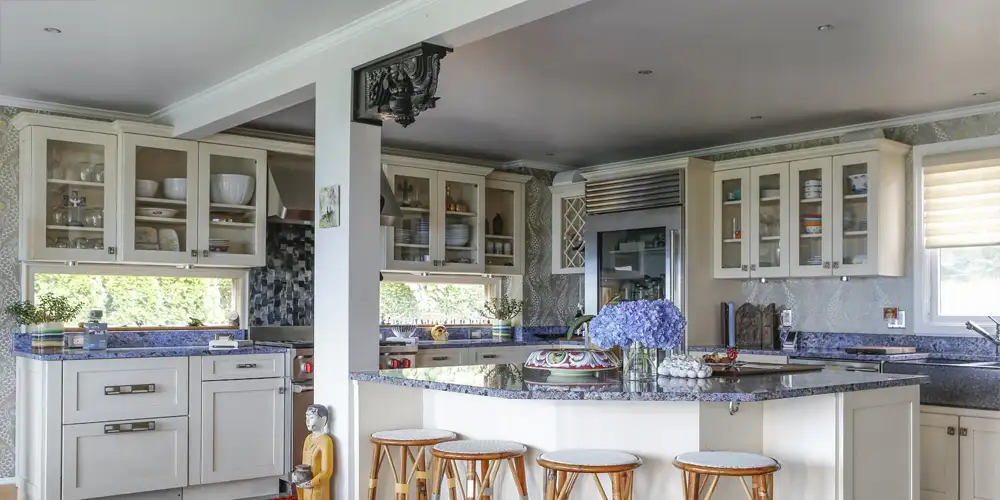
Granite is one of the most trusted materials for kitchen countertops because it offers hardness, heat resistance, scratch resistance, natural beauty, and long-term service life. It works with white cabinets, wood cabinets, black kitchens, stainless steel appliances, brass hardware, modern minimalist spaces, and luxury traditional interiors.
For kitchen use, buyers should evaluate slab layout, sealing requirements, edge profiles, sink cutouts, cooktop cutouts, and backsplash design. A polished or leathered finish is common. Proper installation and maintenance help Granite countertops remain attractive for many years.
Granite Flooring
Granite flooring is suitable for residential and commercial areas when the correct finish is selected. In hotels, shopping malls, office buildings, villas, and public spaces, Granite provides durability and visual permanence. Large-format tiles create a more premium appearance, while smaller tiles can be easier to install in high-traffic or patterned layouts.
For flooring, slip resistance is essential. Honed, flamed, brushed, or textured finishes may be more suitable than polished finishes in wet or public areas. Buyers should also confirm thickness tolerance, calibration, color grouping, and packing labels for large projects.
Granite Wall Cladding and Façades
Granite is widely used for interior wall cladding and exterior façades. Its density, weather resistance, and structural strength make it suitable for hotels, office buildings, public projects, luxury villas, and commercial entrances. Wall cladding requires professional installation, anchor design, weight calculation, and slab or tile inspection.
Granite Stairs and Steps
Granite is strong enough for stair treads, risers, exterior steps, and commercial entrance stairs. Flamed, grooved, honed, or textured finishes are often selected for safety. Edge details, anti-slip strips, nosing design, and thickness should be reviewed before production.
Granite Bathroom Vanities
Granite can be used for bathroom vanity tops, shower thresholds, wall panels, flooring, and bathtub surrounds. It provides a practical natural stone option when buyers want durability with visual variety. In wet areas, sealing, edge details, and cleaning products should be selected carefully.
Granite Commercial and Hospitality Projects
Hotels, restaurants, airports, malls, commercial offices, and luxury retail spaces use Granite because it offers long service life and a premium natural appearance. For commercial projects, buyers should check batch consistency, shop drawings, finish selection, packing, delivery schedule, and replacement quantity.
| Applicazione | Recommended Granite Feature | Miglior finitura | Buyer Priority |
|---|---|---|---|
| Piano di lavoro della cucina | Low absorption and strong polish | Polished or leathered | Sealing and slab layout |
| Pavimenti | Durability and slip control | Honed, flamed, or textured | Thickness and slip resistance |
| Rivestimenti per pareti | Stable slabs and good color | Polished, honed, or flamed | Anchor design |
| Scale | Strength and safety | Flamed or grooved | Edge safety |
| Bathroom vanity | Moisture resistance | Lucidato o levigato | Sigillatura |
| Commercial lobby | Visual consistency | Lucidato o levigato | Lot matching |
Granite Colors and Visual Selection
Light Granite for Bright Interiors
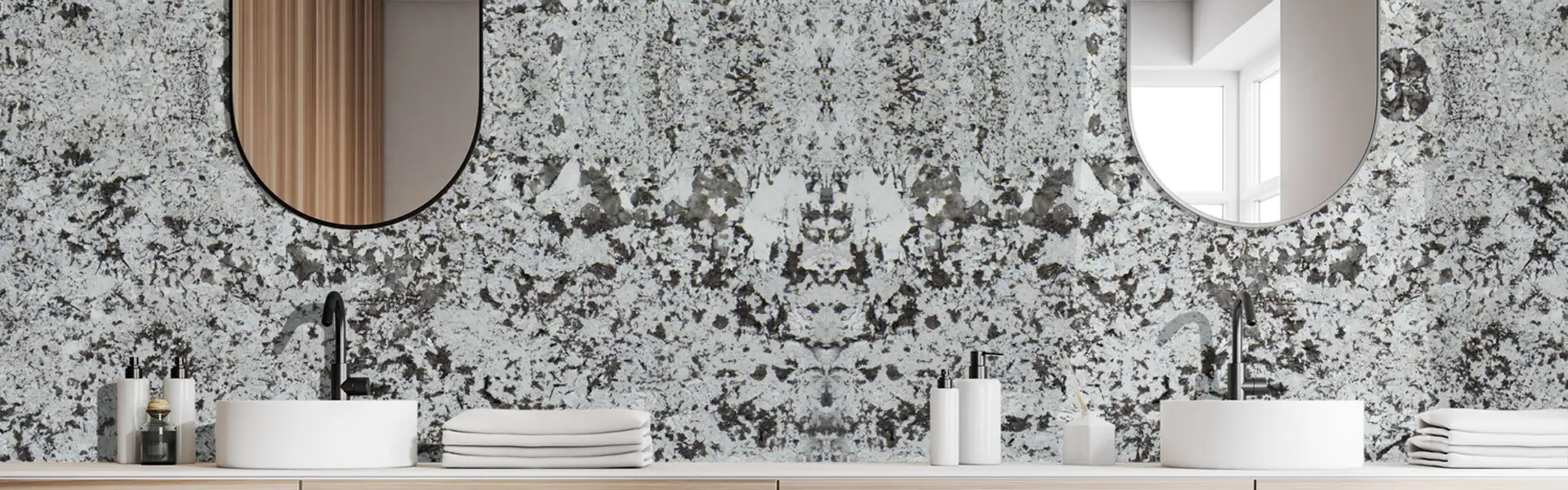
Light Granite creates a clean and open atmosphere. White, beige, and light grey Granite can work well for kitchens, bathrooms, walls, and commercial interiors that need brightness without using softer marble. For example, Granito bianco Pitaya offers a clean white background with fine black speckles and soft grey movement, making it suitable for modern interiors, exterior cladding, floors, and custom architectural pieces.
Dark Granite for Strong Contrast
Dark Granite creates drama, depth, and contrast. Black Granite is widely used for kitchen islands, luxury floors, fireplaces, reception desks, bathroom vanities, and exterior stonework. A material such as Granito nero australiano shows how deep color and natural veining can create a more powerful visual identity for both interior and exterior projects.
Exotic Granite for Statement Design
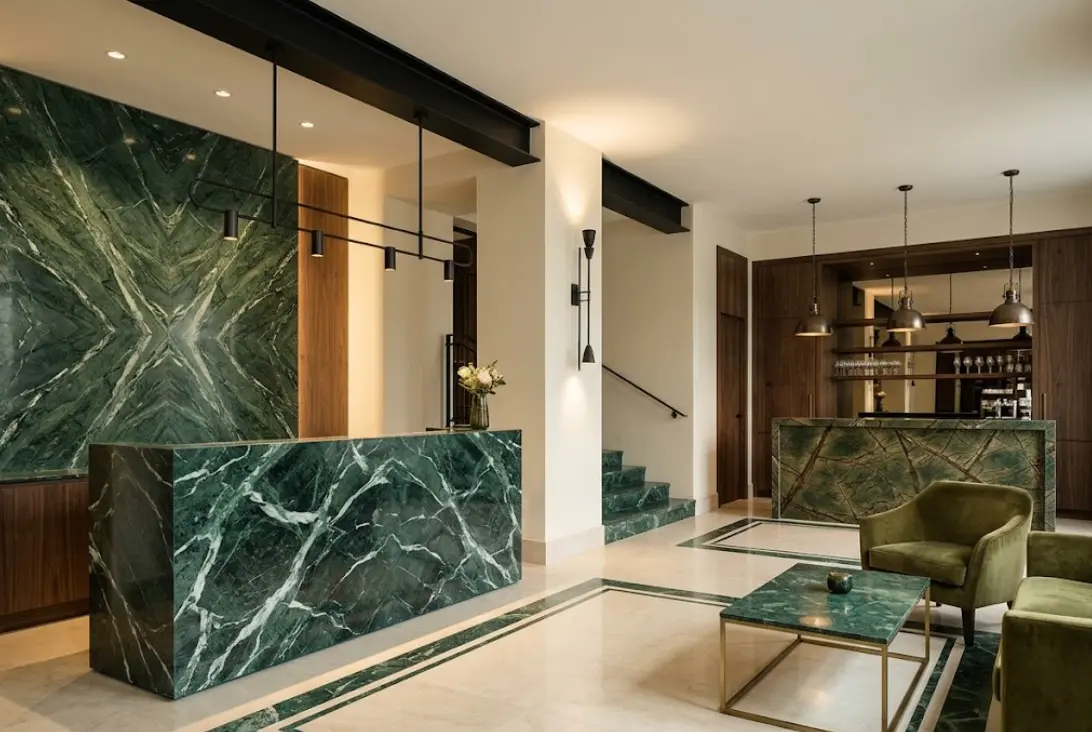
Exotic Granite varieties may include green, blue, red, gold, purple, brown, or dramatic multicolor movement. These stones are ideal for feature walls, bar counters, luxury islands, hotel lobbies, and designer showrooms. A guide such as Granito verde Amazon shows how strong natural color and movement can turn Granite into a focal design element rather than a background material.
Granite vs Marble vs Quartz vs Quartzite
Granite vs Marble
Granite is generally harder and more scratch-resistant than marble. It is often easier to use in kitchens, high-traffic floors, stairs, and exterior applications. Marble offers softer veining and classic elegance, but it is more sensitive to acids and usually requires more careful maintenance.
If the project needs a kitchen countertop or public floor, Granite is often the practical choice. If the project needs a decorative bathroom wall, sculpture-like surface, or classic luxury interior, marble can still be excellent.
Granite vs Engineered Quartz
Granite is natural, unique, and formed by geological processes. Each slab has its own mineral structure and color variation. Engineered quartz offers more consistent color and pattern, which can be useful for apartment projects, hotel room batches, and multi-unit countertops.
Granite is better when natural variation, heat resistance, and one-of-a-kind character are important. Quartz is better when consistency and low maintenance are the main priorities.
Granito vs quarzite
Quartzite can be very hard and durable if it is true quartzite. It often has dramatic marble-like veining and a crystalline appearance. Granite is widely available in many colors, usually easier to source in large quantities, and proven across countertops, flooring, paving, façades, and monuments.
Both materials should be selected based on real slab appearance, test data, finish, thickness, and application. Commercial names can vary, so buyers should confirm material classification before purchase.
| Materiale | Visual Style | Durezza | Manutenzione | Miglior utilizzo |
|---|---|---|---|---|
| Granito | Speckled, crystalline, varied | Alto | Moderato | Countertops, floors, exterior stone |
| Marmo | Soft veining and elegant movement | Medio | Higher care | Bathrooms, walls, decorative interiors |
| Quarzo ingegnerizzato | Consistent engineered pattern | Alto | Basso | Multi-unit countertops |
| Quarzite | Natural veining and crystalline depth | High if true quartzite | Moderato | Luxury countertops and walls |
| Pietra calcarea | Soft, warm, natural | Più basso | Higher care | Walls and low-traffic interiors |
Granite Material Parameters Buyers Should Request
Physical Test Data
B2B buyers should request physical test data when Granite is used for commercial, public, exterior, or high-value applications. Important parameters include density, water absorption, compressive strength, flexural strength, abrasion resistance, slip resistance, freeze-thaw resistance, and modulus of rupture.
Testing does not replace visual approval, but it reduces risk. A stone may look suitable in photos but fail to meet the performance expectations of a public floor, exterior façade, or freeze-thaw environment.
Slab and Tile Dimensional Tolerances
Thickness tolerance matters for countertops, flooring, cladding, and cut-to-size projects. Length and width tolerance affects joint alignment. Flatness affects installation. Edge quality affects fabrication. Large commercial orders should include batch inspection, packing labels, crate numbers, and project piece lists.
Color and Lot Control
Granite is natural, so color and pattern can vary by block. For commercial flooring, wall cladding, stair projects, and large countertop orders, buyers should reserve enough material from the same lot. Slab photos, tile layout photos, and dry lay approval are useful for high-value projects.
| Buyer Test Item | Perché è importante | Common Project Use |
|---|---|---|
| Assorbimento dell'acqua | Stain and freeze-thaw risk | Countertops, exterior paving |
| Densità | Weight and handling | Slabs, walls, façades |
| Resistenza alla flessione | Breakage risk | Stairs, slabs, cladding |
| Resistenza all'abrasione | Wear performance | Flooring, public spaces |
| Resistenza allo scivolamento | Sicurezza | Floors, stairs, wet areas |
| Tolleranza di spessore | Installation accuracy | Tiles and countertops |
| Color variation | Visual consistency | Hotels, malls, commercial projects |
Granite Buying Checklist for B2B Projects
What Importers and Distributors Should Check
Importers and distributors should confirm quarry origin, commercial stone name, alternative names, block lot, slab size, thickness, finish, color range, quantity availability, photos, videos, packing method, container loading, lead time, and after-sales support. For international orders, strong packing and clear documentation are as important as slab beauty.
What Countertop Fabricators Should Check
Countertop fabricators should inspect slab flatness, fissures, resin treatment, mesh backing, polish quality, thickness consistency, cutout areas, edge behavior, sealing requirements, and possible bookmatching or vein-flow layout. These details decide whether the slab becomes a high-quality countertop or a costly cutting-room problem.
What Contractors and Project Buyers Should Check
Contractors and project buyers should check shop drawings, cut-to-size schedules, finish selection, slip resistance, packing labels, installation method, replacement quantity, dry lay photos, batch consistency, and delivery schedule. When comparing supplier capability, it is useful to review a trusted Granite supplier background, including material range, fabrication support, export experience, and project communication process.
Granite Maintenance Characteristics
Pulizia quotidiana
Granite is easy to maintain when cleaned correctly. Use pH-neutral cleaner, soft cloths, stone-safe detergents, and clean water. Avoid harsh acids, strong alkaline chemicals, abrasive pads, and cleaners that may damage sealers or surface finish. In kitchens, wipe spills quickly and use cutting boards, trivets, and coasters.
Sigillatura
Many Granite countertops and high-use surfaces benefit from sealing. Sealing frequency depends on water absorption, finish, use intensity, and stone variety. Dark dense Granite may need less frequent sealing than lighter or more absorbent varieties. A water-drop test can help indicate whether resealing may be needed.
For practical countertop maintenance, buyers can study guidance on how to seal and clean granite countertops, especially when selecting premium blue, white, black, or exotic Granite for active kitchens.
Durata a lungo termine
Properly selected and maintained Granite can last for decades. Its compact structure, low absorption, high hardness, and weather resistance make it suitable for long-service projects. Outdoor applications still require correct finish, drainage, joint design, climate review, and professional installation.
Industry Trends: Why Granite Still Matters in Modern Design
Natural Materials Are Returning to Premium Interiors
Designers increasingly want authentic surfaces that feel permanent, not artificial. Granite provides natural mineral depth, durability, and project flexibility. It can be used in minimalist kitchens, warm villas, commercial lobbies, hospitality spaces, bathrooms, façades, and landscape projects.
Dark and Exotic Granites Are Growing in Luxury Projects
Black, green, blue, red, brown, and highly patterned Granite varieties are increasingly used for statement islands, bar counters, reception desks, feature walls, and luxury floors. White and grey Granite remain practical, but color-rich stones create stronger identity.
Sustainable Design and Long-Life Materials
Granite’s long service life is part of its sustainable value. A material that performs for decades can reduce replacement frequency. Responsible quarrying, efficient fabrication, careful shipping, and proper maintenance all contribute to a more responsible project lifecycle.
For designers who want to use granite slabs for luxury interiors, the most important principle is restraint. Granite should lead the space through proportion, finish, and surface continuity, not compete with too many other decorative materials.
Regulations, Standards, and Documentation for Granite Projects
Natural Stone Testing Standards
Commercial Granite projects may require recognized testing standards. Common references include ASTM C615 for granite dimension stone, ASTM C97 for absorption and bulk specific gravity, ASTM C170 for compressive strength, ASTM C880 for flexural strength, and relevant abrasion or slip-resistance standards depending on application. European or local standards may also apply based on project location.
Import and Export Documentation
B2B Granite orders may require commercial invoice, packing list, certificate of origin, fumigation certificate for wooden crates, test report, container loading photos, shop drawings, cut-to-size schedules, crate labels, and installation piece numbers. Proper documentation reduces customs, installation, and after-sales risk.
Installation and Safety Requirements
Heavy Granite slabs require professional lifting and handling. Façades need anchor engineering. Stairs need anti-slip details. Flooring needs finish selection based on slip resistance. Countertops need support around sink cutouts, cooktop cutouts, dishwasher openings, and long overhangs. Good stone selection can still fail if installation is careless.
Common Mistakes When Buying Granite
Mistake 1: Choosing by Color Name Only
Commercial names can vary by supplier and region. Buyers should check actual photos, physical samples, slab videos, and selected lot details instead of relying only on the stone name.
Mistake 2: Ignoring Finish Selection
The same Granite can look and perform differently in polished, honed, leathered, flamed, brushed, or sandblasted finishes. Choose the finish according to application, traffic, cleaning, safety, and design style.
Mistake 3: Not Checking Water Absorption
Water absorption affects sealing, stain resistance, freeze-thaw performance, and outdoor suitability. For countertops and exterior stone, this parameter should not be ignored.
Mistake 4: Mixing Different Lots
Different lots can show different color tones, mineral grain sizes, and pattern intensity. Large projects should reserve enough material from the same block or batch.
Mistake 5: Choosing the Lowest Price Without Inspection
Low price may hide weak packing, mixed lots, inconsistent thickness, poor polish, excessive fissures, or unclear communication. The real cost appears later through breakage, delays, or replacement problems.
Mistake 6: Using Polished Granite in Wet Public Floors Without Slip Review
Polished Granite can be beautiful, but wet public floors require slip-resistance review. Hotels, malls, restaurants, bathrooms, and outdoor areas should prioritize safety as well as appearance.
Buyer Decision Logic: Which Granite Should You Choose?
If You Need Kitchen Countertops
Choose dense Granite with low absorption, strong polish, suitable slab size, and good layout potential. Review sealing requirements, edge profiles, cutout areas, and actual slab photos before fabrication.
If You Need Commercial Flooring
Choose durable Granite with honed, flamed, or textured finish and request slip-resistance data. Confirm thickness tolerance, calibration, lot matching, and replacement quantity.
If You Need Exterior Cladding
Choose stable Granite with proper thickness, anchor design, freeze-thaw data if needed, and project documentation. Exterior cladding should be specified by both appearance and engineering requirements.
If You Need Luxury Feature Walls
Choose Granite with strong color movement and full-slab approval. For bookmatched walls or large panels, confirm slab sequence, vein direction, cutting layout, and installation numbering.
If You Are a Distributor
Choose Granite varieties with stable demand, consistent supply, reliable packing, good documentation, and clear supplier communication. Distributor success depends on repeatable product quality, not only attractive first-order pricing.
|
|
|


Final Recommendation: Choose Granite by Application, Data, and Real Slab Quality
Granite is hard, dense, durable, heat-resistant in normal use, naturally beautiful, and highly versatile. Its compact structure, high compressive strength, low water absorption, good chemical stability, and strong weather resistance make it suitable for countertops, floors, walls, stairs, exterior paving, façades, monuments, commercial interiors, and hospitality projects.
However, Granite should not be selected only by color or price. The right choice depends on application, finish, thickness, density, water absorption, flexural strength, slip resistance, lot consistency, packing, installation method, and supplier reliability. For large projects, buyers should request photos, test reports, shop drawings, dry lay images, packing details, and pre-shipment inspection records.
Before placing a Granite order, prepare the application type, required size, thickness, finish, quantity, destination, project drawings, and performance requirements. For specific material selection, project evaluation, or custom fabrication support, request a Granite project consultation to reduce sourcing risk and improve order accuracy.
FAQ About Granite Characteristics
1. Quali sono le principali caratteristiche del granito?
Il granito è una pietra naturale compatta, densa e dura, caratterizzata da un'alta resistenza alla compressione, bassa assorbimento d'acqua, buona stabilità chimica, elevata durabilità e ampia disponibilità di colori. Di solito presenta una struttura cristallina granulare e può essere a grana fine, media, grossolana o a placche. Queste caratteristiche rendono il granito adatto per piani di lavoro, pavimenti, rivestimenti murali, scale, pavimentazioni esterne, facciate, monumenti, bagni e progetti commerciali.
2. Il granito è adatto per i piani di lavoro della cucina?
Sì, il granito è uno dei materiali più popolari per i piani di lavoro della cucina perché è duro, resistente, termoresistente in condizioni d'uso normali, resistente ai graffi e naturalmente bello. Riesce a sopportare un uso intensivo in cucina meglio di molte pietre decorative più morbide. Tuttavia, gli acquirenti dovrebbero comunque utilizzare taglieri, sottopentole, detergenti neutri dal punto di vista del pH e una corretta sigillatura quando necessario. È inoltre opportuno pianificare la disposizione delle lastre, la finitura, il profilo dei bordi e il supporto per i ritagli prima della lavorazione.
3. Il granito ha bisogno di essere sigillato?
Molte superfici in granito, mobili da bagno e superfici soggette a intenso utilizzo traggono beneficio dalla sigillatura, anche se la necessità dipende dalla varietà di pietra, dall'assorbimento d'acqua, dalla finitura e dall'ambiente d'uso. Il granito denso potrebbe richiedere una sigillatura meno frequente, mentre il granito più chiaro o più assorbente potrebbe necessitare di una protezione maggiore. Un test con gocce d'acqua può aiutare a determinare se la superficie assorbe rapidamente l'umidità. Per progetti commerciali, la sigillatura dovrebbe essere inclusa nel piano di manutenzione.
4. Qual è la migliore finitura per il granito?
La migliore finitura del granito dipende dall'applicazione. Il granito lucido è ideale per piani di lavoro, mobili da bagno, banconi reception e pareti decorative, poiché intensifica il colore e mette in risalto i motivi minerali. Il granito levigato offre un aspetto opaco più morbido per pavimenti, pareti e scale. Il granito patinato aggiunge texture a cucine e bar. Il granito fiammato, sabbiato o bocciardato è più adatto per pavimentazioni esterne, gradini e aree pubbliche antiscivolo.
5. Come faccio a scegliere il granito per un progetto commerciale?
Per scegliere il granito per un progetto commerciale, valutate il tipo di applicazione, la finitura, lo spessore, la densità, l'assorbimento d'acqua, la resistenza alla compressione, la resistenza alla flessione, la resistenza allo scivolamento, la coerenza del colore, la disponibilità del lotto, la qualità dell'imballaggio e la documentazione fornita dal fornitore. Per pavimenti e scale, la resistenza allo scivolamento è fondamentale. Per facciate, invece, sono importanti l'ancoraggio e la resistenza agli agenti atmosferici. Per grandi interno, approvate le foto reali dei singoli pannelli o piastrelle prima della produzione e della spedizione.
Riferimenti
- “Dimension Stone Design Manual” — Technical Committee — Natural Stone Institute — Stone Design Manual
- “ASTM C615 Standard Specification for Granite Dimension Stone” — ASTM Committee C18 — ASTM International — Natural Stone Standard
- “ASTM C97 Standard Test Methods for Absorption and Bulk Specific Gravity of Dimension Stone” — ASTM Committee C18 — ASTM International — Stone Testing Standard
- “ASTM C170 Standard Test Method for Compressive Strength of Dimension Stone” — ASTM Committee C18 — ASTM International — Stone Testing Standard
- “ASTM C880 Standard Test Method for Flexural Strength of Dimension Stone” — ASTM Committee C18 — ASTM International — Stone Testing Standard
- “Natural Stone Countertop Installation Guide” — Technical Team — Natural Stone Institute — Fabrication and Installation Resource
- “Natural Stone Flooring and Slip Resistance Guidance” — Technical Committee — Natural Stone Institute — Commercial Stone Resource
- “Building Stone Testing and Evaluation for Architectural Projects” — Technical Research Team — International Surface Fabricators Association — Stone Project Resource
Granite Selection Insights for Buyers and Project Specifiers
Decision Logic:
- Piani di lavoro per la cucina → choose dense slabs, good polish, and sealing guidance.
- Commercial flooring → choose durable Granite with slip-resistant finish.
- Exterior façades → confirm thickness, anchoring, and weather resistance.
- Luxury interiors → approve full slab photos and control visual balance.
- Wholesale orders → check lot consistency, packing quality, and inspection records.
Errori comuni: Avoid choosing Granite only by color name, ignoring finish selection, skipping water absorption data, mixing different lots, selecting the lowest price without inspection, or using polished Granite in wet public floors without slip review.
Final recommendation: Choose Granite by application, real slab quality, physical parameters, finish, installation environment, and supplier reliability. The best Granite project is not just beautiful; it is practical, safe, consistent, and easy to maintain over time.