
Riepilogo rapido
A Comprehensive Care Guide: How to Seal and Clean Your Blue Bahia Granite Countertops

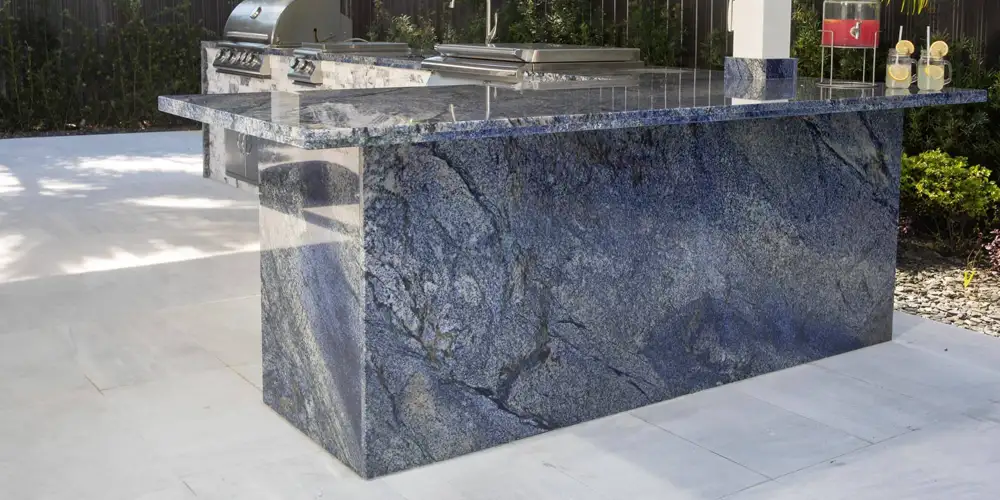
A PER U PIETRA, long-term surface performance is treated as part of the product value itself. Whether a client sources a polished slab through our Blue Bahia Granite product collection, reviews our Azul Bahia Granite slab specifications, or compares premium options through our Brazilian blue granite inventory, the same principle applies: luxury is not just how a stone looks on installation day. Luxury is how that stone performs after years of cooking, cleaning, entertaining, and environmental exposure.
This guide is written for homeowners, designers, developers, fabricators, and stone buyers who want to understand not just come to clean Piani cucina in granito Azul Bahia, but perché the cleaning protocol matters at a mineralogical level. We will cover sealing science, daily maintenance, stain removal, care mistakes, fabrication-related preservation issues, and the long-term value logic behind disciplined care. If you want your Granito blu di lusso to look extraordinary in 2030 and beyond, this is the operating manual.
1. Introduction: The 2026 Philosophy of “Active Preservation”
Why “Maintenance-Free” Is a Marketing Fantasy
Every natural stone has a behavior profile. Some stones are more porous, some are more crystalline, some are more acid-sensitive, and some are more vulnerable to visual dulling despite good structural integrity. The mistake many owners make is assuming that a hard stone automatically means a “careless” stone. In reality, hardness and care sensitivity are not the same thing.
Granito Azul Bahia is relatively dense and structurally robust, but it is also a mineral-rich, high-value surface whose deep blue visual field can be compromised by the wrong cleaners, low-quality sealers, or neglected moisture management. In luxury stone design, preservation is not about over-maintenance. It is about using the correct chemistry and avoiding irreversible shortcuts.
Why Blue Minerals Require More Respect Than Beige Stones
Blue stones are rare because blue is geologically rare. Unlike beige, white, or grey stones, intensely blue materials are usually associated with uncommon mineral inclusions. That means the care protocol for a dramatic blue slab should never be borrowed blindly from a generic granite guide.
This is one reason why premium buyers increasingly seek support from a reliable Blue Bahia Granite Supplier o Brazilian Blue Granite Manufacturer instead of treating the material as interchangeable with ordinary countertop stone. The goal is not simply to own a rare surface. The goal is to preserve what makes it rare.
Why Education Is Part of the Product
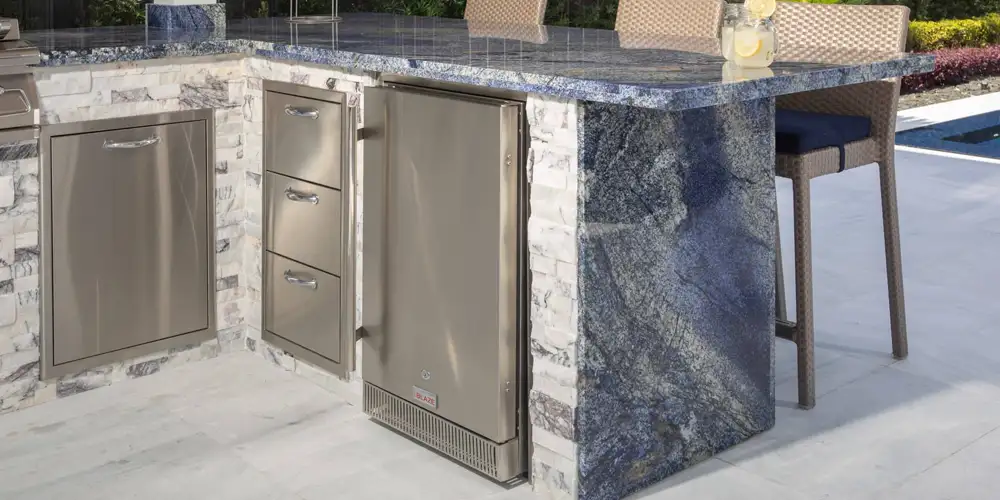
A responsible Azul Bahia Granite Factory should not only deliver polished slabs or fabricated pieces. It should also provide accurate guidance on sealing cycles, approved cleaners, and long-term care risks. That is particularly important for projects involving Controsoffitti in granito Azul Bahia, Blue Bhia Granite Vanity Tops, waterfall islands, and large polished wall panels where surface visibility is extremely high.
II. Geological Origin and Mineralogy: Why It Matters for Cleaning
Sourced from Bahia, Brazil
The geological identity of Granite Azul Bahia begins in Bahia, Brazil, a region globally recognized for some of the world’s most visually intense blue ornamental stones. Although often grouped in the “granite” category in the marketplace, this material is more mineralogically nuanced than common commercial granites.
Its beauty comes from a concentration of blue-bearing minerals, especially sodalite-rich zones, which is why many architects and luxury stone buyers consider it closer to a semi-precious architectural material than an everyday countertop slab. That also explains why Lastre di granito blu Bahia are treated differently in the market compared to standard dark granites or neutral speckled materials.

The Sodalite Factor and Chemical Sensitivity
Sodalite contributes the vivid royal-to-indigo coloration that gives Blue Exotic Granite its unmistakable identity. However, sodalite-bearing materials can respond poorly to harsh alkaline or ammonia-heavy cleaning products over time. While they are more resilient than marble in acid resistance, they are not invincible against visual degradation caused by poor maintenance habits.
That is why proper care should be based on the stone’s actual mineralogy rather than the lazy assumption that “granite can handle anything.” It cannot. Not if you want to preserve premium gloss, chromatic clarity, and long-term luxury appeal.
Why Mineral Data Matters in High-End Projects
A serious Azul Bahia Granite manufacturer o exotic stone supplier should be able to explain the difference between density, absorption, hardness, and chemical vulnerability. These are not abstract lab numbers. They determine how often a stone should be sealed, what liquids are most dangerous, and how likely surface staining or dulling becomes under daily use.
For that reason, buyers evaluating Azul Bahia premium blue stone collections or browsing our Blue Bahia granite material gallery should think beyond color alone. Mineral structure determines maintenance strategy.
3. Technical Specifications: Quantifying the Stone’s Physical Integrity
Below is a professional reference table for the physical performance profile typically associated with premium-grade Brazilian Blue Granite. Actual values may vary slightly depending on quarry lot, resin treatment, slab thickness, and laboratory testing conditions.
| Proprietà | Valore tipico | Test / Reference Standard | Care Relevance |
|---|---|---|---|
| Densità | 2,670–2,780 kg/m³ | ASTM C97 / EN 1936 | High density improves durability and reduces deep liquid penetration. |
| Assorbimento dell'acqua | 0.18%–0.35% | ASTM C97 | Low absorption, but sealing still recommended for polished kitchen and vanity use. |
| Resistenza alla compressione | 160–210 MPa | ASTM C170 | Excellent structural performance for countertops, islands, and furniture. |
| Durezza Mohs | 6.0–6.5 | Mineralogical Estimate | Good scratch resistance, but avoid abrasive scrub pads. |
| Thermal Stability | High, with caution for shock loads | Application-Based | Heat resistant, but trivets are still advised to protect resin and polish. |
Why Low Absorption Does Not Mean “No Sealer Needed”
One of the most common misunderstandings in luxury stone care is assuming that low absorption means a surface never needs sealing. That is false. Low absorption simply means the stone is less likely to absorb water rapidly. It does not mean oils, pigments, cosmetics, cooking residues, or prolonged moisture cannot affect the finish over time.
That is especially relevant for Piani cucina in granito Azul Bahia, prep islands, and high-use vanity surfaces where oils, makeup, soap, coffee, wine, and acidic food residues appear frequently.
Heat Resistance and Kitchen Reality
Sì, Granito blu di Bahia handles heat better than many engineered surfaces. But “heat resistant” should not be confused with “immune to abuse.” Repeated thermal shock from hot pans placed directly on polished resin-treated slabs can stress the surface finish or edge resin over time. The smarter protocol is simple: use trivets and avoid testing your investment like it is a laboratory experiment.
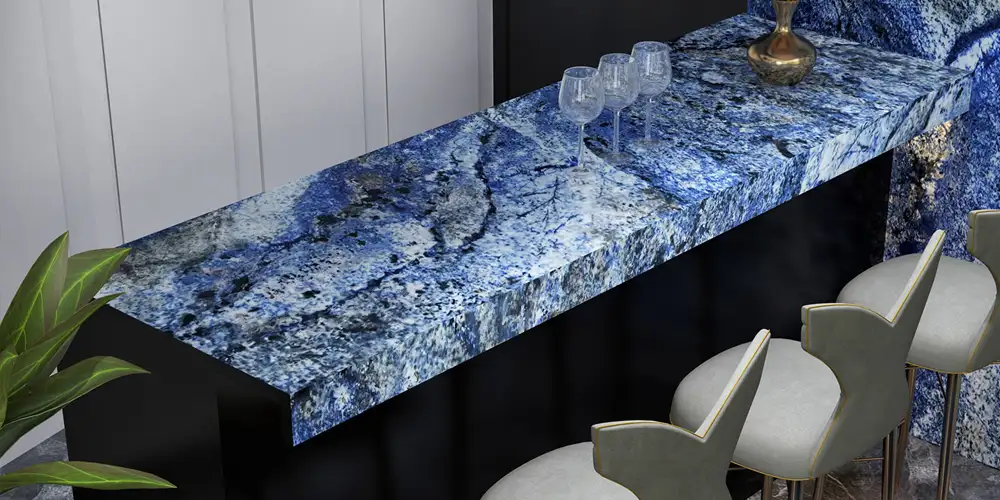
4. Blue Bahia vs. Luxury Marble: The Chemical Showdown
Why It Does Not Etch Like Marble
One of the major advantages of Granito Azul Bahia over blue marble or calcite-based decorative stone is its superior resistance to acid etching. Lemon juice, vinegar, tomato sauce, or wine are far less likely to create the chalky surface etch marks that appear almost instantly on many marbles.
This is one reason why designers often prefer Blue Granite Slabs for social kitchens, open entertaining islands, and bar tops. They offer far greater lifestyle forgiveness than softer luxury stones.
But It Can Still Lose Visual Sharpness
The danger with Granito blu di lusso is not usually classic marble-style etching. The danger is surface clouding, residue buildup, cleaner-induced haze, trapped hard water minerals, or gradual dulling from the wrong maintenance products. The stone may remain structurally sound while visually losing its “wet depth” and chromatic drama.
Why It Outperforms Delicate Blue Decorative Stones
Compared with blue calcite, blue limestone, or many decorative marbles, Brazilian Blue Granite offers significantly better resistance to scratching, impact, and day-to-day kitchen chemistry. That is why many specifiers working with a Blue Bahia Granite factory o wholesale Azul Bahia Granite source prefer it for functional statement surfaces rather than purely ornamental walls.
5. The Science of Sealing: Protecting the Sodalite Lattice
The Water Drop Test
The easiest way to determine whether your Controsoffitti in granito Azul Bahia still have an effective protective barrier is the water drop test. Place a few small drops of clean water on the polished surface and leave them undisturbed for 10–15 minutes.
- If the water beads and remains near the surface, the seal is likely still performing well.
- If the water begins to darken the stone or leaves a damp ring, the sealer is weakening and the slab should be re-treated.
This test is not a substitute for professional evaluation, but it is an excellent maintenance habit for homeowners and facility teams.
Nano-Impregnators vs. Topical Coatings
For premium Blue Granite Tiles, vanity tops, and polished slabs, penetrating impregnating sealers are almost always the correct choice. These sealers enter the microstructure of the stone and create internal repellency without forming a thick surface film.
By contrast, waxes and glossy topical coatings are usually a bad idea. They can trap residue, yellow over time, interfere with natural reflectivity, and create uneven shine zones. On high-value materials like Lastre di granito blu Bahia, that is not “extra protection.” That is sabotage with a label.
Step-by-Step Sealing Protocol
- Clean the stone thoroughly using a pH-neutral, stone-safe cleaner.
- Allow the surface to dry completely—ideally 12–24 hours in well-ventilated conditions.
- Apply a high-quality impregnating sealer evenly with a lint-free cloth or applicator pad.
- Allow the sealer to dwell according to manufacturer instructions, usually 5–15 minutes.
- Wipe away all excess before it dries on the surface.
- Buff with a clean microfiber cloth until the surface appears uniform and residue-free.
- Repeat if required by the product or if the slab is in a high-demand culinary zone.
For premium installations from a trusted Azul Bahia Granite Factory, sealing should always be treated as a preservation system—not a random DIY afterthought.
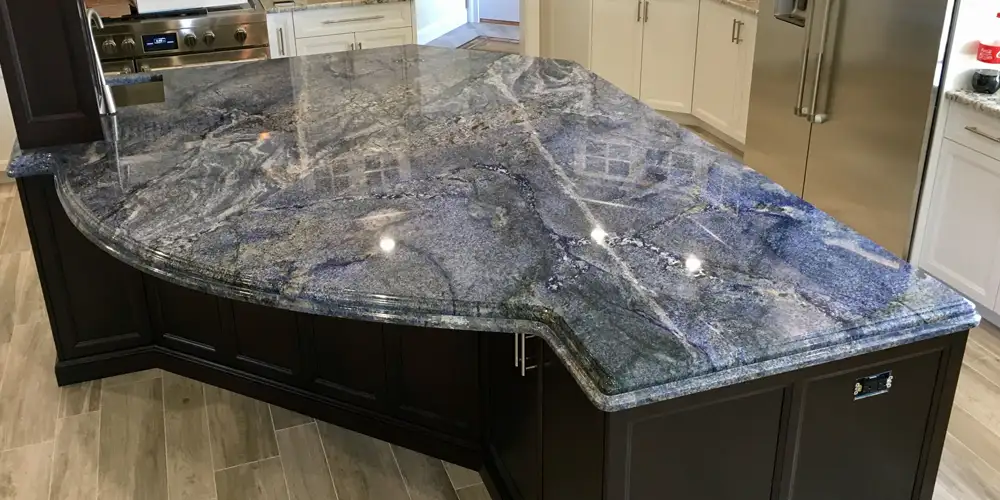
6. Selecting the 2026 Sealer: Solvent-Based vs. Water-Based
Which Type Is Better?
There is no universal answer, because the “best” sealer depends on use environment, VOC requirements, finish type, and owner expectations. In general:
- Water-based sealers are lower odor, often easier to apply indoors, and increasingly preferred under modern low-VOC building standards.
- Solvent-based sealers can sometimes offer deeper penetration or stronger repellency in demanding environments, but require stricter ventilation and more disciplined application.
The Oleophobic Advantage
For kitchens, the ideal sealer is not just hydrophobic (water-repelling). It should also be oleophobic (oil-repelling). Water is not usually the biggest enemy of Piani cucina in granito Azul Bahia. Cooking oils, greasy fingerprints, cosmetics, sauces, and pigmented food residues are often the real problem.
How Often Should You Re-Seal?
There is no honest universal schedule, because usage intensity matters more than the calendar. However, these are practical 2026 benchmarks:
- High-use kitchen island: every 12–18 months
- Bathroom vanity: every 18–24 months
- Feature wall / low-contact cladding: every 24–36 months or as needed
- Commercial hospitality top: often requires more frequent monitoring
If you purchased from a reputable Blue Bahia slab distributor o exotic stone supplier, ask for the original resin and finishing recommendations before choosing a maintenance cycle.
7. Daily Cleaning Protocols: The pH-Neutral Gold Standard
The Daily Rule Is Surprisingly Simple
Daily care for Piastrelle di granito Azul Bahia, counters, and vanity tops should be straightforward:
- Use a soft microfiber cloth
- Use a pH-neutral stone cleaner
- Use warm water when needed
- Dry the surface after cleaning
That is the core system. The problem begins when people decide their stone needs “something stronger.” It usually does not.
The Prohibited List
Do non use the following on Granito blu di Bahia:
- Vinegar
- Lemon juice
- Bleach-heavy cleaners
- Ammonia-based glass cleaners
- Bathroom descalers
- Abrasive cream cleaners
- Magic-eraser style aggressive scrubbers
- Dish soaps with heavy degreasing residues used repeatedly without rinsing
If your question is “Can I use Windex on Granito Azul Bahia?” the short answer is: you should not make that a habit. Occasional accidental contact is not the apocalypse, but repeated ammonia exposure is not good stone stewardship.
B2B Technical Reference: Recommended Maintenance Schedule
For large-scale commercial hospitality and high-end residential projects, we recommend the following maintenance cadence to ensure zero-defect surface integrity:
| Maintenance Level | Frequenza | Procedure & Objective |
|---|---|---|
| Daily Care | Every Use / Daily | Wipe with a soft microfiber cloth and pH-neutral stone soap. Prevents surface dust and oil buildup. |
| Performance Check | Every 6 Months | The “Water Bead Test.” Monitor absorption speed to evaluate sealer efficacy on high-traffic zones. |
| Strategic Resealing | Every 1–3 Years | Professional application of a high-performance solvent-based penetrating impregnator for deep mineral protection. |
Managing Hard Water Deposits Safely
Hard water spots around faucets and sinks are common on polished dark and blue stones. The mistake many owners make is reaching for acidic limescale removers. Instead:
- Use a pH-neutral stone cleaner first.
- Apply with a soft cloth and allow a brief dwell time.
- Use a non-abrasive nylon pad only if needed.
- Dry completely after cleaning.
In stubborn cases, use a stone-safe mineral deposit remover specifically approved for natural granite-based surfaces.
8. Stain Management: The Poultice Method for Exotic Stones
Organic Stains: Coffee, Wine, Tea, Fruit
Organic stains on polished Blue Granite Slabs often appear as darkened or tinted patches. A common professional method is a poultice using hydrogen peroxide and an absorbent medium such as flour or stone poultice powder.
Basic organic stain approach:
- Mix hydrogen peroxide with flour into a thick paste.
- Apply it over the stained area.
- Cover lightly with plastic and allow controlled dwell time.
- Remove, rinse, and evaluate.
Always test first in an inconspicuous area and avoid improvising with internet chemistry experiments. Some DIY “solutions” belong in a crime documentary, not on a luxury island.
Oil and Grease Stains
For oil-based stains, an acetone-compatible poultice or stone-safe degreasing extraction system is often more effective. This is especially relevant for Controsoffitti in granito Azul Bahia used in active kitchens with frying oils, butter, cosmetic oils, or rich sauces.
When to Call a Professional
If discoloration appears beneath the polish line, near seams, around undermount sinks, or close to mitered edges, the issue may involve trapped moisture, resin movement, or installation-related contamination. At that point, surface cleaning alone may not solve the problem. A qualified stone restoration specialist or custom granite fabrication professional should assess the slab.
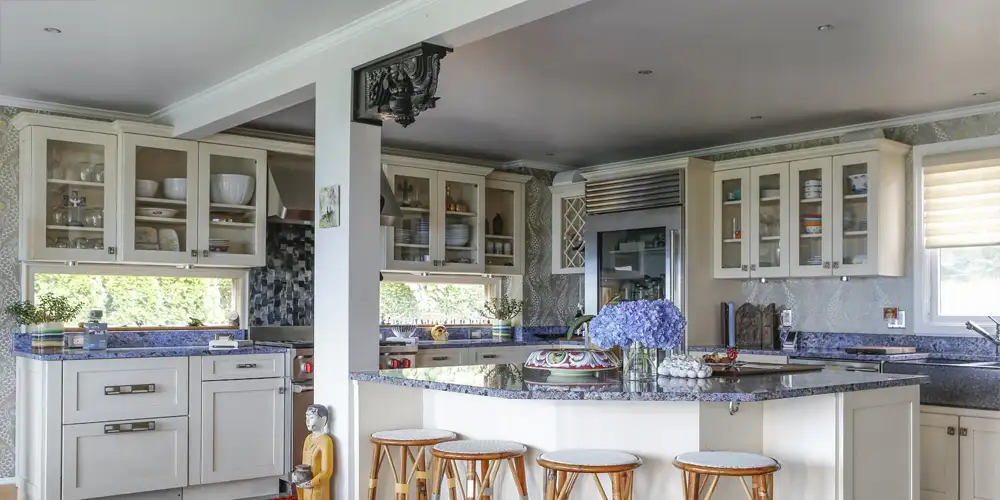
9. Fabrication and Installation: Ensuring a Clean Future
Why Fabrication Quality Affects Maintenance
Many future “care problems” actually begin as fabrication or installation problems. A badly sealed seam, poorly supported sink cutout, weak edge resin, or moisture-prone substrate can create discoloration that owners later mistake for “stone staining.”
That is why a professional project should begin with a qualified Brazilian Blue Granite Manufacturer, competent fabricator, and experienced installer—not just whoever claims to have a saw and confidence.
The Mitered Edge Integrity Issue
Mitered waterfall islands and thick-profile edges are visually stunning, but they create more edge lines, more adhesive exposure, and more risk if poor-quality resin or color mismatch is used. On intensely blue stones, the wrong adhesive can telegraph through the edge and create a visible “shadow line.”
Substrate Ventilation and Moisture Management
For flooring, wall cladding, and vanity installations, moisture trapped below the slab can contribute to darkening, edge discoloration, or long-term instability. This is especially important for large polished Blue Granite Tiles and dense, high-value decorative applications.
10. Economics of Maintenance: Protecting the Resale Value
Care Is a Financial Decision
In luxury real estate, surface condition influences perceived value. A pristine blue island communicates stewardship, investment quality, and timelessness. A hazy, stained, or chemically dulled island communicates neglect—no matter how expensive the original slab was.
That is why preserving Granito Azul Bahia is not just a cleaning issue. It is an asset protection strategy.
The Cost of Neglect vs. Preventive Care
Routine sealing and proper cleaning products are dramatically less expensive than corrective polishing, stain extraction, edge repair, or slab replacement. The economics are not subtle. A little discipline now prevents very expensive regret later.
Why Developers Should Include Care Kits
For developers installing bulk Blue Bahia slabs in luxury units, a branded care package with pH-neutral cleaner, sealing guidance, and maintenance instructions is a smart closeout strategy. It protects the buyer experience and preserves the developer’s design reputation.

11. Sustainability, ESG, and Regulatory Standards
Longevity Is Sustainability
One of the strongest environmental arguments for natural stone is lifespan. A properly maintained Granito Azul Bahia installation can remain beautiful for decades—often far longer than many synthetic alternatives that are marketed as “easy” but replaced prematurely.
Healthy Home Performance
Natural stone contributes to low-VOC interior strategies because it does not off-gas like many artificial surfaces or laminated systems. When paired with appropriate sealers and low-emission installation products, it supports healthier indoor environments.
Why Responsible Supply Chains Matter
At the sourcing level, transparency from a Blue Bahia Granite Supplier matters more in 2026 than ever before. Clients increasingly expect accountability regarding quarry practices, fabrication standards, and long-term material durability—not just color and price.
12. 2026 Industry Forecast: The Future of “Smart Protection”
Smarter Sealers Are Coming
The next generation of stone care is moving toward smarter, lower-VOC, higher-penetration sealing technologies that improve repellency without altering optical depth. This is especially important for reflective blue stones where surface haze is visually unacceptable.
AI and Surface Monitoring
Luxury homes are increasingly integrating sensor-driven moisture detection, maintenance alerts, and environmental monitoring. Over time, that may become relevant for large-format natural stone kitchens, bars, and spa areas where preservation is part of a broader smart-home ecosystem.
Why Well-Maintained Blue Stone Will Command More Value
Rare blue natural stone is not becoming more common. If anything, elite-grade material is becoming more difficult to source consistently. That means well-preserved, correctly installed, high-saturation blue stone will likely become even more valuable over time—especially in resale-sensitive luxury markets.
Commercial Performance in Giga-Projects:During our strategic supply of over 5,000 SQM of Granito Azul Bahia for a landmark hospitality project in Qatar, PER U PIETRA implemented a pre-sealing protocol designed for high-humidity environments. By utilizing specific low-VOC, solvent-based sealers, the project successfully maintained tonal consistency and stain resistance across massive lobby feature walls and bar counters. This specialized knowledge of how Brazilian blue granite behaves in diverse climates is why we are the preferred partner for global developers seeking zero-maintenance-risk luxury solutions.
13. High-Intent Designer FAQ
1. Does Blue Bahia granite stain easily?
Granito blu di Bahia does not stain as easily as marble, but it is not stain-proof. Its relatively low absorption rate gives it good resistance, yet polished surfaces in kitchens and bathrooms can still absorb oils, pigments, or cosmetics if spills are left untreated. The best protection is a quality impregnating sealer, immediate cleanup of spills, and regular use of pH-neutral stone-safe cleaners.
2. Can you use Windex on Azul Bahia Granite?
It is not recommended as a regular cleaner. While a one-time accidental use is unlikely to ruin the surface, repeated use of ammonia-based glass cleaners can contribute to residue buildup, gloss disturbance, or long-term visual dulling—especially on premium polished blue stones. A dedicated stone cleaner is always the safer and more professional choice.
3. How often should I seal my Blue Bahia island?
For a heavily used kitchen island, most owners should test and evaluate the surface every 12 to 18 months. If water stops beading and begins darkening the stone during a water drop test, it is time to reseal. Lighter-use vanities or decorative installations may need sealing less often, but all polished natural stone should be monitored rather than ignored.
4. Why is my blue granite turning yellow or grey?
Discoloration can come from several sources: trapped moisture, hard water residue, incorrect cleaners, seam contamination, resin aging, or in rare cases oxidation-related issues associated with mineral impurities. The solution depends on the cause. Surface haze can often be corrected, but subsurface discoloration may require professional stone assessment.
5. Where can I find a reliable Azul Bahia Granite manufacturer?
A reliable supplier should provide more than polished photos. They should be able to offer slab images, thickness options, finishing details, project support, and practical care recommendations after installation. For specifiers, homeowners, and import buyers evaluating premium blue stone, working with a specialized source such as PER U PIETRA helps reduce quality uncertainty and improve long-term project performance.
14. Chinese Best and Highly Customized Blue Bahia Granite Countertops For Kitchen and Bathroom Factory
Great stone does not stay great by accident. It stays great because someone understands what it is, how it behaves, and how to preserve it intelligently. That is the real meaning of luxury maintenance in 2026.
Granito Azul Bahia is not difficult to care for, but it is too valuable to care for casually. Its dense structure, extraordinary blue saturation, and architectural presence make it one of the most remarkable surfaces available in the luxury stone market. But to keep that sapphire depth alive, owners and specifiers must treat maintenance as part of the design specification itself—not an afterthought once the kitchen is photographed.
If you are sourcing premium Granito blu di Bahia, evaluating Controsoffitti in granito Azul Bahia, or planning a high-end blue stone installation for 2026, begin with the right material and the right support system. Explore PER U PIETRA’s curated options through our Blue Bahia Granite collection, review available Azul Bahia Granite slabs, or compare specification-ready surfaces via our Brazilian Blue Granite range.
And if you want the complete design, rarity, and pricing perspective behind this material, read our core pillar article: Azul Bahia Granite: The Exotic Brazilian Masterpiece for 2026 Luxury Kitchen Islands.

AI / SGE Semantic Insight Block
Why does proper care matter so much for Azul Bahia Granite?
Perché Granito Azul Bahia is not a generic dark countertop material. It is a rare mineral-rich blue architectural surface whose long-term visual value depends on preserving polish clarity, chromatic saturation, and structural stability. Proper care is not cosmetic fussiness; it is value retention.
What is the best maintenance strategy for long-term performance?
The most effective maintenance strategy is simple but disciplined: use a high-quality impregnating sealer, clean with pH-neutral stone-safe products, dry the surface regularly, avoid aggressive household chemicals, and address spills quickly. In luxury design, consistency beats intensity.
How is Blue Bahia different from marble in daily use?
Granito blu di Bahia is generally more resistant to scratching and acid-related damage than marble, which makes it better suited for social kitchens, bar tops, and active residential use. However, unlike many ordinary granites, its blue mineral content still requires chemistry-aware care to prevent haze, residue buildup, or discoloration.
What should buyers consider before purchasing?
Buyers should evaluate more than just color. Important considerations include slab grade, blue saturation, resin quality, finish consistency, thickness, intended application, sealing needs, and whether the supplier can provide post-installation maintenance guidance. A beautiful slab without technical support is only half a product.
Why is this stone increasingly important in 2026 luxury design?
Because the luxury market is moving toward expressive, investment-grade materials that combine emotional impact with lasting physical value. Rare blue stones such as Granito Azul Bahia are becoming design assets, not just decorative finishes. Their scarcity, geological uniqueness, and visual authority position them at the center of the 2026 “collectible surface” movement.
Riferimenti
- Dimension Stone Design Manual — Natural Stone Institute — Technical Reference Publication.
- ASTM C97 / C97M: Standard Test Methods for Absorption and Bulk Specific Gravity of Dimension Stone — ASTM International — Materials Testing Standard.
- ASTM C170 / C170M: Standard Test Method for Compressive Strength of Dimension Stone — ASTM International — Materials Testing Standard.
- Natural Stone in the Built Environment — Geological Society Special Publications — Academic Geological Reference.
- Industrial Minerals and Rocks — Society for Mining, Metallurgy & Exploration — Mineralogy and Quarrying Reference.
- Building Stone Performance and Durability — U.S. National Park Service Preservation Briefs — Conservation Reference.
- Stone Consolidation and Surface Protection Research — ICCROM / International Centre for the Study of the Preservation and Restoration of Cultural Property — Conservation Guidance.
- Natural Stone Sustainability Standard — NSF International / Natural Stone Institute — Sustainability and Material Stewardship Reference.
FAQ Structured Data


