


Two Green Stones, Two Different Kitchen Lifestyles
A green stone kitchen is no longer a rare design experiment. In luxury villas, boutique apartments, hotel residences, and high-end family homes, green surfaces are becoming one of the strongest alternatives to the white-and-grey kitchen trend. They bring nature, depth, calmness, and personality into the room without feeling artificial.
But when buyers start comparing Green Marble and Green Quartzite, the decision becomes more serious than color preference. Both stones can create beautiful kitchen countertops, islands, backsplashes, and wall features. The real question is not “Which one is better?” The better question is: which one fits your cooking habits, maintenance expectations, design mood, and long-term project goals?
For buyers choosing between green marble kitchen countertops and green quartzite kitchen countertops, supplier experience also matters. A professional natural green stone countertop supplier should help review slab photos, finish options, sealing needs, fabrication risks, packing methods, and application suitability before the final order is confirmed.
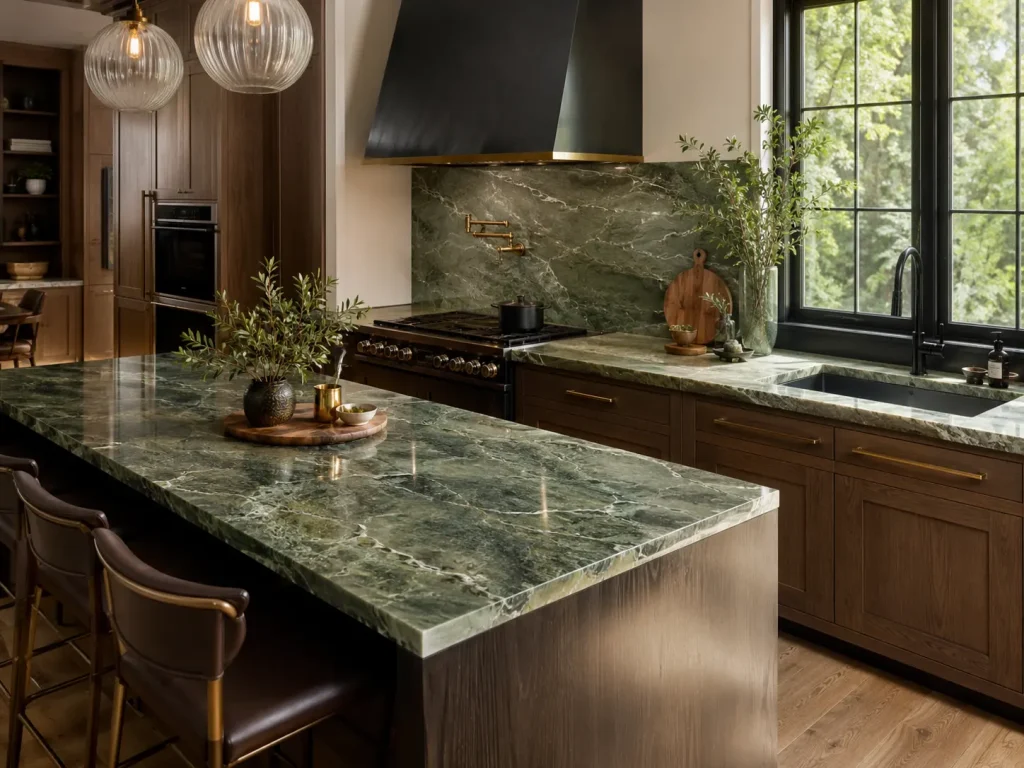
Aesthetic Comparison: Natural Veining vs. Pattern Consistency
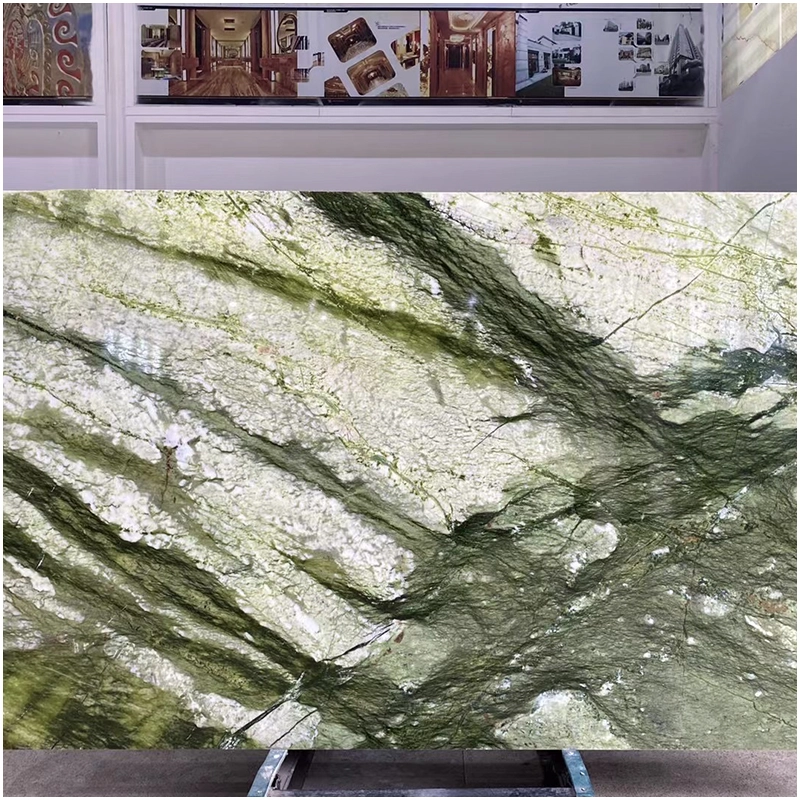
Green Marble often feels expressive, decorative, and emotionally rich. Its veins may appear as soft clouds, white streaks, dark forest-green movement, golden mineral accents, or dramatic waves. In a kitchen, this creates a strong natural-art effect. A Green Marble island can become the visual center of the room without needing much decoration around it.
Green Quartzite usually feels denser, more crystalline, and more architectural. It may show layered patterns, mineral sparkle, flowing movement, or deep green texture. Compared with many marbles, quartzite often gives a sharper and more performance-oriented impression. It still feels natural, but with a stronger structural personality.
If the kitchen is designed as a showpiece, Green Marble can be exceptional. If the kitchen is designed for daily use with natural luxury, Green Quartzite may be more practical. For buyers planning luxury homes in warmer markets, the growing demand for Green Marble slabs for palaces and villas shows how green stone has become a serious architectural surface, not just a decorative accent.
Aesthetic Comparison Table
| Design Factor | Green Marble | Green Quartzite |
|---|---|---|
| Visual Mood | Artistic, soft, luxurious | Crystalline, strong, architectural |
| Veining Style | Dramatic, flowing, expressive | Layered, mineral-rich, textured |
| Pattern Consistency | More natural variation | Usually more structured but still varied |
| Best Design Use | Statement island, feature backsplash | High-use countertop, waterfall island |
| Interior Style | Classic luxury, boutique, art-led | Modern luxury, natural contemporary |
| Buyer Appeal | Emotional and decorative | Practical luxury and performance-driven |
In compact or urban homes, designers should be careful with very dark or heavily veined green stones. A detailed guide on choosing Green Marble for modern villas can help buyers understand how slab color, room size, cabinet tone, and lighting affect the final result.
Color Psychology: Why Green Stone Is Rising in Kitchens
Green is strongly connected with nature, calmness, balance, freshness, and wellness. In kitchen design, it offers a more personal alternative to plain white, black, or grey countertops. It pairs beautifully with walnut, white oak, cream cabinets, brass hardware, bronze metal, black fixtures, warm lighting, and textured backsplashes.
Luxury kitchens are moving beyond purely neutral palettes. Buyers still want practical surfaces, but they also want materials that give the room identity. Green stone does this well because it brings color without feeling synthetic. It can feel botanical, refined, dramatic, or soothing depending on the slab.
For homeowners who want to introduce green stone gradually, using Green Marble to add vibrance to your home can inspire applications beyond countertops, including backsplashes, feature panels, furniture tops, bathroom walls, and decorative accents.
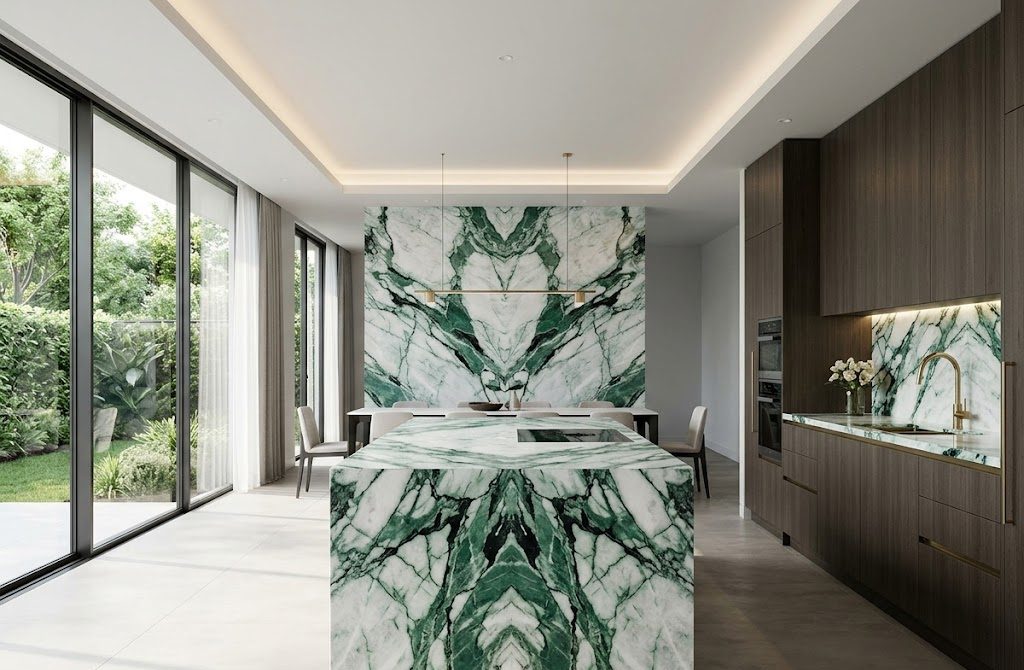
Durability and Hardness: Scratch and Heat Resistance
Durability is where many buyers start comparing Green Marble and Green Quartzite more seriously. Marble is usually a calcium-carbonate-based natural stone with a typical Mohs hardness around 3–4. It can be used in kitchens, but it needs more care. Cutting boards, trivets, sealing, quick spill cleanup, and pH-neutral cleaners are strongly recommended.
Quartzite is a metamorphic stone formed from sandstone under heat and pressure. True quartzite is rich in quartz minerals and often reaches around Mohs 6–7. This generally gives Green Quartzite stronger scratch resistance and better daily-use durability than marble. However, buyers should remember that natural stone performance can vary by quarry, slab, finish, and mineral composition.
Both materials handle heat better than many synthetic surfaces, but direct heat exposure is still not recommended. Hot pans may affect sealers, resin-treated areas, or cause thermal shock in certain conditions. Trivets are still smart. Your countertop may be stone, but it is not a superhero cape.
Scratch and Heat Resistance Comparison
| Performance Factor | Green Marble | Green Quartzite |
|---|---|---|
| Typical Mohs Hardness | 3–4 | 6–7 |
| Scratch Resistance | Moderate | High |
| Heat Resistance | Good with care | Very good with care |
| Acid Sensitivity | Higher | Lower, but test specific slab |
| Etching Risk | Higher from lemon, vinegar, wine | Lower than marble |
| Cutting Board Needed | Yes | Yes, still recommended |
| Trivet Recommended | Yes | Yes |
| Best Use Case | Light-to-medium use luxury kitchens | High-use kitchens and family cooking areas |
For buyers comparing varieties, the ultimate guide to Green Marble slabs is useful for understanding different green marble colors, vein styles, sourcing logic, and project suitability.
Maintenance: Porosity and Sealing Requirements
Maintenance is not about fear. It is about expectation. Green Marble can perform beautifully in kitchens when the owner understands natural stone care. It should be sealed, cleaned with pH-neutral products, and protected from acidic spills such as lemon juice, vinegar, wine, and tomato sauce. Over time, marble may develop a natural patina, which some owners appreciate as part of its character.
Green Quartzite is generally easier for daily kitchen use, but it is not maintenance-free. Many quartzites still benefit from sealing, and some stones sold commercially as quartzite may actually be softer materials such as marble or dolomitic stone. Buyers should always verify the material with supplier information, test data, or professional inspection.
For lower-wear applications such as backsplashes and walls, Green Marble tiles for interior decoration can be a smart option because vertical surfaces face less abrasion, fewer spills, and lower direct cooking stress than countertops.
Maintenance Comparison Table
| Maintenance Factor | Green Marble | Green Quartzite |
|---|---|---|
| Sealing Required | Yes | Usually yes |
| Acid Sensitivity | Higher | Lower, depending on stone |
| Stain Resistance | Good if sealed, but more sensitive | Generally stronger if sealed |
| Cleaning Method | pH-neutral cleaner | pH-neutral cleaner |
| Daily Care Level | Medium to high | Low to medium |
| Patina Over Time | More likely | Less obvious |
| Best Owner Type | Appreciates natural aging | Wants easier daily performance |
Buyers who want to compare different green tones, finishes, and slab patterns can review a wider Green Marble series before deciding whether the kitchen needs dark drama, soft elegance, or a more decorative surface.
Price Point Analysis: Luxury Investment vs. Practicality
Price should not be discussed as a simple “cheap or expensive” decision. In luxury stone projects, the real cost depends on rarity, quarry source, slab size, thickness, availability, finish, freight, fabrication difficulty, cutting waste, bookmatching, and installation complexity.
Green Marble is often chosen for emotional value. Buyers select it when the stone itself is part of the design story. It works especially well in show kitchens, luxury villas, boutique hotel suites, feature backsplashes, and decorative islands where visual impact matters most.
Green Quartzite is often chosen when buyers want natural beauty with stronger daily-use performance. For active households, family kitchens, open-plan kitchens, and waterfall islands, the durability logic can make quartzite very attractive.
The growth of exotic Green Quartzite in luxury interiors shows how designers are increasingly using quartzite as both a performance surface and a statement stone.
Investment Logic Comparison
| Buyer Priority | Better-Fit Direction | Reason |
|---|---|---|
| Artistic luxury | Green Marble | Strong veining and decorative value |
| Daily cooking durability | Green Quartzite | Better scratch resistance |
| Show kitchen | Green Marble | Visual drama |
| Family kitchen | Green Quartzite | Practical durability |
| Low-maintenance preference | Green Quartzite | Easier daily care |
| Classic luxury design | Green Marble | Softer elegance |
| Modern architectural kitchen | Green Quartzite | Strong natural performance |
| Statement island | Both | Depends on vein movement and lifestyle |
For trend-focused buyers, exotic Green Quartzite trends can help identify which textures, tones, and applications are gaining attention in high-end kitchen and interior design.
|
|
|
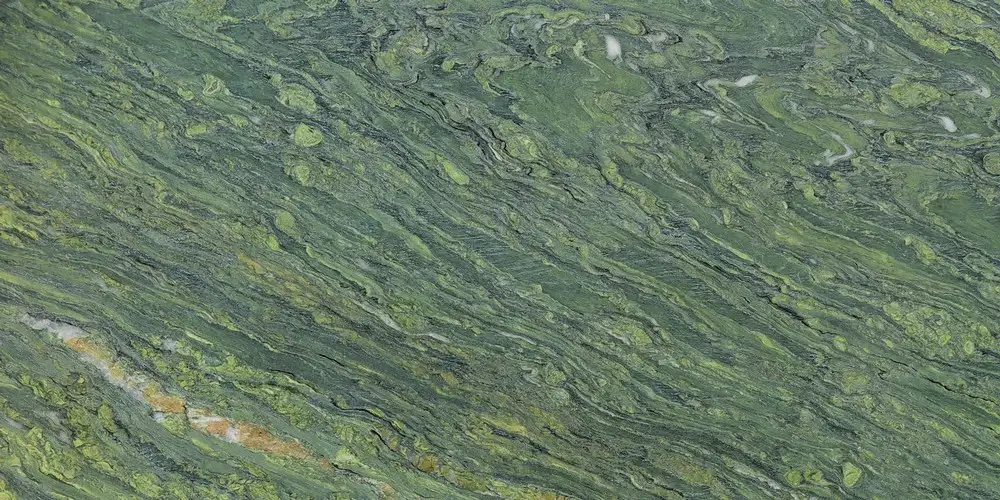

Kitchen Application Scenarios: Which Stone Fits Which Lifestyle?
A show kitchen may favor Green Marble because visual emotion matters more than heavy daily use. A family kitchen may favor Green Quartzite because scratch resistance and lower sensitivity matter more. A luxury apartment may use a calmer green stone to avoid overwhelming the space. A villa island can use either material, depending on whether the client wants art-like veining or stronger daily performance.
For modern statement surfaces, Krypton Quartzite in green luxury trends reflects the growing appetite for exotic green stones with stronger visual depth and premium positioning.
Scenario-Based Selection Matrix
| Kitchen Scenario | Recommended Direction | Buyer Note |
|---|---|---|
| Show kitchen | Green Marble | Use dramatic slabs and controlled lighting |
| Family kitchen | Green Quartzite | Better for frequent cooking |
| Luxury apartment | Subtle Green Quartzite or refined Green Marble | Consider space size |
| Villa island | Both | Choose by lifestyle and visual goal |
| Boutique hotel suite | Green Marble | Strong decorative value |
| High-use rental kitchen | Green Quartzite | Easier care expectations |
| Feature backsplash | Green Marble | Lower wear than countertop |
| Waterfall island | Green Quartzite | Strong durability and visual continuity |
For buyers who want a vivid natural stone alternative, Fusion Granite Quartzite slabs can also be considered when the project needs dynamic movement, strong surface character, and an exotic stone appearance.
Fabrication and Installation Considerations
Both Green Marble and Green Quartzite require skilled fabrication. Small samples are not enough. Buyers should review full slab photos, inspect vein direction, confirm slab thickness, and plan seams before cutting. Strong green stones often have dramatic movement, so poor seam placement can interrupt the entire design.
Marble is generally easier to cut than quartzite, but it may need more care around veins, fissures, sink cutouts, and reinforcement. Quartzite is harder and may require specialized diamond tooling, slower cutting, and experienced fabricators. The harder stone is not always easier to fabricate. Sometimes it is just harder, like a very beautiful but stubborn guest.
Fabrication Risk Table
| Fabrication Item | Green Marble | Green Quartzite |
|---|---|---|
| Cutting Difficulty | Moderate | Higher |
| Edge Chipping Risk | Moderate | Depends on stone hardness and tools |
| Vein Matching | Very important | Very important |
| Sink Cutout Planning | Requires care | Requires diamond tooling and care |
| Slab Handling | Sensitive to veining and fissures | Heavy and hard, needs skilled handling |
| Installer Skill | Important | Very important |
Buyers should request fabrication guidance, sealing recommendations, packing details, and installation support before confirming slabs. A direct green stone project consultation can help clarify material suitability, project dimensions, finish options, and sourcing requirements.
Industry Trends: Why Green Kitchen Stones Are Growing
Green kitchen stone is rising because it connects with several major design trends. Biophilic design is bringing nature-inspired colors into interiors. Warm minimalism is replacing cold grey kitchens. Luxury homeowners want surfaces with personality. Designers are also using natural stone as a storytelling element, not just a functional material.
Green Marble supports artistic and decorative luxury. Green Quartzite supports practical luxury with a stronger performance profile. Both materials also fit the move toward bespoke interiors, where clients want surfaces that cannot be easily repeated.
Sustainability also plays a role. Natural stone can last for decades when properly selected, fabricated, installed, and maintained. Buyers should ask about quarry sourcing, slab yield, cutting waste, durability, and long-term care rather than treating the purchase as a short-term visual decision.
Regulations, Safety, and Documentation Buyers Should Know
Natural stone typically has low VOC concerns, but installation systems still matter. Adhesives, sealers, backing materials, and cleaning products should be selected carefully, especially for interior spaces.
Fabrication safety is important. Cutting, grinding, and polishing stone can generate dust, so professional workshops should follow wet cutting, dust control, ventilation, PPE, and local workplace safety rules. Buyers should not ignore this part, especially for commercial projects.
Buyer Documentation Checklist
| Document / Detail | Why It Matters |
|---|---|
| Full slab photos | Shows real vein movement |
| Absorption data | Helps maintenance planning |
| Thickness confirmation | Supports fabrication |
| Finish sample | Shows real surface effect |
| Sealer recommendation | Reduces staining risk |
| Packing photos | Reduces shipping disputes |
| Installation guidance | Supports project success |
| Supplier experience | Reduces sourcing risk |
Common Mistakes Buyers Should Avoid
The first mistake is choosing by small samples only. Green stone is all about full slab personality, and small samples cannot show it.
The second mistake is assuming all quartzite performs the same. Some stones sold as quartzite may not be true hard quartzite.
The third mistake is expecting marble to behave like engineered stone. Marble needs care and patina acceptance.
The fourth mistake is ignoring lighting. Green stone changes dramatically under warm, cool, and natural light.
The fifth mistake is forgetting cabinet matching. Green stone must coordinate with wood, metal, backsplash, flooring, and wall tones.
The sixth mistake is not planning maintenance. Both materials need sealing and correct cleaning.
Buyer Decision Logic: Green Marble or Green Quartzite?
If the kitchen is mostly decorative, choose Green Marble.
If the kitchen is used daily, choose Green Quartzite.
If the client wants soft luxury, choose Green Marble.
If the client wants durability and natural depth, choose Green Quartzite.
If the project needs a dramatic backsplash, choose Green Marble.
If the project needs a hard-working island, choose Green Quartzite.
If the buyer accepts patina, Green Marble works beautifully.
If the buyer wants lower daily maintenance, Green Quartzite may fit better.
Final Buyer Decision Matrix
| Buyer Need | Recommended Direction |
|---|---|
| Artistic statement island | Green Marble |
| High-use cooking surface | Green Quartzite |
| Lower maintenance expectation | Green Quartzite |
| Classic luxury kitchen | Green Marble |
| Modern architectural kitchen | Green Quartzite |
| Feature backsplash | Green Marble |
| Waterfall island | Green Quartzite |
| Boutique interior | Both, depending on visual goal |
The Best Green Stone Depends on How You Use the Kitchen
Green Marble and Green Quartzite both create luxury kitchen surfaces, but they support different lifestyles. Green Marble is ideal for expressive, artistic, and softer luxury kitchens. Green Quartzite is ideal for high-use kitchens where durability, hardness, and lower daily sensitivity matter more.
Choose Green Marble when the kitchen is about visual emotion. Choose Green Quartzite when the kitchen is about daily performance. Choose either one only after reviewing full slabs, finish samples, maintenance expectations, fabrication requirements, and supplier capability.
Before ordering, buyers should request full slab photos, absorption information, finish samples, sealing recommendations, fabrication guidance, and packing details from a qualified green stone supplier.
|
|
|


Frequently Asked Questions
1. Is Green Marble good for kitchen countertops?
Yes, Green Marble can be good for kitchen countertops when the buyer understands its maintenance requirements. It offers artistic veining, natural luxury, and strong visual impact, especially for statement islands, show kitchens, and lower-to-medium use kitchens. However, because marble is more sensitive to acids and scratches than quartzite, it should be sealed properly, cleaned with pH-neutral products, and protected with cutting boards and trivets during daily use.
2. Is Green Quartzite better for busy kitchens?
Green Quartzite is generally a stronger option for busy kitchens because true quartzite usually has higher hardness and better scratch resistance than marble. It is suitable for family kitchens, high-use countertops, waterfall islands, and cooking spaces where durability matters. Buyers should still seal the surface, use mild cleaners, and verify that the selected slab is true quartzite because some commercially labeled quartzites may vary in performance.
3. What is the main difference between Green Marble and Green Quartzite?
The main difference between Green Marble and Green Quartzite is mineral composition and performance. Green Marble is typically calcium-carbonate based, softer, more acid-sensitive, and known for expressive artistic veining. Green Quartzite is usually quartz-rich, harder, and more resistant to scratches and daily wear. In design terms, Green Marble often feels softer and more decorative, while Green Quartzite feels stronger, more crystalline, and more practical for frequent kitchen use.
4. Does Green Marble stain easily?
Green Marble can stain or etch if it is not sealed properly or if acidic spills are left on the surface. Common kitchen substances such as lemon juice, vinegar, wine, coffee, tomato sauce, and oil should be wiped quickly. A good sealer, pH-neutral cleaner, coasters, cutting boards, and regular maintenance can reduce risk. For buyers who love natural aging and patina, Green Marble can still be a beautiful and rewarding kitchen material.
5. Does Green Quartzite need sealing?
Yes, Green Quartzite usually benefits from sealing, although its porosity can vary depending on the specific stone. True quartzite is generally less sensitive than marble, but sealing helps protect against oil, wine, coffee, and daily kitchen spills. Buyers should ask the supplier or fabricator to test water absorption and recommend a suitable sealer. Proper sealing, mild cleaning, and routine care will help maintain the stone’s appearance and performance over time.
References
- “Dimension Stone Design Manual” — Natural Stone Institute Technical Committee, Natural Stone Institute
- “Standard Specification for Marble Dimension Stone” — ASTM International, ASTM C503/C503M
- “Standard Specification for Quartz-Based Dimension Stone” — ASTM International, ASTM C616/C616M
- “Natural Stone Countertop Care and Maintenance” — Natural Stone Institute Editorial Team, Use Natural Stone
- “Mohs Hardness Scale and Mineral Identification” — United States Geological Survey Educational Resources
- “Kitchen Planning Guidelines” — National Kitchen & Bath Association Professional Guidelines
- “Stone Fabrication Safety and Silica Dust Control” — Occupational Safety and Health Administration, OSHA
- “Biophilic Design and Natural Materials in Interior Spaces” — Terrapin Bright Green Research Publications
How to Choose Between Green Marble and Green Quartzite
What matters most: Green Marble and Green Quartzite should be selected by lifestyle, not by color alone. Buyers should compare hardness, porosity, acid sensitivity, sealing needs, slab movement, kitchen usage frequency, cabinet pairing, lighting condition, fabrication difficulty, and maintenance expectations before choosing a kitchen countertop material.
How buyers should decide: Choose Green Marble when the kitchen needs artistic veining, soft luxury, decorative impact, and a statement surface with natural patina potential. Choose Green Quartzite when the kitchen needs stronger scratch resistance, better daily-use durability, lower sensitivity, and a hard-working countertop for frequent cooking.
Why mistakes happen: Many kitchen stone problems come from choosing by small samples, assuming all quartzite is equally hard, expecting marble to resist acids like engineered stone, ignoring lighting, or skipping sealing guidance. Full slab review, finish testing, absorption checks, and professional fabrication planning are essential for both materials.
Option logic: Use Green Marble for show kitchens, feature backsplashes, boutique interiors, decorative islands, and low-to-medium use luxury kitchens. Use Green Quartzite for family kitchens, waterfall islands, high-use countertops, open-plan kitchens, and buyers who want natural green stone with stronger daily performance.
Final consideration: Before confirming a Green Marble or Green Quartzite order, buyers should prepare kitchen drawings, slab size requirements, finish preferences, lighting conditions, maintenance expectations, and fabrication details. A qualified supplier can then recommend suitable slabs, reduce sourcing risk, and support a smoother luxury kitchen project.