


¿Qué hace que el granito Azul Bahía «Extra Blue» sea tan raro?
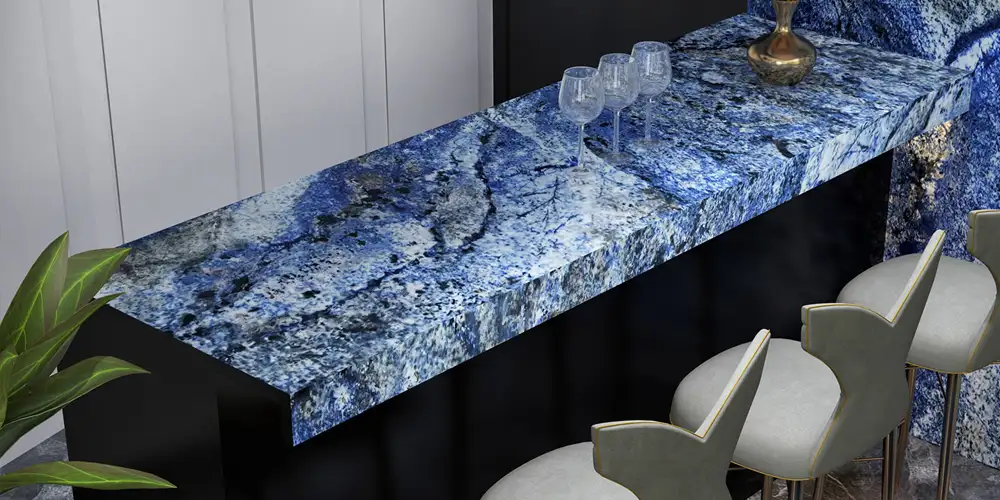
Azul Bahía Granito sits in a very small category of stones that can stop a room in its tracks. The material is sold commercially as granite, yet its true identity is more exotic than that label suggests, which is exactly why it has become a benchmark for Granito azul de lujo projects in 2026. When architects search for a surface that feels like geology, jewelry, and architecture all at once, this stone rises to the top of the conversation. That is also why the best Azul Bahia Granite manufacturer partners are now treated less like vendors and more like technical collaborators.
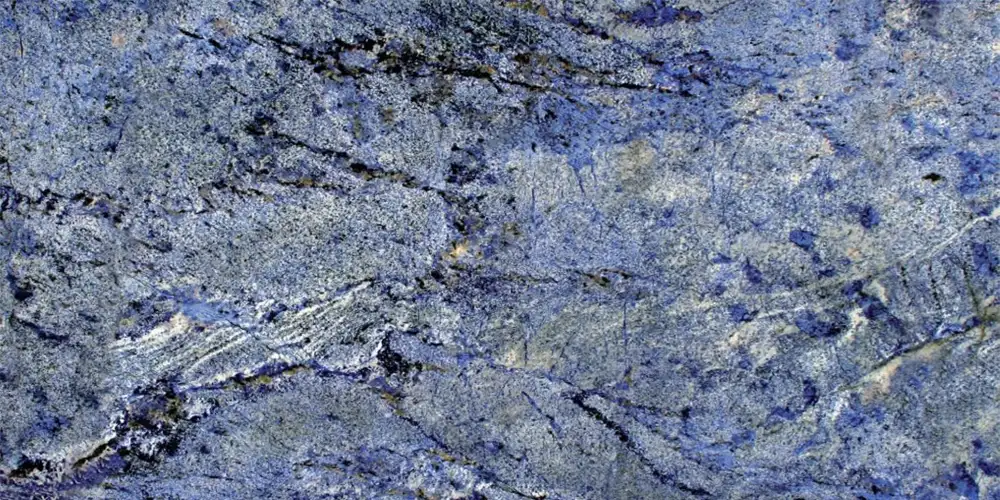
The reason people keep asking ¿Por qué el Azul Bahía Extra es tan raro? is simple: the color is not painted, printed, or engineered. It is the result of mineral chemistry, selective quarrying, and the reality that only a narrow portion of the block population qualifies as true premium material. For that reason, buyers looking for wholesale Azul Bahia Granite, bulk Blue Bahia slabs, or a reliable Blue Bahia Granite Supplier need to understand grading first and aesthetics second. The rarest blocks are the ones that make a project unforgettable.

FOR U STONE has helped bring this stone into global design discussions by pairing stock awareness with fabrication intelligence. That matters because premium stones do not win by color alone; they win when the factory can preserve the color during cutting, polishing, matching, and export. In that sense, Blue Exotic Granite Azul Bahia Granite Factory’s capability is just as important as the quarry itself. The same is true for a dependable Brazilian Blue Granite Manufacturer like FOR U STONE In China, that understands how a blue stone performs once it leaves the quarry floor.
1. The Mineralogical Mystery: Why “Extra Blue” Is a Geological Miracle
1.1 Defining sodalite and the blue pigment
The blue in Granito Bahía Azul comes primarily from sodalite, a feldspathoid mineral that can produce a striking indigo to cobalt tone when it is concentrated in the rock mass. That color is not a superficial stain; it is locked into the mineral structure itself. Geological studies of Bahia blue stones describe the commercial material as sodalite syenite or sodalite metasyenite, which is why many suppliers use “granite” as a market name rather than a strict petrologic classification. The practical result is a stone that behaves like a durable building material while looking like a gem-scale surface.
The deeper the sodalite concentration, the more dramatic the stone appears. That is the difference between a decorative blue surface and an investment-grade slab with serious visual force. In practice, designers want the saturated, almost electric appearance associated with Blue Granite Slabs from the best blocks, not the flatter, busier material that can show too much white or black interruption. For the market, that upper tier is often marketed as Investment Grade Blue Granite, which is exactly the phrase luxury specifiers use when a project needs scarcity as much as color.
1.2 Why the syenite classification matters
Calling the stone granite is commercially convenient, but technically it is closer to a sodalite-bearing syenite. That distinction matters because it explains why the stone has such a distinctive color body and why it behaves differently from standard black, white, or brown granites. The rock’s alkaline igneous origin, sodalite-rich mineralogy, and mixed feldspar matrix give it a visual complexity that ordinary granite does not have. It is one reason the term Granite Azul Bahia has become a shorthand for a highly specific and highly desirable blue stone category.
This is also where the market confusion around Blue Bahia Granite vs. Blue Marble becomes important. Marble can be beautiful, but it is not the same performance class. Azul Bahia’s syenitic nature gives it a stronger technical profile for countertops, wall cladding, and statement applications where daily wear is unavoidable. That is why most high-end stone consultants steer clients toward this material when they want a blue surface that is both rich and credible.
1.3 The “Extra Blue” threshold
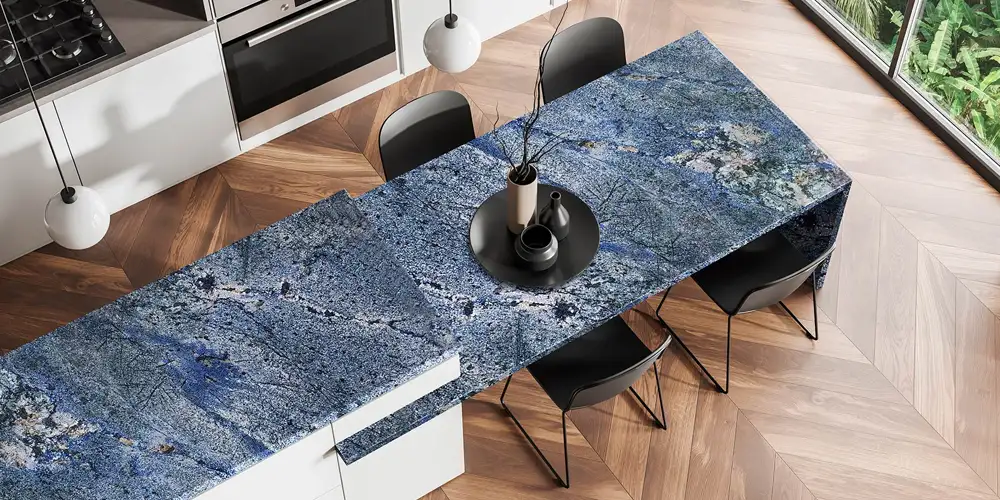
The phrase “Extra Blue” does not describe a random marketing mood; it is shorthand for a block or slab selection that contains a much higher proportion of saturated blue zones and a much lower proportion of pale feldspar interruption. In a serious Azul Bahia Granite factory setting, that threshold is determined visually, block by block, and often by the way the stone reveals itself only after slicing. The best slabs are the ones where blue dominates the composition while white and black accents stay secondary. That balance produces the deep, almost cinematic surface buyers expect when they are paying for the top grade.
That is also why Extra Blue Azul Bahia Slabs are not interchangeable with standard commercial material. Two slabs can be cut from nearby positions in the same block and still show very different intensity levels. One may be suitable for a feature wall, while the other may justify a flagship countertop, reception desk, or art-grade panel. Rare stones live and die by this sort of microscopic selection.
2. Origin and Extraction: Sourcing from the State of Bahia, Brazil
2.2 The geography of scarcity
True Azul Bahía Granito is linked to Bahia in Brazil, and that origin story matters because scarcity starts in the earth long before the slab reaches the factory. The stone is tied to alkaline igneous bodies in the region, and the commercially workable material is not spread evenly through the deposit. Instead, the best blue material tends to occur in limited zones, with quality varying sharply from block to block. That uneven distribution is the first reason the material has remained rare for decades.
Research on Bahia blue stones shows that these materials have been exploited and exported since the 1960s, yet the international market still treats them as exceptional rather than abundant. That is unusual in a global stone industry that often normalizes supply through scale. Bahia blue simply does not behave that way. Its value comes from geology, distance, and the fact that only a narrow range of blocks can produce the color intensity specifiers want for premium work.
2.3 Extraction difficulty and yield loss
High-quality blue blocks are difficult to extract cleanly because the best color is often concentrated in sections that are not easy to maximize during quarrying. This means the quarry team may recover a block that looks promising on the outside but fails to hold its value after slicing. The result is unavoidable waste, reclassification, and a strong premium on the clearest material. In commercial terms, low yield is part of the price of entry.
That is exactly why importers and project teams ask for a trusted Exotic Brazilian stone exporter rather than just a random supplier. They need someone who understands slab orientation, batch consistency, and export packaging as much as quarry selection. For high-value projects in 2026, the sourcing step is not administrative. It is part of the design process.
2.4 How FOR U STONE fits into the supply chain
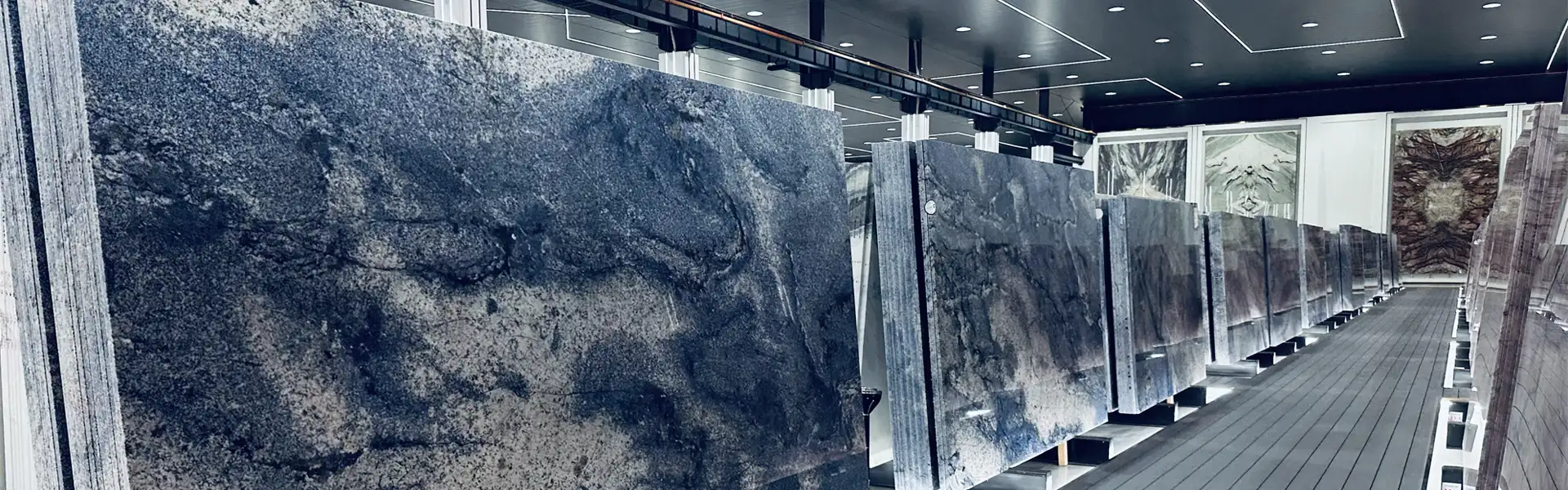
FOR U STONE operates in the zone where sourcing and fabrication meet, which is where premium blue stone transactions either succeed or fail. A serious project may need matching slabs for a waterfall island, a vanity suite, and a wall panel set, all from compatible material. That kind of coordination only works when the supplier can read the quarry output intelligently and keep the lot visually coherent. This is why buyers often search for a Blue Bahia granite factory relationship instead of a one-off purchase.
That supply-chain discipline also matters for architects, contractors, and hospitality developers who are working against tight delivery schedules. A luxury stone can lose value if it arrives in inconsistent batches or if the color story breaks across multiple pieces. The best sourcing partners protect the story from start to finish.
2.5 Technical Grade Comparison: Visual & Mineralogical Markers
To assist procurement officers in verifying material quality, the following matrix defines the standard thresholds for “Extra Blue” certification:
| Quality Marker | Extra Blue (Premium) | Commercial Grade |
|---|---|---|
| Sodalite Concentration | > 70% (Deep Sapphire/Royal Blue) | 30% – 50% (Grey/Blue Mix) |
| Structural Integrity | High density; minimal micro-fissures. | Occasional quartz intrusions or “white clouds.” |
| Slab Yield | Extremely low (Top 5% of Quarry output) | Standard (Found in larger quantities) |
| Valor de la inversión | Appreciating (Collector Grade) | Stable Commercial Value |
3. Technical Specifications: The Quantified Data Hub
The table below summarizes practical planning values for Azul Bahía Granito and comparable blue granite-category stones. These are project-use ranges, not laboratory certificates for a specific lot. For final specification, always request block- or slab-level test reports from the supplier and confirm that the exact batch matches the intended use.
| Propiedad | Typical Planning Range | Por qué es importante |
|---|---|---|
| Densidad aparente | 2,630–2,760 kg/m³ | A high-density stone feels substantial, supports large-format fabrication, and helps the surface read as luxury architecture. |
| Absorción de agua | 0.05%–0.40% | Low absorption reduces staining risk and supports kitchen and bath use when the stone is sealed correctly. |
| Resistencia a la compresión | Common granite dimension stone ranges often exceed 100 MPa | High compressive strength is one reason granite-class materials remain dependable for heavy-use building surfaces. |
| Dureza Mohs | About 6.0–6.5 for sodalite-bearing material | Hardness supports scratch resistance and makes the surface more forgiving than softer blue marbles. |
| Resistencia al calor | Granite-group materials are commonly heat resistant up to about 250°C | Useful for kitchen and hospitality applications, although direct thermal shock should still be avoided. |
| Recommended Thickness | 20mm and 30mm are common for slabs; cut-to-size varies by project | Thickness affects visual mass, edge profile options, and the structural strategy for islands and tables. |
From a specification standpoint, these numbers are why Blue Granite Slabs from Bahia are treated as serious building material rather than ornamental novelty. The Natural Stone Institute notes that granite-group stones generally show low absorption, strong scratch resistance, and durability suited to heavily used surfaces such as countertops, floors, and tabletops. ASTM C615 likewise frames granite dimension stone as suitable for general building and structural purposes with key requirements around absorption, density, compressive strength, abrasion resistance, and flexural strength. That is the performance foundation behind the luxury image.

For designers, the main takeaway is that the stone is not fragile just because it looks delicate. Its blue color may suggest jewelry, but its body behaves like a workhorse. That combination is the whole point of Brazilian Blue Granite in a premium specification context.
4. Classification and Grading: Understanding the 2026 Value Scale
4.1 Commercial grade
Commercial material usually shows more white feldspar, darker mineral interruption, and less uniform blue saturation. It still looks attractive, but it reads more as a decorative stone than a prestige centerpiece. This grade often works well for secondary walls, small vanities, and areas where cost control matters more than visual perfection. It is the entry point into the material family.
4.2 Premium grade
Premium grading balances blue body color with acceptable movement and a cleaner overall face. These slabs are the workhorses of the luxury market because they can be book-matched, cut into large panels, and installed in kitchens, hospitality bars, or boardroom tables without looking repetitive. For many buyers, this is the ideal intersection between value and spectacle. It is where the phrase wholesale Azul Bahia Granite becomes practical rather than merely promotional.
4.3 Extra Blue (AAA)
The top tier is the material that specifiers talk about in near-reverent language. Extra Blue Azul Bahia Slabs in AAA grade have saturated indigo fields, minimal pale interruption, and enough movement to feel alive without losing control of the pattern. This is where the market price climbs fastest, because the block must be clean, the slice must be accurate, and the finished slab must still look exceptional after polishing. The rarer the blue, the higher the confidence premium.
That pricing logic is why a project team may pay more for a slab that is visually calmer but more uniformly blue. A dramatic stone can be beautiful, but a consistently saturated one has more reliable architectural value. In the high-end market, the cleanest blue often wins.

5. The “Marble” Myth: Why Azul Bahia Defeats Blue Calcite Stones
There is a common mistake in the market: buyers see a blue stone and assume it belongs in the same performance bucket as marble. That is risky thinking. Soft blue calcite stones can be breathtaking, but they are far more vulnerable to etching, acid sensitivity, and routine wear than Bahia blue granite-class material. In practical terms, that means the stone you choose for a bar, kitchen, or lobby must be evaluated for durability first and romance second.
Granito Bahía Azul has a very different character from blue marble because it holds its polish better, resists scratching more confidently, and supports everyday use in ways softer stones cannot. This is why a kitchen installer or commercial specifier usually prefers Encimeras de granito Azul Bahia over a blue marble alternative. The stone gives the visual drama of a rare gem while staying usable in the real world. That is a rare combination.
When clients compare Blue Bahia Granite vs. Blue Marble, the answer usually turns on maintenance tolerance and life-cycle cost. Marble may etch if someone leaves citrus on the surface. Azul Bahia is built to handle the demands of a modern luxury home, a boutique hotel, or an executive suite with far less drama. The decision is therefore not only aesthetic; it is operational.
6. 2026 Pricing Intelligence: Why “Extra Blue” Costs More
6.1 The scarcity premium
Prices move higher when the market wants more than the quarry can cleanly supply. That is the core logic behind Azul Bahia Granite price factors 2026. Buyers are competing for a small amount of premium color, and that competition is amplified by the cost of extraction, the cost of transportation, and the cost of rejecting weak blocks. In other words, the blue itself is not the only scarce resource. Clean yield is scarce too.
As demand rises in high-end residential and hospitality markets, the best slabs become harder to source in matching sets. This especially affects bulk Blue Bahia slabs orders for developers who need multiple surfaces to read as one visual family. The rarer the match, the stronger the premium. That is a normal pattern in luxury stone, and Azul Bahia is one of its clearest examples.
6.1 Block size and fabrication cost
Large, clean blocks are much more valuable than smaller pieces because they support more ambitious design moves. Waterfall islands, book-matched walls, oversized tables, and monolithic reception desks all depend on size. When the stone is rare, every cut matters. That is why custom blue stone fabrication can sometimes cost as much as the slab itself, especially when the project calls for mitered edges, radius work, or book-matched continuity.
The most expensive pieces are usually the ones that do the least visual damage to the pattern during fabrication. That is not an accident. It is the result of choosing the right supplier, the right block, and the right cutting plan. For premium buyers, the best quote is not always the cheapest one. It is the one that protects the stone’s visual logic.

7. Manufacturing Mastery: Precision Engineering at the Factory
At a serious Blue Exotic Granite Azul Bahia Granite Factory, the process starts with block inspection and continues through saw calibration, resin stabilization, matching, and final packing. The factory has to behave like an engineering lab because the material is too valuable to treat casually. The best results usually come from vacuum resin infusion, precise drying, and careful slicing that follows the stone rather than fighting it. This is where a skilled Brazilian Blue Granite Manufacturer adds real value.
Diamond-wire cutting is often used to preserve the integrity of the block and reduce breakage. Once the slab is produced, it must be checked for face balance, edge integrity, tonal continuity, and the kind of figure that will read properly under polished light. Book-matching is especially important because the stone’s movement can create a visual corridor across two adjoining slabs. That is how a wall panel becomes architecture instead of decoration.
For project buyers, working with an experienced Blue Bahia Granite Supplier means the selection process becomes clearer. The supplier can show what is available, what is consistent, and what should be reserved for special features. That matters for both residential and commercial projects, because a hotel lobby, a luxury storefront, and a private kitchen all ask different things of the same stone.
8. Real-World Scenarios: Applying the “Extra Blue” Aesthetic
8.1 The monolithic kitchen
In residential design, Encimeras de cocina de granito Azul Bahia can transform the kitchen into a centerpiece rather than a utility room. The most dramatic version is a full-height waterfall island paired with a matching backsplash and perhaps a slab-front breakfast bar. The result feels architectural, almost like a carved object dropped into the plan. That is why so many luxury homeowners and interior designers treat Encimeras de granito Azul Bahia as a status surface rather than a background finish.
For the best effect, the stone should be allowed to breathe visually. Dark walnut cabinetry, satin brass hardware, and low-glare lighting help the blue body color read with depth instead of noise. If the slab has enough movement, the island becomes the single most important object in the room. That is exactly what a luxury kitchen is supposed to do.
8.2 Hotel, resort, and hospitality use
Hotels and resorts love stones with a clear identity because those materials photograph well and build brand memory quickly. In that context, Blue Granite Tiles and wall cladding in Azul Bahia can become part of the guest experience from the moment someone steps into the lobby. A spa may use honed panels for a calmer, oceanic atmosphere, while a resort bar may prefer polished slabs for a stronger reflective effect. The stone works because it feels both luxurious and geologically authentic.
Luxury retail also benefits from this kind of visual power. When a boutique needs a façade, counter, or display plinth that reads as permanent and expensive, Brazilian Blue Granite offers a story that artificial surfaces cannot easily copy. The stone becomes part of the brand architecture, not just the finish schedule.
8.3 Tables, vanity tops, and specialty pieces
Los diseñadores especifican cada vez más Blue Bahia Granite Tables for boardrooms, lounges, and private offices because the material communicates authority without becoming cold. In bathrooms, Blue Bhia Granite Vanity Tops—often written with the misspelling that buyers use in search—can create a jewel-box effect when paired with warm metal fittings and clear mirrors. For wall panels and niche features, Azulejos de granito Azul Bahia y Blue Granite Tiles give a more accessible way to use the material across larger areas.

The format matters because different product forms solve different design problems. A slab says monument, a tile says continuity, and a vanity top says intimacy. A capable Brazilian Blue Granite Manufacturer will know how to cut each one to fit its role.
9. Installation Protocols and Structural Engineering
Blue stone installation is not a casual trade operation. The adhesive, substrate, and handling sequence all matter because a rare material deserves exact execution. Wrong epoxy chemistry can influence edge staining or visible seams, and that is especially risky on polished blue surfaces where any defect reads immediately. For large islands or wall panels, a structural assessment is often the difference between an elegant install and a costly correction.
Lighting is another critical variable. A blue slab that looks flat in the warehouse can suddenly turn vivid under controlled 4000K lighting, grazing light, or concealed linear LED systems. This is where the surface starts to shimmer rather than simply reflect. Many designers now treat Azulejos de granito Azul Bahia and full slabs almost like luminous architecture, using light to activate the stone’s body color and mineral movement.
When the project involves a large furniture piece or a massive monolithic island, the load needs to be planned early. That is especially true for Encimeras de cocina de granito Azul Bahia with oversized apron fronts or waterfall returns. In those cases, a fabricated substructure may be needed so the stone can sit safely and perform over time.
10. Maintenance and Long-Term Preservation
Long-term care is straightforward if the owner respects the stone’s mineral character. A penetrating sealer can help slow stain absorption, while a pH-neutral cleaner will protect the surface from unnecessary chemical stress. Because sodalite-bearing material may respond poorly to aggressive acids, the safest rule is simple: do not treat this like a quartz countertop or a ceramic tile. Treat it like premium natural stone, because that is what it is.
Daily cleaning should be gentle. A soft cloth, warm water, and a neutral stone cleaner are usually enough. Abrasive powders, harsh de-scalers, and high-acid products can dull the finish or alter the appearance over time. That is particularly important on polished Granito azul de lujo, where the shine is part of the value proposition.
There is also a sustainability argument here. Natural stone is durable, repairable, and long-lived, which gives it an advantage in life-cycle planning. A well-specified Blue Granite Slabs installation can serve for decades, and that longevity is one reason architects still choose stone over short-life decorative substitutes. In an era obsessed with replacement cycles, longevity itself is a design luxury.
11. Sustainability, ESG, and Global Compliance
Natural stone is increasingly evaluated through ESG and life-cycle lenses. Low-emitting materials, long service life, and reduced replacement frequency all support responsible specification. The U.S. Green Building Council recognizes that stone is an inherently non-emitting source of VOCs in its low-emitting materials framework, which is one reason natural stone can fit well in healthy-building strategies. For premium interiors, that makes a lot of sense: the same material that looks rare also supports a healthier indoor environment.
In practice, the sustainability conversation includes quarry management, restoration, transport efficiency, and the ability to fabricate the material with minimal waste. Buyers should ask a supplier how blocks are selected, how off-cuts are managed, and how packaging is handled for export. This is where a disciplined exporter matters.

A serious Exotic Brazilian stone exporter should be able to discuss both beauty and compliance without hesitation.
12. 2026 Industry Forecast: The Scarcity Era
The 2026 design market continues to reward rare stones with obvious visual identity. Blue is still a power color, but the winning blue is no longer generic. It has to carry texture, provenance, and enough geological story to feel credible in a luxury portfolio. That is why Rare Sodalite Stone Trends 2026 are so important. Buyers want surfaces that look exclusive, photograph beautifully, and last long enough to justify the investment.
Technology is also changing how the market buys stone. Digital slab previews, virtual matching, and remote inventory review now help clients judge a project before the material is even cut. That helps an Azul Bahia Granite exporter close deals more efficiently, but it also increases expectations. Clients want fewer surprises and more proof. In that environment, transparency is a competitive advantage.
As quarry fronts become more difficult to work, the supply of the cleanest blue material may stay tight. That does not mean the stone disappears. It means the market increasingly rewards the best blocks, the best factories, and the best project teams. Scarcity has become part of the design language.
13. High-Intent Designer FAQs
1. Why is Extra Blue Azul Bahia so rare?
Extra Blue material is rare because the most saturated blue zones are limited inside the quarry output, and the best color is not evenly distributed from block to block. Much of the material has to be visually rejected, regraded, or reserved for smaller applications. That low yield, combined with the stone’s export distance and the demand from luxury projects, creates a premium market. In practical terms, rarity comes from geology, not marketing.
2. Is blue granite natural?
Yes, the blue in Azul Bahía Granito is natural. The color is created by sodalite-rich mineralogy inside the stone, not by painting or artificial dyeing. That is what makes the surface so valuable in high-end architecture. Natural blue stone is difficult to replace because the visual depth comes from the rock itself.
3. What makes Azul Bahia Granite price factors 2026 different from ordinary blue stone pricing?
2026 pricing is shaped by scarcity, block size, blue saturation, slab quality, and the cost of precision fabrication. The best blocks are harder to source and easier to waste during processing, so the final price climbs quickly when the stone is clean, large, and consistently blue. Matching slabs for book-matching or long island runs also adds cost. That is why a premium quote can look very different from a standard commercial quote.

4. Can I use Azul Bahia Granite outdoors?
It can be used outdoors in some settings, but the project must be engineered correctly and the finish, climate, and maintenance plan must be considered together. The stone is durable, but exterior exposure increases the importance of sealing, drainage, substrate design, and cleaning chemistry. If the project is a pool surround, resort wall, or outdoor kitchen, ask the supplier for environment-specific guidance before final approval. Outdoor use is possible, but it should not be treated casually.
5. How do I verify a genuine Azul Bahia Granite exporter?
Ask for quarry origin details, block photos, slab photos, thickness options, packaging method, and previous project references. A legitimate exporter should be able to explain the grading difference between commercial and Extra Blue material, and should know how the stone performs in countertops, tiles, tables, and wall applications. Reliable partners also discuss lead time honestly and provide consistent batch control. When the stone is this rare, documentation matters as much as appearance.
14. Conclusion: The Definitive Sapphire Statement with Azul Bahia Granite By FOR U STONE Factory
Azul Bahía Granito remains one of the clearest examples of a stone whose value comes from both geology and design culture. Its rare sodalite-driven blue, its strong technical performance, and its ability to elevate interiors make it more than a decorative choice. It is a material statement. For architects, developers, and homeowners who want a surface that feels permanent, luxurious, and visually fearless, Granito Bahía Azul still delivers.
Whether the project calls for Encimeras de granito Azul Bahia, Blue Granite Tiles, Losas de Granito Azul Bahia, or a custom conference table, the winning result depends on material selection and fabrication discipline. That is where FOR U STONE continues to matter: not as a casual reseller, but as a sourcing and project partner that understands how to handle rare material from quarry to final installation. In a market crowded with imitation blue surfaces, authentic stone still carries more authority.

For buyers who want to see the stone family in context, the most useful starting points are the current product and guide pages. Explore the material selection through Losa de granito Azul Bahía, compare it with Granito Bahía Azul, review related inventory at Azul Brasil Azul Bahia Granito, and browse the category page for Granito Bahía Azul. For a broader context, the company’s blue stone and quartzite resources also include Cuarcita Azul Bahía and the main exotic quartzite collection.
Semantic Closure Content Block
Why the stone matters to designers and buyers
The market is not simply buying a blue surface; it is buying geological identity. Granito Bahía Azul supports that demand because it can function as a countertop, tile, wall panel, vanity top, or table while still reading as a premium one-off material. That versatility is why the material remains relevant in both residential and commercial projects.
What makes the best slab worth specifying
The best slab is the one with the strongest color body, the least distracting interruption, and enough format size to support the project geometry. For that reason, Blue Granite Slabs y Losas de Granito Azul Bahia should be assessed not only for beauty but also for cut plan, yield, and matching potential. The slab is a design asset, not just stock.
How to think about options
Buyers should compare Azulejos de granito Azul Bahia, Blue Granite Tiles, countertops, and statement tables as separate product categories rather than interchangeable products. A tile installation solves continuity. A slab solves monumentality. A table solves identity. The right format depends on the room, the budget, and the visual goal.
What to ask before purchase
Ask about origin, grading, sealing guidance, available thickness, matching sets, and whether the supplier can support custom fabrication. A serious supplier should be able to explain the difference between commercial blue stone and Extra Blue material without confusion. If they cannot, the risk rises immediately.
Considerations for long-term performance
The strongest projects are built on maintenance discipline. Use neutral cleaners, avoid harsh acids, plan for sealing, and confirm the intended environment before installation. When those basics are handled correctly, Brazilian Blue Granite becomes more than a beautiful surface. It becomes a durable part of the architecture.
Referencias
- U–Pb and Pb–Pb Ages of the Blue Sodalite Syenites — M. L. S. Rosa et al., Lithos, Elsevier/ScienceDirect.
- The Blue Quartzites and Syenites from Bahia, Brazil — Geology and Technological Characteristics — M. H. B. O. Frascá et al., research paper / conference publication.
- Granito — Natural Stone Institute, Natural Stone Institute.
- Standard Specification for Granite Dimension Stone (ASTM C615/C615M) — ASTM International, ASTM International.
- Low-Emitting Materials Credit — U.S. Green Building Council, USGBC.
- LEED v4 / v4.1 Building Design and Construction Guides — U.S. Green Building Council, USGBC.
- Sodalite Mineral Information — Mindat.org, Hudson Institute of Mineralogy.
- Blue Bahia Granite Product and Market Pages — FOR U STONE, FOR U STONE.


