


Imagine you’re in the market for losas de mármol to renovate your home. You’ve narrowed down the choices to the finest marble available, but then another question arises: how can you be sure that the marble you’re purchasing is of high quality, safe, and ethically sourced? You come across several certifications—OEKO-TEX, SGSy Garantía de calidad—and wonder how these apply to your chosen material. How do these certifications impact your purchase decision?
Understanding marble certifications is crucial for buyers looking for reliable, sustainable, and high-quality products. In this blog, we’ll dive into the world of marble certification, explaining what each certification means and why they matter to you as a buyer. We’ll explore the role of OEKO-TEX, SGSy Garantía de calidad, and how they guarantee that the marble you’re purchasing meets the highest standards.
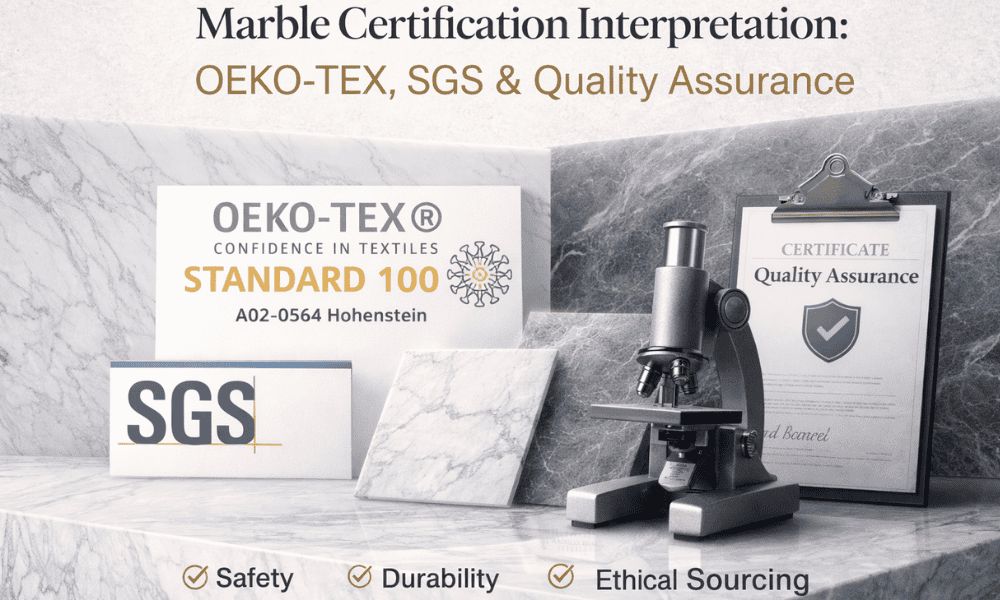
1. What is OEKO-TEX and How Does it Apply to Marble?
En OEKO-TEX Standard 100 is one of the most well-known certifications for textiles, but its relevance also extends to marble. This certification ensures that the material is free from harmful substances, particularly heavy metals and chemicals that could pose a health risk. For marble, the OEKO-TEX label indicates that the material has been tested for harmful substances, ensuring it is safe for indoor use, especially in high-contact areas like kitchen countertops or bathroom flooring.
Why Should You Care About OEKO-TEX Certification for Marble?
-
Safety: Ensures that the marble does not contain toxic substances such as formaldehyde, azo dyes, or other harmful chemicals.
-
Health-Conscious Design: Particularly relevant for buyers who are concerned about air quality or have young children and pets in the home.
En PARA U STONE, we prioritize quality and safety, ensuring that our losas de mármol meet international standards, including the OEKO-TEX certification. For more information on the benefits of using certified materials, check out our Guía de compra del mármol natural.
2. SGS Certification: Ensuring Marble Quality and Compliance
SGS (Société Générale de Surveillance) is the world’s leading inspection, verification, testing, and certification company. For marble, SGS certification ensures that the material has undergone rigorous testing for quality, durability, and compliance with industry standards. This includes tests for mechanical strength, slip resistance, and even aesthetic qualities like color consistency and surface texture.
Why SGS Certification is Crucial for Marble Buyers
-
Trust and Transparency: SGS certification provides an unbiased, third-party verification that the marble you are purchasing meets the highest standards of quality and safety.
-
Performance Assurance: Ensures that the marble will perform well in its intended use, whether as countertops, tiles, or cladding.
Por ejemplo, China Carrara Marble Slabs de PARA U STONE are certified under SGS standards, ensuring that you receive a product that meets both aesthetic and functional expectations. Learn more about this product at China Losa de mármol de Carrara.

3. Quality Assurance: What Does It Mean for Marble?
When you see a Garantía de calidad label on a product, it signifies that the manufacturer has adopted a rigorous system of checks and controls to ensure the product’s quality and consistency. For marble, Garantía de calidad includes a variety of processes from the quarrying stage to finishing. This certification confirms that the marble slabs have been processed to meet specific quality criteria, including durability, aesthetics, and safety standards.
The Role of Quality Assurance in Marble Selection
-
Coherencia: Ensures that every slab of marble is uniform in color, texture, and finish.
-
Durabilidad: Confirms that the marble is resistant to wear, stains, and weather conditions, making it a long-lasting material for both residential and commercial use.
En PARA U STONE, we take quality seriously. Our marble undergoes a strict Garantía de calidad process to ensure that our customers receive the best possible product. To learn more about our commitment to quality, visit our Quiénes somos página.
4. En Importance of Certification for Marble Buyers
For buyers, purchasing losas de mármol with recognized certifications ensures that they are making a responsible and informed choice. Not only do certifications provide assurance about the material’s safety and quality, but they also contribute to sustainability and ethical sourcing practices. These certifications guarantee that the marble has been tested for harmful substances and meets stringent environmental and manufacturing standards.
Case Study: Marble from FOR U STONE
A recent PARA U STONE project involved supplying marble for a luxury commercial building in New York. All of the marble used was certified by SGS y OEKO-TEX, ensuring that the material was both durable and free from harmful chemicals. The client was particularly impressed with the transparency of the sourcing and the quality assurance process, which provided peace of mind in such a high-profile project.
5. Pain Points and Solutions for Marble Certifications
Punto de dolor 1: Lack of Transparency in Marble Sourcing
Many buyers find it difficult to understand the sourcing and certification of their marble. The solution? Look for suppliers like PARA U STONE, who provide detailed information about certification and testing processes. This ensures that the marble you’re purchasing is both safe and high quality.
Punto de dolor 2: Doubts About Marble Durability
Some buyers worry that the marble they purchase won’t be durable enough for high-traffic areas. The solution? Seek out SGS-certified marble, which undergoes rigorous strength testing to ensure it will hold up in demanding environments.
For more detailed solutions on maintaining the longevity and beauty of your losas de mármol, visit our Interpretación de la certificación del mármol página.
Why Certifications Matter for Your Marble Investment
When investing in mármol, it’s essential to ensure that the material meets international standards for safety, quality, and durability. Certifications like OEKO-TEX, SGSy Garantía de calidad provide peace of mind, ensuring that the marble you purchase is free from harmful substances, performs well in high-traffic areas, and comes from ethical sources.
En PARA U STONE, we’re committed to providing top-tier losas de mármol that meet these certifications, giving our customers the confidence that they’re investing in a high-quality, durable material. Whether you’re selecting Mármol de Carrara de China for your countertops or other mármol varieties for your project, rest assured that our products are tested for the highest standards.

PREGUNTAS FRECUENTES
Q: What is the difference between SGS certification and Quality Assurance?
A: SGS certification focuses on testing the material’s quality and performance against international standards, while Garantía de calidad refers to the manufacturer’s internal process to maintain consistent quality throughout production.
Q: Can OEKO-TEX certification be applied to all types of marble?
A: OEKO-TEX certification is generally applied to materials like textiles but can also extend to marble slabs, ensuring they are free of harmful chemicals that could impact health and safety.
Q: How do I know if my marble is SGS-certified?
A: Look for products that display the SGS certification logo or ask your supplier to provide the relevant certification documents.
Q: Is certified marble more expensive than non-certified marble?
A: While certified losas de mármol may have a slightly higher upfront cost due to the rigorous testing and certifications involved, they provide better durability and long-term value.
Q: How do I care for certified marble to ensure its longevity?
A: Regular sealing, cleaning with pH-neutral cleaners, and avoiding acidic substances are essential to maintaining the quality and durability of your certified mármol.


