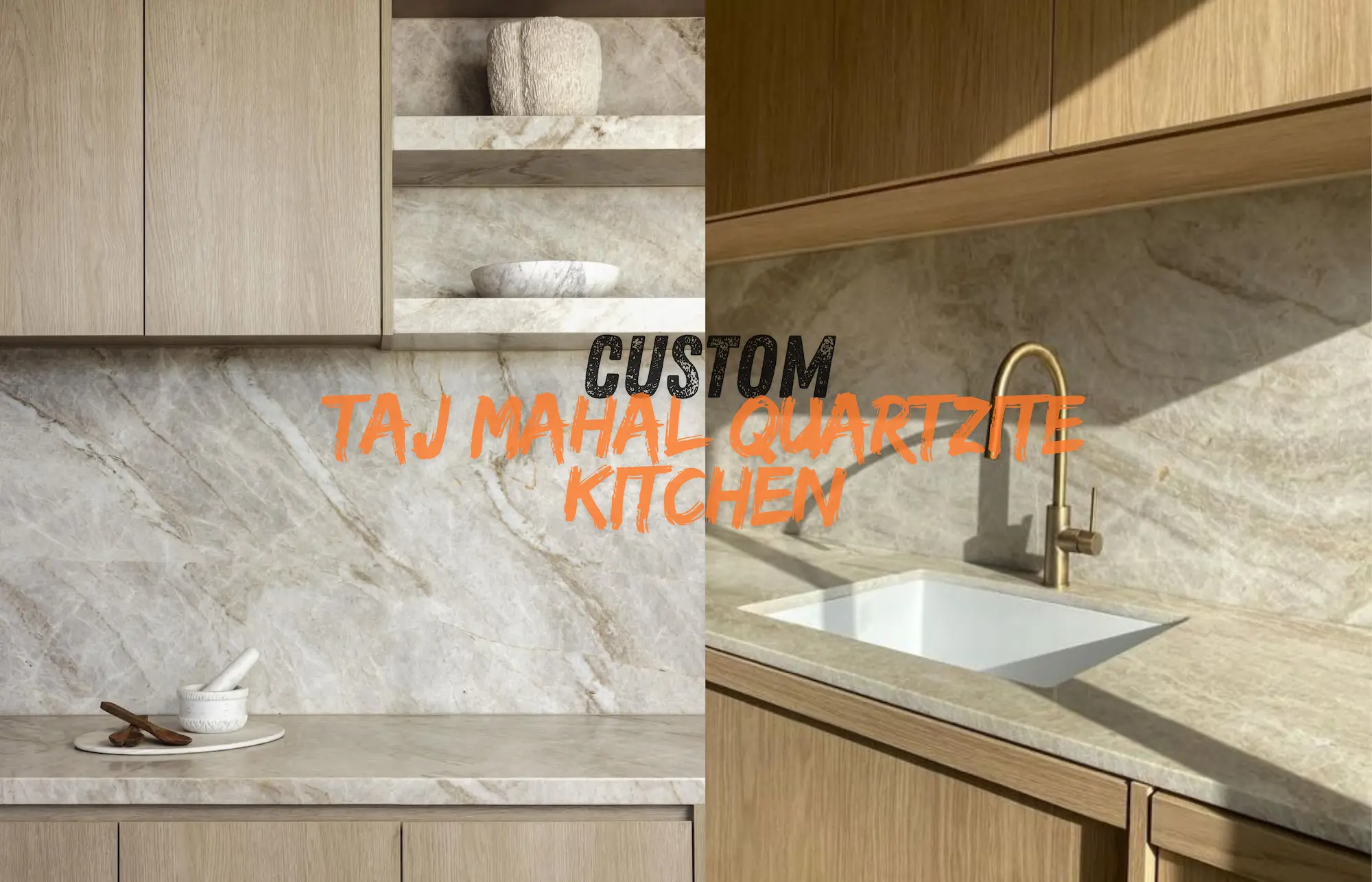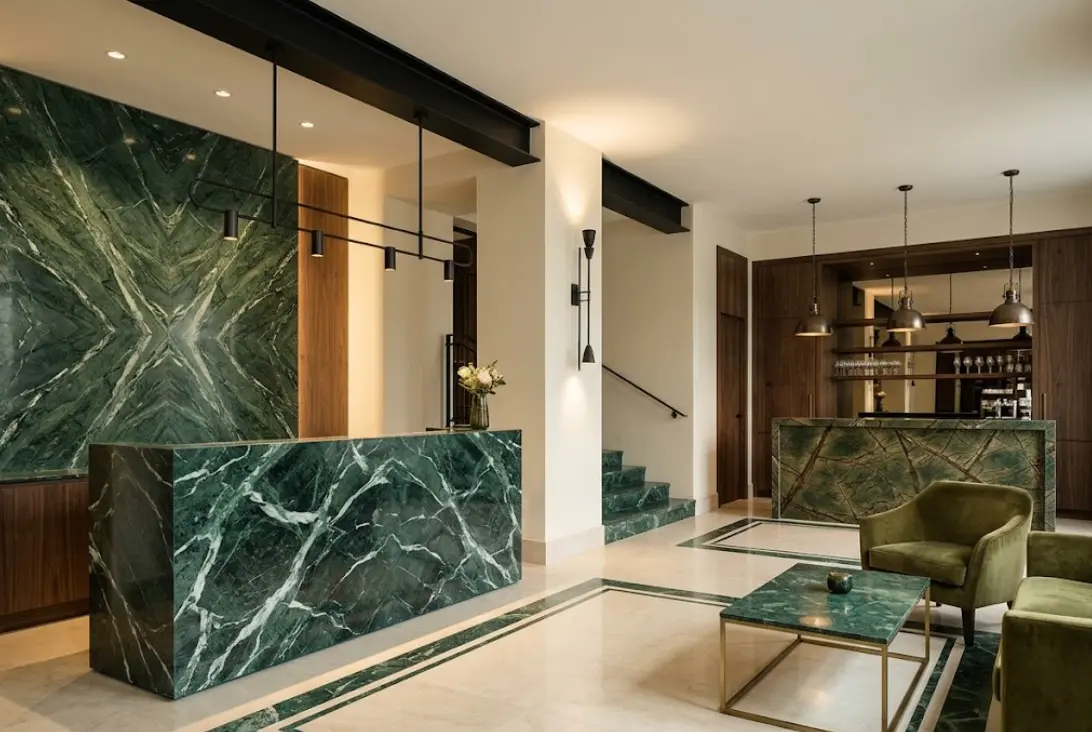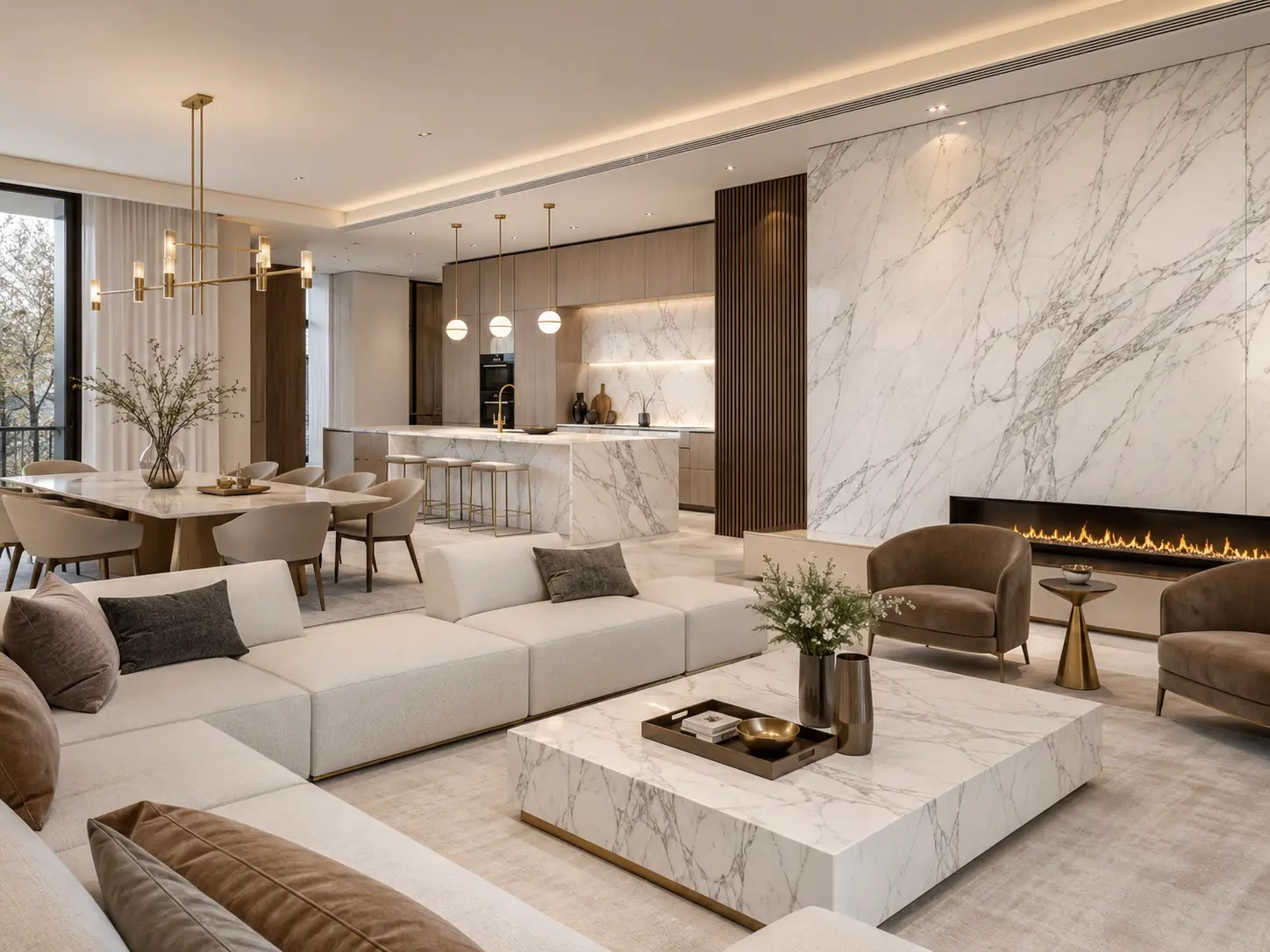
Granite is popular not because it is the loudest natural stone, but because it performs reliably in places where beauty, strength, and long-term durability must work together. From kitchen countertops and hotel lobby floors to exterior paving, stairs, wall cladding, monuments, and commercial entrances, Granite has become one of the most practical and widely specified natural stones in global construction and interior design.
The main characteristics of Granite include a compact crystalline structure, high surface hardness, strong compressive strength, low water absorption, good chemical stability, excellent weather resistance, broad color availability, and flexible processing options. These properties make Granite suitable for both decorative and performance-driven projects. Unlike materials chosen only for visual effect, Granite is often selected because it can handle real use, heavy traffic, outdoor exposure, and long service life.
For buyers comparing different stones for countertops, flooring, cladding, paving, or commercial projects, a professional Granite slabs and tiles collection is a useful starting point because it allows project teams to compare colors, patterns, finishes, slab formats, and application directions before requesting current stock photos, technical data, and quotation support.
What Is Granite?
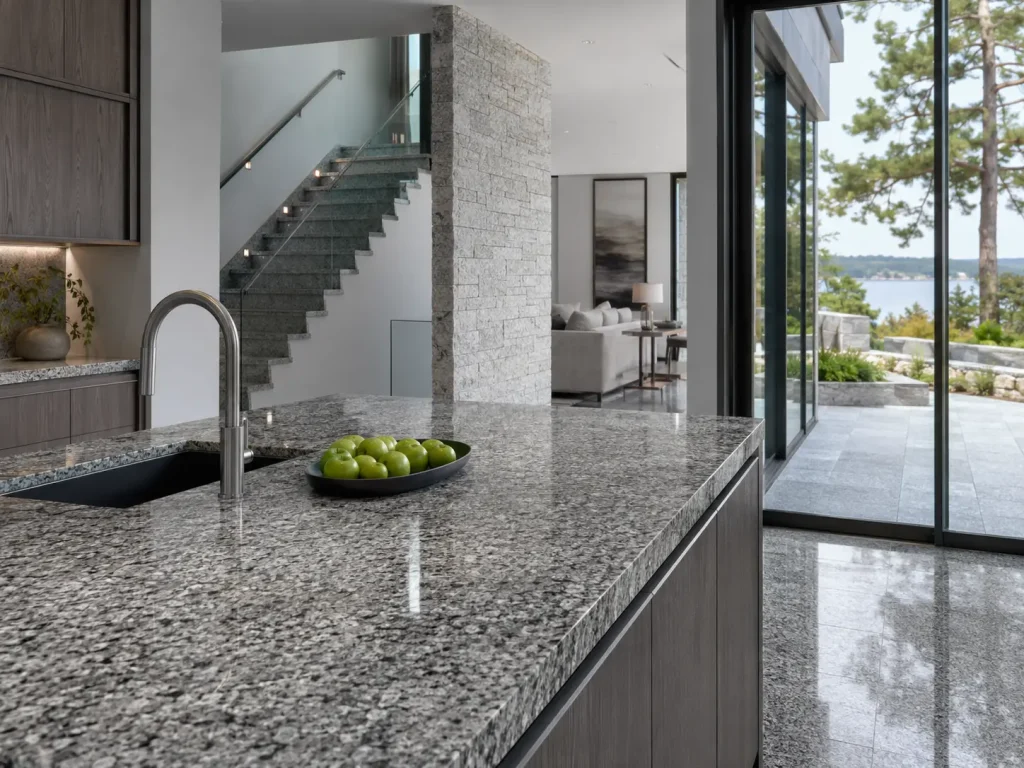
Granite is a natural igneous stone formed from molten magma that cooled and crystallized deep inside the earth. Its typical mineral composition includes quartz, feldspar, mica, and other accessory minerals. These minerals create the stone’s granular structure, surface hardness, color variation, crystalline appearance, and long-term durability. Granite is widely processed into slabs, tiles, countertops, wall panels, paving stones, stair treads, monuments, landscape stone, and cut-to-size architectural products.
The word “granite” is often used in the stone market to describe a range of hard crystalline stones, but true Granite is generally recognized by its interlocking mineral crystals and compact structure. It can be fine-grained, medium-grained, coarse-grained, or sometimes porphyritic. The grains may appear uniform, speckled, flowing, or visually dramatic depending on mineral size and distribution.
This structure is one of the main reasons Granite performs well. The crystals are closely locked together, leaving relatively small gaps between mineral grains. This contributes to low porosity, low water absorption, high strength, and strong resistance to weathering. In practical terms, Granite is a stone that can look decorative while still behaving like a serious construction material.
| Granite Component | Typical Role | Buyer Meaning |
|---|---|---|
| Quarz | Adds hardness and durability | Improves scratch and wear resistance |
| Feldspar | Provides color and structure | Influences white, pink, grey, beige, or red tones |
| Mica | Creates dark mineral movement | Adds depth and natural texture |
| Accessory minerals | Create color variation | Supports unique slab appearance |
| Interlocking crystals | Create compact structure | Helps strength, stability, and durability |
Core Physical Characteristics of Granite
One of the most important characteristics of Granite is high surface hardness. Granite typically has a Mohs hardness around 6 to 7, making it harder than marble, limestone, travertine, and many softer decorative stones. This hardness makes Granite suitable for kitchen countertops, floors, stairs, commercial entrances, paving, and other high-contact areas.
Granite also has high compressive strength. Many Granite varieties fall within a reference range of approximately 100 to 300 MPa, depending on mineral composition, grain size, quarry source, and test method. Fine-grained Granite may achieve higher values because the crystal structure is more compact. This strength is especially important for public flooring, stairs, exterior paving, commercial plazas, and heavy-use building surfaces.
Another key characteristic is low water absorption. Compact Granite often has water absorption around 0.15% to 0.46%, although exact values vary by material and test method. Low absorption helps the stone resist staining, moisture penetration, freeze-thaw stress, and surface deterioration when properly selected and installed. This makes Granite especially valuable for kitchens, wet areas, outdoor paving, exterior cladding, and cold-climate applications.
| Charakteristisch | Typischer Referenzbereich | Warum es wichtig ist |
|---|---|---|
| Mohs-Härte | Approx. 6–7 | Better scratch and wear resistance |
| Dichte | Approx. 2.63–2.75 g/cm³ | Indicates compactness and weight |
| Wasseraufnahme | Approx. 0.15%–0.46% | Affects stain and weather resistance |
| Porosität | Approx. 0.3%–0.7% | Supports durability and freeze-thaw behavior |
| Druckfestigkeit | Approx. 100–300 MPa | Important for floors, paving, stairs, and load-bearing surfaces |
| Biegefestigkeit | Often approx. 10–30 MPa | Important for panels, slabs, and long pieces |
Granite Density, Strength, and Structural Stability
Granite density affects weight, shipping cost, handling method, wall load, countertop support, and installation planning. Dense Granite usually feels compact and strong, but it also requires proper lifting, substrate preparation, and structural calculation when used as large slabs or wall panels. For exterior wall cladding or large commercial stone panels, density helps contractors calculate total load and fixing requirements.
Strength matters most in commercial projects. Hotel lobbies, airports, shopping malls, subway stations, outdoor plazas, staircases, and public entrances need materials that can tolerate repeated foot traffic, trolley movement, rolling luggage, cleaning machines, temperature change, and moisture exposure. Granite is often selected for these areas because it combines hardness, compression strength, stability, and long service life.
Dimensional stability is another advantage. Properly cut, supported, and installed Granite resists deformation well. This makes it useful for large-area flooring, outdoor paving, facade cladding, stair treads, kitchen countertops, and commercial stone projects. However, stability still depends on correct thickness, finish, substrate, anchoring, drainage, and installation practice.
| Projekttyp | Why Granite Stability Matters | Buyer Check |
|---|---|---|
| Hotel lobby floor | Handles high foot traffic | Abrasion and finish selection |
| Exterior paving | Faces rain, sun, and temperature change | Water absorption and finish |
| Treppe | Needs edge strength and slip control | Thickness and anti-slip detail |
| Arbeitsplatten | Needs surface hardness and support | Slab quality and sealing |
| Wandverkleidungen | Needs dimensional stability | Anchoring and panel thickness |
| Public spaces | Needs long-term wear resistance | Strength, finish, and maintenance plan |
Granite Water Absorption and Weather Resistance
Low water absorption is one of the reasons Granite is widely used outdoors. When a stone absorbs less moisture, it is generally less vulnerable to staining, surface deterioration, freeze-thaw stress, and moisture-related damage. This is especially important for exterior paving, garden stone, building facades, outdoor stairs, pool surrounds, driveways, and exterior countertops.
Granite performs well in outdoor decoration because it resists weathering better than many softer stones. It is commonly used for building facades, steps, garden paving, driveways, curbstones, monuments, landscape walls, and outdoor dining counters. In cold climates, buyers should check water absorption, porosity, thickness, finish, drainage design, and installation method. Even a durable stone needs correct slope, joints, and foundation preparation.
For buyers looking at darker exterior and high-performance stone options, Australian Black Granite slabs can be considered for projects where a strong dark tone, compact texture, and modern visual identity are required. Black Granite is often used for countertops, wall panels, floors, and exterior applications when the design needs depth and strength.
| Outdoor Condition | Granit Vorteil | Buyer Requirement |
|---|---|---|
| Rain exposure | Low absorption helps durability | Choose suitable finish and sealing plan |
| Sunlight | Stable appearance in many varieties | Confirm color and quarry type |
| Freeze-thaw climate | Compact structure supports performance | Check absorption and installation |
| Heavy foot traffic | High hardness and strength | Use flamed or textured finish |
| Exterior walls | Weather-resistant natural stone | Confirm anchoring system |
| Garden paving | Strong and decorative | Select anti-slip finish |
Granite Color and Texture Characteristics
Granite is available in many colors, including white, grey, black, red, pink, yellow, green, brown, beige, blue, and purple tones. Color depends on mineral composition. Feldspar can contribute pink, red, cream, beige, or white tones. Quartz may create translucent or greyish movement. Mica and other dark minerals create speckles, depth, and contrast.
Granite patterns may be fine-grained, medium-grained, coarse-grained, speckled, veined, exotic, or relatively uniform. Uniform Granite is useful for large commercial areas where consistency matters. Exotic Granite is better for feature walls, island tops, hotel counters, and luxury interiors where dramatic mineral movement is desired. For large projects, batch control is essential because natural Granite can vary between quarry blocks.
White Granite is popular in kitchens because it offers a bright appearance with stronger practical performance than many softer white stones. For buyers seeking a light and decorative option, Pitaya Weißer Granit can be reviewed as a white Granite direction for countertops, interiors, walls, and modern design projects where the buyer wants brightness with natural crystalline movement.
| Granit Farbe | Design Mood | Common Use |
|---|---|---|
| Weißer Granit | Clean and bright | Kitchens, bathrooms, walls |
| Schwarzer Granit | Strong and modern | Countertops, floors, monuments |
| Grauer Granit | Neutral and commercial | Paving, floors, facades |
| Red or Pink Granite | Warm and classic | Exterior walls, monuments, floors |
| Grüner Granit | Natural and expressive | Feature walls, countertops |
| Beige or Brown Granite | Warm and practical | Villas, hotels, landscaping |
| Blue or Purple Granite | Rare and decorative | Luxury feature surfaces |
Granite Surface Finishes and Their Effects
The finish changes how Granite looks and performs. Polished Granite is glossy, reflective, and premium. It is common for countertops, vanity tops, interior walls, and decorative surfaces. However, polished Granite may be slippery when wet, so it is not always the best choice for exterior stairs, outdoor paving, or wet commercial floors.
Honed Granite has a matte and smoother appearance. It works well in modern interiors, walls, and selected floors. Flamed Granite has a rougher texture, making it suitable for outdoor paving, steps, plazas, and high-traffic exterior areas. Bush-hammered, sandblasted, and leathered finishes create different tactile and visual effects, useful for landscape design, commercial surfaces, and special interiors.
For high-end interiors where the buyer wants strong color, crystalline depth, and visual impact, blue Granite can create a more decorative mood than standard grey or black options. A product such as Granit Lemurianisch Blau is especially relevant for statement countertops, feature walls, reception areas, and luxury surfaces where the stone itself becomes part of the design identity.
| Oberfläche | Visueller Effekt | Beste Verwendung | Buyer Warning |
|---|---|---|---|
| Poliert | Glossy and reflective | Countertops, walls, interiors | Can be slippery when wet |
| Geschliffen | Matte and smooth | Modern interiors, walls, floors | Needs maintenance planning |
| Geflammt | Rough and textured | Outdoor paving, stairs | Not suitable for refined countertops |
| Bush-hammered | Strong texture | Exterior and public areas | Harder to clean |
| Sandgestrahlt | Soft texture | Paving and wall cladding | May collect dirt |
| Beledert | Tactile and premium | Countertops and feature surfaces | Must approve sample first |
Granite Applications in Real Projects
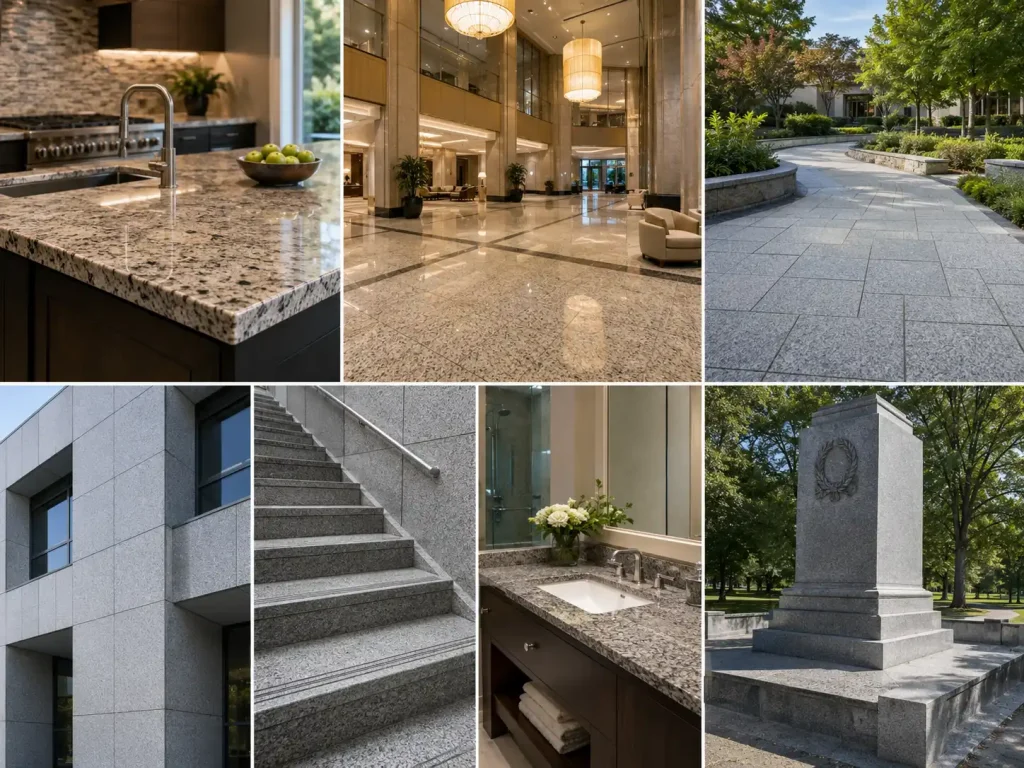
Granite is highly practical for kitchen countertops because it offers hardness, heat tolerance, stain resistance when sealed properly, and long service life. It is suitable for residential kitchens, hotel kitchenettes, restaurant service counters, bar tops, and commercial-style preparation zones. Edge quality, sealing, slab selection, and cleaning routines still matter, but Granite is one of the strongest natural stone choices for active kitchens.
Granite flooring is widely used in hotels, shopping malls, airports, subway stations, office buildings, and public spaces because it can handle heavy foot traffic. Finish selection should match safety and cleaning needs. Polished Granite may work in dry interior lobbies, while flamed or textured Granite is safer for outdoor steps and paving.
Granite also works well for stairs, exterior walls, monuments, garden paving, pool surrounds, building entrances, and landscape features. Designers using large slabs in luxury interiors should avoid overdesigning. A guide on how to use Granite slabs for luxury interiors supports this key idea: Granite looks strongest when material, lighting, furniture, and space planning are balanced instead of forced.
| Anmeldung | Granite Suitability | Key Requirement | Risk If Ignored |
|---|---|---|---|
| Küchenarbeitsplatte | Sehr gut | Sealing and edge quality | Staining or edge chips |
| Hotel lobby floor | Sehr gut | Abrasion and slip review | Wear or safety complaints |
| Pflasterung im Freien | Ausgezeichnet | Textured finish and drainage | Slippery or uneven surface |
| Exterior wall cladding | Sehr gut | Anchoring and thickness | Installation risk |
| Treppe | Sehr gut | Anti-slip detail | Edge damage or slip risk |
| Badezimmer-Waschtisch | Gut | Polished or honed finish and sealing | Water stains |
| Monument stone | Ausgezeichnet | Color stability and carving quality | Poor long-term appearance |
Granite vs Marble, Quartzite, Engineered Quartz, and Porcelain
Granite and marble are both valuable natural stones, but they serve different project goals. Granite is generally harder, denser, more wear-resistant, and more suitable for heavy-use or exterior applications. Marble is often selected for soft veining, classic elegance, bathrooms, walls, fireplaces, and refined interior decoration. The right decision depends on application, not simple preference.
Granite and quartzite can both be durable natural stone options. Quartzite often offers dramatic veining and high-end countertop appeal, while Granite offers broad availability, strong performance, and a wide range of colors. Engineered quartz is more uniform and predictable indoors, but many engineered quartz products are not recommended for exterior UV exposure. Porcelain is thin, practical, and low maintenance, but it does not always provide the same natural crystalline depth as Granite.
| Material | Stärke | Visual Style | Beste Verwendung | Buyer Note |
|---|---|---|---|---|
| Granit | High hardness and durability | Speckled, crystalline, varied | Countertops, floors, exterior | Excellent all-around stone |
| Marmor | Softer and elegant | Veined and classic | Bathrooms, walls, decorative interiors | Needs careful maintenance |
| Quarzit | Very strong in many varieties | Dramatic natural veining | Luxury countertops, feature surfaces | Properties vary by stone |
| Bearbeiteter Quarz | Uniform and practical | Controlled patterns | Indoor countertops | Usually not ideal for exterior UV |
| Porzellan | Thin and low maintenance | Printed patterns | Walls, floors, counters | Less natural depth |
Technical Parameters Buyers Should Check Before Ordering Granite
Before ordering Granite, buyers should check both technical and visual data. Technical data may include water absorption, density, compressive strength, flexural strength, abrasion resistance, slip resistance, freeze-thaw resistance, thickness tolerance, surface finish, and color consistency. Visual data should include full slab photos, close-up photos, batch photos, finish samples, edge samples, and dry lay photos if the order is cut-to-size.
Technical data helps buyers match Granite to the right application. Exterior projects need weather and slip review. Commercial floors need abrasion resistance. Countertops need sealing and surface finish planning. Wall panels need thickness and anchoring review. Large commercial projects need batch consistency and quality control before production.
| Parameter | Warum es wichtig ist | Buyer Question |
|---|---|---|
| Wasseraufnahme | Stain and weathering risk | Is the stone suitable for wet or outdoor use? |
| Dichte | Weight and compactness | Can the structure support it? |
| Druckfestigkeit | Load-bearing performance | Is it suitable for floors or paving? |
| Biegefestigkeit | Slab and panel stability | Can it support large panels? |
| Abriebfestigkeit | Surface wear | Is it suitable for high traffic? |
| Rutschfestigkeit | Sicherheit | Is the finish suitable for wet floors? |
| Freeze-thaw resistance | Outdoor durability | Can it handle cold climates? |
| Dickentoleranz | Installation accuracy | Will it fit project drawings? |
How Granite Is Processed and Fabricated
Granite is usually quarried in large blocks. Block quality affects slab size, color consistency, cracks, mineral movement, and production yield. The blocks are cut into slabs or tiles, then polished, honed, flamed, brushed, sandblasted, leathered, or processed into another finish depending on application.
For countertops and custom projects, additional processing may include CNC cutting, edge profiling, polishing, sink cutouts, faucet holes, cooktop openings, drain grooves, backsplash pieces, and cut-to-size panels. For exterior paving and stairs, flamed or textured finishes are often used to improve slip resistance. For wall cladding, thickness, panel size, anchoring system, and packing method must be planned carefully.
Granite slabs, tiles, countertops, and cut-to-size pieces require different packing methods. Strong wooden crates, foam protection, slab bundles, corner protection, labels, and loading photos help reduce damage during export. A reliable supplier should provide inspection photos and packing information before shipment.
Common Mistakes When Buying Granite
The first mistake is choosing only by color. Granite may look beautiful, but the finish, thickness, water absorption, edge quality, and application suitability matter just as much. The second mistake is ignoring finish selection. Polished Granite may be suitable for countertops but too slippery for wet outdoor stairs. Flamed Granite may be excellent for paving but too rough for refined countertops.
The third mistake is not checking actual slabs. Catalog photos may not show current batch color, grain size, or mineral movement. The fourth mistake is using the same Granite everywhere. One material and finish may not fit kitchens, stairs, walls, and outdoor paving equally. The fifth mistake is choosing by lowest price only, which can lead to poor polishing, weak packing, thickness variation, color mismatch, or limited after-sales support.
How to Choose a Reliable Granite Supplier
A reliable Granite supplier should provide actual slab photos, available thickness options, finish samples, technical data, inspection photos, packing details, and clear communication. Buyers should ask what Granite types are available, whether the supplier supports cut-to-size production, how slabs are inspected, how products are packed, and whether wholesale or project quantities can be supported.
Supplier capability should include factory equipment, slab warehouse, quality inspection, CNC processing, surface finishing, export packing, project experience, communication speed, and after-sales support. A supplier that only sends price without asking application questions may not understand the real project risk. Buyers can review an experienced Granite supplier and stone manufacturer profile before discussing project requirements, inspection process, and export support.
| Supplier Check | Good Signal | Risk Signal |
|---|---|---|
| Actual slab photos | Current stock shown clearly | Only catalog images |
| Technical data | Parameters available | No performance information |
| Finish options | Poliert, geschliffen, geflammt, etc. | Limited processing |
| QC process | Inspection photos provided | No inspection record |
| Verpacken | Strong crates and loading photos | Vague packing details |
| Project support | Cut-to-size and drawings | Only random slab sales |
| Communication | Specific answers | Only price replies |
|
|
|


If This Is Your Project, Choose This Granite Strategy
Granite selection should always start from the application. A busy kitchen needs a different finish and edge plan than an outdoor walkway. A hotel lobby needs different abrasion and slip review than a bathroom vanity. A luxury feature wall needs different color control than a municipal paving project.
Kitchen buyers often begin by asking which color is best. Color matters, but it must be connected to cabinet style, lighting, stain expectations, finish, and maintenance. A detailed article on popular Granite countertop colors for kitchens can help buyers compare white, black, grey, beige, brown, and exotic Granite options before making a final material decision.
| If Your Project Needs | Wählen Sie | Vermeiden Sie |
|---|---|---|
| Active kitchen countertop | Polished or leathered Granite slab | Weak edge processing |
| Pflasterung im Freien | Flamed or textured Granite | Polished slippery finish |
| Hotel lobby floor | Dense Granite with abrasion review | Random low-grade tiles |
| Exterior wall cladding | Granite panels with anchoring plan | Thin unsupported panels |
| Treppe | Granite with anti-slip detail | Sharp polished treads |
| Monument or memorial | Stable color Granite | Highly variable batch |
| Large commercial project | Same-batch Granite with QC | Mixed bundles without approval |
| Low-maintenance surface | Granite with proper sealing | Soft stones in heavy-use zones |
Häufig gestellte Fragen
1. Was sind die Hauptmerkmale von Granit?
Granite is a hard, dense, compact, and durable natural stone with strong compressive strength, low water absorption, good surface hardness, and excellent weather resistance. It usually has a crystalline granular structure made from minerals such as quartz, feldspar, mica, and accessory minerals. Granite is available in many colors, including white, black, grey, red, green, beige, brown, blue, and pink. These characteristics make it suitable for countertops, floors, stairs, exterior walls, paving, monuments, and commercial projects.
2. Ist Granit gut für Küchenarbeitsplatten?
Yes, Granite is widely used for kitchen countertops because it offers good hardness, heat tolerance, surface durability, and stain resistance when properly sealed. It can handle active daily use better than many softer decorative stones. Granite countertops are available in many colors and patterns, from white and grey to black, brown, blue, and exotic varieties. Buyers should still check slab quality, edge processing, sealing recommendations, finish type, and maintenance requirements before ordering a Granite kitchen countertop.
3. Can Granite be used outdoors?
Yes, Granite is one of the most suitable natural stones for outdoor use because it has a compact structure, low water absorption, strong weather resistance, and high durability. It is commonly used for outdoor paving, steps, facades, walls, curbstones, monuments, driveways, pool surrounds, and landscape design. For outdoor projects, buyers should choose the correct finish, such as flamed, bush-hammered, or textured surfaces, to improve slip resistance. Drainage, thickness, installation method, and freeze-thaw performance should also be reviewed.
4. What is the difference between Granite and Marble?
Granite is generally harder, denser, and more resistant to wear, weather, and heavy use than marble. It is often selected for kitchen countertops, public floors, exterior paving, stairs, monuments, and commercial spaces. Marble is usually chosen for its soft veining, classic elegance, and refined interior appearance, especially in bathrooms, walls, fireplaces, and decorative floors. Neither material is simply better than the other. Granite is stronger for performance-driven applications, while marble is often preferred for visual softness and luxury interior design.
5. What should buyers check before ordering Granite?
Before ordering Granite, buyers should check actual slab photos, thickness, surface finish, color consistency, water absorption, density, compressive strength, flexural strength, abrasion resistance, slip resistance, edge processing, packing method, and supplier experience. For commercial or exterior projects, technical data and finish selection are especially important. Buyers should also confirm whether the supplier can support cut-to-size production, inspection photos, strong export packing, and current stock approval before shipment.
Referenzen
- “Dimension Stone Design Manual” — Natural Stone Institute — Natural Stone Design Reference
- “ASTM C615/C615M Standard Specification for Granite Dimension Stone” — ASTM International — Granite Material Standard
- “ASTM C97/C97M Standard Test Methods for Absorption and Bulk Specific Gravity of Dimension Stone” — ASTM International — Stone Testing Method
- “ASTM C170/C170M Standard Test Method for Compressive Strength of Dimension Stone” — ASTM International — Stone Strength Testing Method
- “ASTM C880/C880M Standard Test Method for Flexural Strength of Dimension Stone” — ASTM International — Structural Testing Method
- “Natural Stone Care and Maintenance Guidelines” — Natural Stone Institute — Stone Maintenance Resource
- “Stone Flooring and Paving Installation Guidance” — Natural Stone Institute — Installation Practice Resource
- “Natural Stone Selection for Exterior Applications” — Building Stone Institute — Material Selection Resource
Final Buyer Insight: Why Granite Is Chosen When Strength, Stability, and Long-Term Value Matter
What should buyers understand first?
Granite should be understood as both a decorative stone and a performance material. Its value comes from hardness, compact structure, density, low water absorption, compressive strength, weather resistance, and broad application range.
How should Granite be selected?
The best Granite choice depends on application, finish, thickness, color, porosity, water absorption, strength, slip resistance, and supplier quality control. Countertops, exterior paving, hotel floors, stairs, and wall cladding should not all be specified the same way.
Why do Granite projects fail?
Common problems come from choosing only by color, ignoring finish, approving catalog photos instead of actual slabs, selecting polished surfaces in wet outdoor areas, using weak packing, or failing to check technical data for high-traffic and exterior projects.
Option logic: If the project is an active kitchen, choose dense Granite with good sealing and edge quality. If the project is outdoor paving, choose textured Granite with drainage planning. If the project is a hotel lobby, check abrasion and slip performance. If the project is a luxury feature surface, approve actual slab color and pattern before cutting.
Recommendation: Before placing an order, prepare project type, application area, size, thickness, finish, quantity, color preference, and destination. Buyers can submit these details through the Granite project consultation page to request material matching, current slab photos, quotation, and fabrication advice.
Soft CTA: Granite remains one of the most reliable natural stones because it gives buyers what many projects need most: strength, stability, practical beauty, and long-term performance.