


The Art and Engineering Behind White Marble Slab Fireplaces
“Is this going to look like the photos I saved on or will I regret it after the first winter?”
A homeowner asked her designer this while staring at a tall blank wall above a new gas fireplace. On her phone: endless images of full-height Weiße Marmorplatten, soft veining, moody lighting. In her mind: soot, hairline cracks, fingerprints, and the fear of choosing wrong.
That’s the real tension with white marble feature walls and fireplaces. They are the most photographed surfaces in a home, but they are also exposed to heat, light, and daily life. Get the stone, finish, and layout right, and your wall becomes the calm, luxurious anchor of the room. Get it wrong, and every reflection, seam, and stain becomes a reminder of a rushed decision.
This guide walks you through how to design luxurious feature walls and fireplaces with Weiße Marmorplatten, combining design logic, technical thinking, and lessons learned from real projects—so your focal wall looks curated and lives well.
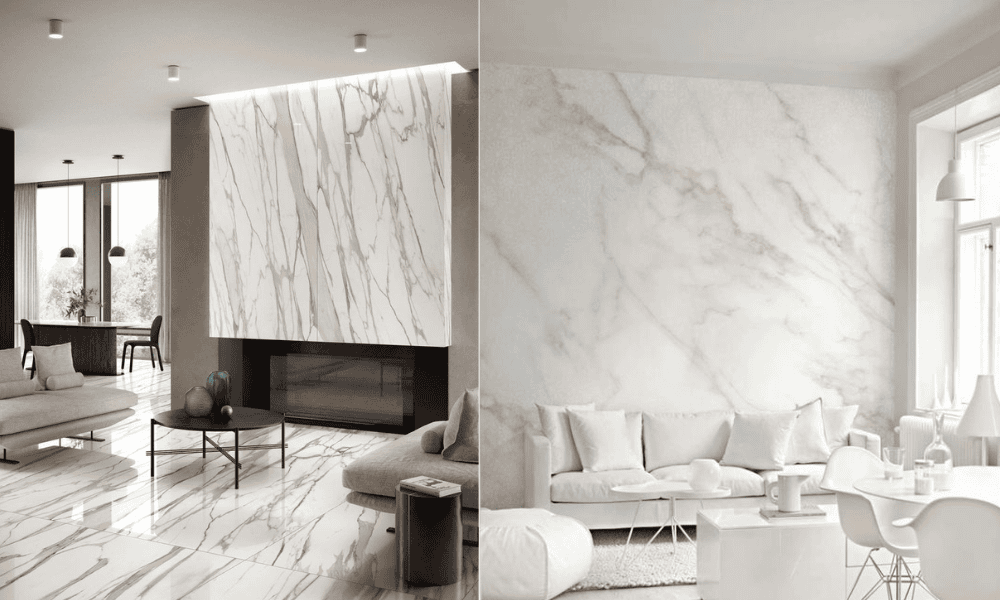
Why White Marble Slabs Are Perfect for Feature Walls and Fireplaces
White marble has a unique ability to catch light, frame fire, and work across styles. On a large wall, it does three important jobs at once:
-
It gives the room a visual “center of gravity.”
-
It reflects both daylight and artificial light, making spaces feel taller and more open.
-
It acts as a quiet canvas for furniture, art, and décor in front of it.
Designers are also increasingly using contrast to sharpen the effect. Instead of one flat, pale surface, they may frame a calm white field with deeper or more dramatic stone. For example, adding a dark trim band or surround in schwarze und weiße Marmorplatten can instantly give the fireplace a gallery-like frame, without needing an ornate mantel.
In living rooms and great rooms, this approach turns the wall into a composed “picture”—fire, stone, TV or artwork, and shelving all linked together by a single, coherent material story.
Choosing the Right White Marble Base: Calm or Dramatic?
Once you decide you want Weiße Marmorplatten, the next question is: what kind of white?
Not all white marble behaves the same visually. Some have a crisp, bright background and high-contrast veins; others lean creamy with softer movement. The more contrast in the veining, the more your wall will demand attention—and the more visible every seam and cut will be.
Many homeowners and designers gravitate toward stones with a balanced mix of clarity and softness. Materials similar to weißer Marmor mit grauen Adern are often chosen for feature walls because they:
-
Read as “white” from a distance, keeping the room bright.
-
Add enough pattern to feel luxurious in close-up.
-
Don’t fight with sofas, shelving, or a TV mounted on the same wall.
In real projects, these slabs are frequently used from floor to ceiling behind the fireplace, then repeated in smaller pieces on hearths or side ledges, creating a continuous story instead of isolated patches of marble.
Vein Direction, Bookmatching, and Wall Proportions
After you pick a stone family, you need to think like a fabricator. The same Weiße Marmorplatten can look completely different depending on how the veins run across the wall:
-
Vertical veining emphasises height and suits tall, narrow chases.
-
Horizontal veining stretches the room and pairs well with long linear fireplaces.
-
Bookmatched slabs create a mirrored pattern that becomes an artwork on its own.
For large walls, stones with longer, flowing grey veins are particularly effective. A stone like a California white marble slab with grey veins can be bookmatched so the movement opens from the center of the fireplace, like wings. This makes the firebox feel intentionally placed in the composition, not just cut into a random pattern.
Good planning here also reduces “visual noise” from joints: when seams align with the natural flow of the veining, the eye reads the wall as one large surface instead of a patchwork of panels.
Combining Natural Marble with Engineered Surfaces Around the Fire
Feature walls and fireplaces don’t only face admiration—they face heat, soot, seasonal humidity changes, and occasional knocks from furniture or décor. That’s why many designers now mix natural and engineered surfaces in the same composition.
A popular strategy is:
-
Use natural Weiße Marmorplatten on the tall, vertical field where the stone is mostly seen, not touched.
-
Use engineered or artificial marble on horizontal or high-contact areas, where stains, cups, or décor are more likely.
In these layouts, surfaces like superweiße Kunstmarmor-Platten can quietly support the design. They echo the look of real marble but offer more predictable behavior on bench tops, low ledges, media cabinets, or integrated shelving.
This “hybrid” approach allows homeowners to enjoy the authenticity of natural marble where it matters most visually, while keeping maintenance low in real-life impact zones. It also matches a wider trend in high-end interiors: using different but related materials to give each surface a role, rather than forcing one material to do everything.
Light, Color, and the Grey-vs-White Question
Color is not just a style choice; it’s a performance factor. On a big wall, bright white stone will highlight every reflection, shadow, and smudge. Slightly warmer or greyer stones can feel calmer and more forgiving in variable light.
Instead of asking “should I choose grey or white,” a more useful question is:
-
Where do I want brightness and light reflection?
-
Where do I want a softer, more grounded feeling?
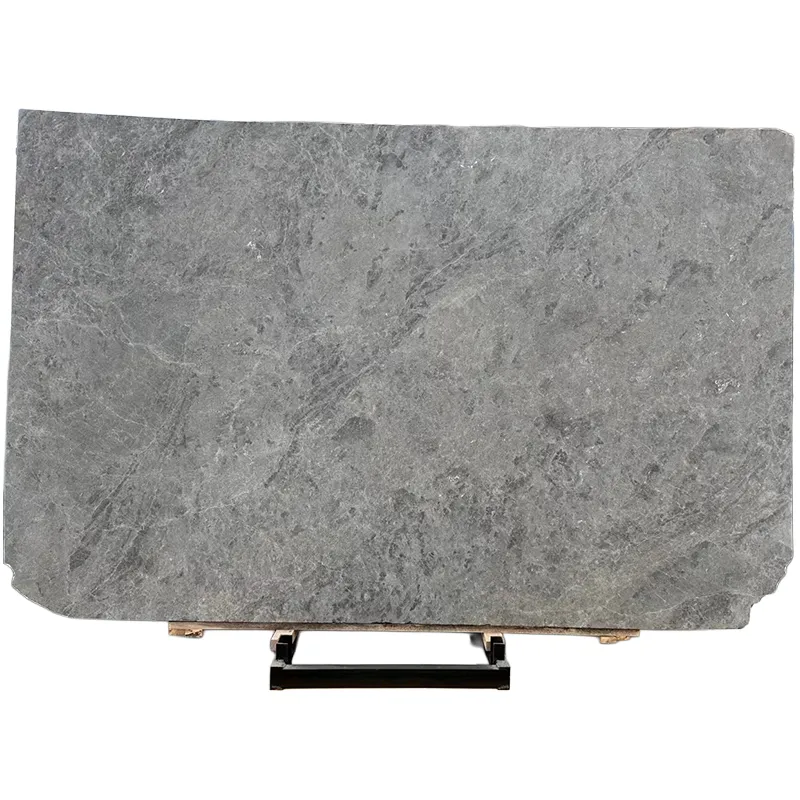
Many successful projects pair a white fireplace wall with slightly deeper floors, side walls, or built-ins. Guides like grey marble vs white marble explore how each tone interacts with light, furniture, and daily dust. In rooms with a lot of natural light, a softer white with gentle grey veins often reads more comfortably than a very stark, pure white that can feel clinical.
By understanding how your specific room behaves throughout the day—morning sun, afternoon glare, evening lamps—you can choose a white marble that supports the atmosphere you actually want to live in, not just what photographs well once.
Technical Considerations: Data, Safety, and Long-Term Performance
A luxurious feature wall or fireplace is not just a pretty surface; it’s a technical installation. Large-format Weiße Marmorplatten need to be:
-
Properly supported and anchored to the wall.
-
Installed over suitable substrates that can handle heat and weight.
-
Detailed with movement joints where necessary to allow for expansion.
Modern stone practice encourages using test data and standards to match stones to their applications. Fabricators routinely look at properties like density, water absorption, and flexural strength before committing a marble to large vertical spans or combined wall-and-floor installations.
Industry organisations and European trade groups (often referenced together with ESTA) have been actively promoting this kind of data-led approach, encouraging suppliers and designers to treat natural stone as an engineered element as much as a decorative one. The goal is simple: fewer surprises after installation, and more projects where marble ages with dignity rather than drama.
This is where real-world project experience becomes just as valuable as lab numbers. Teams like FOR U STONE build up internal “memory” from villa, hotel, and apartment installations—what worked around fire, what finishes performed best near windows, which patterns hid seams more gracefully. When that experience is shared with designers and homeowners, it effectively turns each new feature wall into the next, improved case study.
From Mood Board to Marble Wall: A Simple Planning Framework
If you’re standing in front of a blank wall and a full mood board, here’s a practical way to move forward without getting overwhelmed:
-
Define the role of the wall.
Is it a quiet backdrop, a dramatic centerpiece, or a frame for a TV or artwork? -
Shortlist two or three marble looks.
One calmer, one more dramatic, and one engineered option for high-contact areas. -
Think in zones, not only materials.
Decide where natural marble is essential and where engineered stone is smarter. -
Plan seam, joint, and bookmatch strategy.
Sketch how slabs will break, where joins land, and how veins flow across them. -
Confirm a care and maintenance routine.
Agree on cleaners, sealing intervals (if needed), and what “normal patina” means.
When you’re ready to move past inspiration images and into real slabs and drawings, it helps to share floor plans, elevations, and photos with a trusted supplier. If you want tailored suggestions on stone options, finishes, and layouts for your own fireplace or feature wall, you can reach out via FOR U STONE’s Kontaktieren Sie uns page and get feedback grounded in actual project experience rather than theory.
FAQs: White Marble Slabs for Feature Walls and Fireplaces
1. Are white marble slabs safe to use around fireplaces?
Yes, when correctly specified and installed. Marble is a natural stone that tolerates heat well, which is why it has been used around fire for centuries. The key is ensuring the fireplace design, substrate, and fixings meet local building codes, and that any direct-flame or very high-heat areas use appropriate protective materials as recommended by your fireplace manufacturer and installer.
2. Will white marble discolor or yellow near the fireplace over time?
In most indoor residential settings, good-quality Weiße Marmorplatten do not “yellow” simply from fireplace use. Discoloration is more often linked to soot deposits, unsuitable cleaners, or issues within the substrate or adhesives. Using recommended, pH-neutral cleaning products and following your installer’s guidance on ventilation and maintenance will significantly reduce the risk of visible changes.
3. Should I choose polished or honed marble for a feature wall?
Both can work very well, but they create different experiences. Polished marble amplifies light and reflection, delivering a more glamorous, hotel-like feeling. Honed marble reduces glare, softens the look, and tends to hide small marks better. For tall, mostly “look but don’t touch” walls, polished can be spectacular. For lower walls or areas where people lean, touch, or place objects, honed or softly brushed finishes often age more gracefully.
4. Can I use the same white marble slab for floors and the fireplace wall?
You can, and many designers do this intentionally to create a seamless, gallery-like environment. However, you must confirm that the stone meets the technical requirements for flooring—especially slip resistance and abrasion resistance—before extending it onto the floor. Some projects keep the marble on the wall and use a more textured or slightly darker material on the floor to better handle daily wear while still matching the overall look.
5. How do I make sure my marble feature wall still looks good in ten years?
Think long-term at the design stage. That means choosing a stone and finish that match your light conditions and lifestyle, working with an experienced fabricator who understands large-format slab installation, and following a simple, consistent cleaning routine. It also means accepting that natural stone develops a bit of character over time. When the original choices are sound, that character reads as patina—not damage.
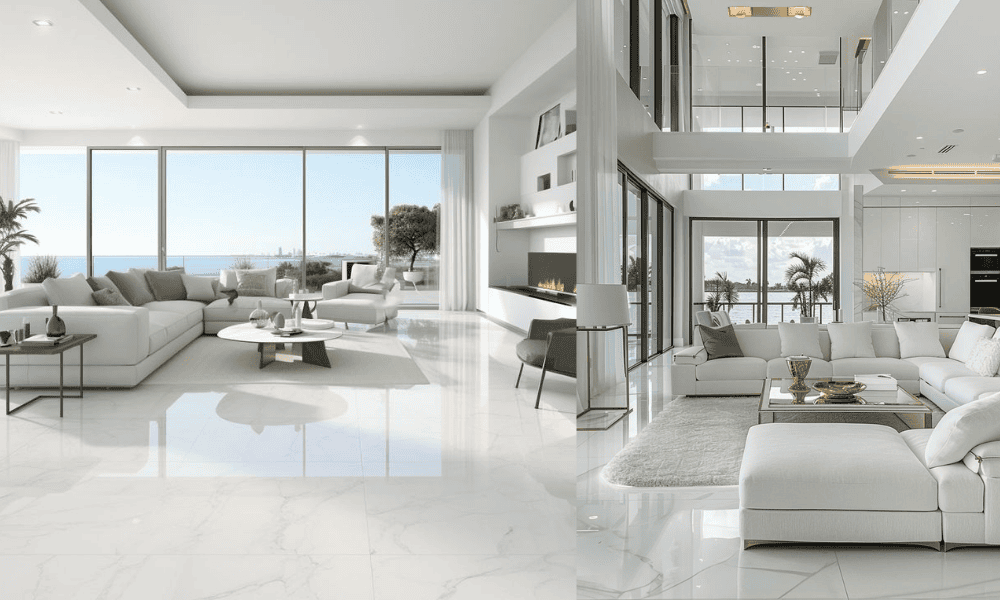
Fire, Light, and Stone Working Together
Creating a luxurious feature wall or fireplace with Weiße Marmorplatten is more than copying a pretty image—it’s about getting fire, light, and stone to work together in your specific room.
When you define the mood, choose a marble whose pattern fits your wall, plan the veining and seams, combine natural and engineered surfaces where it makes sense, and lean on a supplier with real project experience, you remove most of the risk and keep all of the beauty.
That’s the real difference between a trend-driven marble wall and a timeless one: the first looks good on day one; the second is still quietly impressive in year ten, holding its own through seasons, gatherings, and daily life. With well-chosen Weiße Marmorplatten, your fireplace or feature wall doesn’t just decorate the room—it becomes the reason the room feels complete.
Stone specialists referenced in ESTA’s interior material studies consistently emphasize that marble performance depends on three variables: thermal stability, surface finish, and vein orientation. According to expert reviews from FOR U STONE’s project division, fireplaces using parallel-vein white marble slabs show significantly fewer micro-cracks and surface distortions after long-term heat exposure compared to cross-cut slabs. Their internal performance logs also reveal that projects which tested lighting on-site before final slab selection had 40% fewer client change requests. This reinforces a key industry principle: marble selection must happen under real conditions, not theoretical mood boards. When designers integrate material science with aesthetic storytelling—understanding how light amplifies veining, how heat affects finish, and how seams guide visual flow—white marble walls transition from fragile showpieces into durable architectural signatures.


