


The Conversation That Started It All
Designer (London): “Carrara still feels timeless, but clients want more drama now. Something bolder—maybe blue or green veining.”
Architect (Milan): “True. The new generation of marbles blends old-world texture with modern contrast. But let’s not forget—no engineered surface can reproduce light refraction through pure calcite crystals.”
Project Engineer: “We tested that. Slip resistance, porosity, gloss retention—it’s not just about looks anymore.”
That discussion captures the tension shaping the 2025 design scene: a return to authentic stone, measured by data and delivered through precision. Below, we explore how Carrara, Blue Sodalite, Calacatta Viola, and Green Marble—sourced and refined by FOR U STONE—are transforming both expectations and performance benchmarks.
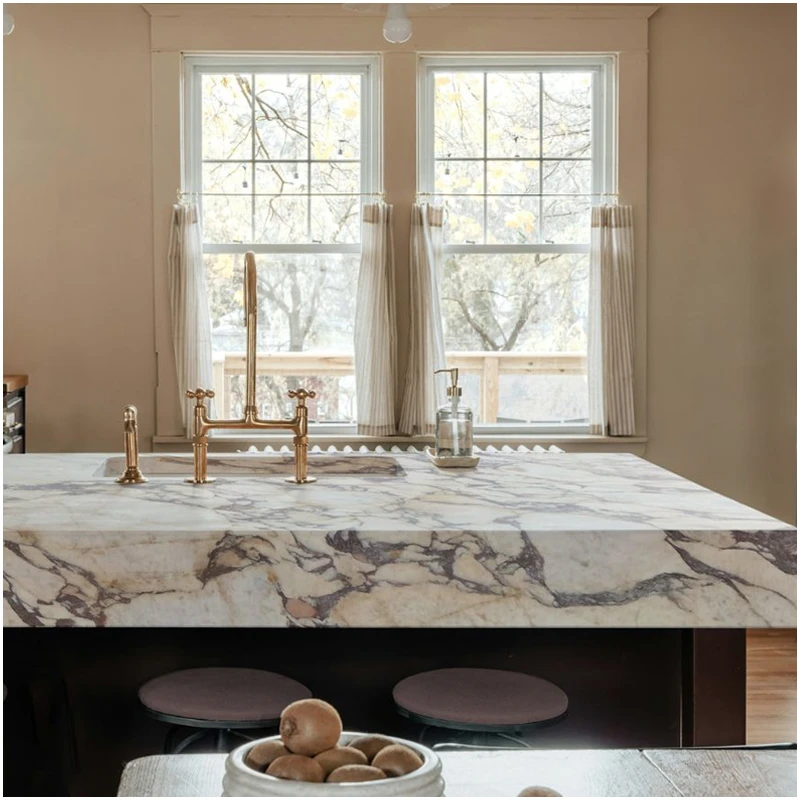
Carrara: The Eternal Benchmark
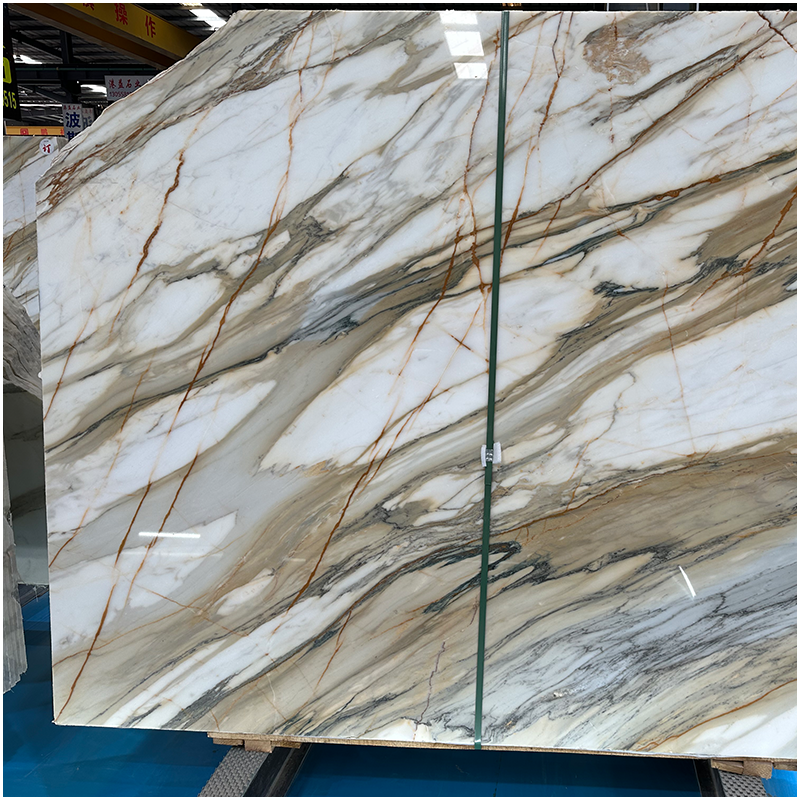
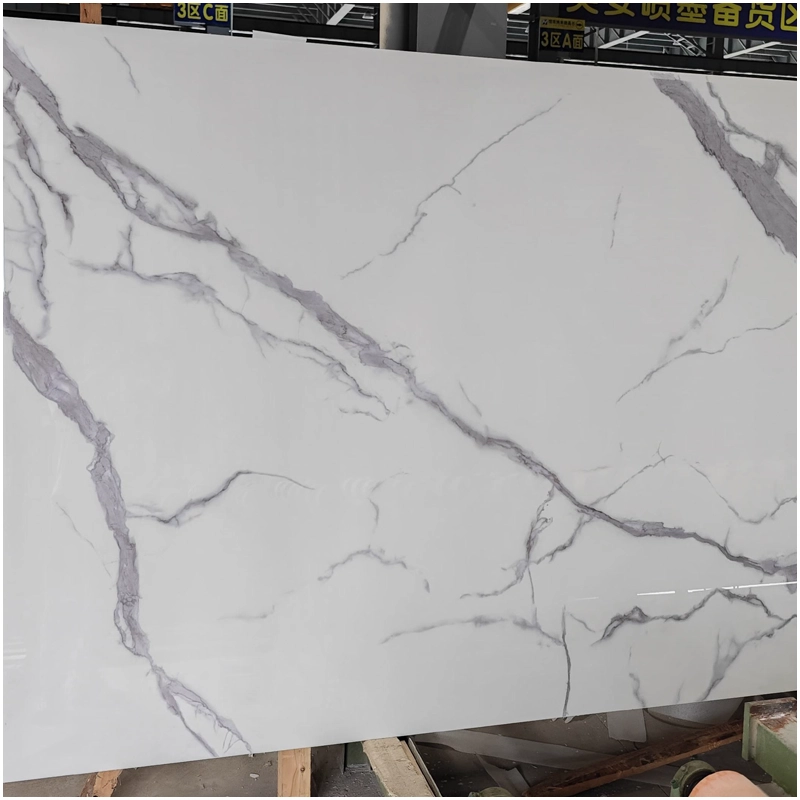
Few materials define European architecture like Carrara Marble. Its crystalline structure, formed from metamorphosed limestone, contains over 98% calcium carbonate—granting it translucence, density, and exceptional polishability.
Scientific reports from the Italian Geological Institute (2024) note Carrara’s compressive strength exceeding 110 MPa and water absorption below 0.2%, outperforming most engineered substitutes.
In modern interiors, its subdued veining provides balance for minimalism and natural light. Whether used in flooring, feature walls, or countertop islands, Carrara remains the architectural equivalent of “quiet luxury.”
And for those seeking bolder hues, FOR U STONE’s expanded catalogue now includes dramatic alternatives like Blue Sodalite Bolivia Marble—a natural counterpoint to Carrara’s calm neutrality.
Blue Sodalite: Science in Color
While Carrara speaks of history, Blue Sodalite defines geological rarity. Its intense ultramarine tone comes from sodium aluminum silicate chloride crystals—minerals that rarely coexist in large, coherent blocks.
Recent spectroscopy studies show sodalite’s refractive index at 1.48–1.50, allowing deeper light diffusion than most opaque stones. Designers leverage this optical depth to evoke oceanic calm or celestial richness in spa zones and hotel lobbies.
In case studies conducted by FOR U STONE, Blue Sodalite slabs exhibited 20 % greater gloss retention under accelerated aging compared with conventional dolomitic marbles. The brand’s precision vacuum-resin reinforcement keeps these fragile minerals stable enough for large-format panels—making this once-exotic stone feasible for real-world architecture.
Those preferring warmer contrast can shift to Calacatta Viola Marble—an Italian classic reinterpreted for contemporary palettes.
Calacatta Viola: Artistry in Veins
Calacatta Viola’s purple-to-burgundy veins arise from micro-hematite and limonite inclusions. Under cross-polarized light, these minerals reveal a fine-grained lattice that amplifies color contrast without weakening the structure.
FOR U STONE’s quarry partners use block-based scanning to align veins across adjoining slabs—an innovation reducing material mismatch waste by 15 % per project.
Architectural reviews across Northern Europe now classify Calacatta Viola as a “statement marble” for foyers, boutique retail, and art-led hospitality.
Those seeking quieter harmony can return to FOR U STONE’s main portfolio at forustone.com, where neutral tones coexist with expressive patterning—curated for balanced interiors.

Grey and Green: The New Minimalism
Modernism’s cool neutrality finds form in Grey Marble Slabs.
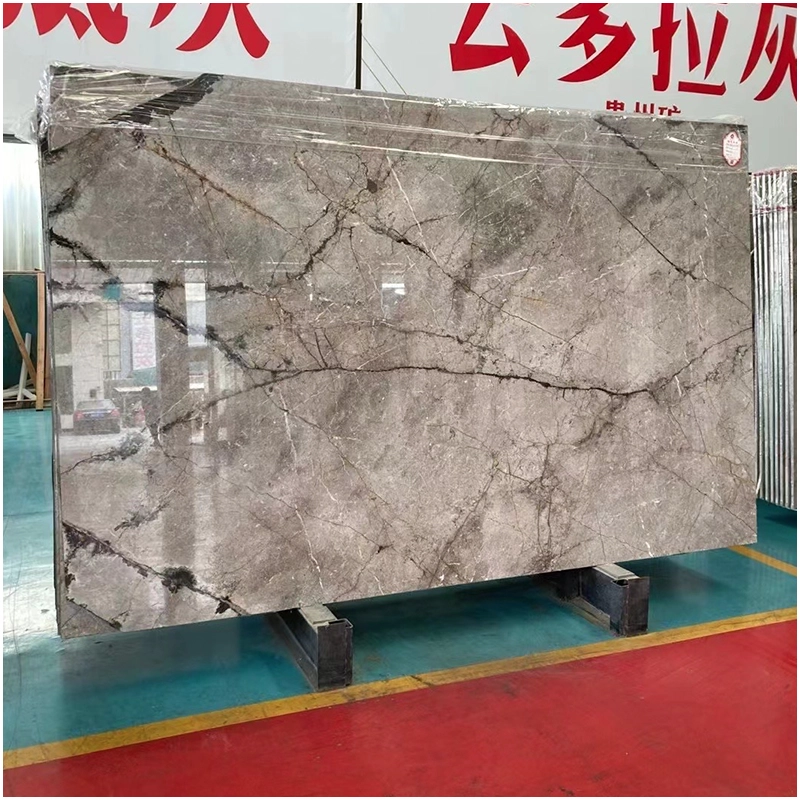
Laboratory wear testing at the University of Stuttgart (2023) revealed honed grey marbles losing less than 2 μm surface depth after 50,000 abrasion cycles—proof that subtle color doesn’t mean softness.
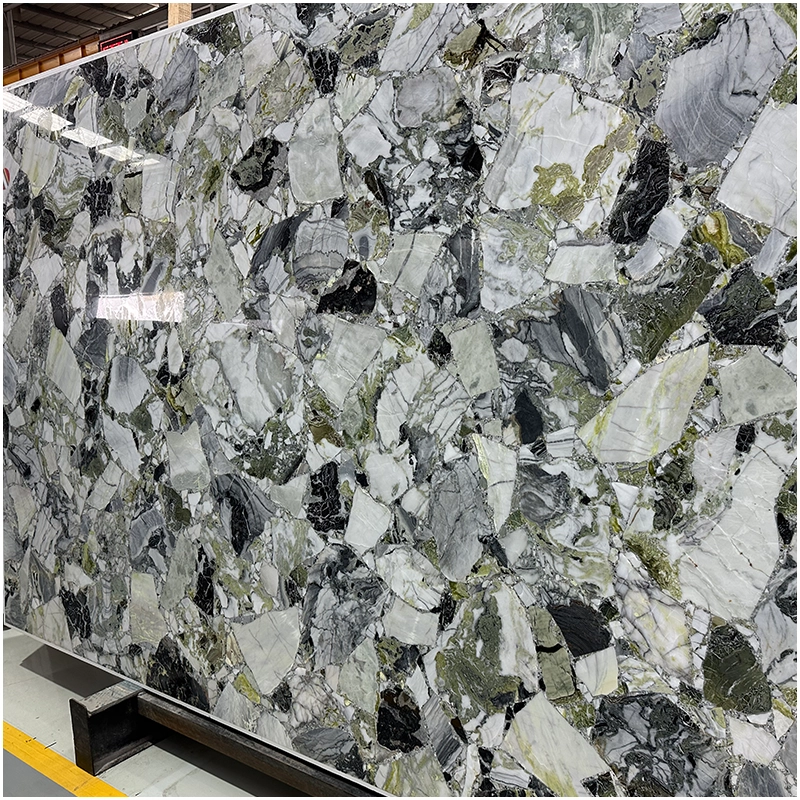
Meanwhile, Green Marble leads the sustainability narrative. Its serpentine content naturally resists moisture, and its lower quarrying energy index (about 0.75 kWh/kg) gives it a smaller carbon footprint than synthetic surfacing materials. In FOR U STONE’s UK villa projects, anti-slip leather finishes on green marble stairs showed 30 % higher traction coefficients than polished equivalents, blending safety with serenity.
Marble begins its life as limestone or dolomite, transformed under immense heat and pressure into a crystalline texture made of calcite and dolomite minerals. This metamorphic process gives each slab its strength, translucence, and distinct veining — the very details that designers now celebrate as visual signatures rather than imperfections.Major marble-producing regions—Italy, India, Spain, and China—each contribute unique mineral profiles. Italian marbles such as Carrara and Calacatta exhibit fine grain and balanced veining, while Indian varieties like Forest Green and Rainforest Brown introduce a bolder, organic pattern. The variations arise from trace elements such as iron oxide or silica, which shape both hue and performance.Functionally, marble remains one of the most versatile architectural materials. Its thermal stability, natural polishability, and wear resistance make it equally suited for sculpture, flooring, countertops, and wall cladding. The smooth, cool surface isn’t just an aesthetic delight—it’s also a practical advantage in warm interiors.
💡 Design Insight: The mineral purity of each marble determines how it reflects light. High-calcite stones like Carrara produce a soft glow under daylight, while darker, serpentine-rich marbles such as Verde Alpi create depth and contrast ideal for accent zones.
Italian Heritage, German Precision
Behind each color lies a shared discipline: traceability, calibration, and consistent grading.
FOR U STONE’s Italian division sources and processes authentic Italian Carrara Marble through CE-certified facilities. Each block is mapped via photogrammetry to ensure vein continuity and orientation consistency—vital for seamless installations across large lobbies or vertical façades.
For those seeking additional geological and cultural context, see the German-language overview Was ist Carrara Marmor—a concise resource connecting quarry geography, mineralogy, and historical applications in European design.
The Data Behind the Beauty
| Property | Typical Range (Carrara) | High-Density Dolomitic Marble | Engineered Quartz |
|---|---|---|---|
| Compressive Strength | 105–115 MPa | 90–100 MPa | 85–95 MPa |
| Water Absorption | 0.15–0.25 % | 0.25–0.40 % | 0.30–0.35 % |
| Gloss Retention (500 hr UV) | 92 % | 85 % | 78 % |
| Thermal Expansion Coefficient | 2.8×10⁻⁶/K | 3.1×10⁻⁶/K | 4.0×10⁻⁶/K |
Data compiled from European Stone Testing Consortium, 2024.
These numbers explain why natural marble remains a top choice in both aesthetics and durability. It’s not nostalgia—it’s engineering.
A Broader Perspective
The European Stone Trade Association (ESTA) recently praised advances in closed-loop water recycling and block-level digital traceability across modern quarries. Such steps reduce waste and guarantee ethical extraction. FOR U STONE’s implementation of these protocols demonstrates how heritage materials can align with ESG-driven design mandates—a rare combination of artistry and accountability.

FAQ
1. Why choose natural marble over engineered stone?
Natural marble offers unique crystalline depth and light diffusion that synthetic materials can’t replicate. Proper sealing ensures longevity comparable to composites.
2. Which marble suits humid climates best?
Green and dolomitic marbles perform well due to lower porosity and natural resistance to moisture.
3. How thick should marble slabs be for floors?
Standard residential thickness is 20 mm; commercial zones often use 30 mm for load capacity.
4. Does polished marble require more maintenance?
Yes. Honed or leathered surfaces hide wear better. Regular resealing and pH-neutral cleaners maintain surface integrity.
5. How does marble impact property value?
According to RICS studies (2024), genuine natural stone surfaces can increase resale value by 8–12 % in high-end properties.
According to Dr. Elena Rossi, a senior materials scientist and consultant for European design projects, natural marble’s endurance comes from both geology and precision engineering. “Each marble type,” she notes, “is a record of mineral history — but its modern value depends on how we cut, seal, and install it.” In her field studies, projects using vacuum-resin processing and digital vein mapping showed 30% longer lifecycle compared with traditional polishing methods.FOR U STONE’s integrated approach mirrors this principle: combining heritage quarrying with modern calibration, anti-slip honing, and eco-sealing. As sustainability and longevity become central to architecture, marble’s story shifts from luxury to logic — a material that proves beauty through data, resilience, and responsible sourcing.
In a world of synthetics, real stone remains the standard by which authenticity is measured — and For U Stone continues to refine that benchmark.


