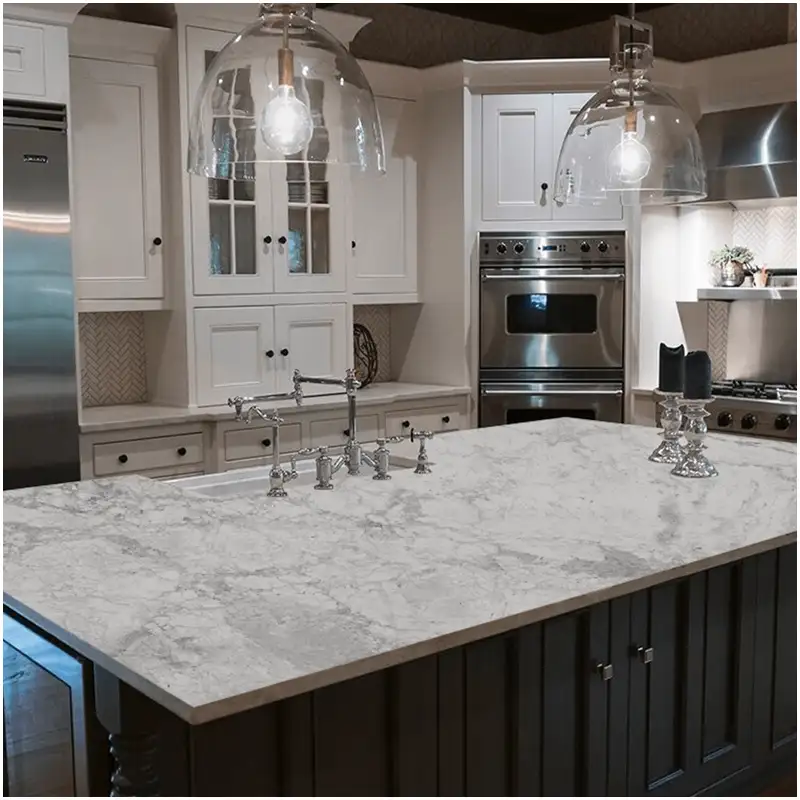
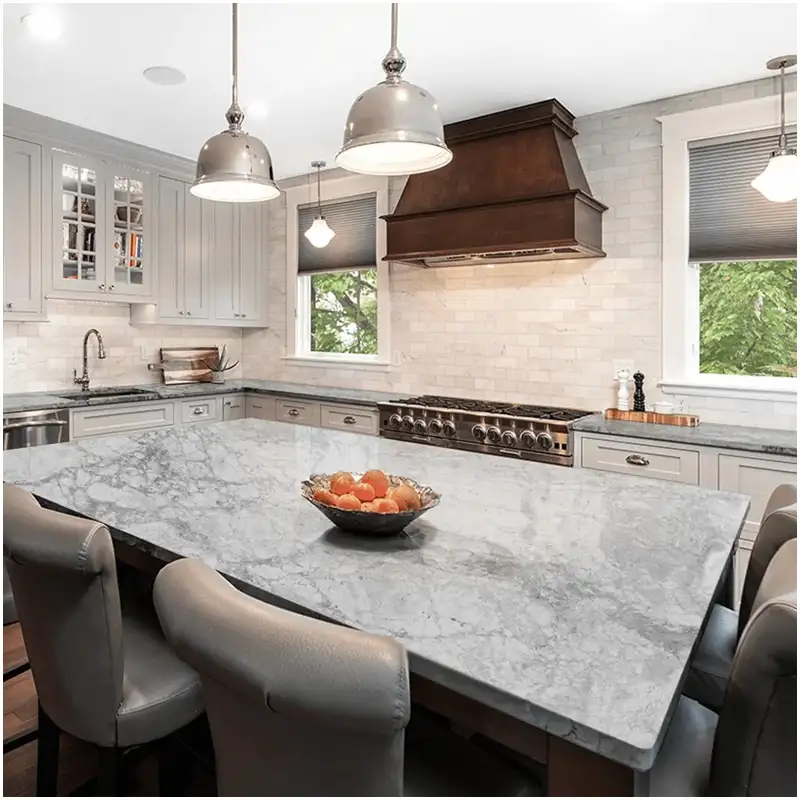
Super White Quartzite Cut-To-Size Planning For Hotel And Villa Projects
One villa project looked under control until the site team changed the door threshold heights after the stone was already on the saw list. The factory had the old dimensions. The architect had the new elevation. The contractor had neither when the crate arrived. Six thresholds were 12 mm too tall, and a job that was supposed to begin with a simple floor handover became a week of trimming and blame.
Take it from me, cut-to-size stone is not a material order once the drawings start changing. It is a controlled production package. Back in the day, people relied on a final PDF in an email folder. That does not hold up when 140 pieces, three room types, and two finishing teams are involved.
Release Super White quartzite cut-to-size from one drawing set
Every piece needs a unique code that appears on the shop drawing, cutting list, dry-lay photograph, crate label, and packing list. A bathroom vanity, a corridor threshold, and a wall return may all be similar in size, but they do not belong in the same place. I use the room or area code first, then the piece sequence. That keeps the information readable after a long journey.
Before we release كوارتزيت أبيض فائق البياض for fabrication, I compare the final issue date with the slab layout and finished-edge schedule. You can’t skip this step. One small update to an outlet, door jamb, bowl, or cabinet end can create a false economy if the factory keeps working from yesterday’s PDF.
Plan visible pieces before yield pieces
We use the quietest and most related sections of the slab for the visible surfaces first. The remaining material can serve less exposed returns, small thresholds, or approved spare pieces. That is not about wasting stone. It is how a project keeps a long vanity, wall panel, and return from looking like unrelated leftovers.
A سطح حوض كوارتزيت أبيض مدمج سوبر كوارتزيت أبيض needs its bowl drawing, faucet position, drain detail, and support route frozen before the cutter receives a file. A sink change after cutting does not produce a minor adjustment. It produces a new top or a compromise that will be visible every day.
Dry-lay is the factory’s last honest conversation
Quartzite dry-lay inspection is where I want to find the mistakes. We arrange the visible pieces in their intended sequence, photograph the faces, verify the piece codes, and compare them with the signed drawing. At this stage, a wrong return can still move. Once it is edge-finished, packed, and loaded, the cost of a simple correction climbs quickly.

Spare piece planning belongs in the same discussion. We do not throw random offcuts into a crate and call them spares. The project needs identified, usable pieces for likely damage points or future adjustments. Mark them on the packing list. Otherwise they are just heavy stone with no destination.
| Stage | Control record | What I check |
|---|---|---|
| Drawing release | Revision-stamped shop drawing | Dimensions, openings, edges, room codes, and issue date |
| Slab allocation | Marked full-slab image | Visible face, vein direction, and cut yield |
| Dry-lay | Numbered inspection photographs | Sequence, pairing, finish, and piece identity |
| التعبئة | Crate list and shipping mark | Where each room package and spare piece is located |
The Hard-Won Lesson: The correct stone went to the wrong floor
A 120-room hotel package had correct dimensions and acceptable dry-lay photographs. The failure was the code sequence. The factory labeled the crates by production order while the site unpacked by floor and room. The installer opened twelve crates to find the first corridor set, then damaged two polished edges while repacking. The materials were right. The delivery logic was wrong.
The Lesson: Give every cut piece one code that survives drawing, dry-lay, crate, and site handover.
Understanding cut-to-size control in today’s export work
Work in the order the project will need the pieces
First, we freeze the drawing and allocate slabs. Next, we cut and dry-lay the visible sets. Then we photograph, finish, label, and pack by area. That chronology matters. It keeps a factory from treating a hotel package as a pile of similar rectangles.
What to do if a dry-lay reveals a wrong piece
Take full and close photographs, hold the affected set before edge finishing, and contact the supplier with the released drawing and slab layout. Do not force the piece into a neighbouring room just to protect a shipment date. Document it, stop that sequence, and compare the records first.
The detailed process belongs inside Natural Stone Project Procurement: The Complete Step-by-Step Guide for Export Orders. We keep the package traceable so a site team can install it in a sensible order.
Questions before cut-to-size release
1. What does Super White quartzite cut-to-size planning include?
It includes final shop drawings, slab allocation, a piece-code schedule, edge and opening details, dry-lay photographs, spare-piece allocation, and crate labels that repeat the same codes.
2. Why is dry-lay necessary for quartzite?
Dry-lay reveals visual sequence and piece-code mistakes while the factory can still move material. It is especially useful for long vanities, wall panels, and repeated room sets that must read consistently.
3. How should spare pieces be marked?
Give each spare a code, size, finish, and intended area on the packing list. An unmarked offcut is not a usable project spare when the site is trying to solve a specific problem.
4. Can a factory cut while drawings are still changing?
Not safely. Hold the affected pieces until the revision is released. A short pause is cheaper than remaking cut stone after a basin, door, or wall condition changes.
5. What should I do first if the dry-lay does not match the drawing?
Photograph the set, stop finishing and packing that sequence, and send the records to the supplier with the signed drawing. Do not proceed with installation decisions until the mismatch is compared against the original inspection record.
Quick-Reference Checklist for cut-to-size release
- Freeze the final shop drawing before a cutting list is issued.
- Assign one piece code across all factory and shipping records.
- Mark visible faces on the full slab layout.
- Dry-lay paired and repeated pieces before edge finishing.
- Photograph every released set with visible codes.
- List usable spares by size, finish, and intended area.
Final Conclusion
Cut-to-size work succeeds when every person can trace one piece from drawing to slab, dry-lay, crate, and room. I have seen enough costly confusion to know that a good product is not enough. The records have to travel with it.
Super White quartzite cut-to-size planning gives the project that route before the first crate closes. Take it from me, I would rather issue one more controlled drawing than explain a mixed room package to our FOR U STONE project partners.

المراجع
- Dimension Stone Design Manual, Natural Stone Institute.
- Natural Stone Care Guide, Natural Stone Institute.
- ASTM C97 Standard Test Methods for Absorption and Bulk Specific Gravity of Dimension Stone, ASTM International.
- ASTM C99 Standard Test Method for Modulus of Rupture of Dimension Stone, ASTM International.
- Natural Stone Testing Standards, Stone Federation Great Britain.
- ISPM 15 Regulation of Wood Packaging Material in International Trade, International Plant Protection Convention.
- Search Essentials and Creating Helpful, Reliable, People-First Content, Google Search Central.